







Question: Suppose there are three languages (i e, problems), of which we know the following: 1. L1 is in P. 2. L2 is NP-complete. 3. 3
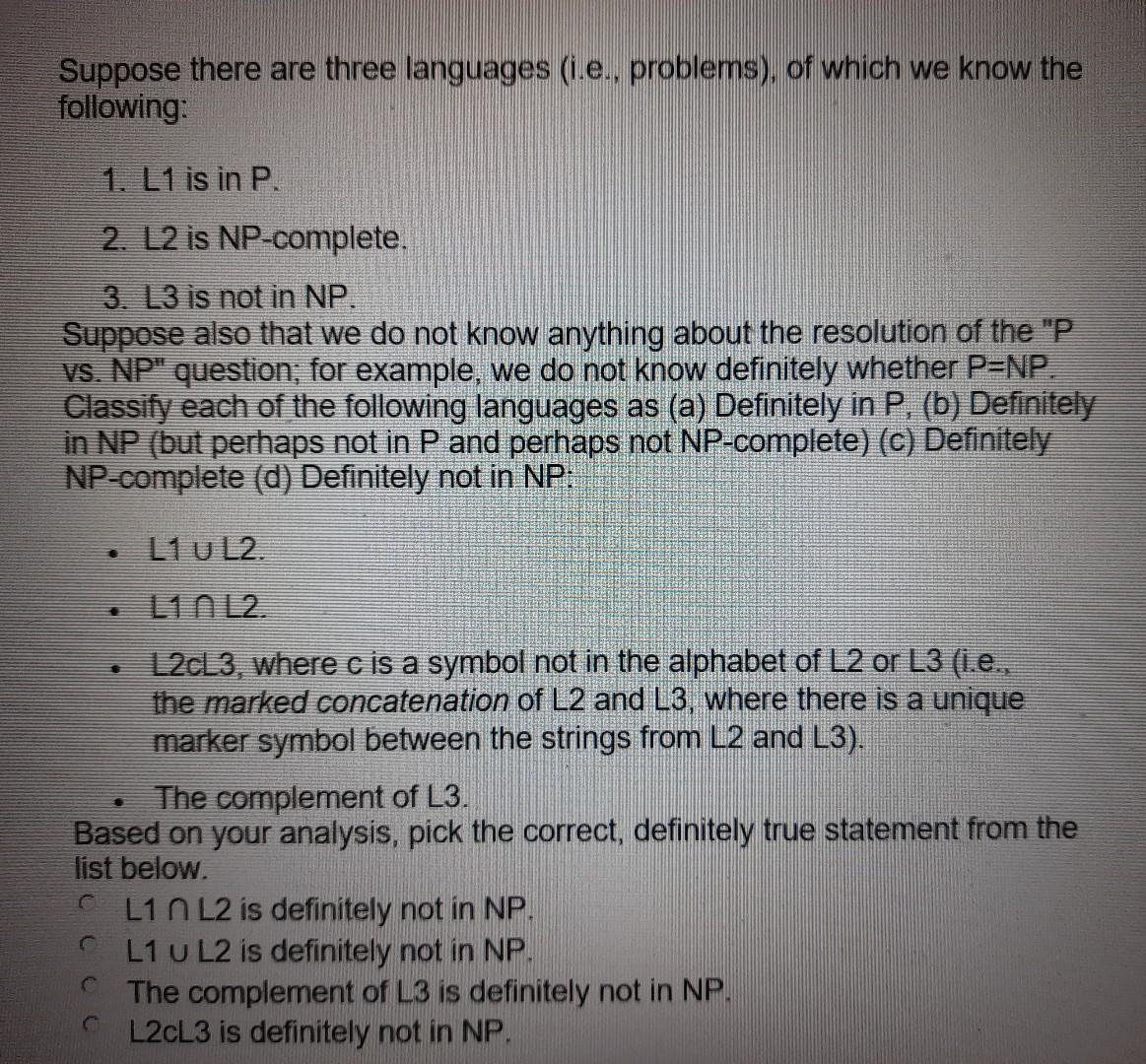
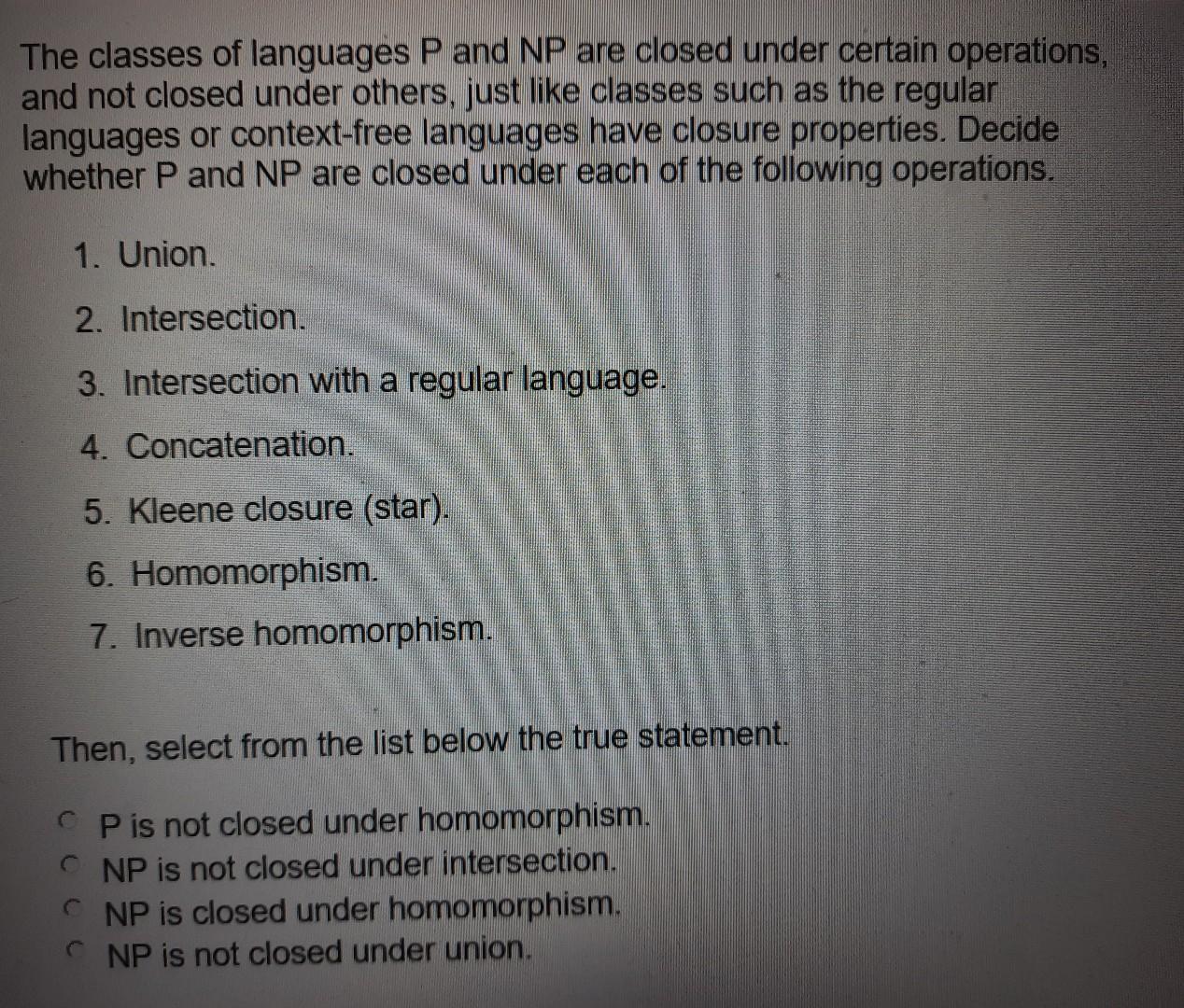
Suppose there are three languages (i e, problems), of which we know the following: 1. L1 is in P. 2. L2 is NP-complete. 3. 3 is not in NP. Suppose also that we do not know anything about the resolution of the "P VS. NP" question, for example, we do not know definitely whether P=NP. Classify each of the following languages as (a) Definitely in P. (b) Definitely in NP (but perhaps not in P and perhaps not NP-complete) (c) Definitely NP-complete (d) Definitely not in NP: L203, where c is a symbol not in the alphabet of L2 or L3 (i.e., the marked concatenation of L2 and L3, where there is a unique marker symbol between the strings from L2 and L3). The complement of L3. Based on your analysis, pick the correct, definitely true statement from the list below. CL1 L2 is definitely not in NP. L1 L2 is definitely not in NP. The complement of L3 is definitely not in NP. L2CL3 is definitely not in NP. The classes of languages P and NP are closed under certain operations, and not closed under others, just like classes such as the regular languages or context-free languages have closure properties. Decide whether P and NP are closed under each of the following operations. 1. Union. 2. Intersection. 3. Intersection with a regular language. 4. Concatenation. 5. Kleene closure (star). 6. Homomorphism. 7. Inverse homomorphism. Then, select from the list below the true statement. CP is not closed under homomorphism. CNP is not closed under intersection. CNP is closed under homomorphism. NP is not closed under union
Step by Step Solution
There are 3 Steps involved in it

Get step-by-step solutions from verified subject matter experts
 Study Help