







Question: Suppose you have two algorithms to predict whether a student can obtain an offer from Harvard University based on some features such as GPA, number
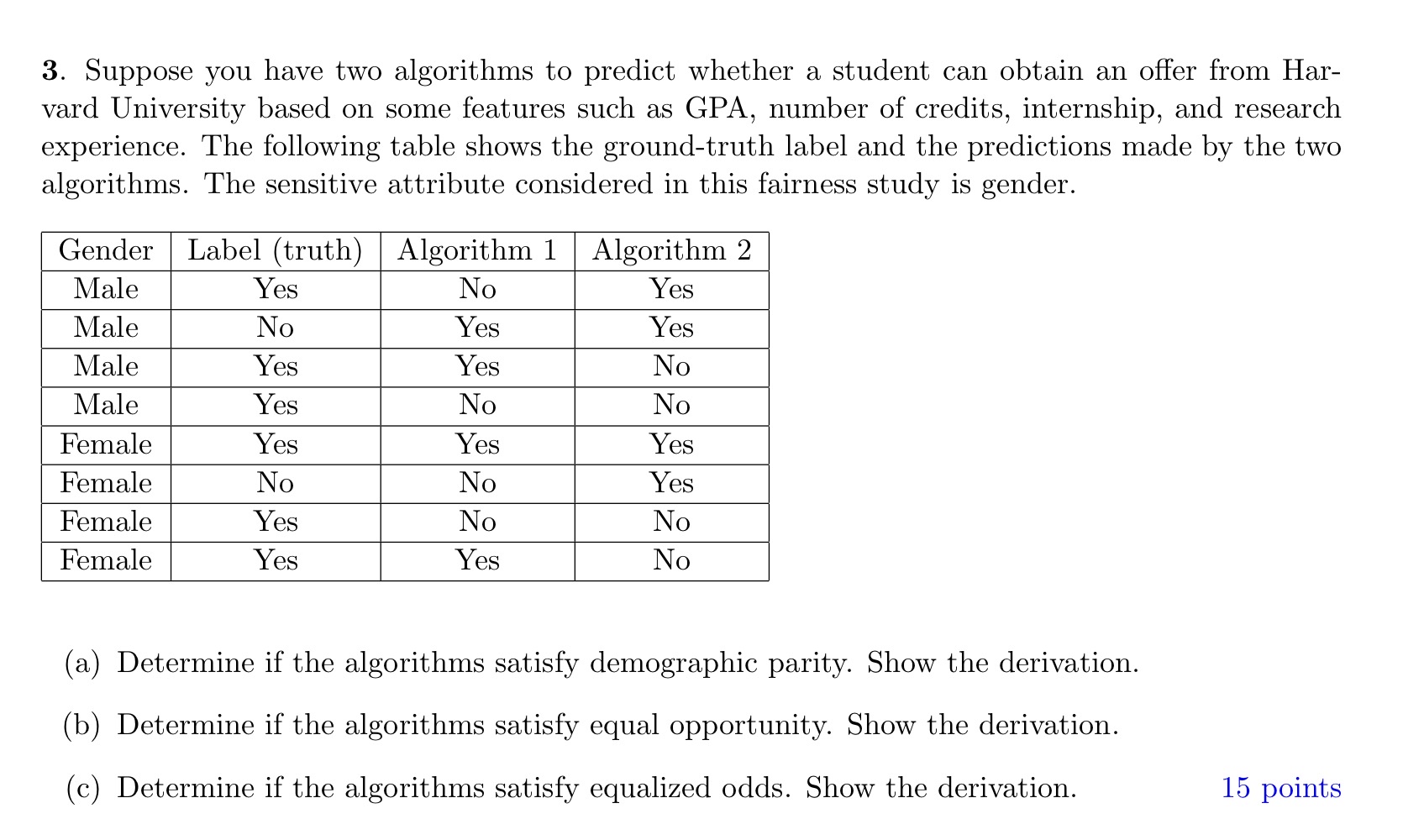
Suppose you have two algorithms to predict whether a student can obtain an offer from Harvard University based on some features such as GPA, number of credits, internship, and research experience. The following table shows the groundtruth label and the predictions made by the two algorithms. The sensitive attribute considered in this fairness study is gender.
tableGenderLabel truthAlgorithm Algorithm MaleYes,NoYesMaleNoYes,YesMaleYes,Yes,NoMaleYes,NoNoFemaleYes,Yes,YesFemaleNoNoYesFemaleYes,NoNoFemaleYes,Yes,No
a Determine if the algorithms satisfy demographic parity. Show the derivation.
b Determine if the algorithms satisfy equal opportunity. Show the derivation.
c Determine if the algorithms satisfy equalized odds. Show the derivation.
points
Step by Step Solution
There are 3 Steps involved in it
1 Expert Approved Answer
Step: 1 Unlock

Question Has Been Solved by an Expert!
Get step-by-step solutions from verified subject matter experts
Step: 2 Unlock
Step: 3 Unlock
 Study Help