Question: Table 1. Sales forecast Flexa Quest Discovery Total Month Jan. Feb. 5 3 18 25 2 2 10 13 30 60 98 64 Mar. April
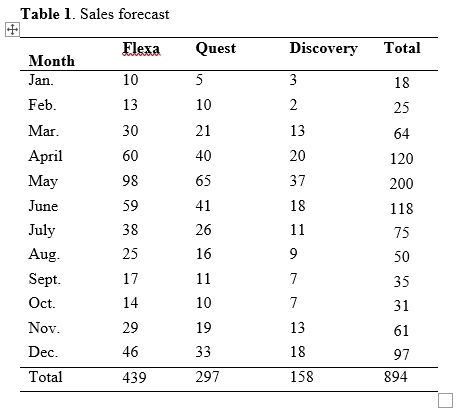
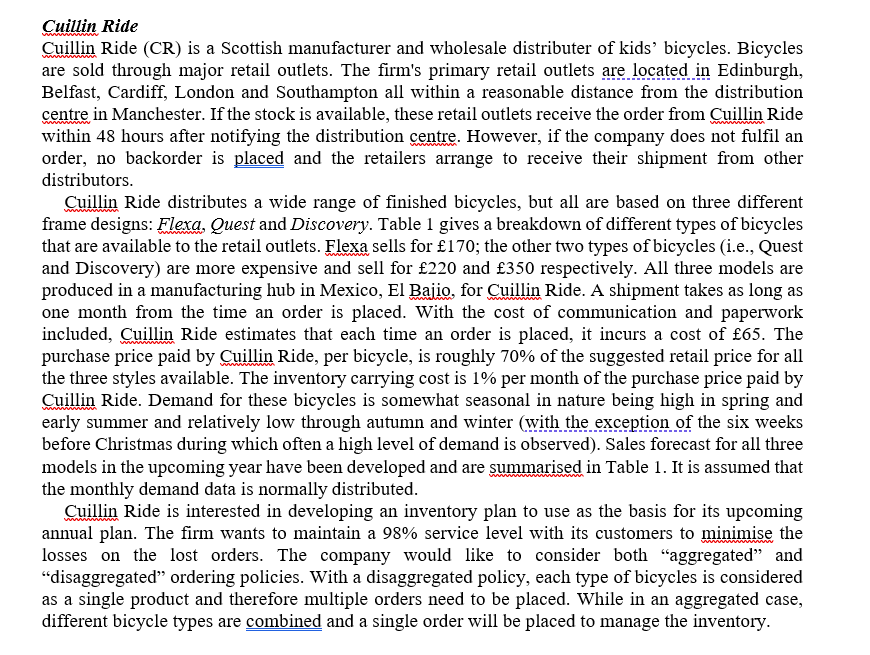



Table 1. Sales forecast Flexa Quest Discovery Total Month Jan. Feb. 5 3 18 25 2 2 10 13 30 60 98 64 Mar. April May June July Aug. Sept. Oct. Nov. Dec. 10 21 40 65 41 26 16 11 10 13 20 37 18 11 9 59 38 25 17 120 200 118 75 50 35 31 61 97 894 7 14 7 29 46 19 33 297 13 18 158 Total 439 Cuillin Ride Cuillin Ride (CR) is a Scottish manufacturer and wholesale distributer of kids' bicycles. Bicycles are sold through major retail outlets. The firm's primary retail outlets are located in Edinburgh, Belfast, Cardiff, London and Southampton all within a reasonable distance from the distribution centre in Manchester. If the stock is available, these retail outlets receive the order from Cuillin Ride within 48 hours after notifying the distribution centre. However, if the company does not fulfil an order, no backorder is placed and the retailers arrange to receive their shipment from other distributors. Cuillin Ride distributes a wide range of finished bicycles, but all are based on three different frame designs: Flexa, Quest and Discovery. Table 1 gives a breakdown of different types of bicycles that are available to the retail outlets. Flexa sells for 170; the other two types of bicycles (i.e., Quest and Discovery) are more expensive and sell for 220 and 350 respectively. All three models are produced in a manufacturing hub in Mexico, El Bajio, for Cuillin Ride. A shipment takes as long as one month from the time an order is placed. With the cost of communication and paperwork included, Cuillin Ride estimates that each time an order is placed, it incurs a cost of 65. The purchase price paid by Cuillin Ride, per bicycle, is roughly 70% of the suggested retail price for all the three styles available. The inventory carrying cost is 1% per month of the purchase price paid by Cuillin Ride. Demand for these bicycles is somewhat seasonal in nature being high in spring and early summer and relatively low through autumn and winter (with the exception of the six weeks before Christmas during which often a high level of demand is observed). Sales forecast for all three models in the upcoming year have been developed and are summarised in Table 1. It is assumed that the monthly demand data is normally distributed. Cuillin Ride is interested in developing an inventory plan to use as the basis for its upcoming annual plan. The firm wants to maintain a 98% service level with its customers to minimise the losses on the lost orders. The company would like to consider both aggregated and "disaggregated" ordering policies. With a disaggregated policy, each type of bicycles is considered as a single product and therefore multiple orders need to be placed. While in an aggregated case, different bicycle types are combined and a single order will be placed to manage the inventory. a) Develop and compare two inventory control plans for each type of bicycles distributed by Cuillin Ride under continuous and periodic review systems. b) Develop and compare two aggregated inventory control plans for the bicycles distributed by Cuillin Ride under continuous and periodic review systems. Compare the two plans developed in (a) and (b) (i.e., the aggregated and disaggregated cases), discuss their pros and cons and provide recommendation. d) The Mexican supplier intend to reduce a large stock of its Flexa model. It has offered a 20% discount on Flexa unit price if Cuillin Ride order 100 bicycles (of this type) or more. Assuming that the forecast figures are accurate and ignoring the forecast errors, advise Cuillin Ride whether it should take advantage of this discount or purchase the basic EOQ order size to manage Flexa's inventory. Hint: (1) Calculate and report the order size only for Flexa style in your proposed plan under the periodic review system; no need to report the order size for the aggregated case under the periodic review system (i.e., part b). (2) Use EOQ to estimate the order size in the periodic review system wherever needed. Table 1. Sales forecast Flexa Quest Discovery Total Month Jan. Feb. 5 3 18 25 2 2 10 13 30 60 98 64 Mar. April May June July Aug. Sept. Oct. Nov. Dec. 10 21 40 65 41 26 16 11 10 13 20 37 18 11 9 59 38 25 17 120 200 118 75 50 35 31 61 97 894 7 14 7 29 46 19 33 297 13 18 158 Total 439 Cuillin Ride Cuillin Ride (CR) is a Scottish manufacturer and wholesale distributer of kids' bicycles. Bicycles are sold through major retail outlets. The firm's primary retail outlets are located in Edinburgh, Belfast, Cardiff, London and Southampton all within a reasonable distance from the distribution centre in Manchester. If the stock is available, these retail outlets receive the order from Cuillin Ride within 48 hours after notifying the distribution centre. However, if the company does not fulfil an order, no backorder is placed and the retailers arrange to receive their shipment from other distributors. Cuillin Ride distributes a wide range of finished bicycles, but all are based on three different frame designs: Flexa, Quest and Discovery. Table 1 gives a breakdown of different types of bicycles that are available to the retail outlets. Flexa sells for 170; the other two types of bicycles (i.e., Quest and Discovery) are more expensive and sell for 220 and 350 respectively. All three models are produced in a manufacturing hub in Mexico, El Bajio, for Cuillin Ride. A shipment takes as long as one month from the time an order is placed. With the cost of communication and paperwork included, Cuillin Ride estimates that each time an order is placed, it incurs a cost of 65. The purchase price paid by Cuillin Ride, per bicycle, is roughly 70% of the suggested retail price for all the three styles available. The inventory carrying cost is 1% per month of the purchase price paid by Cuillin Ride. Demand for these bicycles is somewhat seasonal in nature being high in spring and early summer and relatively low through autumn and winter (with the exception of the six weeks before Christmas during which often a high level of demand is observed). Sales forecast for all three models in the upcoming year have been developed and are summarised in Table 1. It is assumed that the monthly demand data is normally distributed. Cuillin Ride is interested in developing an inventory plan to use as the basis for its upcoming annual plan. The firm wants to maintain a 98% service level with its customers to minimise the losses on the lost orders. The company would like to consider both aggregated and "disaggregated" ordering policies. With a disaggregated policy, each type of bicycles is considered as a single product and therefore multiple orders need to be placed. While in an aggregated case, different bicycle types are combined and a single order will be placed to manage the inventory. a) Develop and compare two inventory control plans for each type of bicycles distributed by Cuillin Ride under continuous and periodic review systems. b) Develop and compare two aggregated inventory control plans for the bicycles distributed by Cuillin Ride under continuous and periodic review systems. Compare the two plans developed in (a) and (b) (i.e., the aggregated and disaggregated cases), discuss their pros and cons and provide recommendation. d) The Mexican supplier intend to reduce a large stock of its Flexa model. It has offered a 20% discount on Flexa unit price if Cuillin Ride order 100 bicycles (of this type) or more. Assuming that the forecast figures are accurate and ignoring the forecast errors, advise Cuillin Ride whether it should take advantage of this discount or purchase the basic EOQ order size to manage Flexa's inventory. Hint: (1) Calculate and report the order size only for Flexa style in your proposed plan under the periodic review system; no need to report the order size for the aggregated case under the periodic review system (i.e., part b). (2) Use EOQ to estimate the order size in the periodic review system wherever needed




