







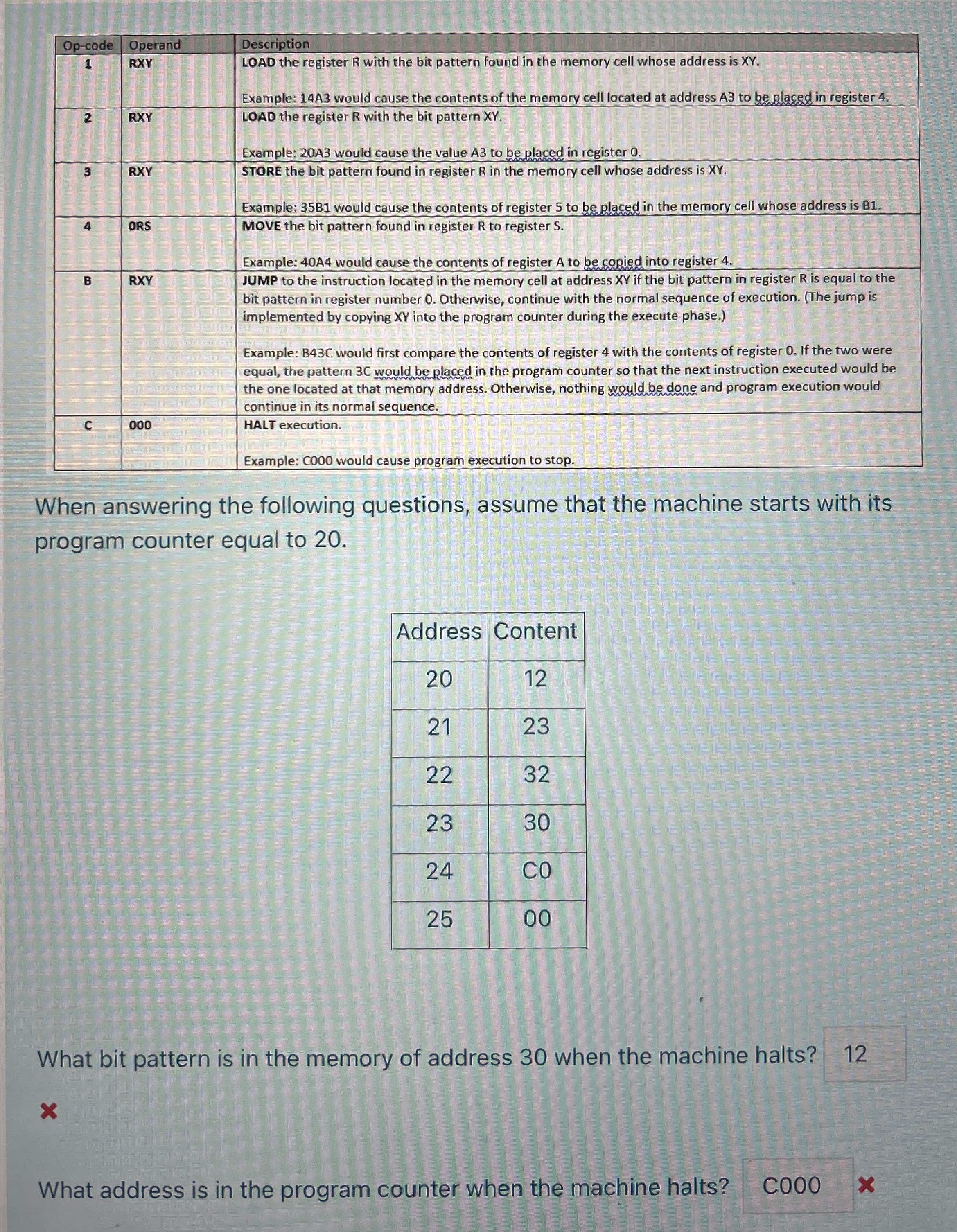
Question: table [ [ ? b a r ( O p - code ) , Operand,Description ] , [ 1 , RXY , table
tablecode Operand,DescriptionRXYtableLOAD the register with the bit pattern found in the memory cell whose address is Example: would cause the contents of the memory cell located at address to be placed in register RXYtableLOAD the register with the bit pattern Example: would cause the value to be placed in register RXYtableSTORE the bit pattern found in register in the memory cell whose address is XYExample: would cause the contents of register to be placed in the memory cell whose address is BORS,tableMOVE the bit pattern found in register to register Example: would cause the contents of register to be copied into register BRXYtableJUMP to the instruction located in the memory cell at address XY if the bit pattern in register is equal to thebit pattern in register number Otherwise, continue with the normal sequence of execution. The jump isimplemented by copying XY into the program counter during the execute phase.Example: would first compare the contents of register with the contents of register If the two wereequal the pattern would be placed in the program counter so that the next instruction executed would bethe one located at that memory address. Otherwise, nothing would be done and program execution wouldcontinue in its normal sequence.ctableHALT execution.Example: CO would cause program execution to stop.
When answering the following questions, assume that the machine starts with its program counter equal to
tableAddressContent
Step by Step Solution
There are 3 Steps involved in it
1 Expert Approved Answer
Step: 1 Unlock

Question Has Been Solved by an Expert!
Get step-by-step solutions from verified subject matter experts
Step: 2 Unlock
Step: 3 Unlock
 Study Help