







Question: TABLE B (continued) P n X 0.05 0.1 0.2 0.25 0.3 0.4 0.5 0.6 0.7 0.75 0.8 0.9 0.95 18 0 0.397 0.150 0.018 0.006
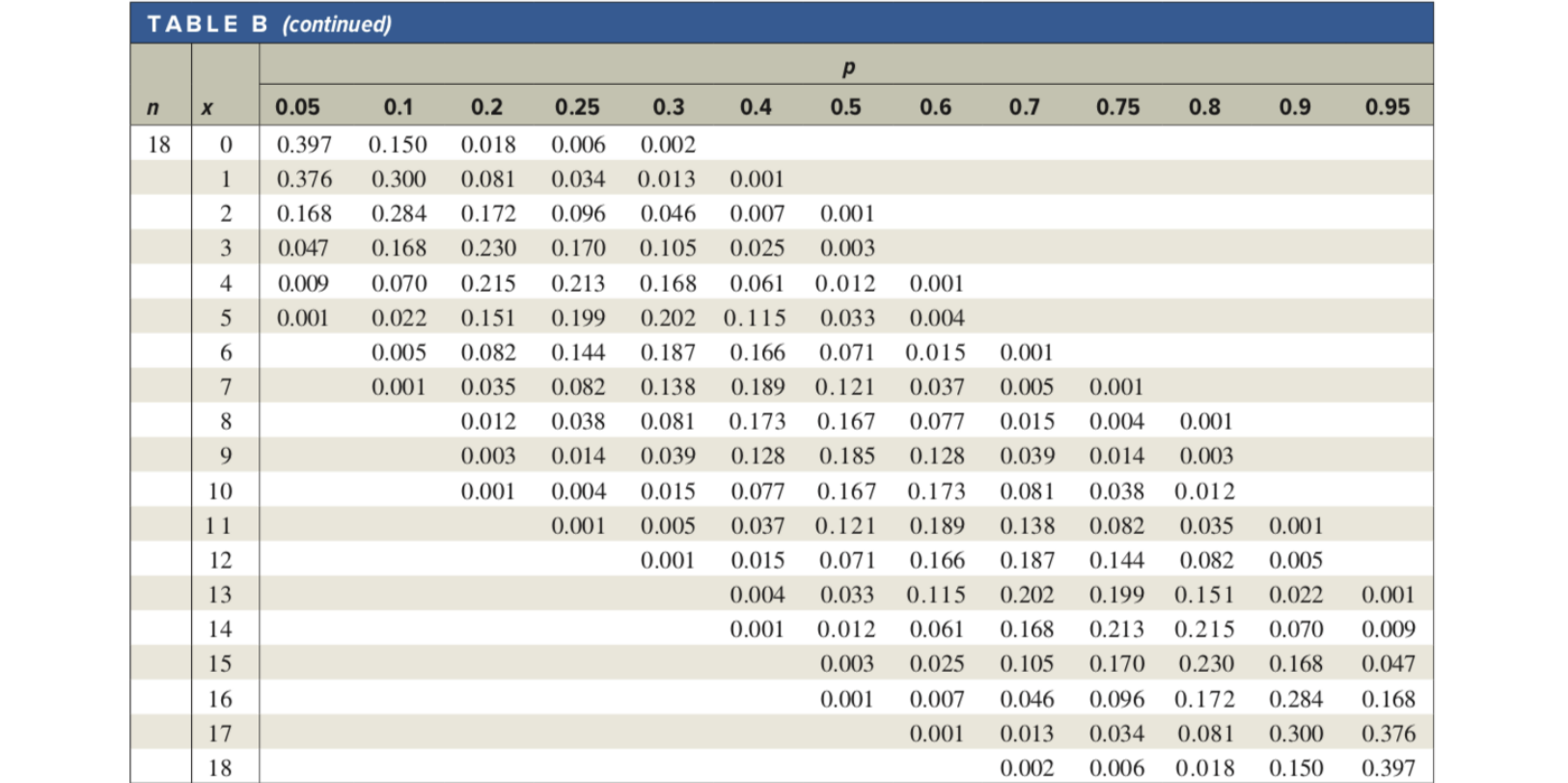
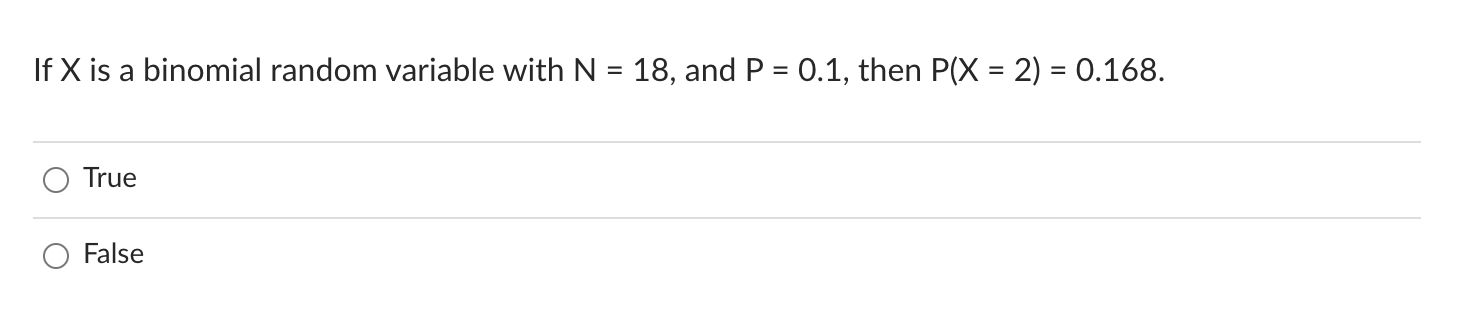
TABLE B (continued) P n X 0.05 0.1 0.2 0.25 0.3 0.4 0.5 0.6 0.7 0.75 0.8 0.9 0.95 18 0 0.397 0.150 0.018 0.006 0.002 1 0.376 0.300 0.081 0.034 0.013 0.001 2 0.168 0.284 0.172 0.096 0.046 0.007 0.001 3 0.047 0.168 0.230 0.170 0.105 0.025 0.003 4 0.009 0.070 0.215 0.213 0.168 0.061 0.012 0.001 0.001 0.022 0.151 0.199 0.202 0.115 0.033 0.004 0.005 0.082 0.144 0.187 0.166 0.071 0.015 0.001 0.001 0.035 0.082 0.138 0.189 0.121 0.037 0.005 0.001 0.012 0.038 0.081 0.173 0. 167 0.077 0.015 0.004 0.001 0.003 0.014 0.039 0.128 0.185 0.128 0.039 0.014 0.003 0.001 0.004 0.015 0.077 0.167 0.173 0.081 0.038 0.012 0.001 0.005 0.037 0.121 0.189 0.138 0.082 0.035 0.001 0.001 0.015 0.071 0.166 0.187 0.144 0.082 0.005 0.004 0.033 0.115 0.202 0.199 0.151 0.022 0.001 0.001 0.012 0.061 0.168 0.213 0.215 0.070 0.009 15 0.003 0.025 0.105 0.170 0.230 0.168 0.047 16 0.001 0.007 0.046 0.096 0.172 0.284 0.168 17 0.001 0.013 0.034 0.081 0.300 0.376 18 0.002 0.006 0.018 0.150 0.397If X is a binomial random variable with N = 18, and P = 0.1, then P(X = 2) = 0.168. O True O False
Step by Step Solution
There are 3 Steps involved in it

Get step-by-step solutions from verified subject matter experts
 Study Help