Question: Target is the U.S. third-largest retailer after Walmart and Costco, but in the last decade it has seen its earnings drop from $3.2 billion to
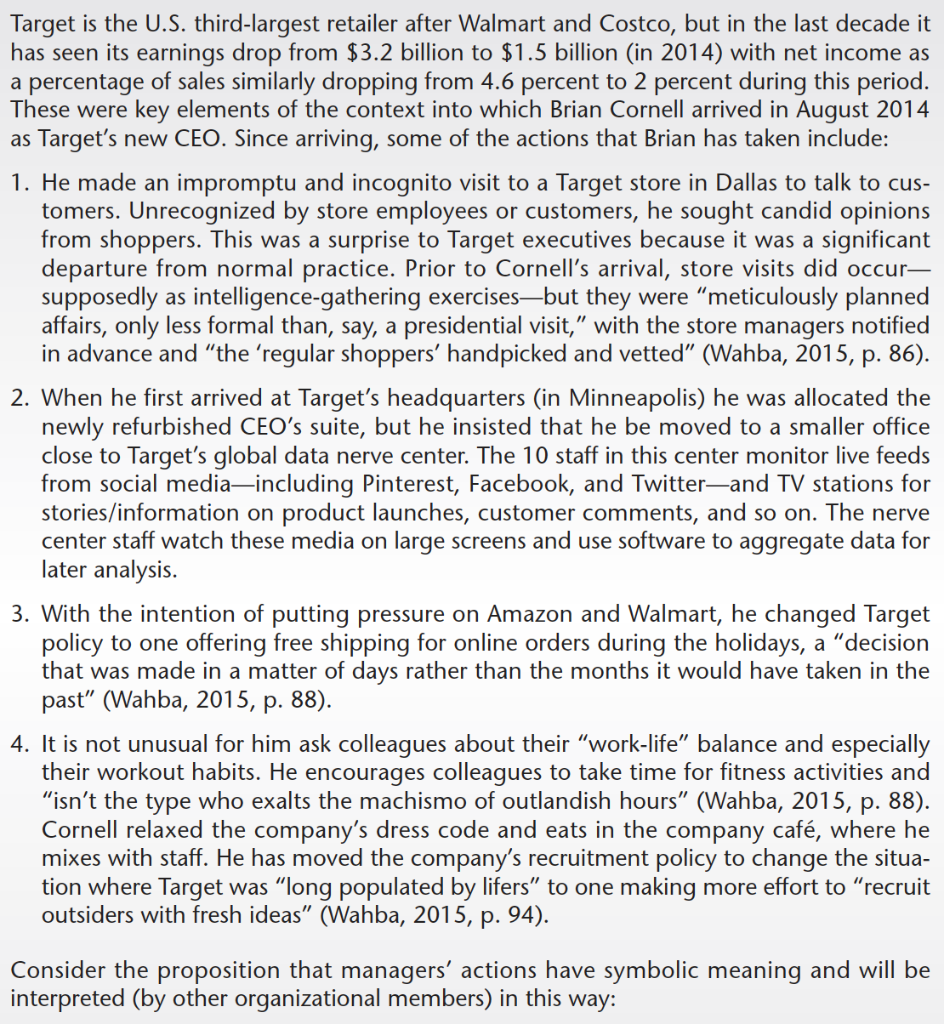
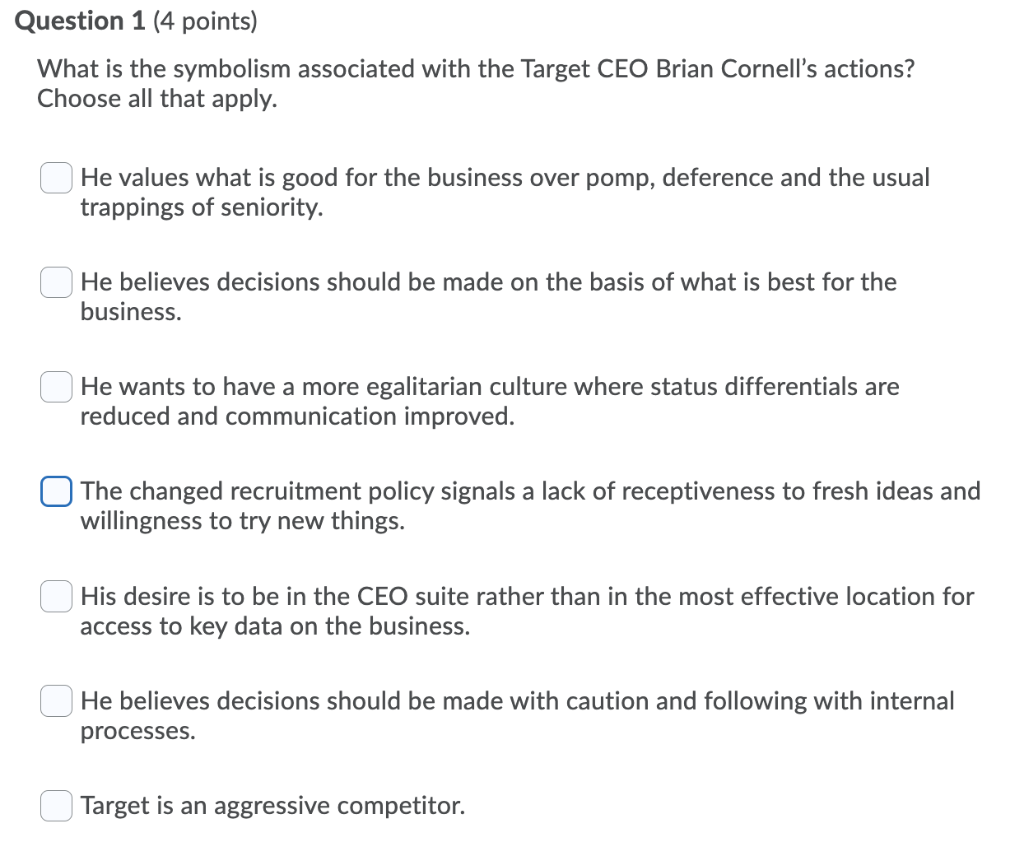
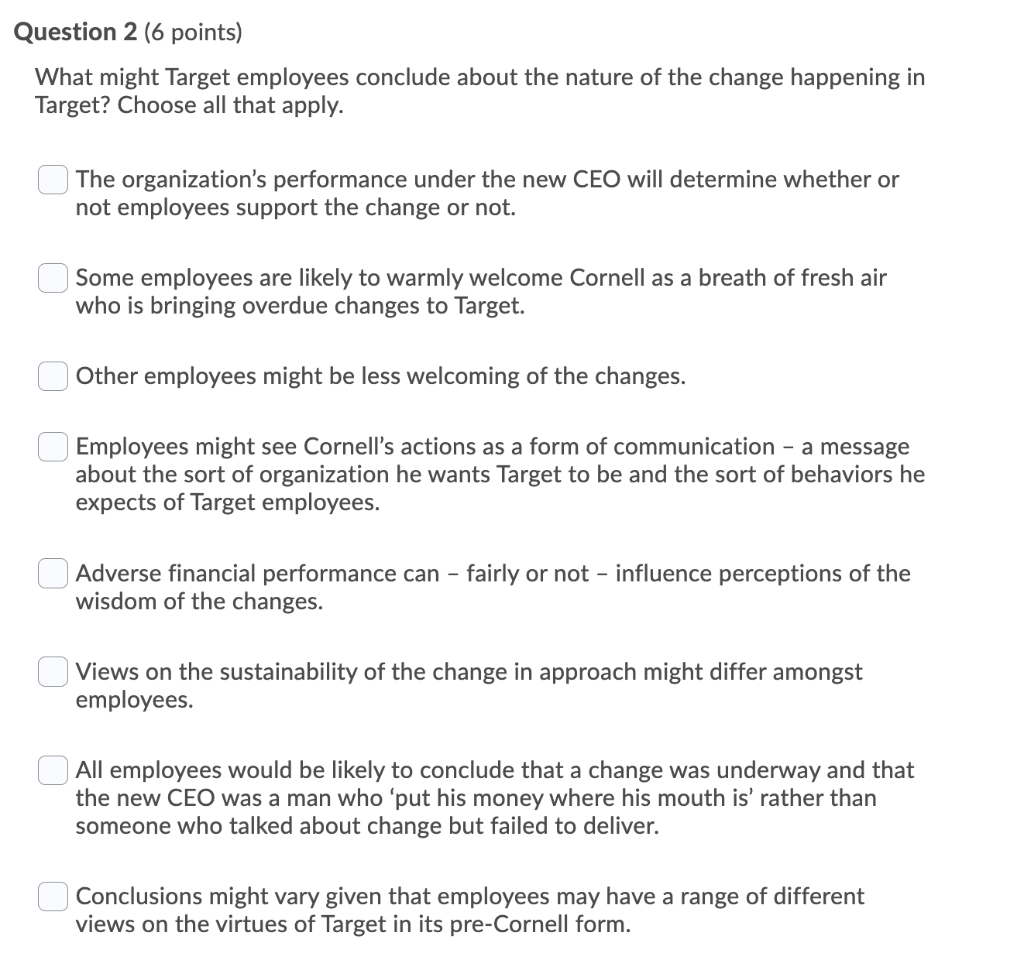
Target is the U.S. third-largest retailer after Walmart and Costco, but in the last decade it has seen its earnings drop from $3.2 billion to $1.5 billion (in 2014) with net income as a percentage of sales similarly dropping from 4.6 percent to 2 percent during this period. These were key elements of the context into which Brian Cornell arrived in August 2014 as Target's new CEO. Since arriving, some of the actions that Brian has taken include: 1. He made an impromptu and incognito visit to a Target store in Dallas to talk to cus- tomers. Unrecognized by store employees or customers, he sought candid opinions from shoppers. This was a surprise to Target executives because it was a significant departure from normal practice. Prior to Cornell's arrival, store visits did occur- supposedly as intelligence-gathering exercisesbut they were meticulously planned affairs, only less formal than, say, a presidential visit, with the store managers notified in advance and "the 'regular shoppers' handpicked and vetted (Wahba, 2015, p. 86). 2. When he first arrived at Target's headquarters (in Minneapolis) he was allocated the newly refurbished CEO's suite, but he insisted that he be moved to a smaller office close to Target's global data nerve center. The 10 staff in this center monitor live feeds from social mediaincluding Pinterest, Facebook, and Twitterand TV stations for stories/information on product launches, customer comments, and so on. The nerve center staff watch these media on large screens and use software to aggregate data for later analysis. 3. With the intention of putting pressure on Amazon and Walmart, he changed Target policy to one offering free shipping for online orders during the holidays, a "decision that was made in a matter of days rather than the months it would have taken in the past" (Wahba, 2015, p. 88). 4. It is not unusual for him ask colleagues about their work-life" balance and especially their workout habits. He encourages colleagues to take time for fitness activities and "isn't the type who exalts the machismo of outlandish hours (Wahba, 2015, p. 88). Cornell relaxed the company's dress code and eats in the company caf, where he mixes with staff. He has moved the company's recruitment policy to change the situa- tion where Target was "long populated by lifers to one making more effort to recruit outsiders with fresh ideas (Wahba, 2015, p. 94). Consider the proposition that managers' actions have symbolic meaning and will be interpreted (by other organizational members) in this way: Question 1 (4 points) What is the symbolism associated with the Target CEO Brian Cornell's actions? Choose all that apply. He values what is good for the business over pomp, deference and the usual trappings of seniority. He believes decisions should be made on the basis of what is best for the business. He wants to have a more egalitarian culture where status differentials are reduced and communication improved. The changed recruitment policy signals a lack of receptiveness to fresh ideas and willingness to try new things. His desire is to be in the CEO suite rather than in the most effective location for access to key data on the business. He believes decisions should be made with caution and following with internal processes. Target is an aggressive competitor. Question 2 (6 points) What might Target employees conclude about the nature of the change happening in Target? Choose all that apply. The organization's performance under the new CEO will determine whether or not employees support the change or not. Some employees are likely to warmly welcome Cornell as a breath of fresh air who is bringing overdue changes to Target. Other employees might be less welcoming of the changes. Employees might see Cornell's actions as a form of communication - a message about the sort of organization he wants Target to be and the sort of behaviors he expects of Target employees. Adverse financial performance can - fairly or not - influence perceptions of the wisdom of the changes. Views on the sustainability of the change in approach might differ amongst employees. All employees would be likely to conclude that a change was underway and that the new CEO was a man who put his money where his mouth is' rather than someone who talked about change but failed to deliver. Conclusions might vary given that employees may have a range of different views on the virtues of Target in its pre-Cornell form









 Study Help