







Question: - Tax rate = 40% - [Debt] Its long-term bond with 10 years maturity, 8% semiannual coupons, and $1,000 face value is currently traded at
![- Tax rate = 40% - [Debt] Its long-term bond with](https://s3.amazonaws.com/si.experts.images/answers/2024/07/66a75cdf4e09c_31866a75cdebd0e6.jpg)
![traded at $875.38 (No floatation cost, just for simplicity) - [Preferred stock]](https://s3.amazonaws.com/si.experts.images/answers/2024/07/66a75ce0913cb_32066a75ce031aef.jpg)
![stock] * The common stock that paid a $5 dividend at the](https://s3.amazonaws.com/si.experts.images/answers/2024/07/66a75ce1e578b_32166a75ce1706d9.jpg)
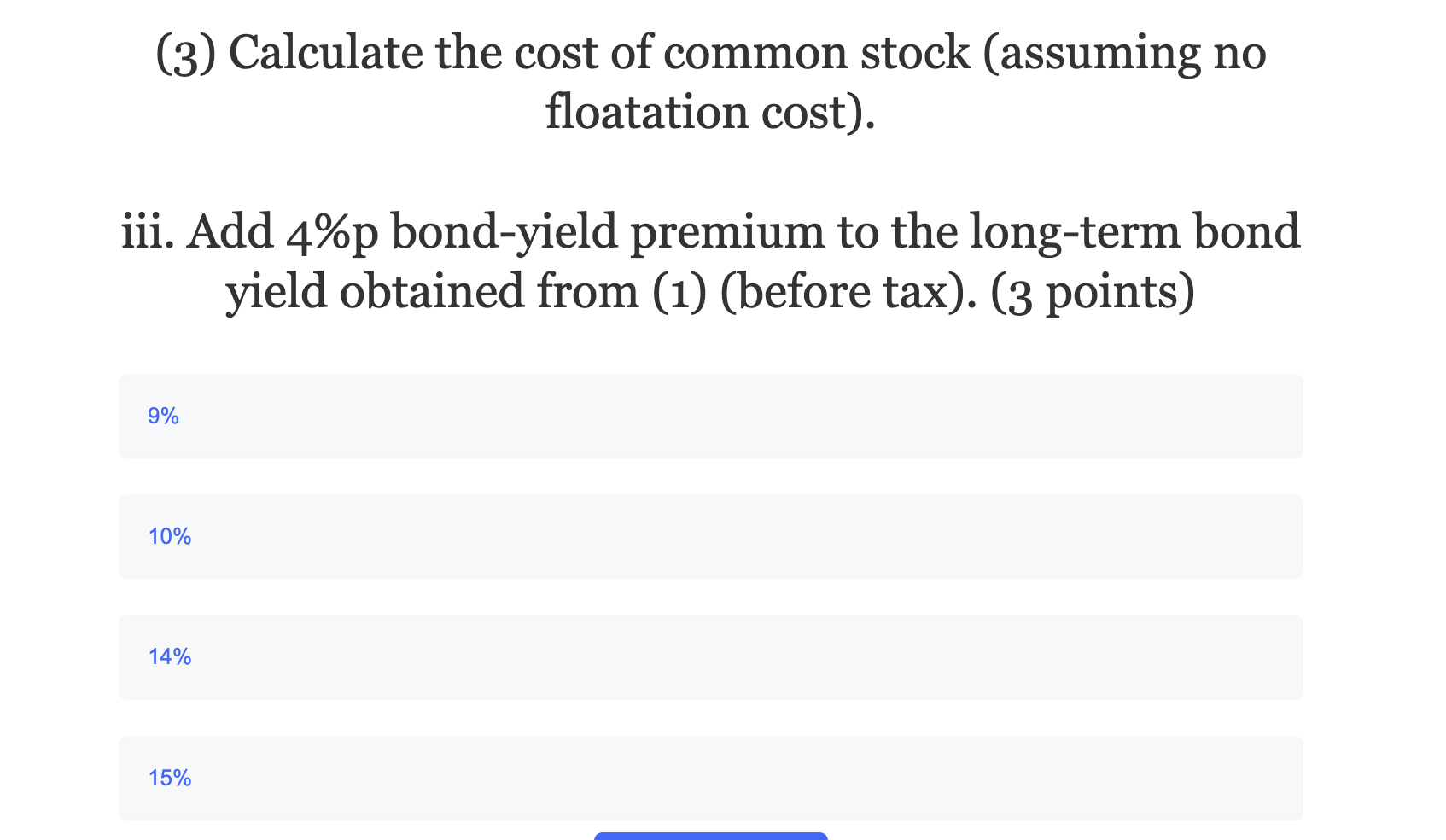
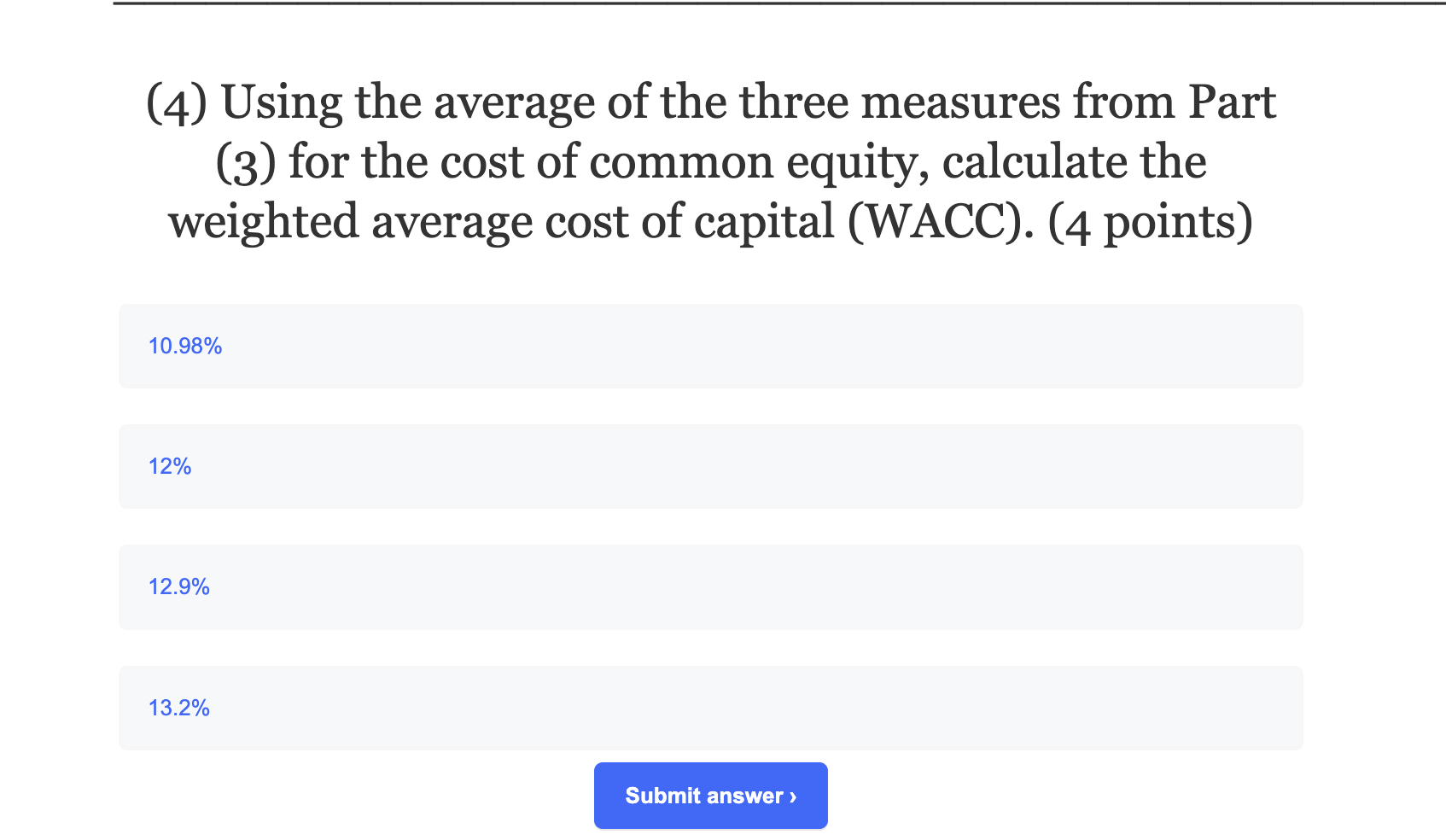
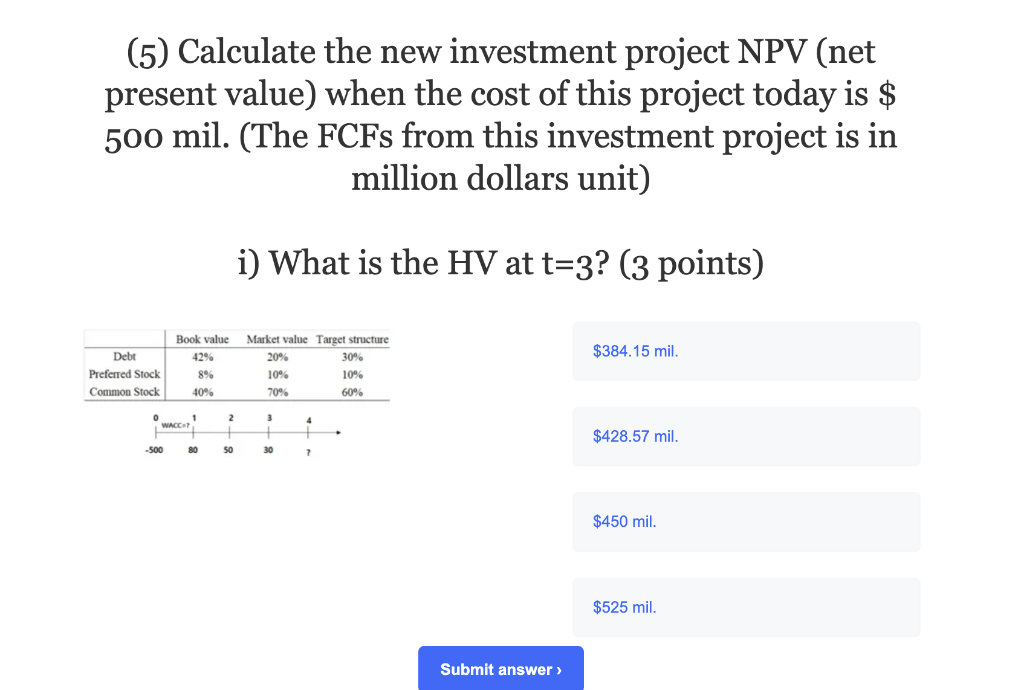
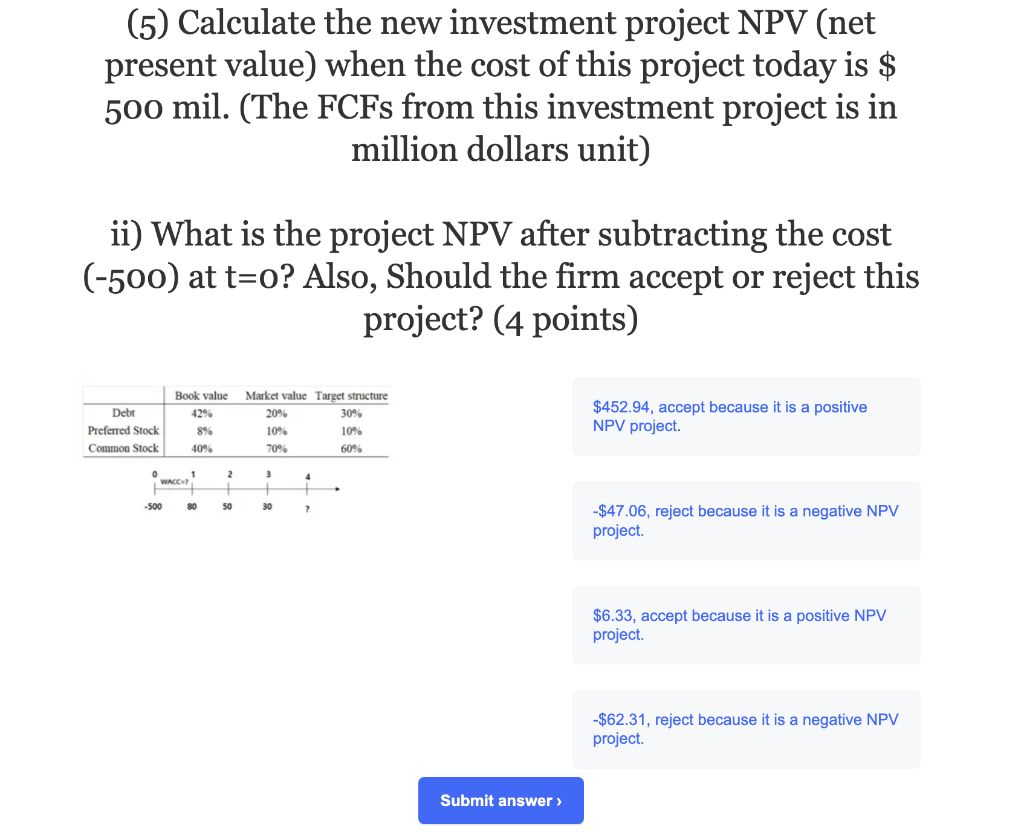
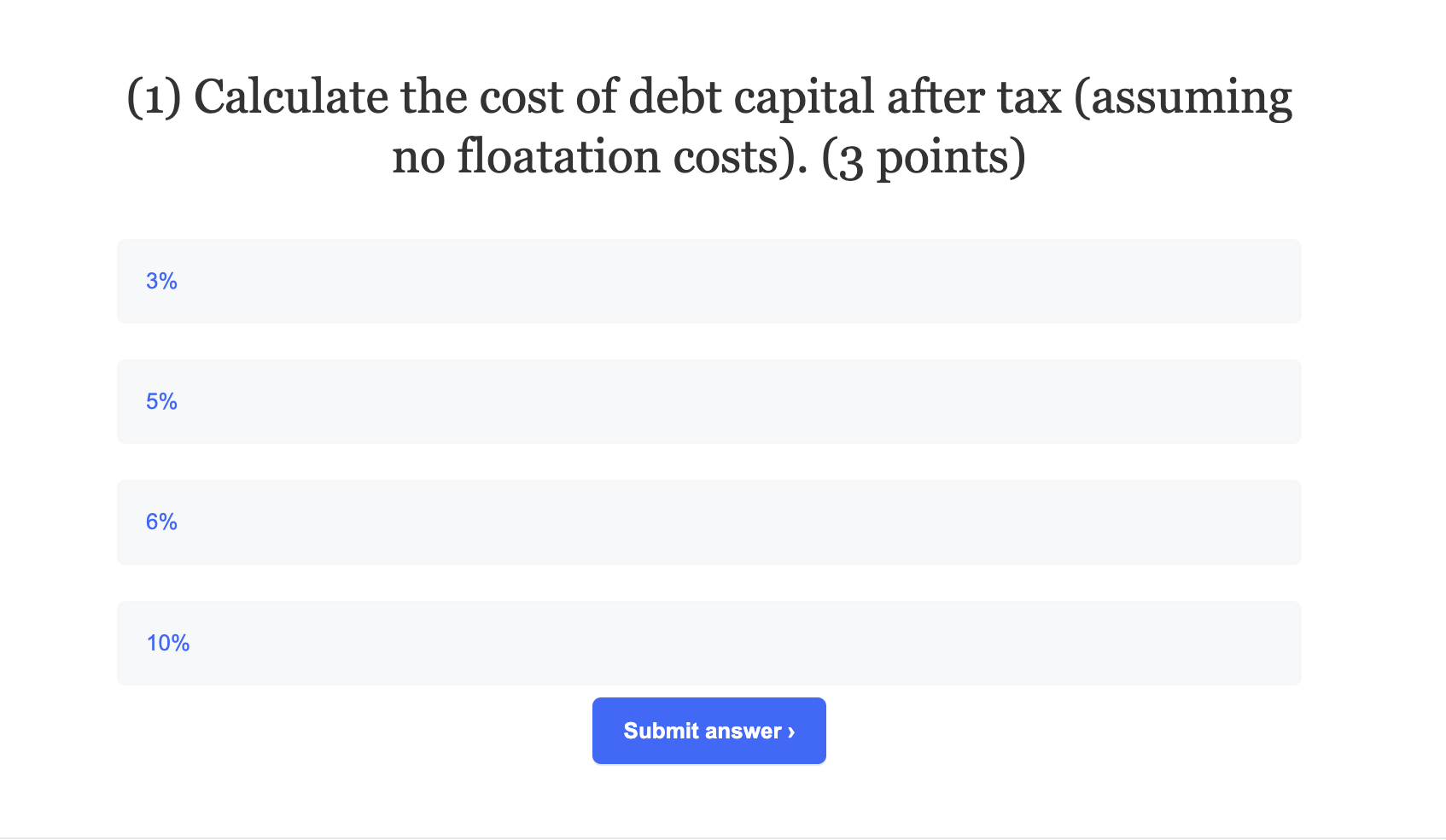
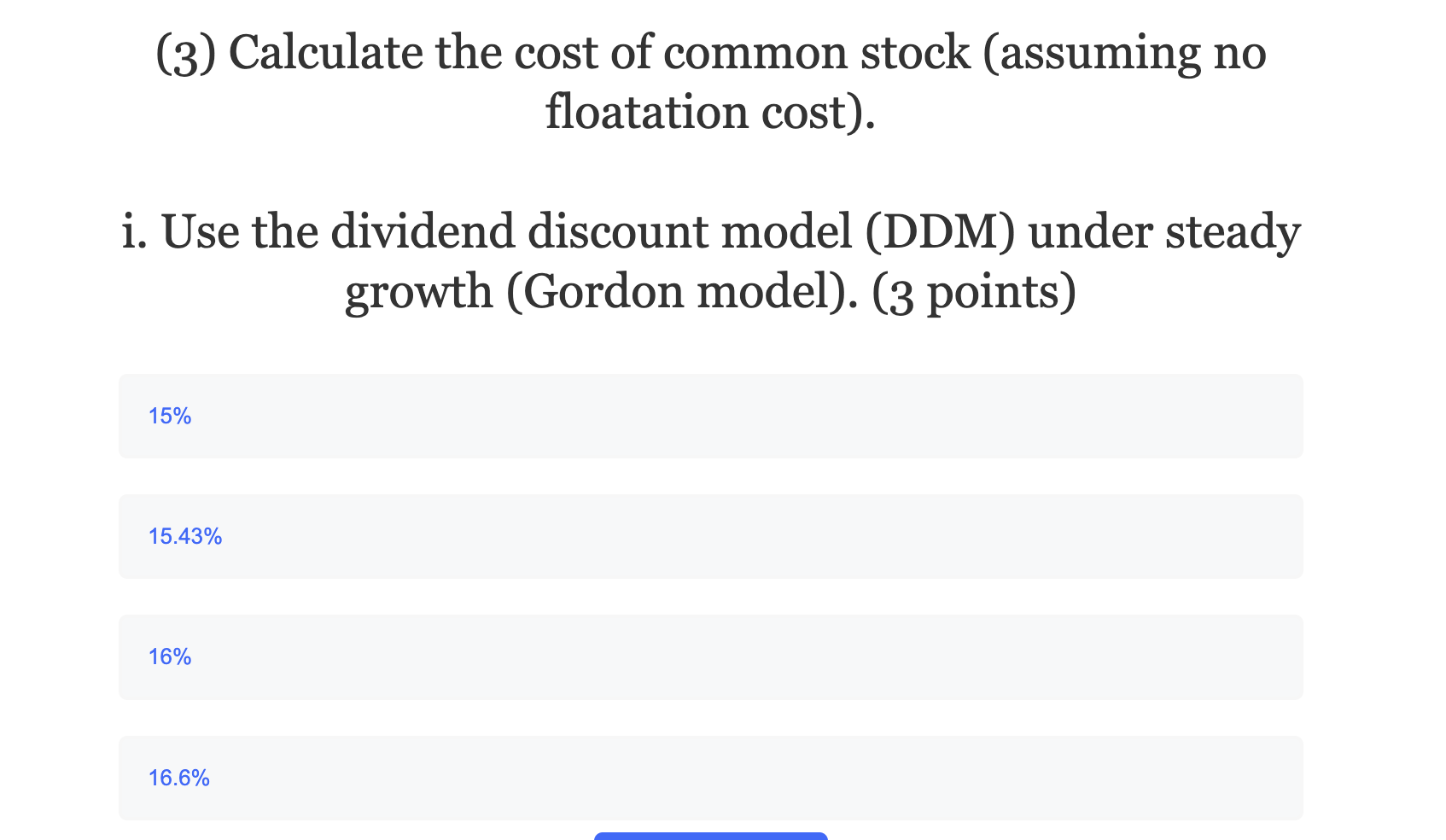
- Tax rate = 40% - [Debt] Its long-term bond with 10 years maturity, 8% semiannual coupons, and $1,000 face value is currently traded at $875.38 (No floatation cost, just for simplicity) - [Preferred stock] $6 dividend-paying (annually) preferred stock is currently traded at $50. - [Common stock] * The common stock that paid a $5 dividend at the last year-end is now traded at $53, and the dividend is expected to grow at 6% per year. * The risk-free rate is 3%, the market risk premium is 8%, and its beta is 1.5. * According to studies, 3-5%p bond-yield risk premium on common stocks is added to the long-term bond yield. (1) Calculate the cost of debt capital after tax (assuming no floatation costs). (3 points) 3% 5% 6% 10% Submit answer > (2) Calculate the cost of preferred stock (assuming no floatation costs). (3 points) 6% 12% 12.72% 24% Submit answer > (3) Calculate the cost of common stock (assuming no floatation cost). i. Use the dividend discount model (DDM) under steady growth (Gordon model). (3 points) 15% 15.43% 16% 16.6% (3) Calculate the cost of common stock (assuming no floatation cost). ii. Use the capital asset pricing model (CAPM). (3 points) 10.5% 12% 12.5% 15% (3) Calculate the cost of common stock (assuming no floatation cost). iii. Add 4%p bond-yield premium to the long-term bond yield obtained from (1) (before tax). (3 points) 9% 10% 14% 15% (4) Using the average of the three measures from Part (3) for the cost of common equity, calculate the weighted average cost of capital (WACC). (4 points) 10.98% 12% 12.9% 13.2% Submit answer > (5) Calculate the new investment project NPV (net present value) when the cost of this project today is $ 500 mil. (The FCFs from this investment project is in million dollars unit) i) What is the HV at t=3? (3 points) $384.15 mil. Debt Preferred Stock Common Stock $428.57 mil. $450 mil. $525 mil. 0 WACCIP Book value Market value Target structure 42% 20% 30% 8% 10% 10% 40% 70% 60% 1 2 3 21 + + 50 30 -500 80 4 ? Submit answer > (5) Calculate the new investment project NPV (net present value) when the cost of this project today is $ 500 mil. (The FCFs from this investment project is in million dollars unit) ii) What is the project NPV after subtracting the cost (-500) at t=0? Also, Should the firm accept or reject this project? (4 points) Book value Market value Target structure 42% 20% 30% Debt Preferred Stock Common Stock $452.94, accept because it is a positive NPV project. 8% 10% 10% 40% 70% 60% 3 + 30 -$47.06, reject because it is a negative NPV project. $6.33, accept because it is a positive NPV project. -$62.31, reject because it is a negative NPV project. 0 WACC? 1 -500 80 2 + 50 4 ? Submit answer > - Tax rate = 40% - [Debt] Its long-term bond with 10 years maturity, 8% semiannual coupons, and $1,000 face value is currently traded at $875.38 (No floatation cost, just for simplicity) - [Preferred stock] $6 dividend-paying (annually) preferred stock is currently traded at $50. - [Common stock] * The common stock that paid a $5 dividend at the last year-end is now traded at $53, and the dividend is expected to grow at 6% per year. * The risk-free rate is 3%, the market risk premium is 8%, and its beta is 1.5. * According to studies, 3-5%p bond-yield risk premium on common stocks is added to the long-term bond yield. (1) Calculate the cost of debt capital after tax (assuming no floatation costs). (3 points) 3% 5% 6% 10% Submit answer > (2) Calculate the cost of preferred stock (assuming no floatation costs). (3 points) 6% 12% 12.72% 24% Submit answer > (3) Calculate the cost of common stock (assuming no floatation cost). i. Use the dividend discount model (DDM) under steady growth (Gordon model). (3 points) 15% 15.43% 16% 16.6% (3) Calculate the cost of common stock (assuming no floatation cost). ii. Use the capital asset pricing model (CAPM). (3 points) 10.5% 12% 12.5% 15% (3) Calculate the cost of common stock (assuming no floatation cost). iii. Add 4%p bond-yield premium to the long-term bond yield obtained from (1) (before tax). (3 points) 9% 10% 14% 15% (4) Using the average of the three measures from Part (3) for the cost of common equity, calculate the weighted average cost of capital (WACC). (4 points) 10.98% 12% 12.9% 13.2% Submit answer > (5) Calculate the new investment project NPV (net present value) when the cost of this project today is $ 500 mil. (The FCFs from this investment project is in million dollars unit) i) What is the HV at t=3? (3 points) $384.15 mil. Debt Preferred Stock Common Stock $428.57 mil. $450 mil. $525 mil. 0 WACCIP Book value Market value Target structure 42% 20% 30% 8% 10% 10% 40% 70% 60% 1 2 3 21 + + 50 30 -500 80 4 ? Submit answer > (5) Calculate the new investment project NPV (net present value) when the cost of this project today is $ 500 mil. (The FCFs from this investment project is in million dollars unit) ii) What is the project NPV after subtracting the cost (-500) at t=0? Also, Should the firm accept or reject this project? (4 points) Book value Market value Target structure 42% 20% 30% Debt Preferred Stock Common Stock $452.94, accept because it is a positive NPV project. 8% 10% 10% 40% 70% 60% 3 + 30 -$47.06, reject because it is a negative NPV project. $6.33, accept because it is a positive NPV project. -$62.31, reject because it is a negative NPV project. 0 WACC? 1 -500 80 2 + 50 4 ? Submit answer >
Step by Step Solution
There are 3 Steps involved in it

Get step-by-step solutions from verified subject matter experts
 Study Help