







Question: textbook information about question A textbook information about question B Show your own work. Do not Copy/Cut/Paste texts. Be concise. Provide a presentable report. Observe
textbook information about question A
textbook information about question B
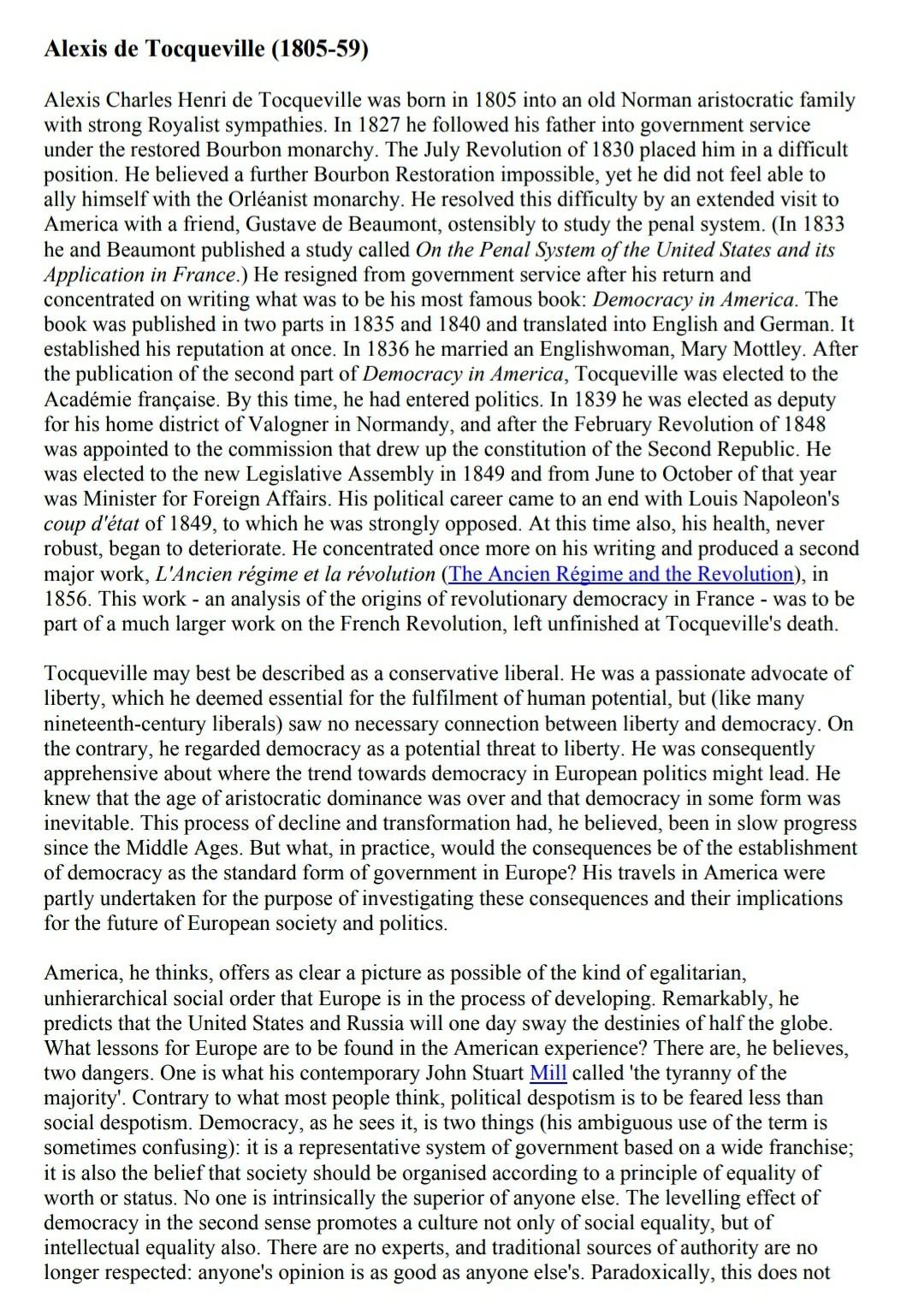
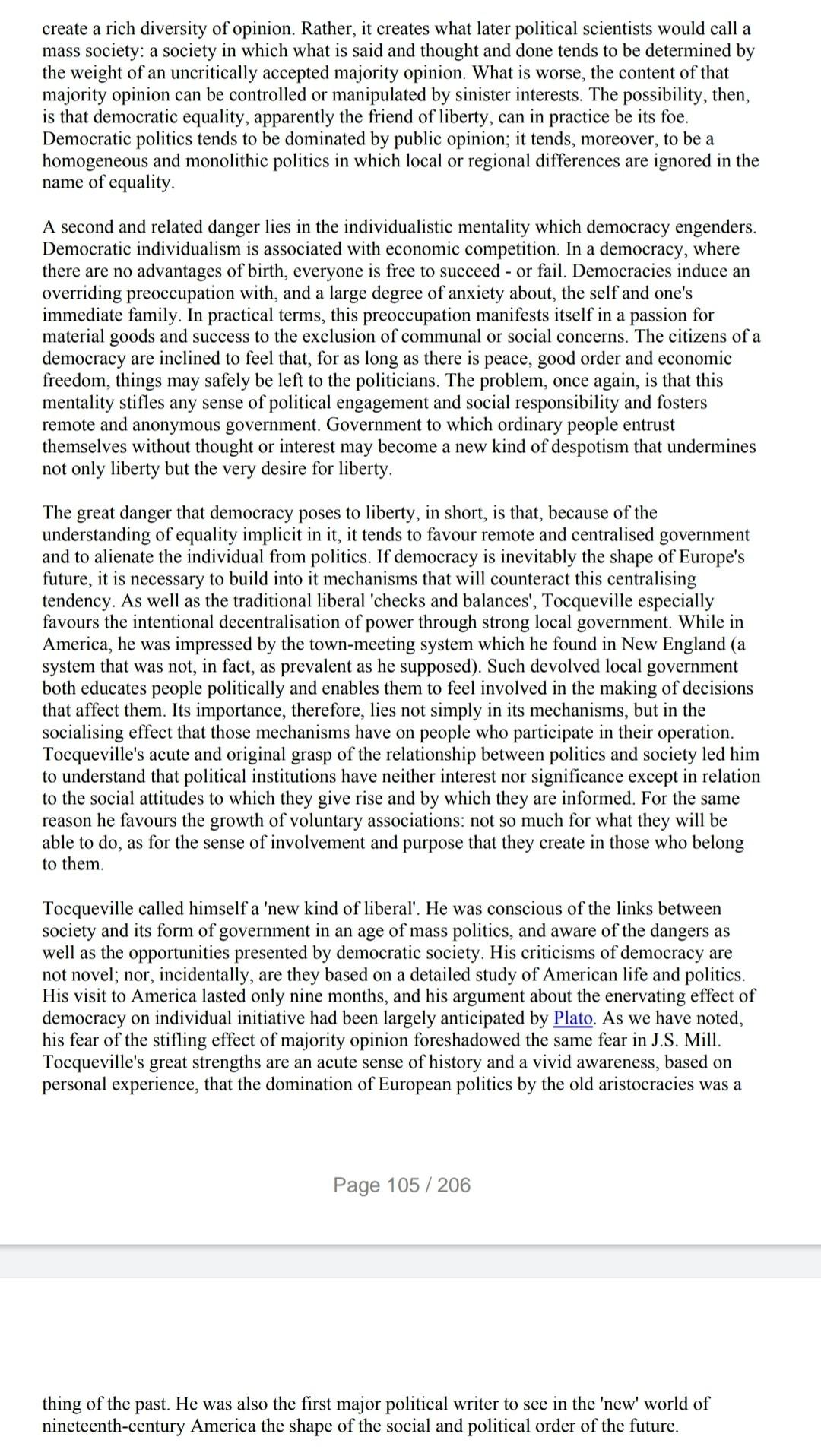
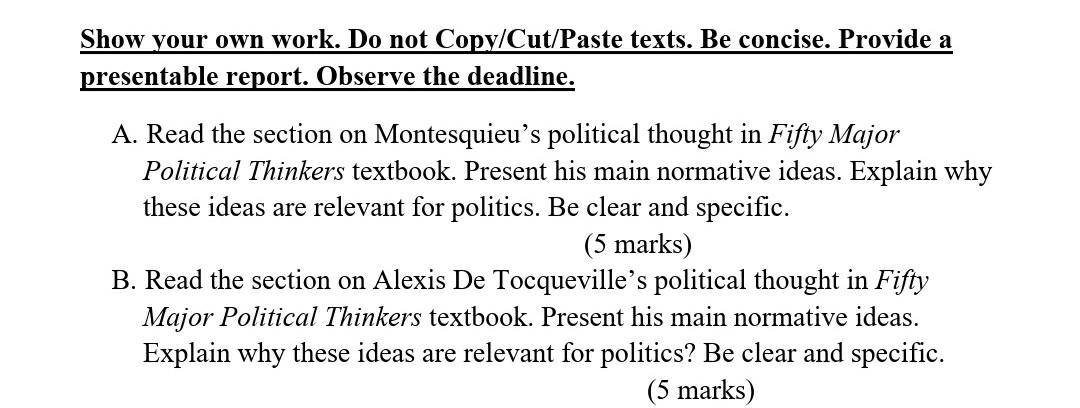
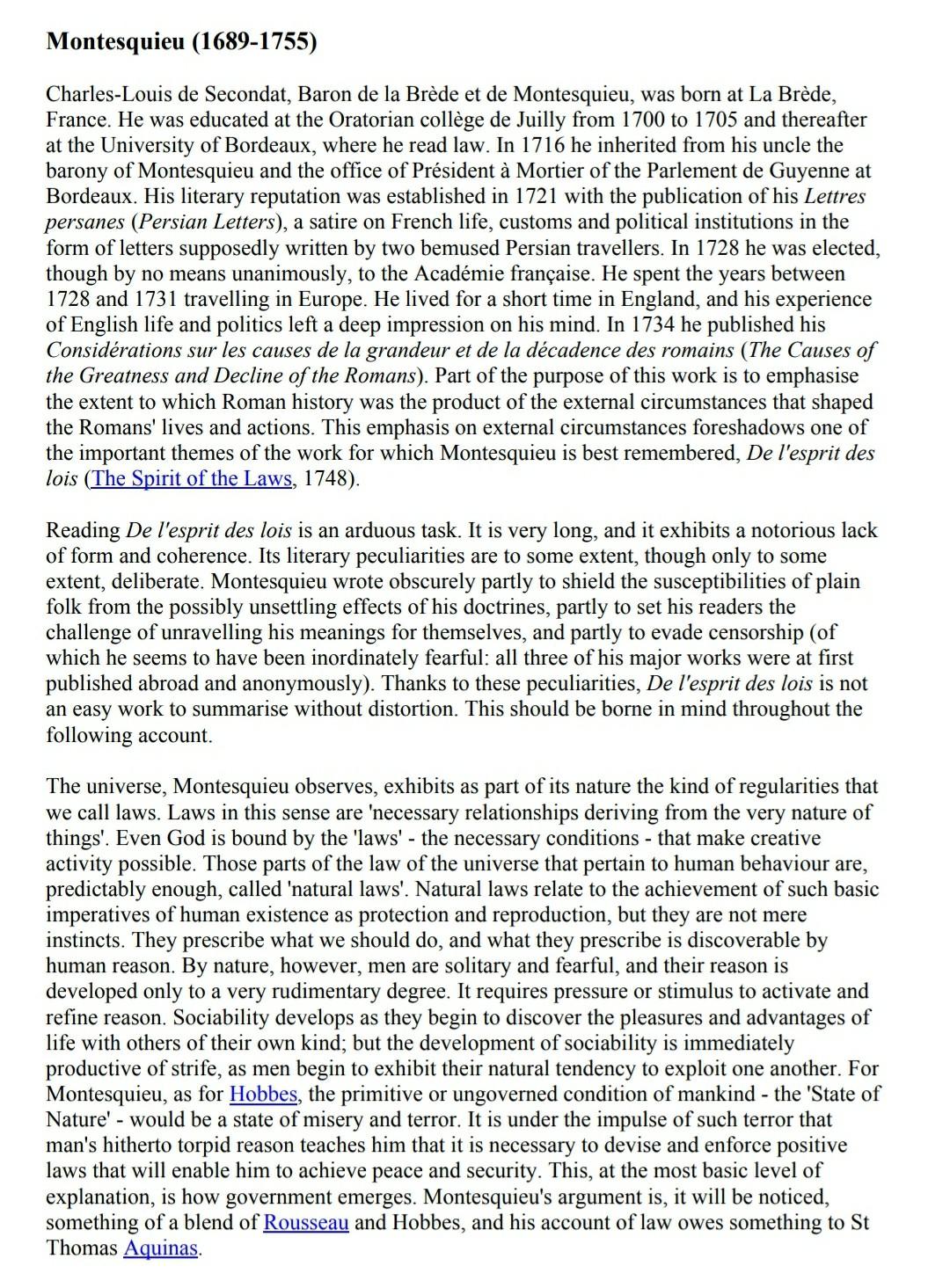
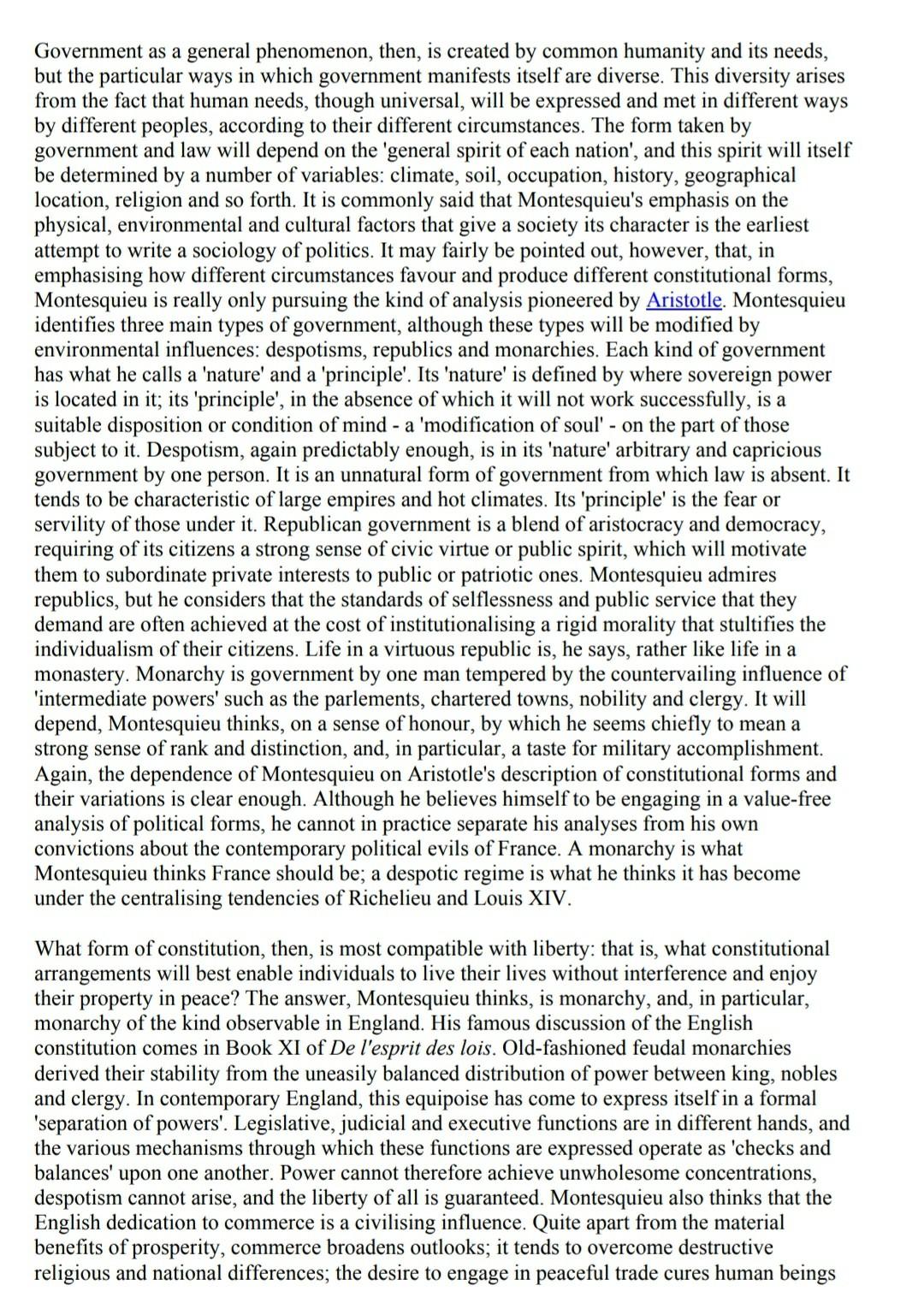
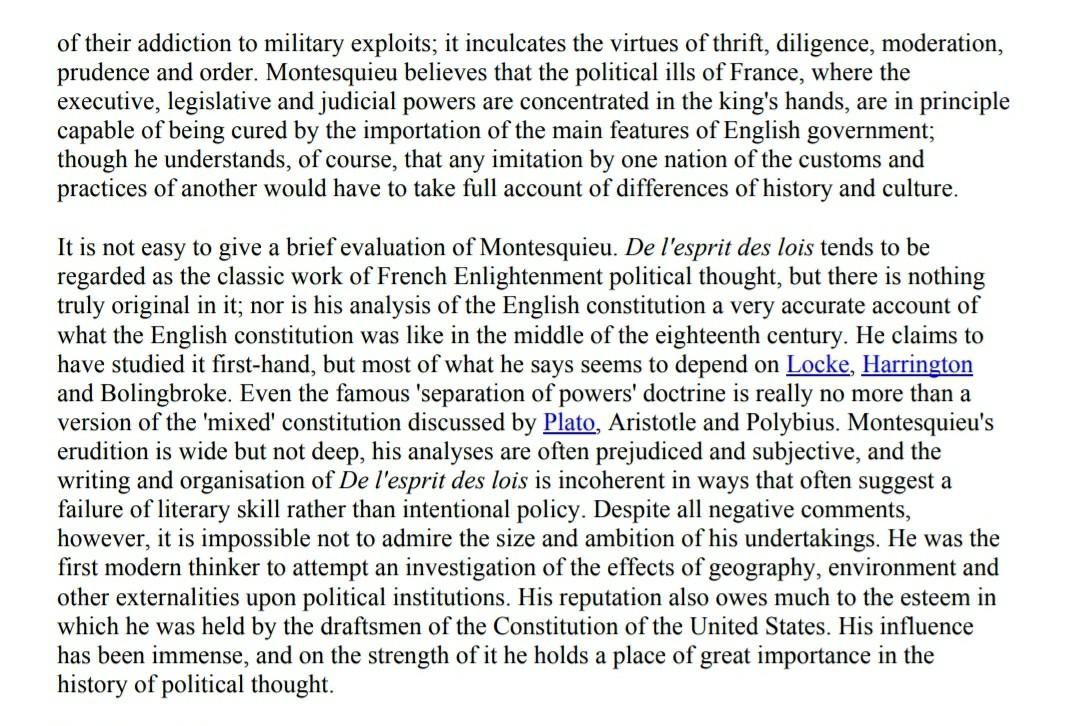
Show your own work. Do not Copy/Cut/Paste texts. Be concise. Provide a presentable report. Observe the deadline. A. Read the section on Montesquieu's political thought in Fifty Major Political Thinkers textbook. Present his main normative ideas. Explain why these ideas are relevant for politics. Be clear and specific. (5 marks) B. Read the section on Alexis De Tocqueville's political thought in Fifty Major Political Thinkers textbook. Present his main normative ideas. Explain why these ideas are relevant for politics? Be clear and specific. (5 marks) Montesquieu (1689-1755) Charles-Louis de Secondat, Baron de la Brde et de Montesquieu, was born at La Brde, France. He was educated at the Oratorian collge de Juilly from 1700 to 1705 and thereafter at the University of Bordeaux, where he read law. In 1716 he inherited from his uncle the barony of Montesquieu and the office of Prsident Mortier of the Parlement de Guyenne at Bordeaux. His literary reputation was established in 1721 with the publication of his Lettres persanes (Persian Letters), a satire on French life, customs and political institutions in the form of letters supposedly written by two bemused Persian travellers. In 1728 he was elected, though by no means unanimously, to the Acadmie franaise. He spent the years between 1728 and 1731 travelling in Europe. He lived for a short time in England, and his experience of English life and politics left a deep impression on his mind. In 1734 he published his Considrations sur les causes de la grandeur et de la dcadence des romains (The Causes of the Greatness and Decline of the Romans). Part of the purpose of this work is to emphasise the extent to which Roman history was the product of the external circumstances that shaped the Romans' lives and actions. This emphasis on external circumstances foreshadows one of the important themes of the work for which Montesquieu is best remembered, De l'esprit des lois (The Spirit of the Laws, 1748). Reading De l'esprit des lois is an arduous task. It is very long, and it exhibits a notorious lack of form and coherence. Its literary peculiarities are to some extent, though only to some extent, deliberate. Montesquieu wrote obscurely partly to shield the susceptibilities of plain folk from the possibly unsettling effects of his doctrines, partly to set his readers the challenge of unravelling his meanings for themselves, and partly to evade censorship (of which he seems to have been inordinately fearful: all three of his major works were at first published abroad and anonymously). Thanks to these peculiarities, De l'esprit des lois is not an easy work to summarise without distortion. This should be borne in mind throughout the following account. The universe, Montesquieu observes, exhibits as part of its nature the kind of regularities that we call laws. Laws in this sense are 'necessary relationships deriving from the very nature of things'. Even God is bound by the 'laws' - the necessary conditions - that make creative activity possible. Those parts of the law of the universe that pertain to human behaviour are, predictably enough, called 'natural laws'. Natural laws relate to the achievement of such basic imperatives of human existence as protection and reproduction, but they are not mere instincts. They prescribe what we should do, and what they prescribe is discoverable by human reason. By nature, however, men are solitary and fearful, and their reason is developed only to a very rudimentary degree. It requires pressure or stimulus to activate and refine reason. Sociability develops as they begin to discover the pleasures and advantages of life with others of their own kind; but the development of sociability is immediately productive of strife, as men begin to exhibit their natural tendency to exploit one another. For Montesquieu, as for Hobbes, the primitive or ungoverned condition of mankind - the 'State of Nature' - would be a state of misery and terror. It is under the impulse of such terror that man's hitherto torpid reason teaches him that it is necessary to devise and enforce positive laws that will enable him to achieve peace and security. This, at the most basic level of explanation, is how government emerges. Montesquieu's argument is, it will be noticed, something of a blend of Rousseau and Hobbes, and his account of law owes something to St Thomas Aquinas. Government as a general phenomenon, then, is created by common humanity and its needs, but the particular ways in which government manifests itself are diverse. This diversity arises from the fact that human needs, though universal, will be expressed and met in different ways by different peoples, according to their different circumstances. The form taken by government and law will depend on the 'general spirit of each nation', and this spirit will itself be determined by a number of variables: climate, soil, occupation, history, geographical location, religion and so forth. It is commonly said that Montesquieu's emphasis on the physical, environmental and cultural factors that give a society its character is the earliest attempt to write a sociology of politics. It may fairly be pointed out, however, that, in emphasising how different circumstances favour and produce different constitutional forms, Montesquieu is really only pursuing the kind of analysis pioneered by Aristotle. Montesquieu identifies three main types of government, although these types will be modified by environmental influences: despotisms, republics and monarchies. Each kind of government has what he calls a 'nature' and a 'principle'. Its 'nature' is defined by where sovereign power is located in it; its 'principle', in the absence of which it will not work successfully, is a suitable disposition or condition of mind - a 'modification of soul' - on the part of those subject to it. Despotism, again predictably enough, is in its 'nature' arbitrary and capricious government by one person. It is an unnatural form of government from which law is absent. It tends to be characteristic of large empires and hot climates. Its 'principle' is the fear or servility of those under it. Republican government is a blend of aristocracy and democracy, requiring of its citizens a strong sense of civic virtue or public spirit, which will motivate them to subordinate private interests to public or patriotic ones. Montesquieu admires republics, but he considers that the standards of selflessness and public service that they demand are often achieved at the cost of institutionalising a rigid morality that stultifies the individualism of their citizens. Life in a virtuous republic is, he says, rather like life in a monastery. Monarchy is government by one man tempered by the countervailing influence of 'intermediate powers' such as the parlements, chartered towns, nobility and clergy. It will depend, Montesquieu thinks, on a sense of honour, by which he seems chiefly to mean a strong sense of rank and distinction, and, in particular, a taste for military accomplishment. Again, the dependence of Montesquieu on Aristotle's description of constitutional forms and their variations is clear enough. Although he believes himself to be engaging in a value-free analysis of political forms, he cannot in practice separate his analyses from his own convictions about the contemporary political evils of France. A monarchy is what Montesquieu thinks France should be; a despotic regime is what he thinks it has become under the centralising tendencies of Richelieu and Louis XIV. What form of constitution, then, is most compatible with liberty: that is, what constitutional arrangements will best enable individuals to live their lives without interference and enjoy their property in peace? The answer, Montesquieu thinks, is monarchy, and, in particular, monarchy of the kind observable in England. His famous discussion of the English constitution comes in Book XI of De l'esprit des lois. Old-fashioned feudal monarchies derived their stability from the uneasily balanced distribution of power between king, nobles and clergy. In contemporary England, this equipoise has come to express itself in a formal 'separation of powers'. Legislative, judicial and executive functions are in different hands, and the various mechanisms through which these functions are expressed operate as 'checks and balances' upon one another. Power cannot therefore achieve unwholesome concentrations, despotism cannot arise, and the liberty of all is guaranteed. Montesquieu also thinks that the English dedication to commerce is a civilising influence. Quite apart from the material benefits of prosperity, commerce broadens outlooks; it tends to overcome destructive religious and national differences; the desire to engage in peaceful trade cures human beings of their addiction to military exploits; it inculcates the virtues of thrift, diligence, moderation, prudence and order. Montesquieu believes that the political ills of France, where the executive, legislative and judicial powers are concentrated in the king's hands, are in principle capable of being cured by the importation of the main features of English government; though he understands, of course, that any imitation by one nation of the customs and practices of another would have to take full account of differences of history and culture. It is not easy to give a brief evaluation of Montesquieu. De l'esprit des lois tends to be regarded as the classic work of French Enlightenment political thought, but there is nothing truly original in it; nor is his analysis of the English constitution a very accurate account of what the English constitution was like in the middle of the eighteenth century. He claims to have studied it first-hand, but most of what he says seems to depend on Locke, Harrington and Bolingbroke. Even the famous 'separation of powers' doctrine is really no more than a version of the 'mixed' constitution discussed by Plato, Aristotle and Polybius. Montesquieu's erudition is wide but not deep, his analyses are often prejudiced and subjective, and the writing and organisation of De l'esprit des lois is incoherent in ways that often suggest a failure of literary skill rather than intentional policy. Despite all negative comments, however, it is impossible not to admire the size and ambition of his undertakings. He was the first modern thinker to attempt an investigation of the effects of geography, environment and other externalities upon political institutions. His reputation also owes much to the esteem in which he was held by the draftsmen of the Constitution of the United States. His influence has been immense, and on the strength of it he holds a place of great importance in the history of political thought. Alexis de Tocqueville (1805-59) Alexis Charles Henri de Tocqueville was born in 1805 into an old Norman aristocratic family with strong Royalist sympathies. In 1827 he followed his father into government service under the restored Bourbon monarchy. The July Revolution of 1830 placed him in a difficult position. He believed a further Bourbon Restoration impossible, yet he did not feel able to ally himself with the Orlanist monarchy. He resolved this difficulty by an extended visit to America with a friend, Gustave de Beaumont, ostensibly to study the penal system. (In 1833 he and Beaumont published a study called On the Penal System of the United States and its Application in France.) He resigned from government service after his return and concentrated on writing what was to be his most famous book: Democracy in America. The book was published in two parts in 1835 and 1840 and translated into English and German. It established his reputation at once. In 1836 he married an Englishwoman, Mary Mottley. After the publication of the second part of Democracy in America, Tocqueville was elected to the Acadmie franaise. By this time, he had entered politics. In 1839 he was elected as deputy for his home district of Valogner in Normandy, and after the February Revolution of 1848 was appointed to the commission that drew up the constitution of the Second Republic. He was elected to the new Legislative Assembly in 1849 and from June to October of that year was Minister for Foreign Affairs. His political career came to an end with Louis Napoleon's coup d'tat of 1849 , to which he was strongly opposed. At this time also, his health, never robust, began to deteriorate. He concentrated once more on his writing and produced a second major work, L'Ancien rgime et la rvolution (The Ancien Rgime and the Revolution), in 1856. This work - an analysis of the origins of revolutionary democracy in France - was to be part of a much larger work on the French Revolution, left unfinished at Tocqueville's death. Tocqueville may best be described as a conservative liberal. He was a passionate advocate of liberty, which he deemed essential for the fulfilment of human potential, but (like many nineteenth-century liberals) saw no necessary connection between liberty and democracy. On the contrary, he regarded democracy as a potential threat to liberty. He was consequently apprehensive about where the trend towards democracy in European politics might lead. He knew that the age of aristocratic dominance was over and that democracy in some form was inevitable. This process of decline and transformation had, he believed, been in slow progress since the Middle Ages. But what, in practice, would the consequences be of the establishment of democracy as the standard form of government in Europe? His travels in America were partly undertaken for the purpose of investigating these consequences and their implications for the future of European society and politics. America, he thinks, offers as clear a picture as possible of the kind of egalitarian, unhierarchical social order that Europe is in the process of developing. Remarkably, he predicts that the United States and Russia will one day sway the destinies of half the globe. What lessons for Europe are to be found in the American experience? There are, he believes, two dangers. One is what his contemporary John Stuart Mill called 'the tyranny of the majority'. Contrary to what most people think, political despotism is to be feared less than social despotism. Democracy, as he sees it, is two things (his ambiguous use of the term is sometimes confusing): it is a representative system of government based on a wide franchise; it is also the belief that society should be organised according to a principle of equality of worth or status. No one is intrinsically the superior of anyone else. The levelling effect of democracy in the second sense promotes a culture not only of social equality, but of intellectual equality also. There are no experts, and traditional sources of authority are no longer respected: anyone's opinion is as good as anyone else's. Paradoxically, this does not create a rich diversity of opinion. Rather, it creates what later political scientists would call a mass society: a society in which what is said and thought and done tends to be determined by the weight of an uncritically accepted majority opinion. What is worse, the content of that majority opinion can be controlled or manipulated by sinister interests. The possibility, then, is that democratic equality, apparently the friend of liberty, can in practice be its foe. Democratic politics tends to be dominated by public opinion; it tends, moreover, to be a homogeneous and monolithic politics in which local or regional differences are ignored in the name of equality. A second and related danger lies in the individualistic mentality which democracy engenders. Democratic individualism is associated with economic competition. In a democracy, where there are no advantages of birth, everyone is free to succeed - or fail. Democracies induce an overriding preoccupation with, and a large degree of anxiety about, the self and one's immediate family. In practical terms, this preoccupation manifests itself in a passion for material goods and success to the exclusion of communal or social concerns. The citizens of a democracy are inclined to feel that, for as long as there is peace, good order and economic freedom, things may safely be left to the politicians. The problem, once again, is that this mentality stifles any sense of political engagement and social responsibility and fosters remote and anonymous government. Government to which ordinary people entrust themselves without thought or interest may become a new kind of despotism that undermines not only liberty but the very desire for liberty. The great danger that democracy poses to liberty, in short, is that, because of the understanding of equality implicit in it, it tends to favour remote and centralised government and to alienate the individual from politics. If democracy is inevitably the shape of Europe's future, it is necessary to build into it mechanisms that will counteract this centralising tendency. As well as the traditional liberal 'checks and balances', Tocqueville especially favours the intentional decentralisation of power through strong local government. While in America, he was impressed by the town-meeting system which he found in New England (a system that was not, in fact, as prevalent as he supposed). Such devolved local government both educates people politically and enables them to feel involved in the making of decisions that affect them. Its importance, therefore, lies not simply in its mechanisms, but in the socialising effect that those mechanisms have on people who participate in their operation. Tocqueville's acute and original grasp of the relationship between politics and society led him to understand that political institutions have neither interest nor significance except in relation to the social attitudes to which they give rise and by which they are informed. For the same reason he favours the growth of voluntary associations: not so much for what they will be able to do, as for the sense of involvement and purpose that they create in those who belong to them. Tocqueville called himself a 'new kind of liberal'. He was conscious of the links between society and its form of government in an age of mass politics, and aware of the dangers as well as the opportunities presented by democratic society. His criticisms of democracy are not novel; nor, incidentally, are they based on a detailed study of American life and politics. His visit to America lasted only nine months, and his argument about the enervating effect of democracy on individual initiative had been largely anticipated by Plato. As we have noted, his fear of the stifling effect of majority opinion foreshadowed the same fear in J.S. Mill. Tocqueville's great strengths are an acute sense of history and a vivid awareness, based on personal experience, that the domination of European politics by the old aristocracies was a Page 105 / 206 thing of the past. He was also the first major political writer to see in the 'new' world of nineteenth-century America the shape of the social and political order of the future
Step by Step Solution
There are 3 Steps involved in it
1 Expert Approved Answer
Step: 1 Unlock

Question Has Been Solved by an Expert!
Get step-by-step solutions from verified subject matter experts
Step: 2 Unlock
Step: 3 Unlock
 Study Help