



Question: The biggest difference noted between SOEs with stronger ethical cultures and those with weaker ethical cultures was for ethics awareness followed by a leadership commitment
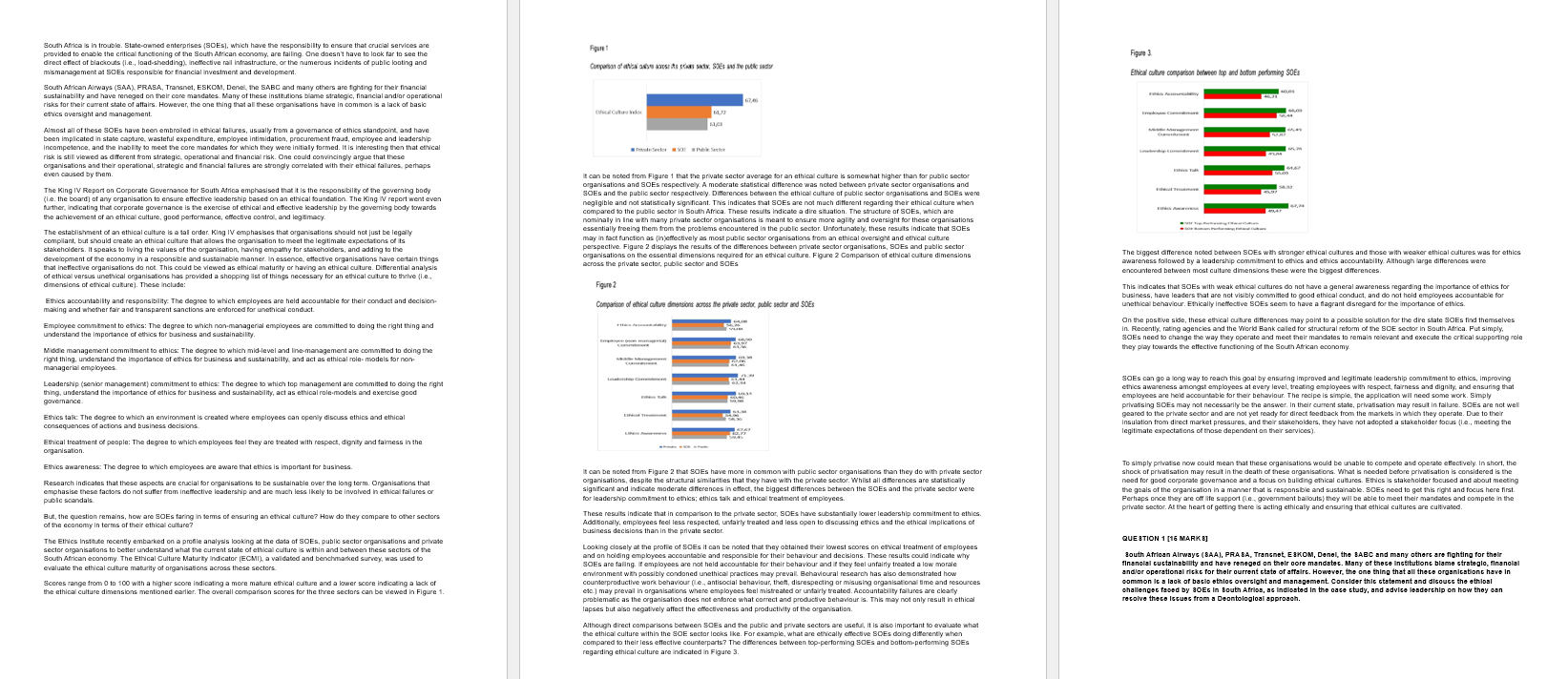
The biggest difference noted between SOEs with stronger ethical cultures and those with weaker ethical cultures was for ethics awareness followed by a leadership commitment to ethics and ethics accountability. Although large differences were encountered between most culture dimensions these were the biggest differences.
This indicates that SOEs with weak ethical cultures do not have a general awareness regarding the importance of ethics for business, have leaders that are not visibly committed to good ethical conduct, and do not hold employees accountable for unethical behaviour. Ethically ineffective SOEs seem to have a flagrant disregard for the importance of ethics.
On the positive side, these ethical culture differences may point to a possible solution for the dire state SOEs find themselves in Recently, rating agencies and the World Bank called for structural reform of the SOE sector in South Africa. Put simply, SOEs need to change the way they operate and meet their mandates to remain relevant and execute the critical supporting role they play towards the effective functioning of the South African economy.
SOEs can go a long way to reach this goal by ensuring improved and legitimate leadership commitment to ethics, improving ethics awareness amongst employees at every level, treating employees with respect, fairness and dignity, and ensuring that employees are held accountable for their behaviour. The recipe is simple, the application will need some work. Simply privatising SOEs may not necessarily be the answer. In their current state, privatisation may result in failure. SOEs are not well geared to the private sector and are not yet ready for direct feedback from the markets in which they operate. Due to their insulation from direct market pressures, and their stakeholders, they have not adopted a stakeholder focus ie meeting the legitimate expectations of those dependent on their services
To simply privatise now could mean that these organisations would be unable to compete and operate effectively. In short, the shock of privatisation may result in the death of these organisations. What is needed before privatisation is considered is the need for good corporate governance and a focus on building ethical cultures. Ethics is stakeholder focused and about meeting the goals of the organisation in a manner that is responsible and sustainable. SOEs need to get this right and focus here first. Perhaps once they are off life support ie government bailouts they will be able to meet their mandates and compete in the private sector. At the heart of getting there is acting ethically and ensuring that ethical cultures are cultivated.
QUESTION MARKS
South African Airways SAA PRASA, Transnet, ESKOM, Denel, the SABC and many others are fighting for their financial sustainability and have reneged on their core mandates. Many of these institutions blame strategic, financial andor operational risks for their current state of affairs. However, the one thing that all these organisations have in common is a lack of basic ethics oversight and management. Consider this statement and discuss the ethical challenges faced by SOEs in South Africa, as indicated in the case study, and advise leadership on how they can resolve these issues from a Deontological approach.
Step by Step Solution
There are 3 Steps involved in it
1 Expert Approved Answer
Step: 1 Unlock

Question Has Been Solved by an Expert!
Get step-by-step solutions from verified subject matter experts
Step: 2 Unlock
Step: 3 Unlock