





Question: THE CASE IS BELOW Description Read Case Incident #2 - Active Cultures about Patagonia at the end of Chapter 16 (p. 575). Answer the three
THE CASE IS BELOW Description Read Case Incident
THE CASE IS BELOW
THE CASE IS BELOW Description Read Case Incident
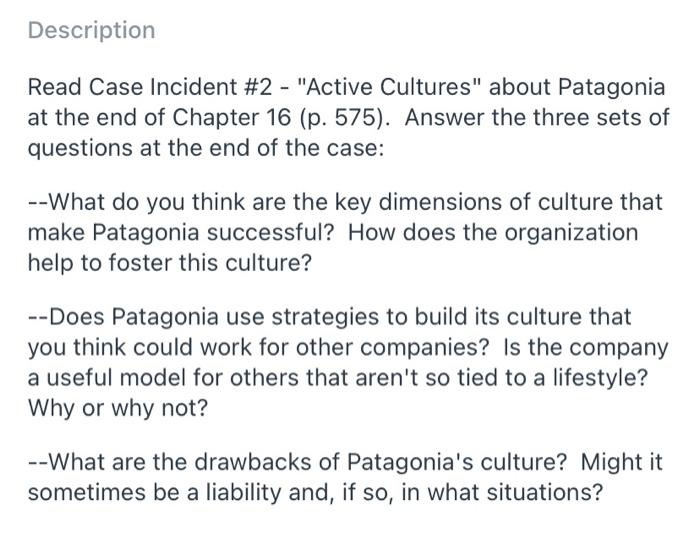
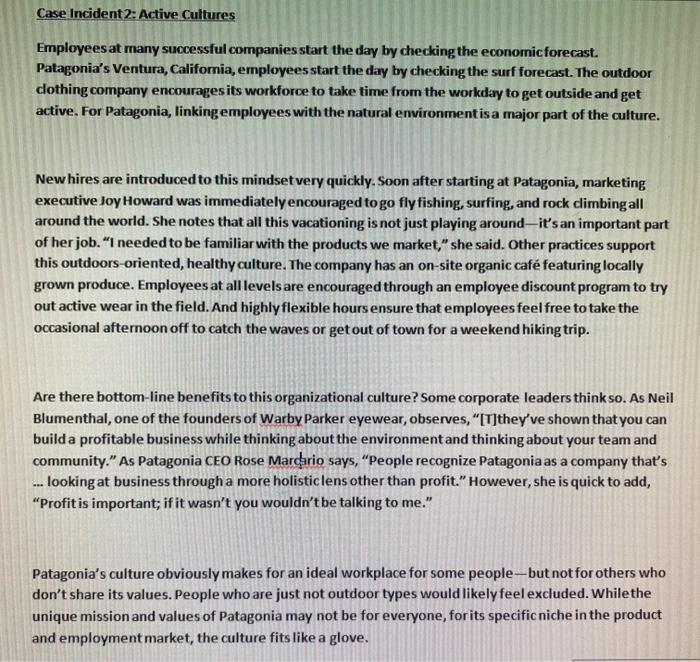
Description Read Case Incident #2 - "Active Cultures" about Patagonia at the end of Chapter 16 (p. 575). Answer the three sets of questions at the end of the case: --What do you think are the key dimensions of culture that make Patagonia successful? How does the organization help to foster this culture? --Does Patagonia use strategies to build its culture that you think could work for other companies? Is the company a useful model for others that aren't so tied to a lifestyle? Why or why not? --What are the drawbacks of Patagonia's culture? Might it sometimes be a liability and, if so, in what situations? Case Incident 2: Active Cultures Employees at many successful companies start the day by checking the economic forecast. Patagonia's Ventura, California, employees start the day by checking the surf forecast. The outdoor clothing company encourages its workforce to take time from the workday to get outside and get active. For Patagonia, linking employees with the natural environment is a major part of the culture. New hires are introduced to this mindset very quickly. Soon after starting at Patagonia, marketing executive Joy Howard was immediately encouraged to go fly fishing, surfing, and rock climbing all around the world. She notes that all this vacationing is not just playing aroundit's an important part of her job."I needed to be familiar with the products we market," she said. Other practices support this outdoors-oriented, healthy culture. The company has an on-site organic caf featuring locally grown produce. Employees at all levels are encouraged through an employee discount program to try out active wear in the field. And highly flexible hours ensure that employees feel free to take the occasional afternoon off to catch the waves or get out of town for a weekend hiking trip. Are there bottom-line benefits to this organizational culture? Some corporate leaders think so. As Neil Blumenthal, one of the founders of Warby Parker eyewear, observes, "[T]they've shown that you can build a profitable business while thinking about the environment and thinking about your team and community." As Patagonia CEO Rose Marcario says, "People recognize Patagonia as a company that's ... looking at business through a more holistic lens other than profit." However, she is quick to add, "Profit is important; if it wasn't you wouldn't be talking to me." Patagonia's culture obviously makes for an ideal workplace for some people--but not for others who don't share its values. People who are just not outdoor types would likely feel excluded. While the unique mission and values of Patagonia may not be for everyone, forits specificniche in the product and employment market, the culture fits like a glove

Step by Step Solution

There are 3 Steps involved in it

1 Expert Approved Answer
Step: 1 Unlock blur-text-image

Question Has Been Solved by an Expert!

Get step-by-step solutions from verified subject matter experts

Step: 2 Unlock
Step: 3 Unlock

Students Have Also Explored These Related General Management Questions!