Question: the case Q1 identify one of the issues set forth in the Comprehensive Model of Top Management Fraud (industry-based issues) and how it applies to
the case
Q1 identify one of the issues set forth in the Comprehensive Model of Top Management Fraud (industry-based issues) and how it applies to Enron
Q2 identify one "trick of the trade" used by Enron to defraud its stakeholders
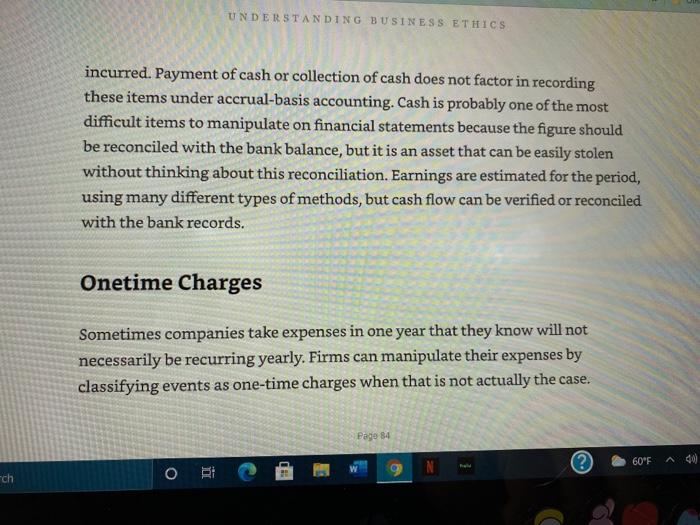
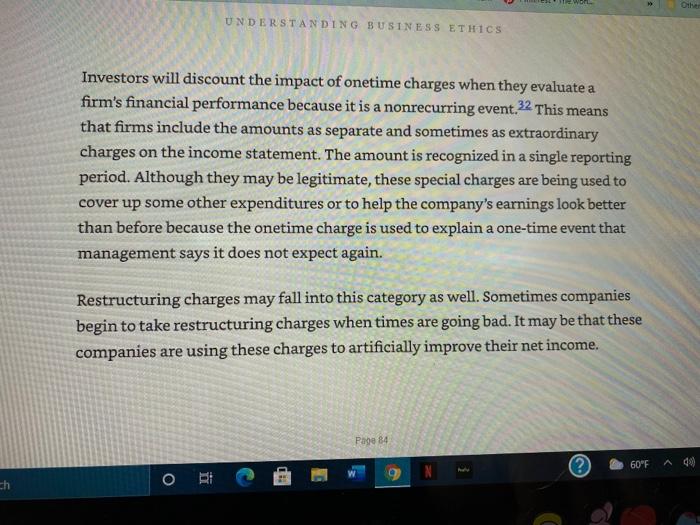
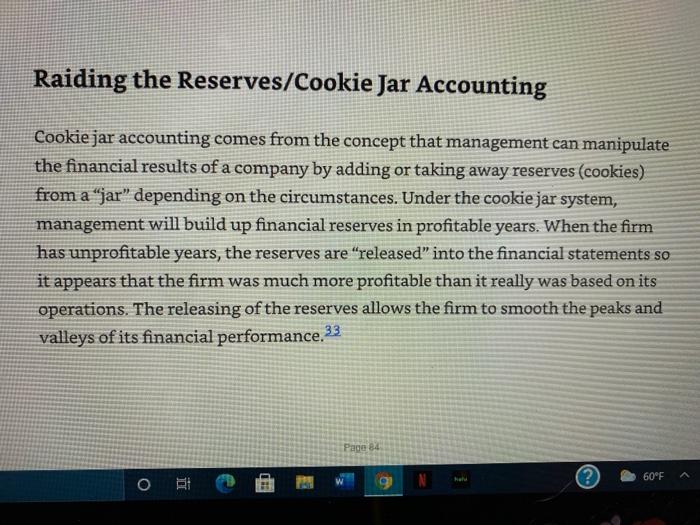
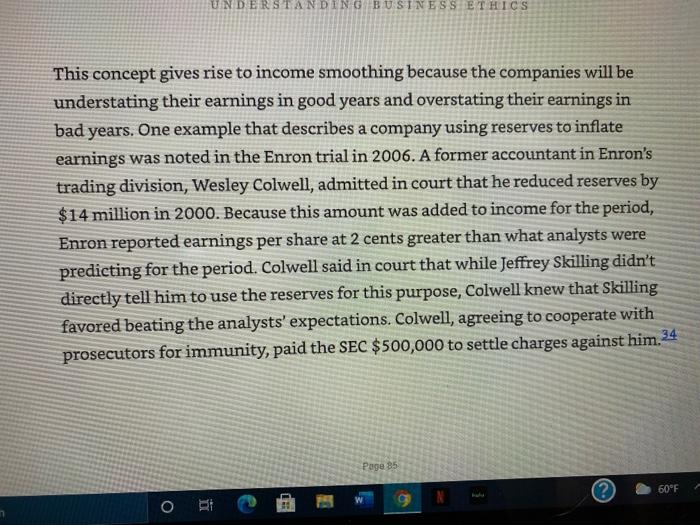
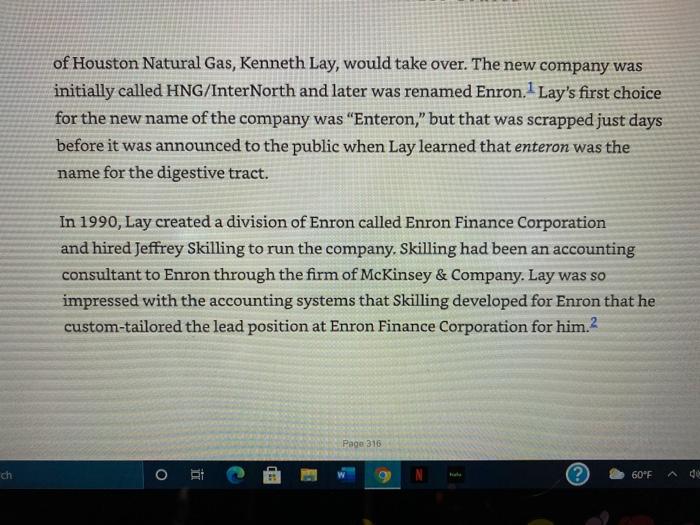
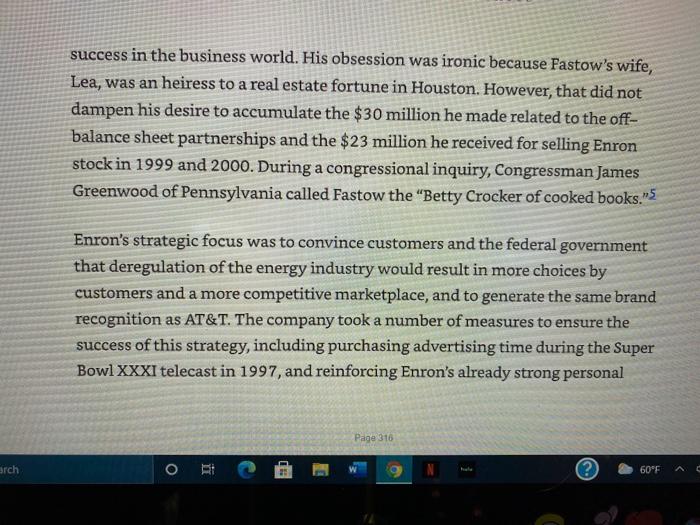
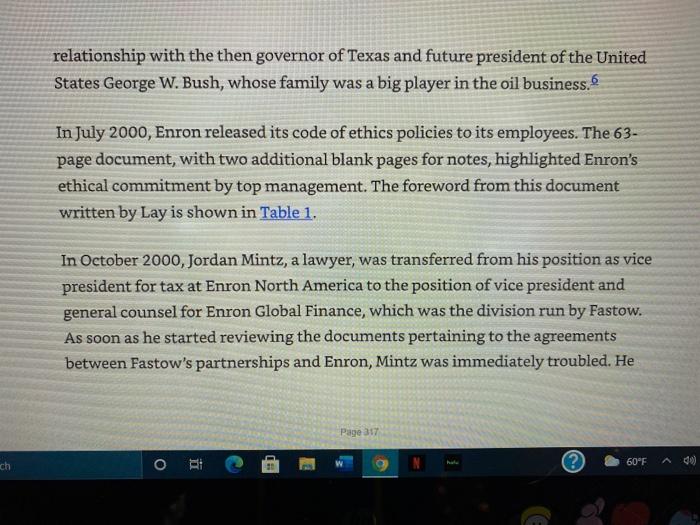
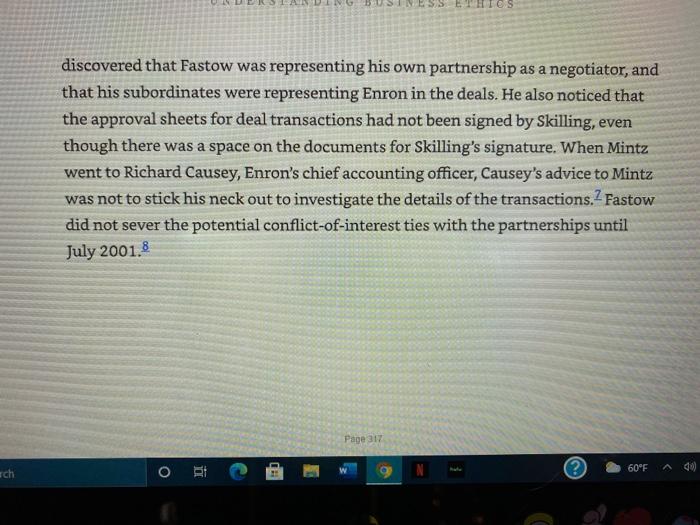
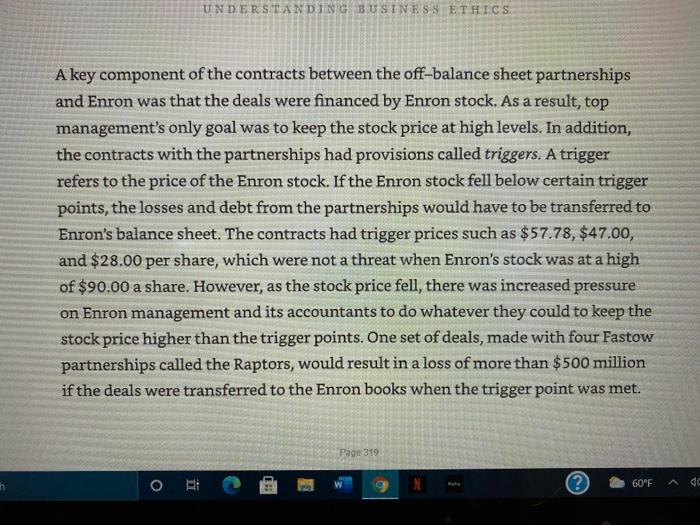
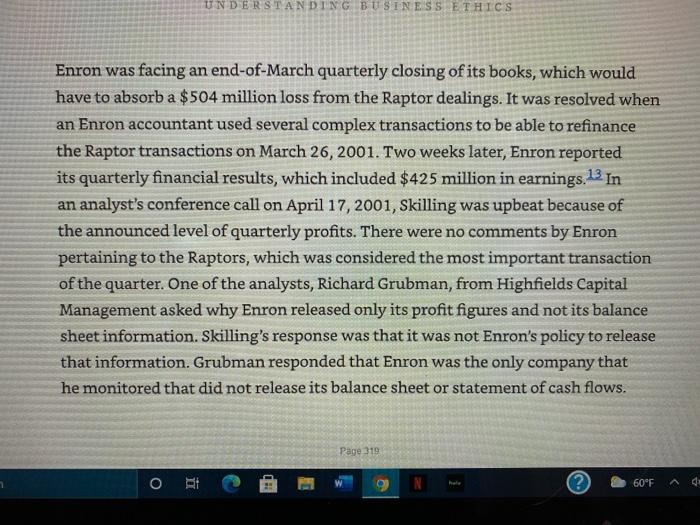
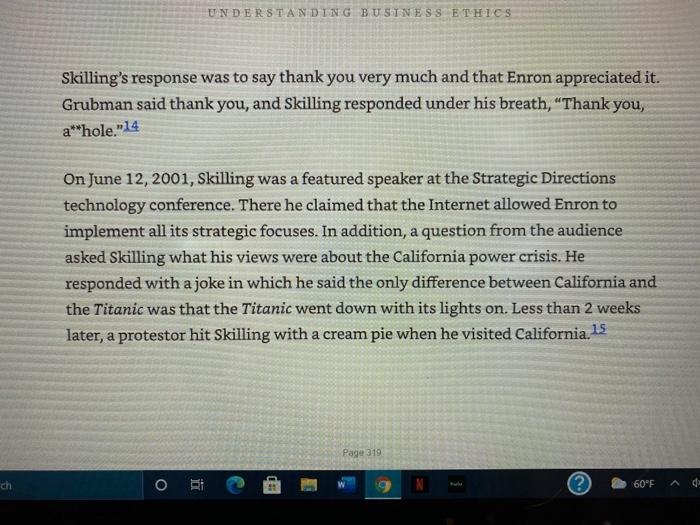
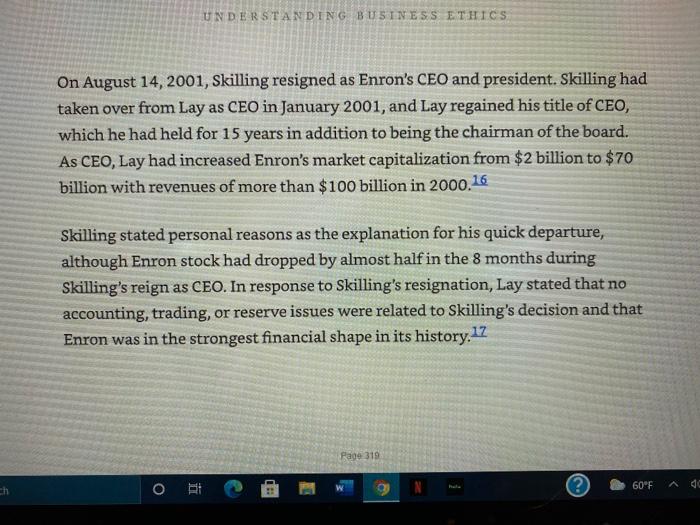
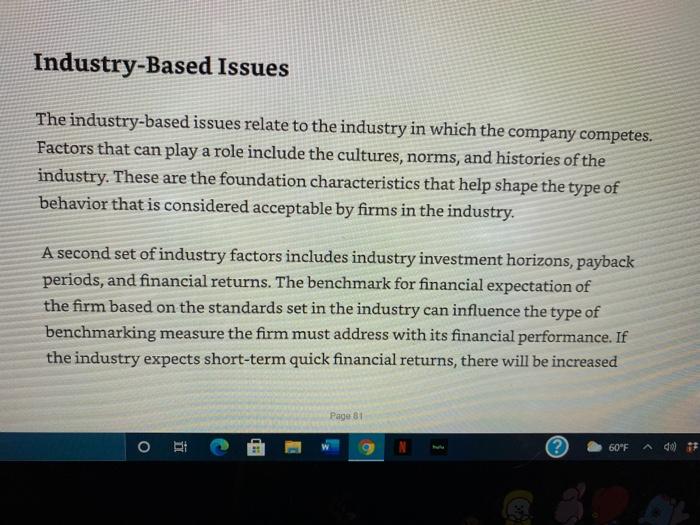
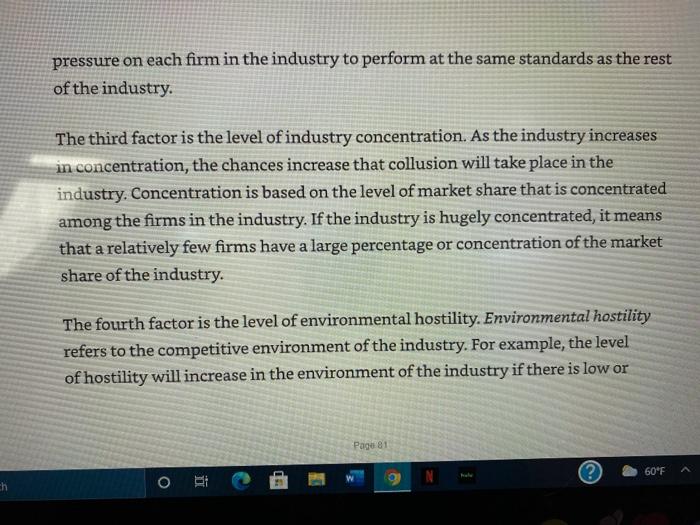
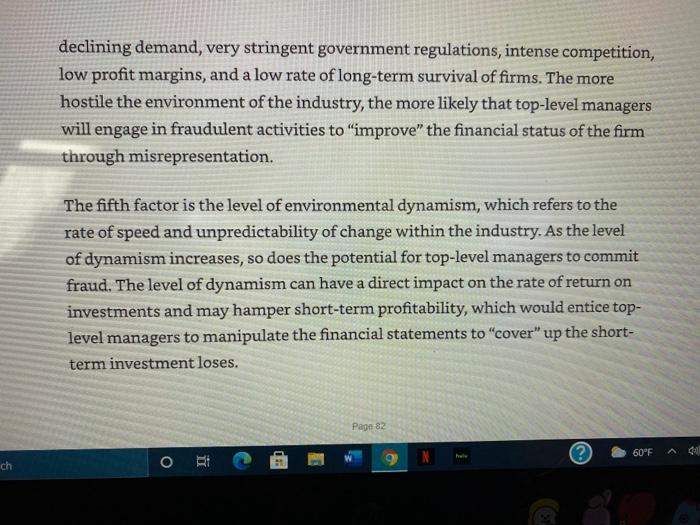
O 7 Enron: Were They the Crookedest Guys in the Room? The Rise of the Big E In May 1985, InterNorth Incorporated and Houston Natural Gas announced that they would merge. Their combined value was an estimated $2.3 billion. These firms were two of the largest gas pipeline companies in the United States. As part of the negotiations, the chairman and CEO of InterNorth, Sam Segnar, would be the head of the new entity until January 1, 1987, when the chairman and CEO 50% Page 316 of 572 Location 8842 of 17733 ch O i ? 60'F A 40 of Houston Natural Gas, Kenneth Lay, would take over. The new company was initially called HNG/InterNorth and later was renamed Enron. Lay's first choice for the new name of the company was "Enteron," but that was scrapped just days before it was announced to the public when Lay learned that enteron was the name for the digestive tract. In 1990, Lay created a division of Enron called Enron Finance Corporation and hired Jeffrey Skilling to run the company, Skilling had been an accounting consultant to Enron through the firm of McKinsey & Company. Lay was so impressed with the accounting systems that Skilling developed for Enron that he custom-tailored the lead position at Enron Finance Corporation for him.2 Page 316 ch O et 60'E A do success in the business world. His obsession was ironic because Fastow's wife, Lea, was an heiress to a real estate fortune in Houston. However, that did not dampen his desire to accumulate the $30 million he made related to the off- balance sheet partnerships and the $23 million he received for selling Enron stock in 1999 and 2000. During a congressional inquiry, Congressman James Greenwood of Pennsylvania called Fastow the "Betty Crocker of cooked books. Enron's strategic focus was to convince customers and the federal government that deregulation of the energy industry would result in more choices by customers and a more competitive marketplace, and to generate the same brand recognition as AT&T. The company took a number of measures to ensure the success of this strategy, including purchasing advertising time during the Super Bowl XXXI telecast in 1997, and reinforcing Enron's already strong personal Page 316 arch ? 60F relationship with the then governor of Texas and future president of the United States George W. Bush, whose family was a big player in the oil business. In July 2000, Enron released its code of ethics policies to its employees. The 63- page document, with two additional blank pages for notes, highlighted Enron's ethical commitment by top management. The foreword from this document written by Lay is shown in Table 1. In October 2000, Jordan Mintz, a lawyer, was transferred from his position as vice president for tax at Enron North America to the position of vice president and general counsel for Enron Global Finance, which was the division run by Fastow. As soon as he started reviewing the documents pertaining to the agreements between Fastow's partnerships and Enron, Mintz was immediately troubled. He Page 317 O ch 3 ? 60F A 00 HTC discovered that Fastow was representing his own partnership as a negotiator, and that his subordinates were representing Enron in the deals. He also noticed that the approval sheets for deal transactions had not been signed by Skilling, even though there was a space on the documents for Skilling's signature. When Mintz went to Richard Causey, Enron's chief accounting officer, Causey's advice to Mintz was not to stick his neck out to investigate the details of the transactions. Fastow did not sever the potential conflict-of-interest ties with the partnerships until July 2001.8 Page 317 rch O 60F et From 1998 to 2000, the total compensation paid to the top 200 executives at Enron went from $193 million to $1.4 billion. The top three Enron executives went from tens of millions in 1998 to each of the three earning more than $100 million by 2000.2 The Rank and Yank Culture at Enron There was a simple understanding at Enron. The company believed it could get the best and brightest employees and pay them the most in the industry, but if they did not perform they would be fired. Skilling established a performance review committee to evaluate Enron's employees. It quickly got a reputation for being the toughest employee ranking system of any company in the United States. Although the official components of an employee's evaluation were based Page 18 ORI C? 60F on respect, integrity, communication, and excellence, the employees quickly learned that the only performance measure that mattered in the evaluation was their contribution to Enron's profitability. Each employee's performance was compared with others' to generate an overall ranking. The top 5% were given a ranking as superior, the next 30% were ranked as excellent, and the next 30% were ranked as strong. The bottom two categories were satisfactory (20%) and needs improvement (15%), respectively. These evaluations occurred every 6 months, and anyone who did not move from the needs improvement category to one of the higher categories was fired. As a result, the culture at Enron became fiercely competitive and secretive, with each employee looking out for his or her own performance without regard to helping colleagues improve their performance. 10.1 Page 318 Tch 60F A The Beginning of the End In March 2001, the first crack in Enron's armor occurred when Bethany McLean from Fortune Magazine wrote an article titled "Is Enron Overpriced?" In the article, McLean questioned how it was possible for Enron's stock to trade at 55 times its earnings, two and a half times greater than one of Enron's chief competitors, Duke Power. She also questioned how Enron's stock could have more than doubled to $126, as forecast by Enron's top management. The core of her questions was a simple one: How does Enron make its money? She was unable to develop a clear picture of the revenue and cash flow streams at work at Enron, and when she asked Enron for more detailed information than was released to the public, Enron declined for proprietary reasons. The confusion about revenue Page 318 ch o 60F UNDERSTANDING BUSINESS ETHICS generation was based on Enron's shifting its strategic focus over time. In the beginning of the 1990s, approximately 80% of Enron's revenue came from the traditional gas pipeline business. During the 1990s, Enron sold its iron and steel assets that were related to the gas pipeline business, and by 2000, 95% of Enron's sales and 80% of its operating profits were generated from the business Enron labeled as "wholesale energy operations and services." This business sector was described by Enron as the "financialization of energy," which McLean restated as the trading through buying and selling of energy. The lack of details on Enron's operations frustrated Wall Street analysts who were evaluating Enron's bonds and stock, as well as Enron's competitors, who could not understand how Enron always did better than the competitors when it came to financial performance.12 Page 318 O EM ? ch 60F UNDERSTANDING BUSINESS ETHICS A key component of the contracts between the off-balance sheet partnerships and Enron was that the deals were financed by Enron stock. As a result, top management's only goal was to keep the stock price at high levels. In addition, the contracts with the partnerships had provisions called triggers. A trigger refers to the price of the Enron stock. If the Enron stock fell below certain trigger points, the losses and debt from the partnerships would have to be transferred to Enron's balance sheet. The contracts had trigger prices such as $57.78, $47.00, and $28.00 per share, which were not a threat when Enron's stock was at a high of $90.00 a share. However, as the stock price fell, there was increased pressure on Enron management and its accountants to do whatever they could to keep the stock price higher than the trigger points. One set of deals, made with four Fastow partnerships called the Raptors, would result in a loss of more than $500 million if the deals were transferred to the Enron books when the trigger point was met. Page 319 O ? 60F dc UNDERSTANDING BUSINESS ETHICS Enron was facing an end-of-March quarterly closing of its books, which would have to absorb a $504 million loss from the Raptor dealings. It was resolved when an Enron accountant used several complex transactions to be able to refinance the Raptor transactions on March 26, 2001. Two weeks later, Enron reported its quarterly financial results, which included $425 million in earnings.13 In an analyst's conference call on April 17, 2001, Skilling was upbeat because of the announced level of quarterly profits. There were no comments by Enron pertaining to the Raptors, which was considered the most important transaction of the quarter. One of the analysts, Richard Grubman, from Highfields Capital Management asked why Enron released only its profit figures and not its balance sheet information. Skilling's response was that it was not Enron's policy to release that information. Grubman responded that Enron was the only company that he monitored that did not release its balance sheet or statement of cash flows. Page 319 1 O RE E C? 60F UNDERSTANDING BUSINESS ETHICS Skilling's response was to say thank you very much and that Enron appreciated it. Grubman said thank you, and Skilling responded under his breath, "Thank you, a**hole." -14 On June 12, 2001, Skilling was a featured speaker at the Strategic Directions technology conference. There he claimed that the Internet allowed Enron to implement all its strategic focuses. In addition, a question from the audience asked Skilling what his views were about the California power crisis. He responded with a joke in which he said the only difference between California and the Titanic was that the Titanic went down with its lights on. Less than 2 weeks later, a protestor hit Skilling with a cream pie when he visited California. 15 Page 319 ch o BI ? 60F UNDERSTANDING BUSINESS ETHICS On August 14, 2001, Skilling resigned as Enron's CEO and president. Skilling had taken over from Lay as CEO in January 2001, and Lay regained his title of CEO, which he had held for 15 years in addition to being the chairman of the board. As CEO, Lay had increased Enron's market capitalization from $2 billion to $70 billion with revenues of more than $100 billion in 2000.16 Skilling stated personal reasons as the explanation for his quick departure, although Enron stock had dropped by almost half in the 8 months during Skilling's reign as CEO. In response to Skilling's resignation, Lay stated that no accounting, trading, or reserve issues were related to Skilling's decision and that Enron was in the strongest financial shape in its history. 17 Page 319 OBE 0: ? 60F 00 Industry-Based Issues The industry-based issues relate to the industry in which the company competes. Factors that can play a role include the cultures, norms, and histories of the industry. These are the foundation characteristics that help shape the type of behavior that is considered acceptable by firms in the industry. A second set of industry factors includes industry investment horizons, payback periods, and financial returns. The benchmark for financial expectation of the firm based on the standards set in the industry can influence the type of benchmarking measure the firm must address with its financial performance. If the industry expects short-term quick financial returns, there will be increased Page 81 o i 60F * pressure on each firm in the industry to perform at the same standards as the rest of the industry. The third factor is the level of industry concentration. As the industry increases in concentration, the chances increase that collusion will take place in the industry. Concentration is based on the level of market share that is concentrated among the firms in the industry. If the industry is hugely concentrated, it means that a relatively few firms have a large percentage or concentration of the market share of the industry. The fourth factor is the level of environmental hostility. Environmental hostility refers to the competitive environment of the industry. For example, the level of hostility will increase in the environment of the industry if there is low or Page 81 60'F th managers may be more likely to commit occupational- and corporate-level fraud. The consequences of the fraudulent actions affect the critical stakeholders of the firm including shareholders, society, local communities, and employees, as well as the reputations of the managers. Accounting Shenanigans or Tricks of the Trade It is an ongoing challenge to ensure that firms produce accurate and reliable financial statements. There will always be potential problems when the self- interests of the managers supersede the interests of the firm's stakeholders. Page 83 O 2 60F ING BUSINESS ETHICS In an effort to understand financial statements, it is necessary to understand where companies may practice aggressive accounting methods. It is difficult to supply a comprehensive list of all of the ways management can manipulate financial statements or manage earnings. However, following are some examples of where many tricks can occur on a company's books. Revenue Recognition Revenue recognition is one of the four major principles of Generally Accepted Accounting Principles (GAAP). If a customer pays in cash, the revenue or sale is recognized when the cash is given to the firm. However, revenue recognition becomes harder to determine and, therefore, open to abuse when cash is not paid. This is called an accrual payment, which means the customer will pay the money Page 8 ww CE 60'E A 49 O ? ch DI UNDERSTANDING BUSINESS ETHICS at a future point in time. The determination of the future point in time can lead to unethical manipulation of this concept. The revenue recognition principle states that if accrued, revenue should not be recognized until it is realized or realizable and earned. SEC Staff Accounting Bulletin No. 101 identifies four criteria that must be met for revenue to be realized or realizable and earned: (1) persuasive evidence of an arrangement, (2) delivery occurred or services rendered, (3) price fixed or readily determinable, and (4) collectability reasonably ensured. This provides an easy way for managers to either record the revenue before it is earned or to record revenue that may not even exist. It may be necessary to compare cash flows to net income using the statement of cash flows. The numbers may need to be investigated in more depth if the amount of net income consistently exceeds the cash flows for the period. Remember, accrual accounting basically says that income should be recorded when earned and expenses should be recorded when Page 34 60F 00 O BH UNDERSTANDING BUSINESS ETHICS incurred. Payment of cash or collection of cash does not factor in recording these items under accrual-basis accounting. Cash is probably one of the most difficult items to manipulate on financial statements because the figure should be reconciled with the bank balance, but it is an asset that can be easily stolen without thinking about this reconciliation. Earnings are estimated for the period, using many different types of methods, but cash flow can be verified or reconciled with the bank records. Onetime Charges Sometimes companies take expenses in one year that they know will not necessarily be recurring yearly. Firms can manipulate their expenses by classifying events as one-time charges when that is not actually the case. Page 84 ? N 60F 00 ch Other UNDERSTANDING BUSINESS ETHICS Investors will discount the impact of onetime charges when they evaluate a firm's financial performance because it is a nonrecurring event.22 This means that firms include the amounts as separate and sometimes as extraordinary charges on the income statement. The amount is recognized in a single reporting period. Although they may be legitimate, these special charges are being used to cover up some other expenditures or to help the company's earnings look better than before because the onetime charge is used to explain a one-time event that management says it does not expect again. Restructuring charges may fall into this category as well. Sometimes companies begin to take restructuring charges when times are going bad. It may be that these companies are using these charges to artificially improve their net income. Page 84 60"F A ch ORI Raiding the Reserves/Cookie Jar Accounting Cookie jar accounting comes from the concept that management can manipulate the financial results of a company by adding or taking away reserves (cookies) from a jar" depending on the circumstances. Under the cookie jar system, management will build up financial reserves in profitable years. When the firm has unprofitable years, the reserves are "released" into the financial statements so it appears that the firm was much more profitable than it really was based on its operations. The releasing of the reserves allows the firm to smooth the peaks and valleys of its financial performance. 33 Page 84 CER Nel ORI 9 ? 60F UNDERSTANDING BUSINESS ETHICS This concept gives rise to income smoothing because the companies will be understating their earnings in good years and overstating their earnings in bad years. One example that describes a company using reserves to inflate earnings was noted in the Enron trial in 2006. A former accountant in Enron's trading division, Wesley Colwell, admitted in court that he reduced reserves by $14 million in 2000. Because this amount was added to income for the period, Enron reported earnings per share at 2 cents greater than what analysts were predicting for the period. Colwell said in court that while Jeffrey Skilling didn't directly tell him to use the reserves for this purpose, Colwell knew that Skilling favored beating the analysts' expectations. Colwell, agreeing to cooperate with prosecutors for immunity, paid the SEC $500,000 to settle charges against him.24 Page 85 60F O BE 13 Lease Accounting In 2004, many companies in the retail, restaurant, and wireless tower industries (among others) had to deal with errors made in their lease accounting. It seems that many companies had failed to follow the lease accounting rules that had guided the treatment of leases for years. Many companies were expensing leasehold improvements over the expected life of the property, rather than for the duration of the lease. This created an error in the amount of depreciation the companies were recording, effectively causing less depreciation to be expensed for the leasehold improvement. Page 85 60F ch O gi SS ET HTOS Off-Balance Sheet Items Off-balance sheet financing creates separate legal entities from the parent company. These entities are not wholly owned subsidiaries and can be hidden from the investors by keeping the entities off the financial statements. However, they are legal entities. The SEC has identified that the definition of off-balance sheet arrangements includes (1) certain guarantee contracts, (2) retained or contingent interests in assets transferred to an unconsolidated entity, (3) derivative instruments that are classified as equity, and (4) material variable interests in unconsolidated entities that conduct certain activities. The entities are used to provide financing for new or existing ventures, and liquidity or credit support for the parent company. In addition, the arrangements could provide Page 85 ? 60F n leasing, hedging, or research and development services 25 These arrangements are intended to shift assets or liabilities off the balance sheet but should be disclosed in the company's footnotes to the financial statements. In effect, the arrangements shift risk from the parent company to the new company. A good example of a company that violated the use of off-balance sheet arrangements is Enron. Enron attempted to make the company look better through these special arrangements rather than providing a legitimate business operation. Earnings Management In recent years, companies have been employing earnings management techniques. Larry Bitner and Robert Dolan refer to earnings management or income smoothing as the purposeful intervention in the process of reporting income Page 85 ? 60F ch O UNDERSTANDING BUSINESS ETHICS numbers with the objective of dampening the fluctuations of those numbers around their trend.36 The reasons for income smoothing vary, but most financial professionals will agree that it exists mainly to overstate corporate earnings. Managers may be under pressure from their boards to increase earnings, or they may need higher earnings to earn a bigger bonus at year-end. One thing is clear: The public scandals that have resulted from earnings management have caused the public to lose confidence in the financial reporting process. Questions for Thought 1. Swiss banks have had a long tradition of keeping information about their clients confidential. Is this still the correct strategic focus to take in the 21st century? Should Page 85 ? 60F ORA E h









 Study Help