







Question: The Central Park Five This case highlights many issues: unethical interrogation techniques (duration, evidence ploys, minimization, etc.), the vulnerability of youth in the legal
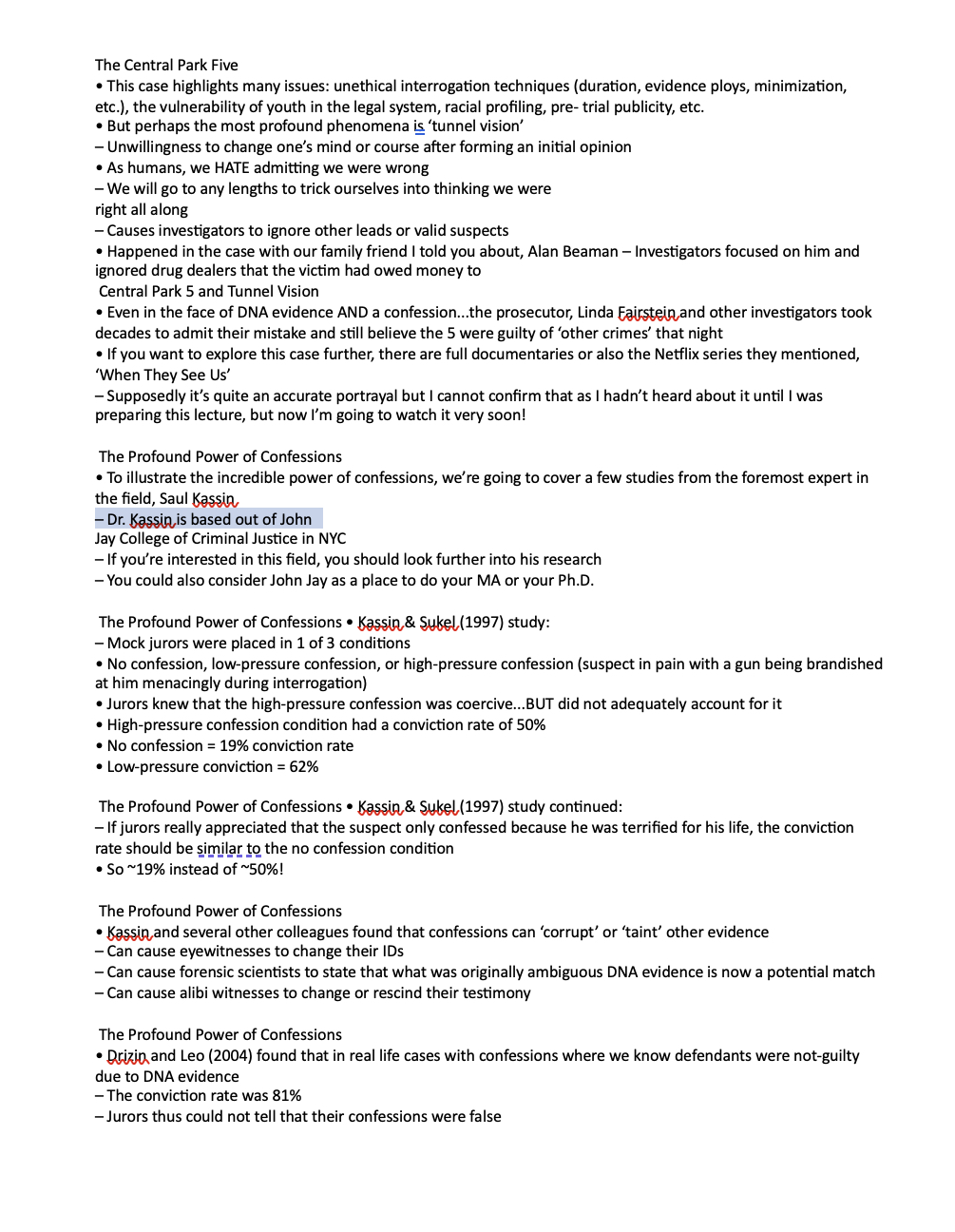
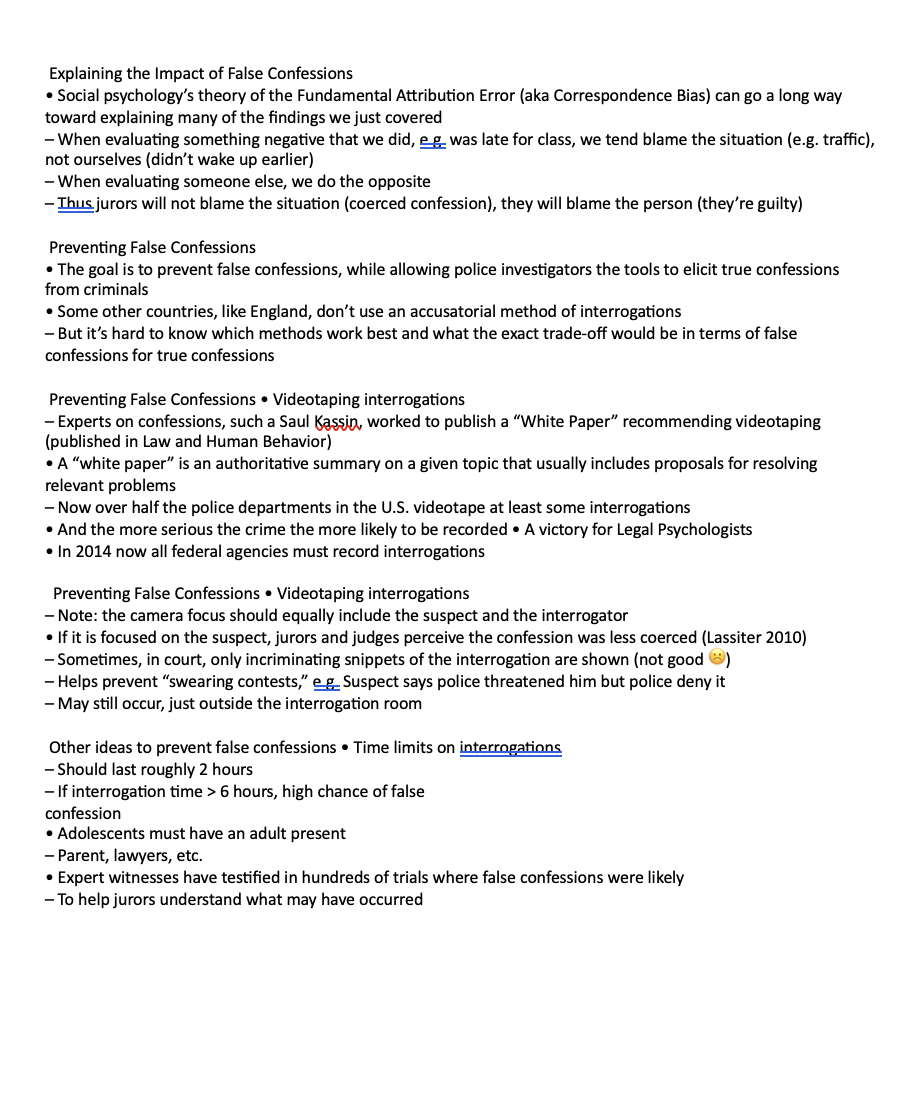
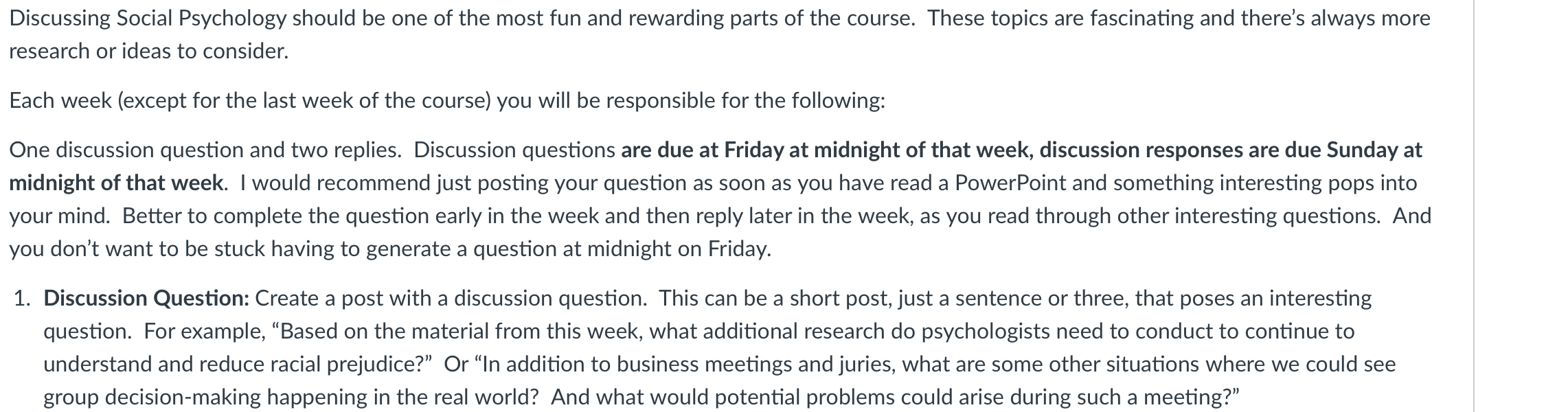
The Central Park Five This case highlights many issues: unethical interrogation techniques (duration, evidence ploys, minimization, etc.), the vulnerability of youth in the legal system, racial profiling, pre-trial publicity, etc. But perhaps the most profound phenomena is 'tunnel vision' - Unwillingness to change one's mind or course after forming an initial opinion As humans, we HATE admitting we were wrong - We will go to any lengths to trick ourselves into thinking we were right all along - Causes investigators to ignore other leads or valid suspects Happened in the case with our family friend I told you about, Alan Beaman - Investigators focused on him and ignored drug dealers that the victim had owed money to Central Park 5 and Tunnel Vision Even in the face of DNA evidence AND a confession...the prosecutor, Linda Fairstein and other investigators took decades to admit their mistake and still believe the 5 were guilty of 'other crimes' that night If you want to explore this case further, there are full documentaries or also the Netflix series they mentioned, 'When They See Us' - Supposedly it's quite an accurate portrayal but I cannot confirm that as I hadn't heard about it until I was preparing this lecture, but now I'm going to watch it very soon! The Profound Power of Confessions To illustrate the incredible power of confessions, we're going to cover a few studies from the foremost expert in the field, Saul Kassin - Dr. Kassin is based out of John Jay College of Criminal Justice in NYC -If you're interested in this field, you should look further into his research - You could also consider John Jay as a place to do your MA or your Ph.D. The Profound Power of Confessions Kassin & Sukel (1997) study: - Mock jurors were placed in 1 of 3 conditions No confession, low-pressure confession, or high-pressure confession (suspect in pain with a gun being brandished at him menacingly during interrogation) Jurors knew that the high-pressure confession was coercive...BUT did not adequately account for it High-pressure confession condition had a conviction rate of 50% No confession = 19% conviction rate Low-pressure conviction = 62% The Profound Power of Confessions Kassin & Sukel (1997) study continued: - If jurors really appreciated that the suspect only confessed because he was terrified for his life, the conviction rate should be similar to the no confession condition So ~19% instead of ~50%! The Profound Power of Confessions Kassin and several other colleagues found that confessions can 'corrupt' or 'taint' other evidence - Can cause eyewitnesses to change their IDs - Can cause forensic scientists to state that what was originally ambiguous DNA evidence is now a potential match - Can cause alibi witnesses to change or rescind their testimony The Profound Power of Confessions Drizin and Leo (2004) found that in real life cases with confessions where we know defendants were not-guilty due to DNA evidence -The conviction rate was 81% -Jurors thus could not tell that their confessions were false Explaining the Impact of False Confessions Social psychology's theory of the Fundamental Attribution Error (aka Correspondence Bias) can go a long way toward explaining many of the findings we just covered -When evaluating something negative that we did, eg was late for class, we tend blame the situation (e.g. traffic), not ourselves (didn't wake up earlier) - When evaluating someone else, we do the opposite -Thus jurors will not blame the situation (coerced confession), they will blame the person (they're guilty) Preventing False Confessions The goal is to prevent false confessions, while allowing police investigators the tools to elicit true confessions from criminals Some other countries, like England, don't use an accusatorial method of interrogations - But it's hard to know which methods work best and what the exact trade-off would be in terms of false confessions for true confessions Preventing False Confessions Videotaping interrogations - Experts on confessions, such a Saul Kassin, worked to publish a "White Paper" recommending videotaping (published in Law and Human Behavior) A "white paper" is an authoritative summary on a given topic that usually includes proposals for resolving relevant problems -Now over half the police departments in the U.S. videotape at least some interrogations And the more serious the crime the more likely to be recorded A victory for Legal Psychologists In 2014 now all federal agencies must record interrogations Preventing False Confessions Videotaping interrogations - Note: the camera focus should equally include the suspect and the interrogator If it is focused on the suspect, jurors and judges perceive the confession was less coerced (Lassiter 2010) - Sometimes, in court, only incriminating snippets of the interrogation are shown (not good - Helps prevent "swearing contests," eg Suspect says police threatened him but police deny it - May still occur, just outside the interrogation room Other ideas to prevent false confessions Time limits on interrogations -Should last roughly 2 hours - If interrogation time > 6 hours, high chance of false confession Adolescents must have an adult present - Parent, lawyers, etc. Expert witnesses have testified in hundreds of trials where false confessions were likely -To help jurors understand what may have occurred Discussing Social Psychology should be one of the most fun and rewarding parts of the course. These topics are fascinating and there's always more research or ideas to consider. Each week (except for the last week of the course) you will be responsible for the following: One discussion question and two replies. Discussion questions are due at Friday at midnight of that week, discussion responses are due Sunday at midnight of that week. I would recommend just posting your question as soon as you have read a PowerPoint and something interesting pops into your mind. Better to complete the question early in the week and then reply later in the week, as you read through other interesting questions. And you don't want to be stuck having to generate a question at midnight on Friday. 1. Discussion Question: Create a post with a discussion question. This can be a short post, just a sentence or three, that poses an interesting question. For example, "Based on the material from this week, what additional research do psychologists need to conduct to continue to understand and reduce racial prejudice?" Or "In addition to business meetings and juries, what are some other situations where we could see group decision-making happening in the real world? And what would potential problems could arise during such a meeting?"
Step by Step Solution
There are 3 Steps involved in it

Get step-by-step solutions from verified subject matter experts
 Study Help