







Question: The choices are (decrease, increase, depends on the temperature) Required information Membrane Fluidity Cell membranes must maintain the right degree of fluidity for a cell
The choices are (decrease, increase, depends on the temperature)
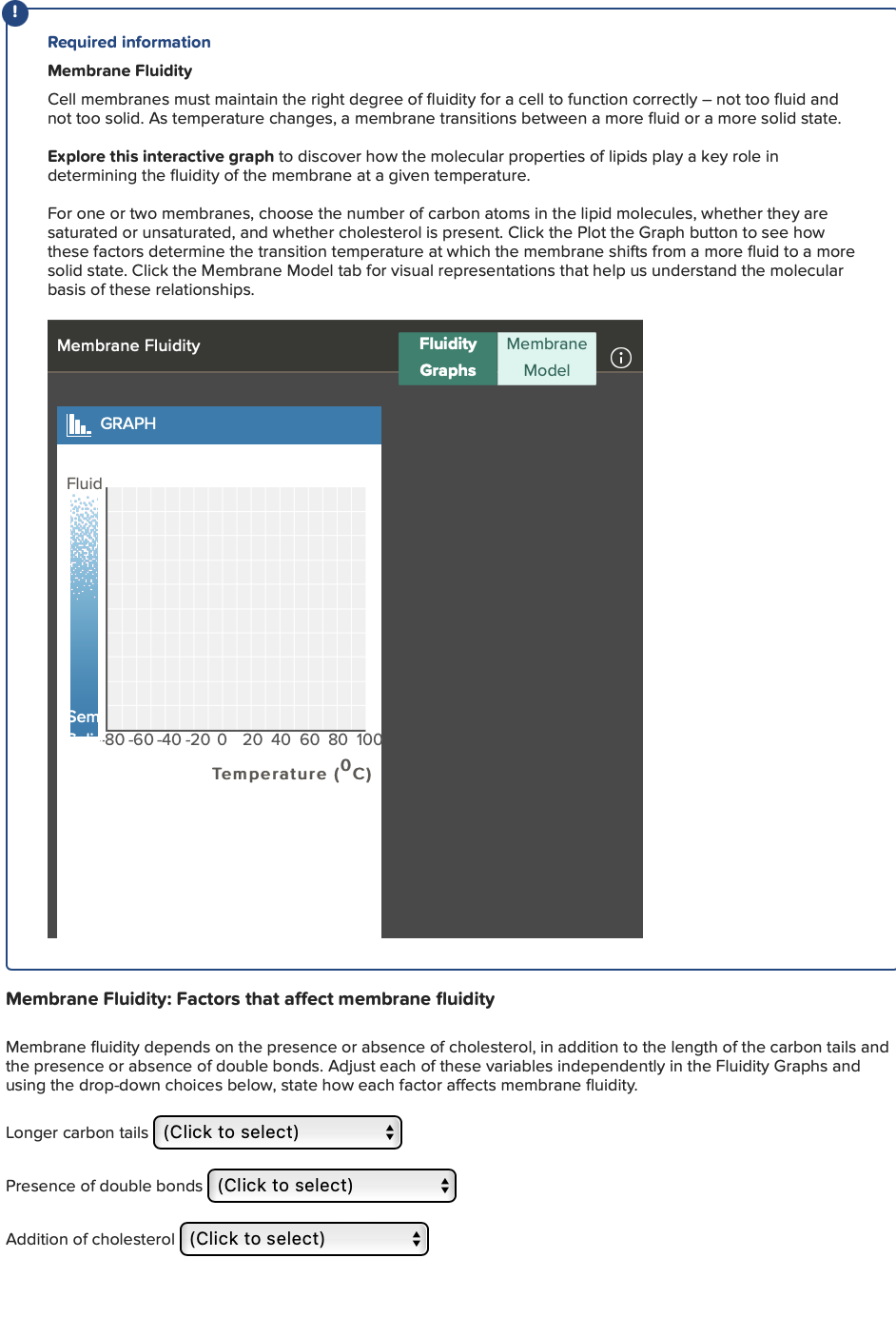
Required information Membrane Fluidity Cell membranes must maintain the right degree of fluidity for a cell to function correctly - not too fluid and not too solid. As temperature changes, a membrane transitions between a more fluid or a more solid state. Explore this interactive graph to discover how the molecular properties of lipids play a key role in determining the fluidity of the membrane at a given temperature. For one or two membranes, choose the number of carbon atoms in the lipid molecules, whether they are saturated or unsaturated, and whether cholesterol is present. Click the Plot the Graph button to see how these factors determine the transition temperature at which the membrane shifts from a more fluid to a more solid state. Click the Membrane Model tab for visual representations that help us understand the molecular basis of these relationships. Membrane Fluidity: Factors that affect membrane fluidity Membrane fluidity depends on the presence or absence of cholesterol, in addition to the length of the carbon tails and the presence or absence of double bonds. Adjust each of these variables independently in the Fluidity Graphs and using the drop-down choices below, state how each factor affects membrane fluidity. Longer carbon tails Presence of double bonds Addition of cholesterol
Step by Step Solution
There are 3 Steps involved in it

Get step-by-step solutions from verified subject matter experts
 Study Help