







Question: The coding language is python. The attachment is in plain text format converted from CSV (should be converted if needed).I will appreciate a feedback within
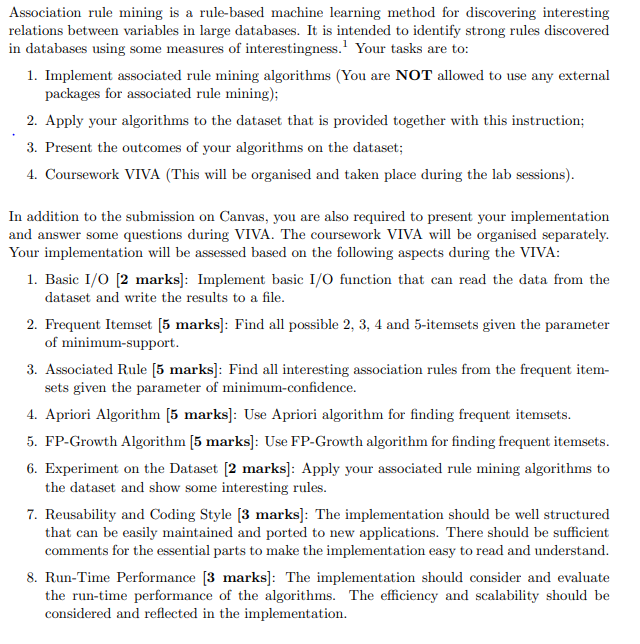
The coding language is python. The attachment is in plain text format converted from CSV (should be converted if needed).I will appreciate a feedback within 24hrs. Thank you in advance
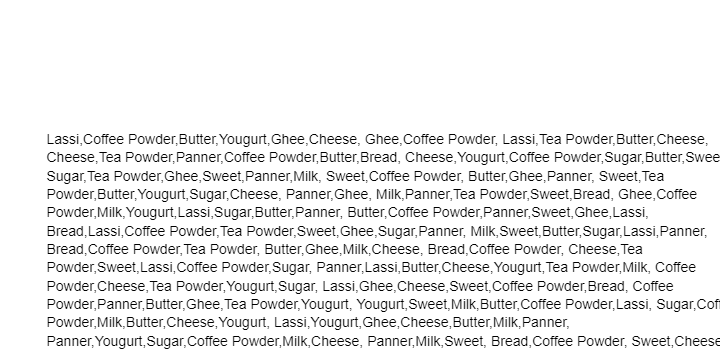
Association rule mining is a rule-based machine learning method for discovering interesting relations between variables in large databases. It is intended to identify strong rules discovered in databases using some measures of interestingness. Your tasks are to: 1. Implement associated rule mining algorithms (You are NOT allowed to use any external packages for associated rule mining); 2. Apply your algorithms to the dataset that is provided together with this instruction; 3. Present the outcomes of your algorithms on the dataset; 4. Coursework VIVA (This will be organised and taken place during the lab sessions). In addition to the submission on Canvas, you are also required to present your implementation and answer some questions during VIVA. The coursework VIVA will be organised separately. Your implementation will be assessed based on the following aspects during the VIVA: 1. Basic 1/0 [2 marks]: Implement basic I/O function that can read the data from the dataset and write the results to a file. 2. Frequent Itemset [5 marks): Find all possible 2, 3, 4 and 5-itemsets given the parameter of minimum-support. 3. Associated Rule (5 marks): Find all interesting association rules from the frequent item- sets given the parameter of minimum-confidence. 4. Apriori Algorithm (5 marks]: Use A priori algorithm for finding frequent itemsets. 5. FP-Growth Algorithm (5 marks]: Use FP-Growth algorithm for finding frequent itemsets. 6. Experiment on the Dataset [2 marks]: Apply your associated rule mining algorithms to the dataset and show some interesting rules. 7. Reusability and Coding Style [3 marks): The implementation should be well structured that can be easily maintained and ported to new applications. There should be sufficient comments for the essential parts to make the implementation easy to read and understand. 8. Run-Time Performance [3 marks]: The implementation should consider and evaluate the run-time performance of the algorithms. The efficiency and scalability should be considered and reflected in the implementation. Lassi, Coffee Powder, Butter, Yougurt, Ghee, Cheese, Ghee, Coffee Powder, Lassi, Tea Powder, Butter Cheese, Cheese, Tea Powder, Panner, Coffee Powder, Butter, Bread, Cheese, Yougurt, Coffee Powder, Sugar, Butter, Swee Sugar, Tea Powder, Ghee, Sweet Panner, Milk, Sweet Coffee Powder, Butter, Ghee, Panner, Sweet, Tea Powder,Butter, Yougurt, Sugar, Cheese, Panner, Ghee, Milk Panner, Tea Powder, Sweet, Bread, Ghee, Coffee Powder, Milk, Yougurt, Lassi Sugar, Butter Panner, Butter, Coffee Powder Panner, Sweet Ghee, Lassi, Bread, Lassi, Coffee Powder, Tea Powder, Sweet Ghee, Sugar,Panner, Milk, Sweet, Butter, Sugar, Lassi, Panner, Bread, Coffee Powder, Tea Powder, Butter, Ghee, Milk Cheese, Bread, Coffee Powder, Cheese, Tea Powder, Sweet, Lassi, Coffee Powder, Sugar, Panner,Lassi, Butter Cheese, Yougurt, Tea Powder, Milk, Coffee Powder Cheese, Tea Powder, Yougurt, Sugar, Lassi, Ghee, Cheese, Sweet, Coffee Powder, Bread, Coffee Powder,Panner,Butter, Ghee, Tea Powder, Yougurt, Yougurt, Sweet, Milk, Butter, Coffee Powder, Lassi, Sugar, Cof Powder, Milk, Butter Cheese, Yougurt, Lassi, Yougurt, Ghee, Cheese, Butter, Milk,Panner, Panner, Yougurt, Sugar, Coffee Powder, Milk Cheese, Panner, Milk, Sweet, Bread, Coffee Powder, Sweet Cheese Association rule mining is a rule-based machine learning method for discovering interesting relations between variables in large databases. It is intended to identify strong rules discovered in databases using some measures of interestingness. Your tasks are to: 1. Implement associated rule mining algorithms (You are NOT allowed to use any external packages for associated rule mining); 2. Apply your algorithms to the dataset that is provided together with this instruction; 3. Present the outcomes of your algorithms on the dataset; 4. Coursework VIVA (This will be organised and taken place during the lab sessions). In addition to the submission on Canvas, you are also required to present your implementation and answer some questions during VIVA. The coursework VIVA will be organised separately. Your implementation will be assessed based on the following aspects during the VIVA: 1. Basic 1/0 [2 marks]: Implement basic I/O function that can read the data from the dataset and write the results to a file. 2. Frequent Itemset [5 marks): Find all possible 2, 3, 4 and 5-itemsets given the parameter of minimum-support. 3. Associated Rule (5 marks): Find all interesting association rules from the frequent item- sets given the parameter of minimum-confidence. 4. Apriori Algorithm (5 marks]: Use A priori algorithm for finding frequent itemsets. 5. FP-Growth Algorithm (5 marks]: Use FP-Growth algorithm for finding frequent itemsets. 6. Experiment on the Dataset [2 marks]: Apply your associated rule mining algorithms to the dataset and show some interesting rules. 7. Reusability and Coding Style [3 marks): The implementation should be well structured that can be easily maintained and ported to new applications. There should be sufficient comments for the essential parts to make the implementation easy to read and understand. 8. Run-Time Performance [3 marks]: The implementation should consider and evaluate the run-time performance of the algorithms. The efficiency and scalability should be considered and reflected in the implementation. Lassi, Coffee Powder, Butter, Yougurt, Ghee, Cheese, Ghee, Coffee Powder, Lassi, Tea Powder, Butter Cheese, Cheese, Tea Powder, Panner, Coffee Powder, Butter, Bread, Cheese, Yougurt, Coffee Powder, Sugar, Butter, Swee Sugar, Tea Powder, Ghee, Sweet Panner, Milk, Sweet Coffee Powder, Butter, Ghee, Panner, Sweet, Tea Powder,Butter, Yougurt, Sugar, Cheese, Panner, Ghee, Milk Panner, Tea Powder, Sweet, Bread, Ghee, Coffee Powder, Milk, Yougurt, Lassi Sugar, Butter Panner, Butter, Coffee Powder Panner, Sweet Ghee, Lassi, Bread, Lassi, Coffee Powder, Tea Powder, Sweet Ghee, Sugar,Panner, Milk, Sweet, Butter, Sugar, Lassi, Panner, Bread, Coffee Powder, Tea Powder, Butter, Ghee, Milk Cheese, Bread, Coffee Powder, Cheese, Tea Powder, Sweet, Lassi, Coffee Powder, Sugar, Panner,Lassi, Butter Cheese, Yougurt, Tea Powder, Milk, Coffee Powder Cheese, Tea Powder, Yougurt, Sugar, Lassi, Ghee, Cheese, Sweet, Coffee Powder, Bread, Coffee Powder,Panner,Butter, Ghee, Tea Powder, Yougurt, Yougurt, Sweet, Milk, Butter, Coffee Powder, Lassi, Sugar, Cof Powder, Milk, Butter Cheese, Yougurt, Lassi, Yougurt, Ghee, Cheese, Butter, Milk,Panner, Panner, Yougurt, Sugar, Coffee Powder, Milk Cheese, Panner, Milk, Sweet, Bread, Coffee Powder, Sweet Cheese
Step by Step Solution
There are 3 Steps involved in it

Get step-by-step solutions from verified subject matter experts
 Study Help