







Question: The diagram below shows a directed graph. Is (d, b, c, g,c, f, e, c, d) a circuit in the graph? Is it a cycle?
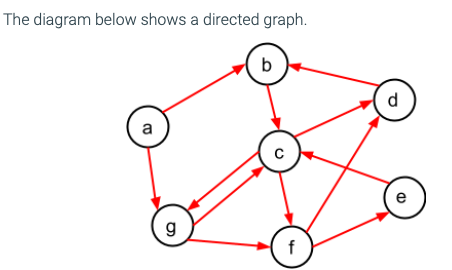
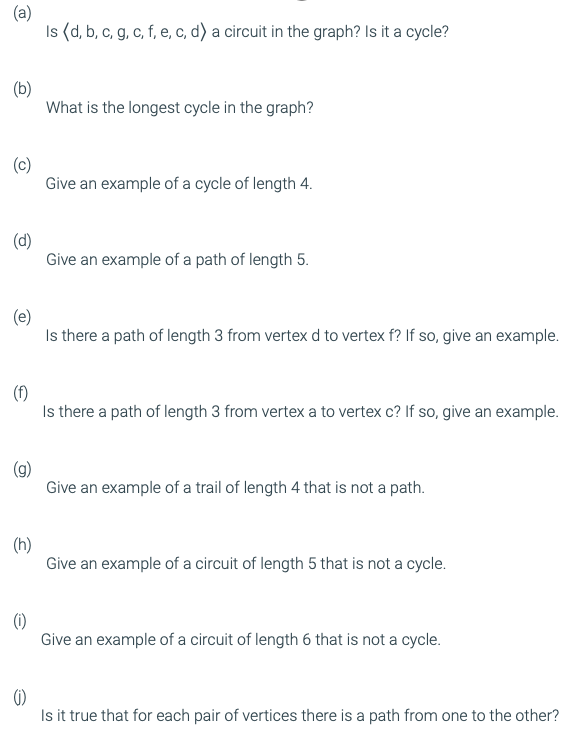
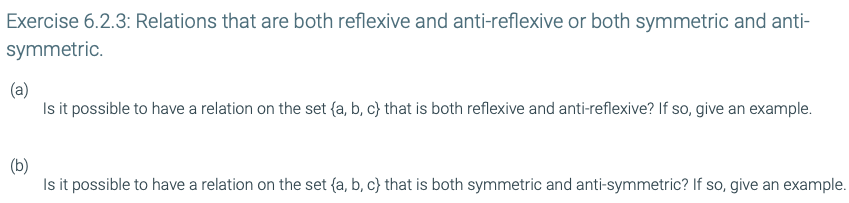
The diagram below shows a directed graph. Is (d, b, c, g,c, f, e, c, d) a circuit in the graph? Is it a cycle? What is the longest cycle in the graph? Give an example of a cycle of length 4. Give an example of a path of length 5 Is there a path of length 3 from vertex d to vertex f? If so, give an example. Is there a path of length 3 from vertex a to vertex c? If so, give an example. Give an example of a trail of length 4 that is not a path. Give an example of a circuit of length 5 that is not a cycle. Give an example of a circuit of length 6 that is not a cycle C) Is it true that for each pair of vertices there is a path from one to the other? Exercise 6.2.3: Relations that are both reflexive and anti-reflexive or both symmetric and anti- symmetric Is it possible to have a relation on the set (a, b, c that is both reflexive and anti-reflexive? If so, give an example. Is it possible to have a relation on the set {a, b, c} that is both symmetric and anti-symmetric? If so, give an example
Step by Step Solution
There are 3 Steps involved in it

Get step-by-step solutions from verified subject matter experts
 Study Help