







Question: The dual cost-allocation method classifies costs into two pools, a budgeted cost pool and an actual cost pool. 2) The single-rate method makes a distinction
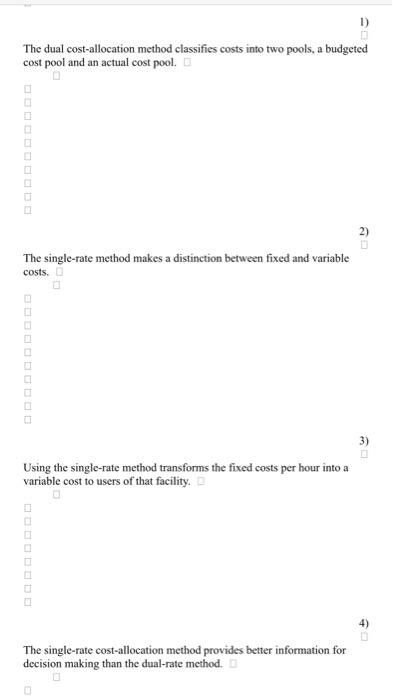

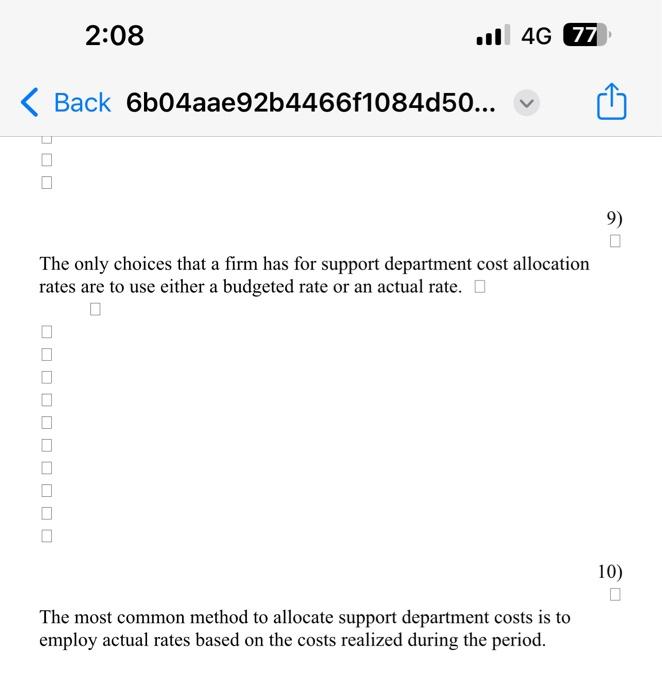
The dual cost-allocation method classifies costs into two pools, a budgeted cost pool and an actual cost pool. 2) The single-rate method makes a distinction between fixed and variable costs. 3) Using the single-rate method transforms the fixed costs per hour into a variable cost to users of that facility. 4) The single-rate cost-allocation method provides better information for decision making than the dual-rate method. An advantage of the single-rate method is that it is easier and always the most accurate cost-allocation choice. 6) When budgeted cost-allocation rates are used, user-division managers face uncertainty about the allocation rates for that budget period. 7) When budgeted cost-allocation rates are used, managers of the supplier division are motivated to improve efficiency. 8) When budgeted cost-allocation rates are used, variations in actual usage by one division affect the costs allocated to other divisions. The only choices that a firm has for support department cost allocation rates are to use either a budgeted rate or an actual rate. The most common method to allocate support department costs is to employ actual rates based on the costs realized during the period
Step by Step Solution
There are 3 Steps involved in it

Get step-by-step solutions from verified subject matter experts
 Study Help