Question: The event tree, shown below, analyses a failsafe mechanism consisting of three (3) components. In the event of a fault, . Component A should operate
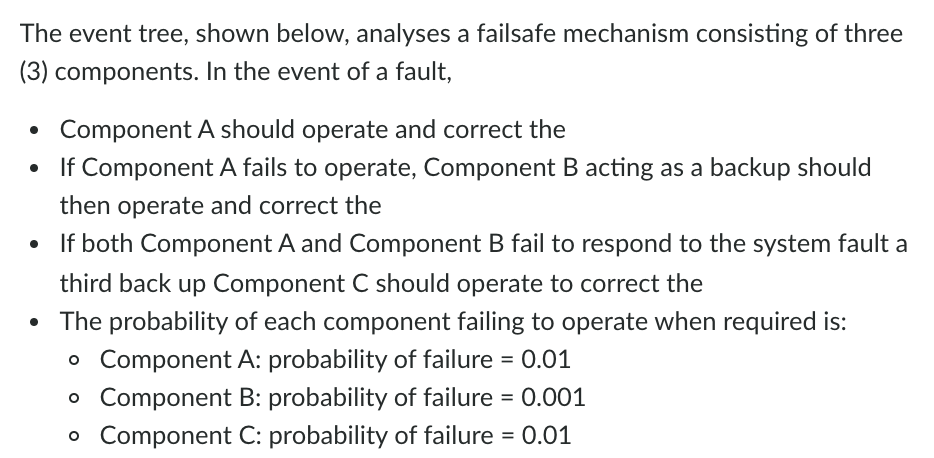
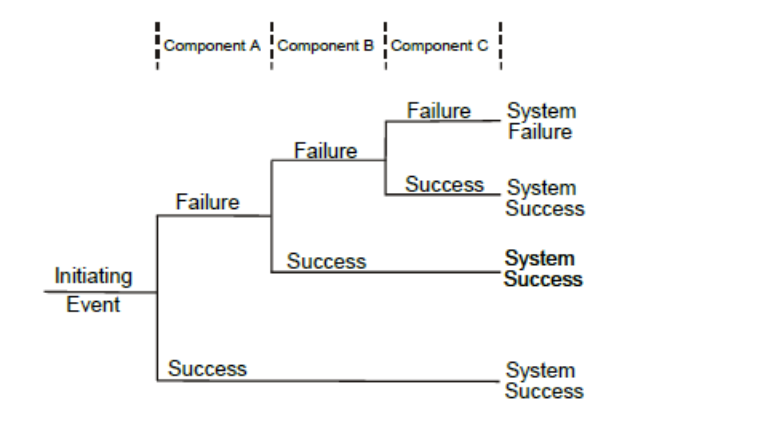
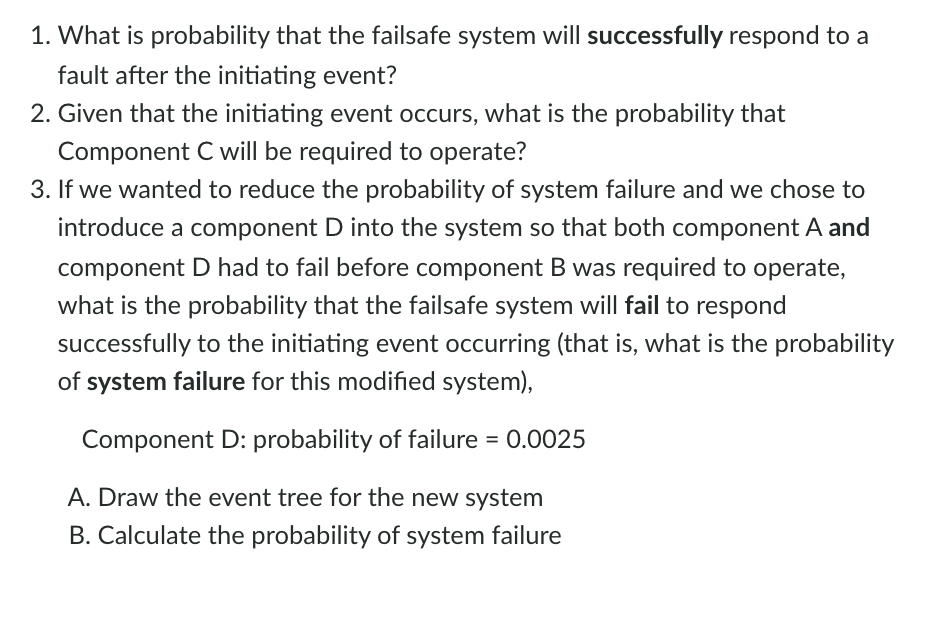
The event tree, shown below, analyses a failsafe mechanism consisting of three (3) components. In the event of a fault, . Component A should operate and correct the If Component A fails to operate, Component B acting as a backup should then operate and correct the If both Component A and Component B fail to respond to the system fault a third back up Component C should operate to correct the The probability of each component failing to operate when required is: o Component A: probability of failure = 0.01 o Component B: probability of failure = 0.001 o Component C: probability of failure = 0.01 Component A Component B Component C C Failure System Failure Failure Failure Success System Success Success Initiating Event System Success Success System Success 1. What is probability that the failsafe system will successfully respond to a fault after the initiating event? 2. Given that the initiating event occurs, what is the probability that Component C will be required to operate? 3. If we wanted to reduce the probability of system failure and we chose to introduce a component D into the system so that both component A and component D had to fail before component B was required to operate, what is the probability that the failsafe system will fail to respond successfully to the initiating event occurring (that is, what is the probability of system failure for this modified system), Component D: probability of failure = 0.0025 A. Draw the event tree for the new system B. Calculate the probability of system failure The event tree, shown below, analyses a failsafe mechanism consisting of three (3) components. In the event of a fault, . Component A should operate and correct the If Component A fails to operate, Component B acting as a backup should then operate and correct the If both Component A and Component B fail to respond to the system fault a third back up Component C should operate to correct the The probability of each component failing to operate when required is: o Component A: probability of failure = 0.01 o Component B: probability of failure = 0.001 o Component C: probability of failure = 0.01 Component A Component B Component C C Failure System Failure Failure Failure Success System Success Success Initiating Event System Success Success System Success 1. What is probability that the failsafe system will successfully respond to a fault after the initiating event? 2. Given that the initiating event occurs, what is the probability that Component C will be required to operate? 3. If we wanted to reduce the probability of system failure and we chose to introduce a component D into the system so that both component A and component D had to fail before component B was required to operate, what is the probability that the failsafe system will fail to respond successfully to the initiating event occurring (that is, what is the probability of system failure for this modified system), Component D: probability of failure = 0.0025 A. Draw the event tree for the new system B. Calculate the probability of system failure




