







Question: The First picture is the problem I need help solving, the second picture is the Exhibt 5 table I need the problem solved into. EX
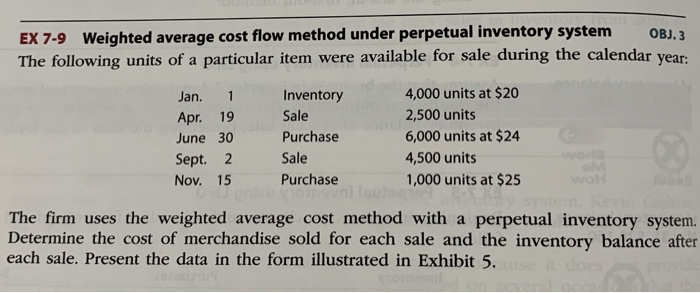
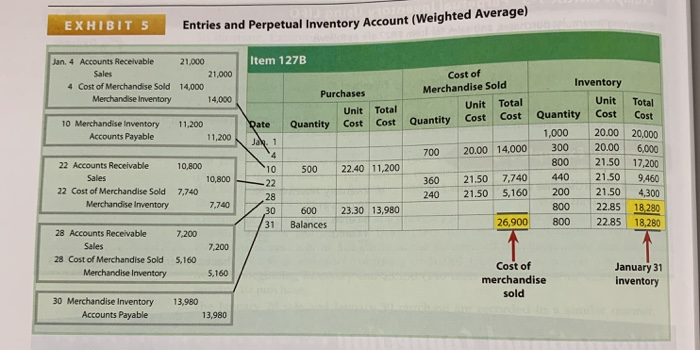
EX 7-9 Weighted average cost flow method under perpetual inventory system OBJ.3 The following units of a particular item were available for sale during the calendar year: 4,000 units at $20 Jan. 1 Inventory Apr. 19 Sale 2,500 units 6,000 units at $24 4,500 units Purchase June 30 Sale Sept. 2 Purchase 1,000 units at $25 Nov. 15 The firm uses the weighted average cost method with a perpetual inventory system. Determine the cost of merchandise sold for each sale and the inventory balance after each sale. Present the data in the form illustrated in Exhibit 5. EXHIBIT 5 Entries and Perpetual Inventory Account (Weighted Average) Item 127B Jan. 4 Accounts Receivable 21.000 Sales 21,000 Cost of Inventory 4 Cost of Merchandise Sold 14,000 Merchandise Sold Purchases Merchandise Inventory 14,000 Unit Total Unit Total Unit Total ate Quantity Cost Cost Quantity Cost Cost Quantity Cost Cost 1,000 20.00 20,000 10 Merchandise Inventory 11,200 Accounts Payable 6,000 800 21.50 17,200 700 20.00 14,000 300 20.00 22 Accounts Receivable 10,800 10 500 22.40 11,200 360 21.50 7.74044021.50 9460 240 21.50 5.160 200 2150 4300 800 22.85 18280 26,900 800 22.85 18,280 Sales 10,800 22 Cost of Merchandise Sold 7,740 28 Merchandise Inventory 7.740 30 600 23.30 13,980 3 31 Balances 28 Accounts Receivable Sales 7,200 7,200 28 Cost of Merchandise Sold 5,160 Cost of merchandise January 31 inventory Merchandise Inventory 5,160 sold 3O Merchandise Inventory 13,980 Accounts Payable 13,980
Step by Step Solution
There are 3 Steps involved in it

Get step-by-step solutions from verified subject matter experts
 Study Help