



Question: the first two images are the first question and the rest are the second question Marvel Parts, Incorporated, manufactures auto accessories. One of the company's
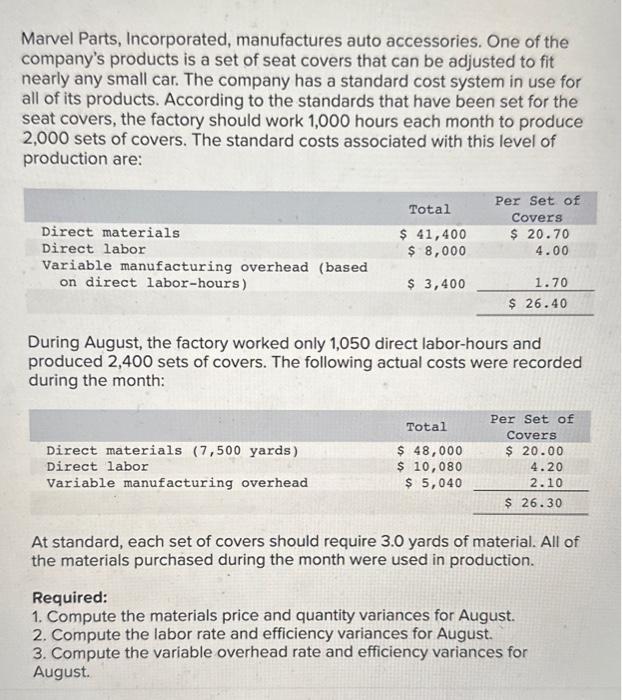
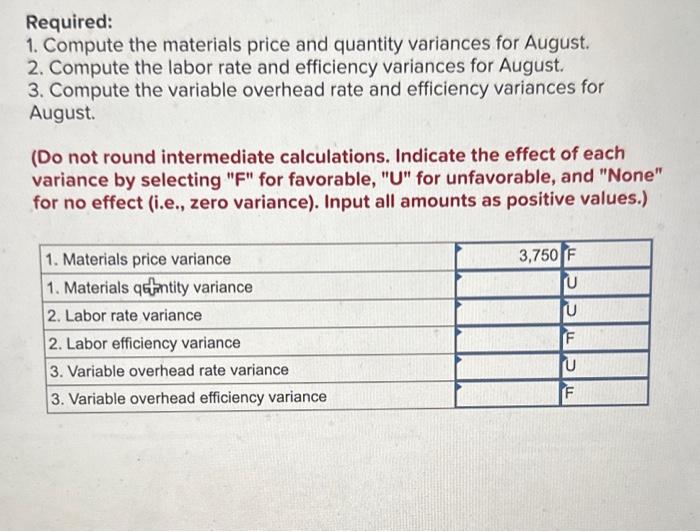
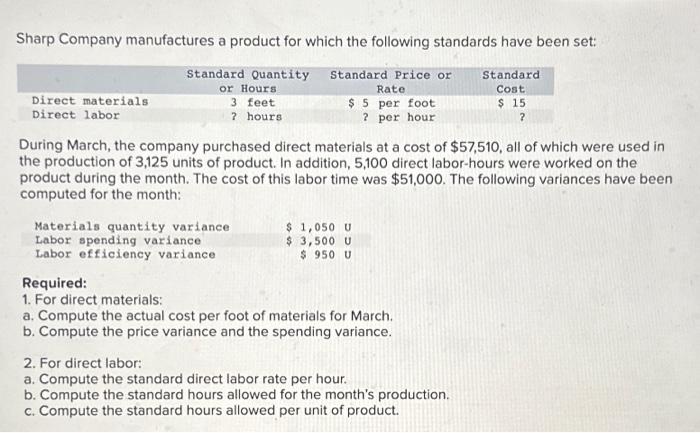
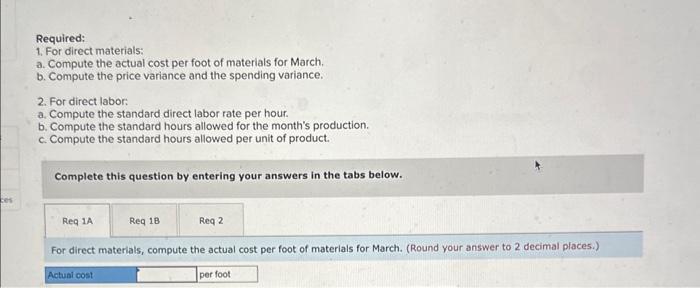
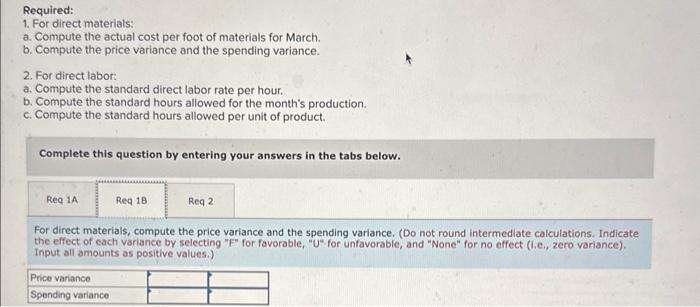
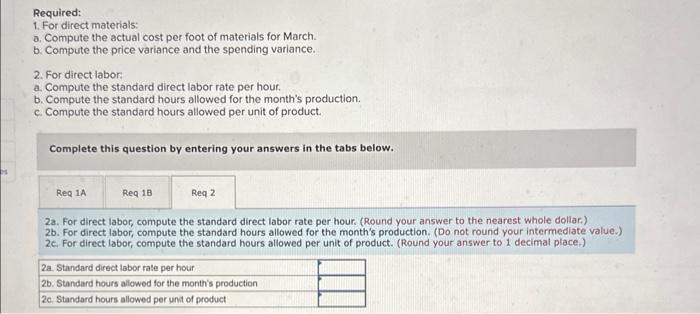
Marvel Parts, Incorporated, manufactures auto accessories. One of the company's products is a set of seat covers that can be adjusted to fit nearly any small car. The company has a standard cost system in use for all of its products. According to the standards that have been set for the seat covers, the factory should work 1,000 hours each month to produce 2,000 sets of covers. The standard costs associated with this level of production are: During August, the factory worked only 1,050 direct labor-hours and produced 2,400 sets of covers. The following actual costs were recorded during the month: At standard, each set of covers should require 3.0 yards of material. All of the materials purchased during the month were used in production. Required: 1. Compute the materials price and quantity variances for August. 2. Compute the labor rate and efficiency variances for August. 3. Compute the variable overhead rate and efficiency variances for August. Required: 1. Compute the materials price and quantity variances for August. 2. Compute the labor rate and efficiency variances for August. 3. Compute the variable overhead rate and efficiency variances for August. (Do not round intermediate calculations. Indicate the effect of each variance by selecting "F" for favorable, "U" for unfavorable, and "None" for no effect (i.e., zero variance). Input all amounts as positive values.) Sharp Company manufactures a product for which the following standards have been set: During March, the company purchased direct materials at a cost of $57,510, all of which were used in the production of 3,125 units of product. In addition, 5,100 direct labor-hours were worked on the product during the month. The cost of this labor time was $51,000. The following variances have been computed for the month: Required: 1. For direct materials: a. Compute the actual cost per foot of materials for March. b. Compute the price variance and the spending variance. 2. For direct labor: a. Compute the standard direct labor rate per hour. b. Compute the standard hours allowed for the month's production. c. Compute the standard hours allowed per unit of product. Required: 1. For direct materials: a. Compute the actual cost per foot of materials for March. b. Compute the price variance and the spending variance. 2. For direct labor: a. Compute the standard direct labor rate per hour. b. Compute the standard hours allowed for the month's production. c. Compute the standard hours allowed per unit of product. Complete this question by entering your answers in the tabs below. For direct materials, compute the actual cost per foot of materials for March. (Round your answer to 2 decimal places.) Required: 1. For direct materials: a. Compute the actual cost per foot of materials for March. b. Compute the price variance and the spending variance. 2. For direct labor: a. Compute the standard direct labor rate per hour. b. Compute the standard hours allowed for the month's production. c. Compute the standard hours allowed per unit of product. Complete this question by entering your answers in the tabs below. For direct materials, compute the price variance and the spending variance. (Do not round intermediate calculations. Indicate the effect of each variance by selecting "F" for favorable, "U" for unfavorable, and "None" for no effect (i.e., zero variance). input all amounts as positive values.) Required: 1. For direct materials: a. Compute the actual cost per foot of materials for March. b. Compute the price variance and the spending variance. 2. For direct labor: a. Compute the standard direct labor rate per hour. b. Compute the standard hours allowed for the month's production. c. Compute the standard hours allowed per unit of product. Complete this question by entering your answers in the tabs below. 2a. For direct labor, compute the standard direct labor rate per hour. (Round your answer to the nearest whole dollar.) 2b. For direct labor, compute the standard hours allowed for the month's production. (Do not round your intermediate value.) 2c. For direct labor, compute the standard hours allowed per unit of product. (Round your answer to 1 decima! place.)
Step by Step Solution
There are 3 Steps involved in it

Get step-by-step solutions from verified subject matter experts