



Question: The following diagram shows a basic ERD for an events database. As shown, there are 4 entities: I. Event: shows the event, for example a
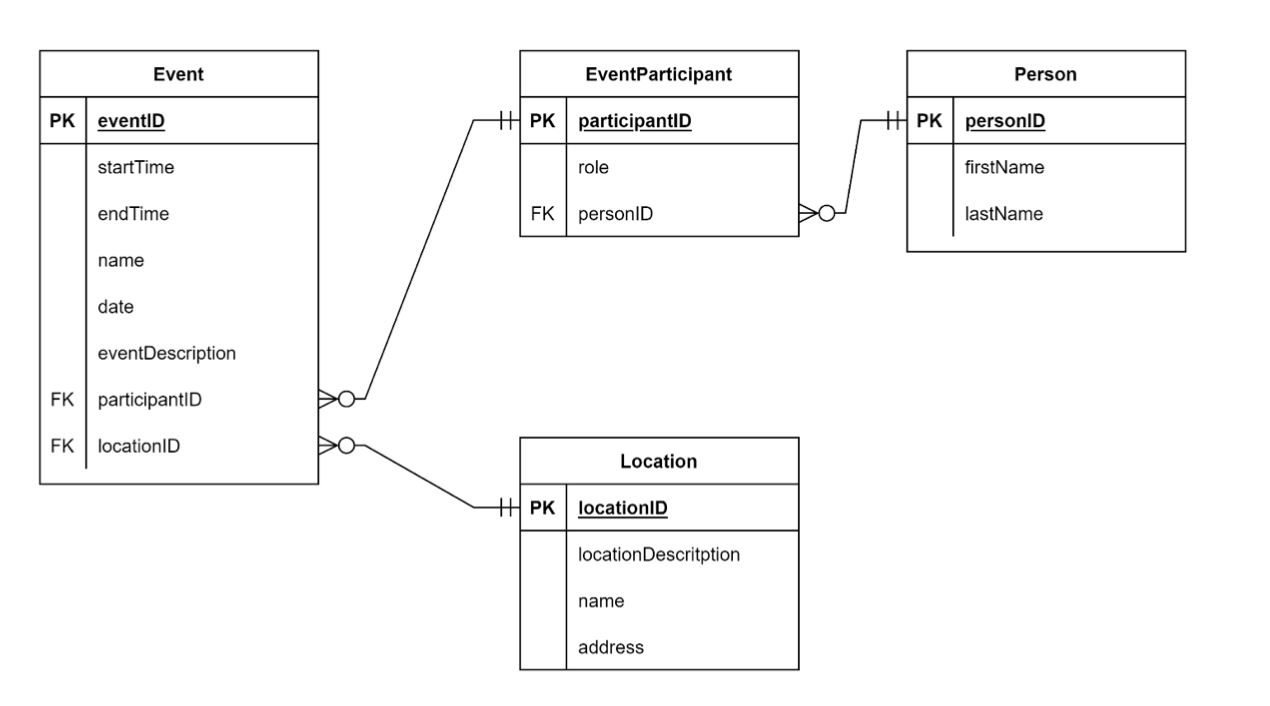
The following diagram shows a basic ERD for an events database.
As shown, there are 4 entities:
I. Event: shows the event, for example a conference on new database trends. II. Location: shows the location of an event can take place, for example SJ convention center in downtown San Jose or online (through zoom) or both.
III. Person: shows a person who would potentially attend the event. For example, John Smith. IV. EventParticipants: shows a person as a participant of the event. For example, John Smith can attend the DB conference as keynote speaker (role) or a regular attendee.
Pay attention to the relationships between the entities. All relationships have been identified as one-to-many (1:M) with one mandatory and many as optional.
Step 1: Use SQL to design the following database.
Step 2: Create the tables with proper PK and FK
Step 3: Populate the database with at least 3 entries for each category. (Use SQL to insert records). You will have to insert PK first before you can add a foreign key.
Step 4: Make the following queries and display the results:
a.) All events that start at the same date (make sure you add two events with the same date in steps 2 and 3).
b.) All the participants as a keynote speaker (set the role in EventParticipant table as keynote speaker). Set at least two participants as keynote speaker in steps 2 and 3.
Step by Step Solution
There are 3 Steps involved in it

Get step-by-step solutions from verified subject matter experts