







Question: The following function, fun, is defined using a loop as follows: int fun(int n) { int i, sum=0; for(i=1;i=1) return n + fun(n-1); } b.
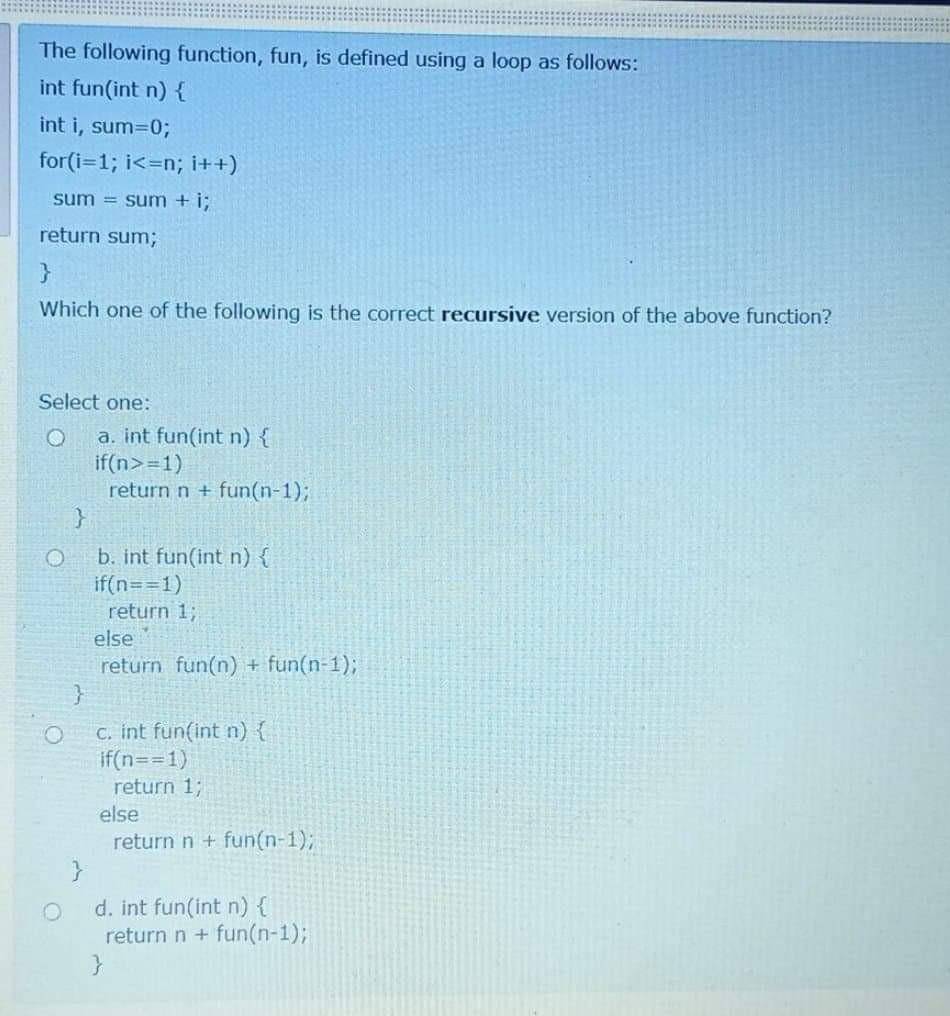
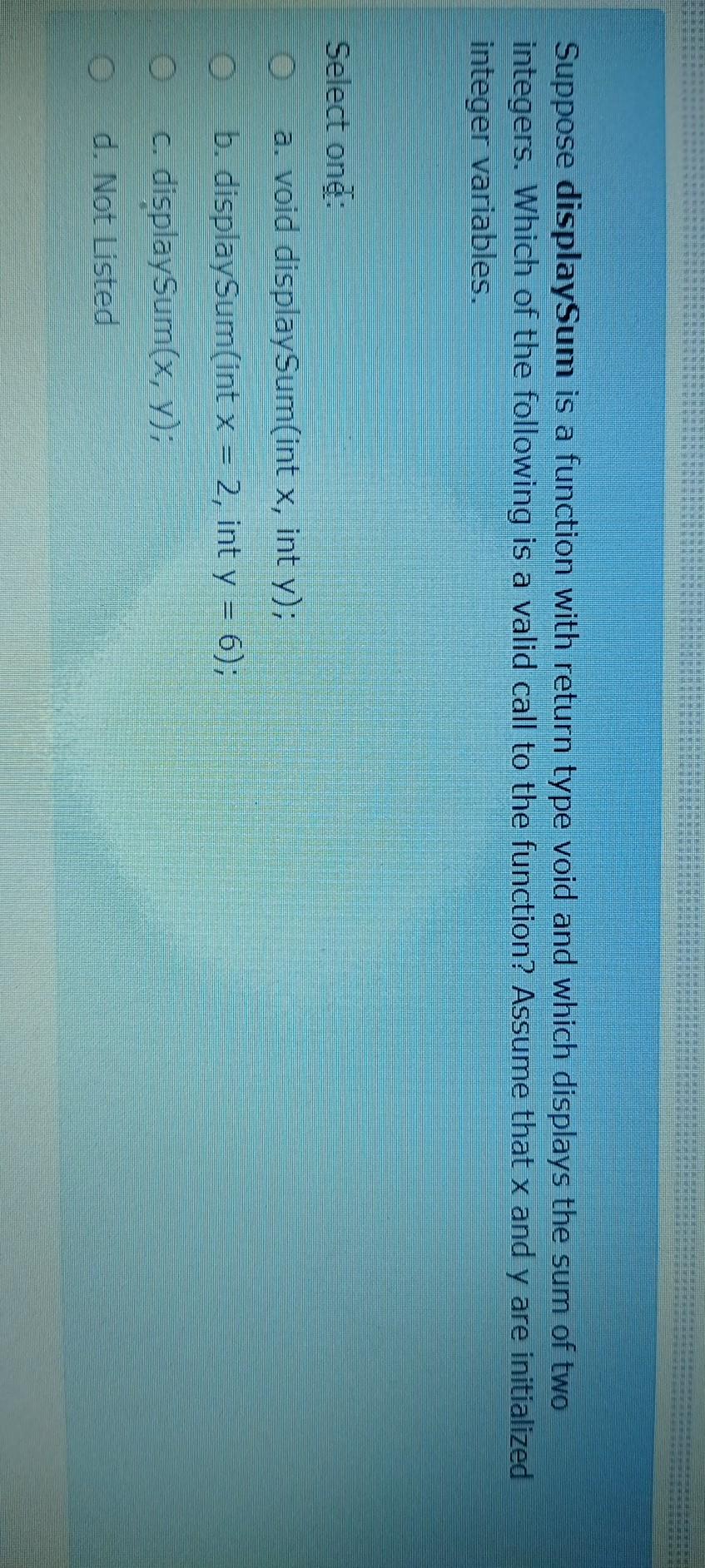
The following function, fun, is defined using a loop as follows: int fun(int n) { int i, sum=0; for(i=1;i=1) return n + fun(n-1); } b. int fun(int n) { if(n==1) return 1; else return fun(n) + fun(n-1); 3 c. int fun(int n) { if(n==1) return 1; else return n + fun(n-1), } d. int fun(int n) { return n + fun(n-1); } Suppose displaySum is a function with return type void and which displays the sum of two integers. Which of the following is a valid call to the function? Assume that x and y are initialized integer variables. Select one a. void display Sum(int x, int y); b. displaySum(int x = 2, int y = 6); C. displaySum(x, y); d. Not Listed
Step by Step Solution
There are 3 Steps involved in it
1 Expert Approved Answer
Step: 1 Unlock

Question Has Been Solved by an Expert!
Get step-by-step solutions from verified subject matter experts
Step: 2 Unlock
Step: 3 Unlock
 Study Help