







Question: The Mergesort algorithm we discussed in class is a recursive, divide-and-conquer algorithm in which the order of merges is determined by its recursive structure. However,
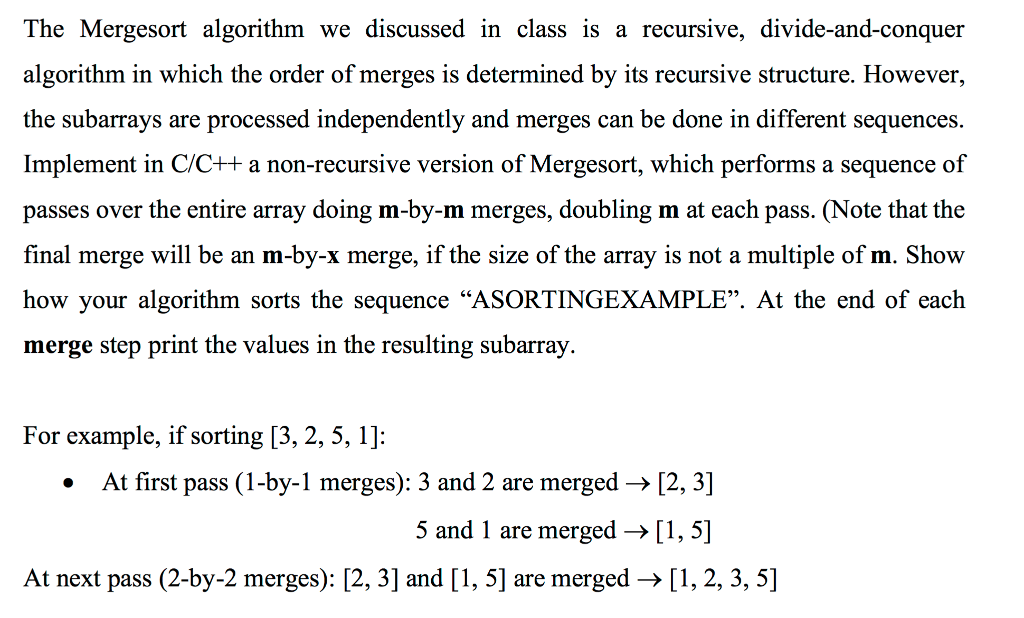
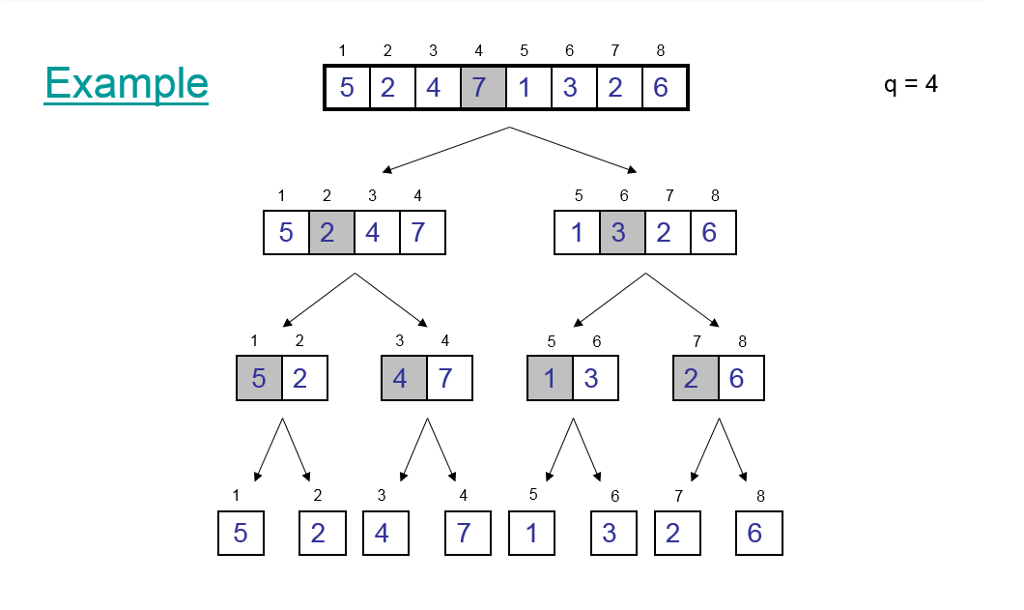
The Mergesort algorithm we discussed in class is a recursive, divide-and-conquer algorithm in which the order of merges is determined by its recursive structure. However, the subarrays are processed independently and merges can be done in different sequences. Implement in C/Ct+ a non-recursive version of Mergesort, which performs a sequence of passes over the entire array doing m-by-m merges, doubling m at each pass. (Note that the final merge will be an m-by-x merge, if the size of the array is not a multiple of m. Show how your algorithm sorts the sequence "ASORTINGEXAMPLE". At the end of each merge step print the values in the resulting subarray. 93 For example, if sorting [3, 2, 5,1] At first pass (1-by-1 merges): 3 and 2 are merged -[2, 3] 5 and 1 are merged -[1,5] At next pass (2-by-2 merges): [2, 3] and [1, 5] are merged -> [1, 2, 3, 5] The Mergesort algorithm we discussed in class is a recursive, divide-and-conquer algorithm in which the order of merges is determined by its recursive structure. However, the subarrays are processed independently and merges can be done in different sequences. Implement in C/Ct+ a non-recursive version of Mergesort, which performs a sequence of passes over the entire array doing m-by-m merges, doubling m at each pass. (Note that the final merge will be an m-by-x merge, if the size of the array is not a multiple of m. Show how your algorithm sorts the sequence "ASORTINGEXAMPLE". At the end of each merge step print the values in the resulting subarray. 93 For example, if sorting [3, 2, 5,1] At first pass (1-by-1 merges): 3 and 2 are merged -[2, 3] 5 and 1 are merged -[1,5] At next pass (2-by-2 merges): [2, 3] and [1, 5] are merged -> [1, 2, 3, 5]
Step by Step Solution
There are 3 Steps involved in it

Get step-by-step solutions from verified subject matter experts
 Study Help