







Question: The next task is to modify the shell interface program so that it provides a history feature that allows the user to access the most
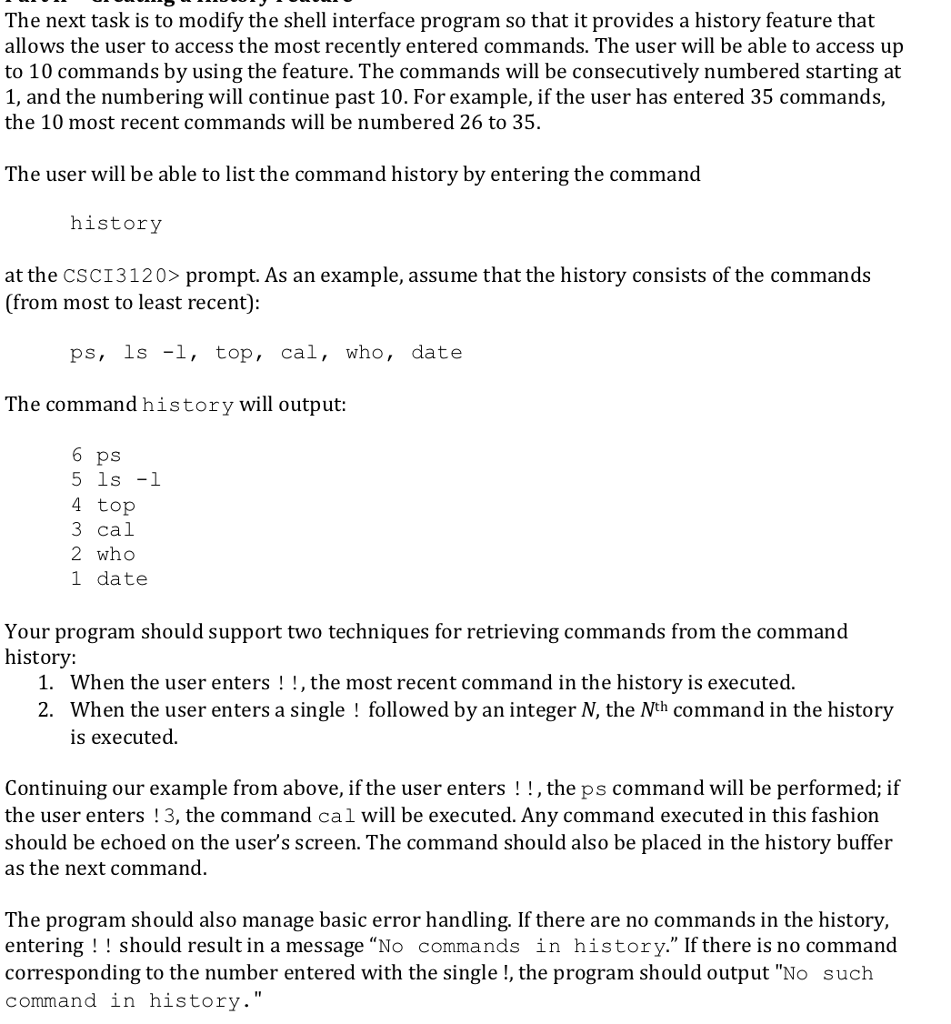
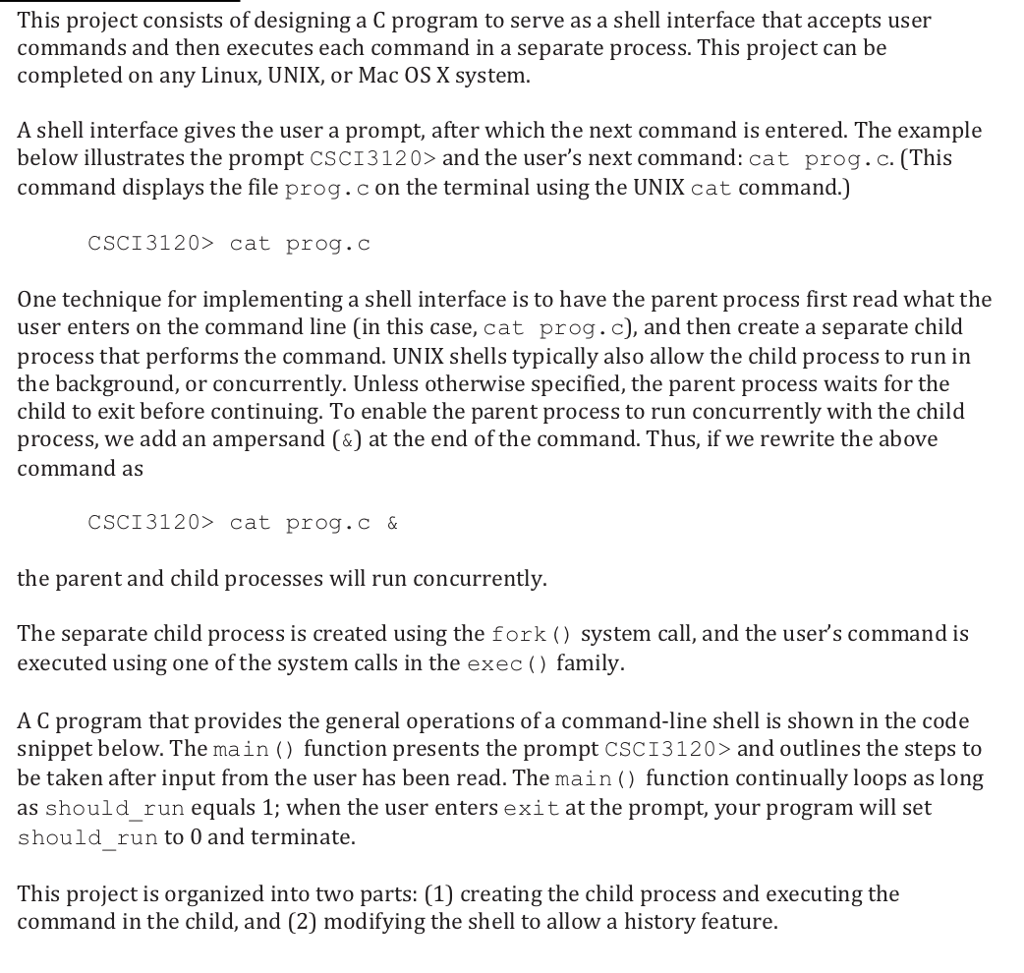
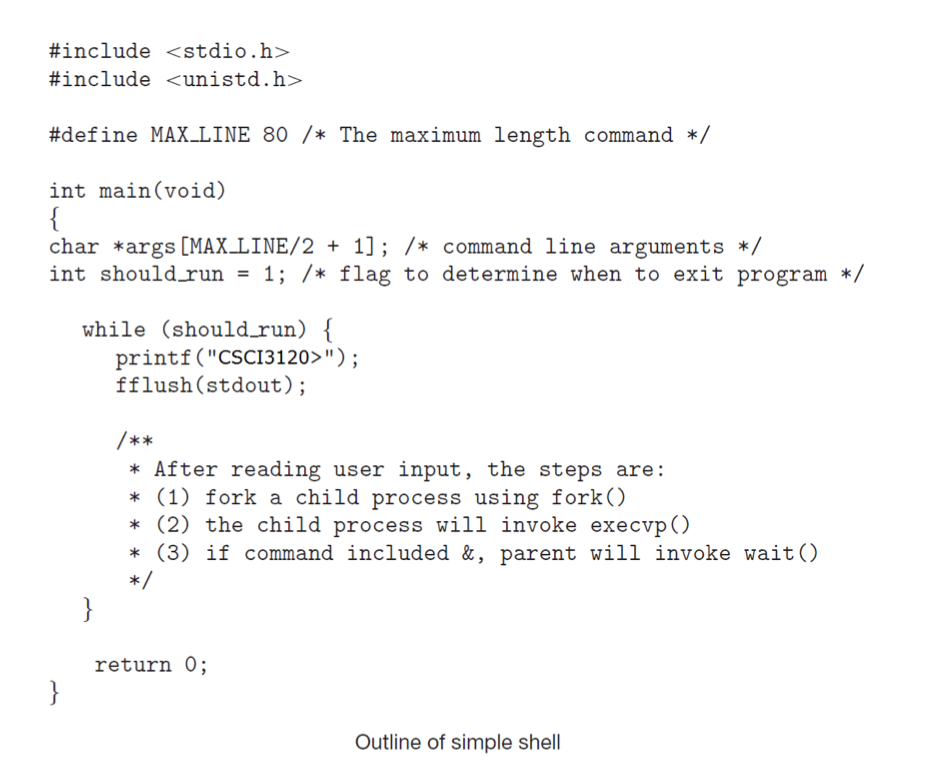
The next task is to modify the shell interface program so that it provides a history feature that allows the user to access the most recently entered commands. The user will be able to access up to 10 commands by using the feature. The commands will be consecutively numbered starting at 1, and the numbering will continue past 10. For example, if the user has entered 35 commands, the 10 most recent commands will be numbered 26 to 35. The user will be able to list the command history by entering the command history at the CSCI3120> prompt. As an example, assume that the history consists of the commands (from most to least recent) ps, ls -?, top, cal, who, date The command history will output: 5ls- 4 top 3 cal 2 who 1 date Your program should support two techniques for retrieving commands from the command history: 1. When the user enters ! !, the most recent command in the history is executed 2. When the user enters a single ! followed by an integer N, the Nth command in the history is executed. Continuing our example from above, if the user enters !!, the ps command will be performed; if the user enters ! 3, the command cal will be executed. Any command executed in this fashion should be echoed on the user's screen. The command should also be placed in the history buffer as the next command. The program should also manage basic error handling. If there are no commands in the history, entering! ! should result in a message "No commands in history." If there is no command corresponding to the number entered with the single !, the program should output "No such command in history." The next task is to modify the shell interface program so that it provides a history feature that allows the user to access the most recently entered commands. The user will be able to access up to 10 commands by using the feature. The commands will be consecutively numbered starting at 1, and the numbering will continue past 10. For example, if the user has entered 35 commands, the 10 most recent commands will be numbered 26 to 35. The user will be able to list the command history by entering the command history at the CSCI3120> prompt. As an example, assume that the history consists of the commands (from most to least recent) ps, ls -?, top, cal, who, date The command history will output: 5ls- 4 top 3 cal 2 who 1 date Your program should support two techniques for retrieving commands from the command history: 1. When the user enters ! !, the most recent command in the history is executed 2. When the user enters a single ! followed by an integer N, the Nth command in the history is executed. Continuing our example from above, if the user enters !!, the ps command will be performed; if the user enters ! 3, the command cal will be executed. Any command executed in this fashion should be echoed on the user's screen. The command should also be placed in the history buffer as the next command. The program should also manage basic error handling. If there are no commands in the history, entering! ! should result in a message "No commands in history." If there is no command corresponding to the number entered with the single !, the program should output "No such command in history
Step by Step Solution
There are 3 Steps involved in it

Get step-by-step solutions from verified subject matter experts
 Study Help