Question: The problems will say the following: Use Appendix X as an approximate answer, but to calculate the final answer use the formula and financial calculator
The problems will say the following: Use Appendix X as an approximate answer, but to calculate the final answer use the formula and financial calculator methods. DO NOT FOLLOW THESE INSTRUCTIONS! Instead, use Excel to compute your result
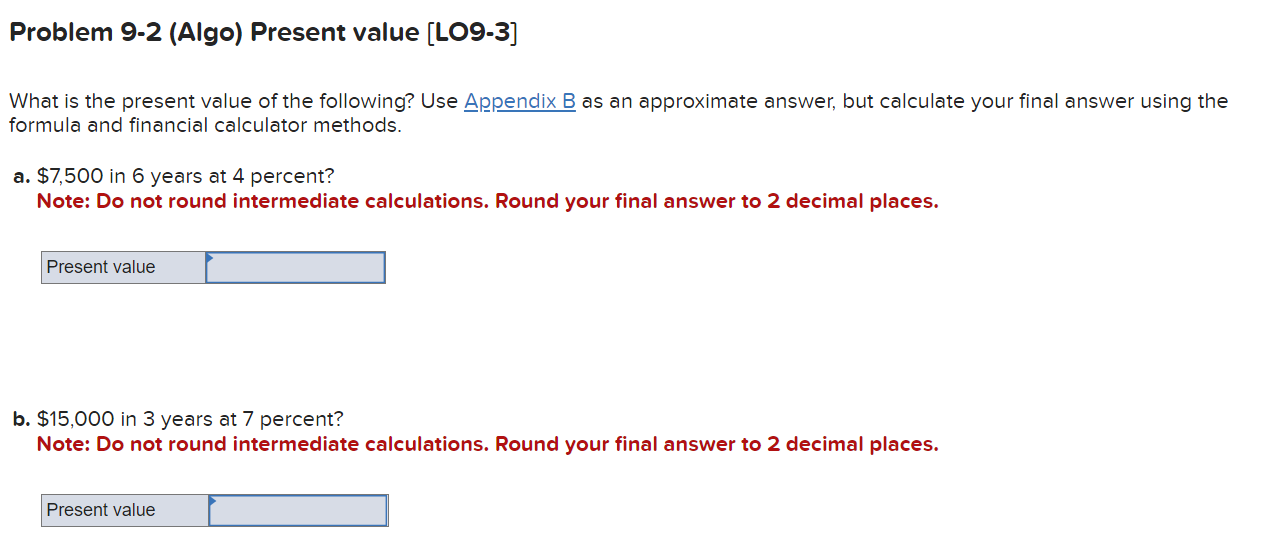
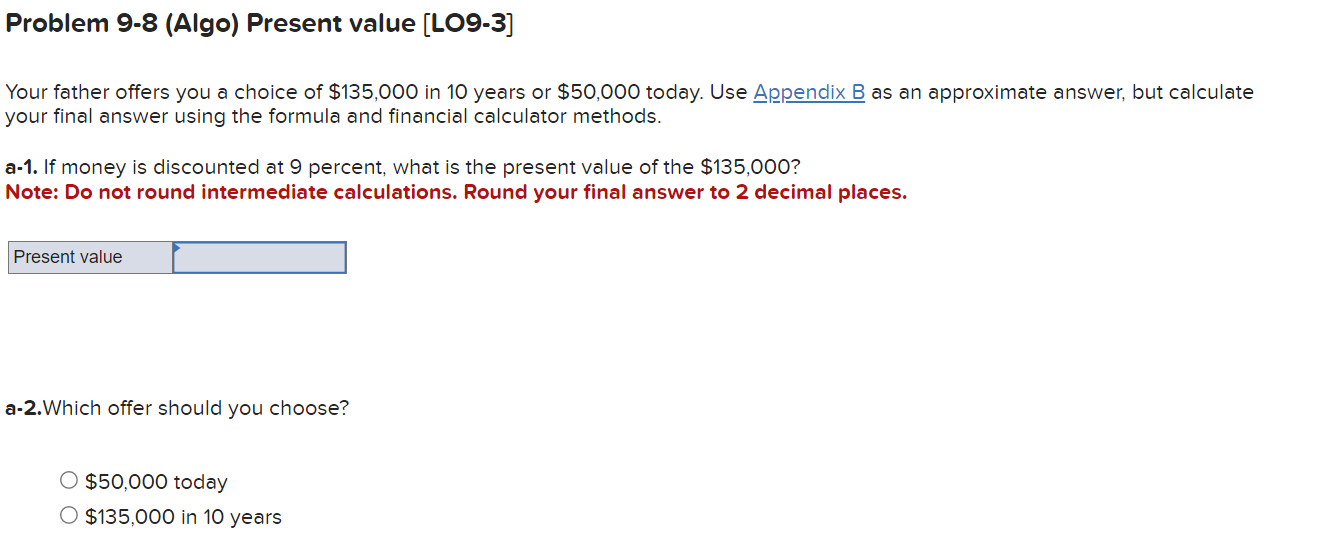
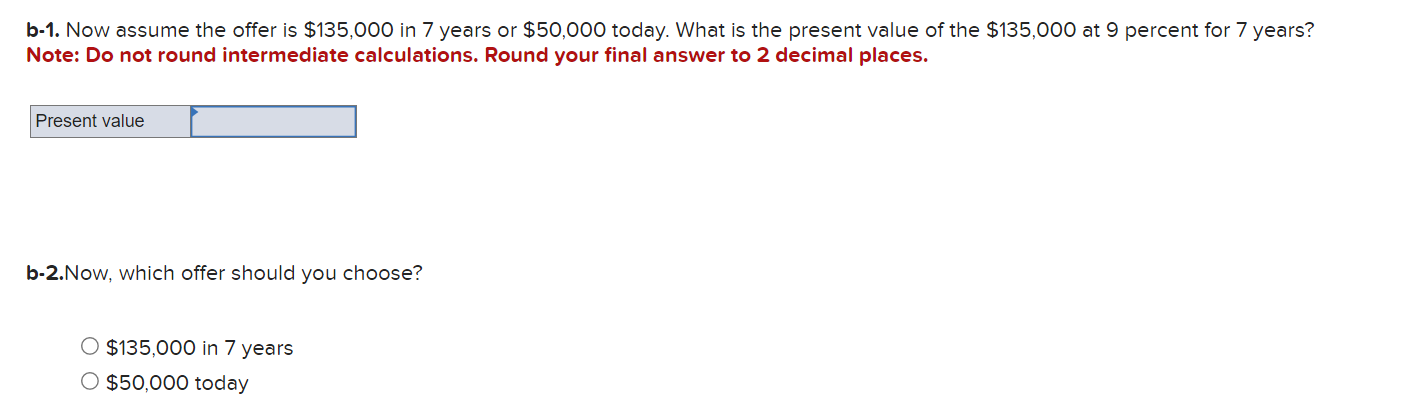
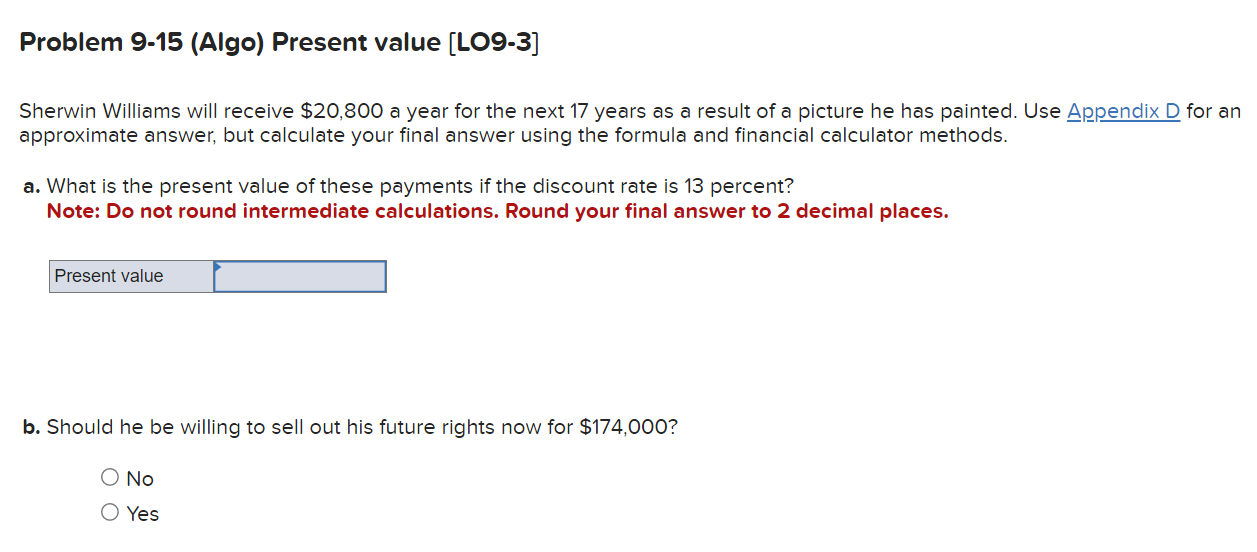
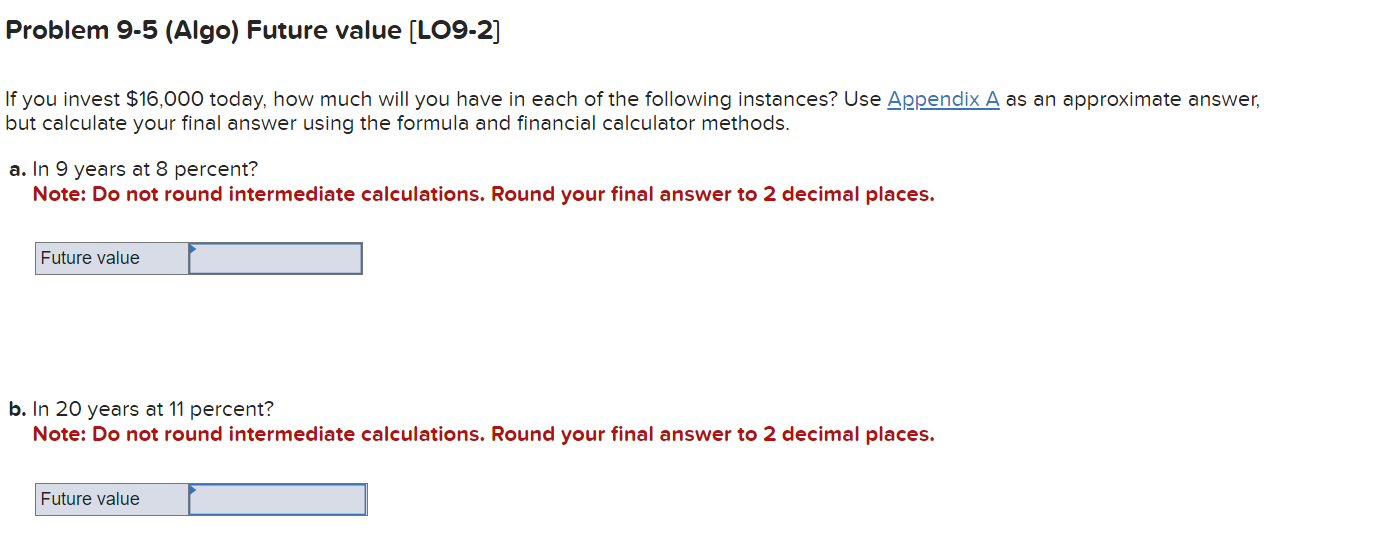
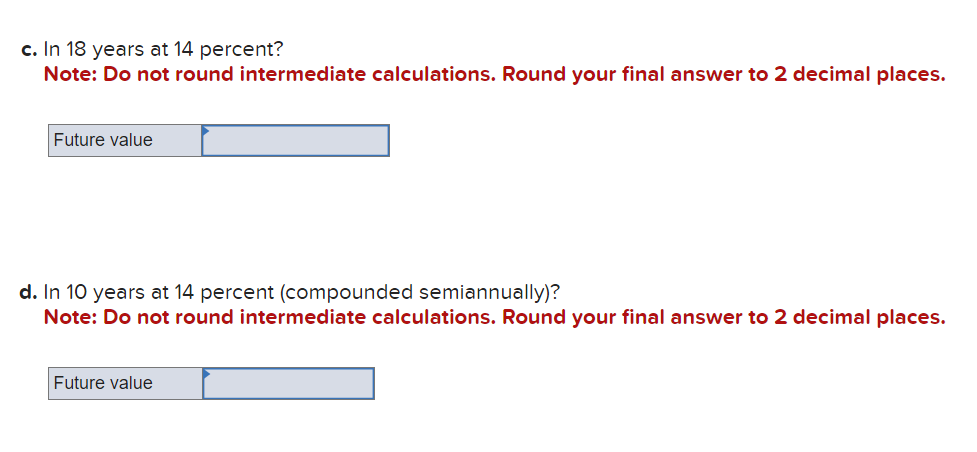
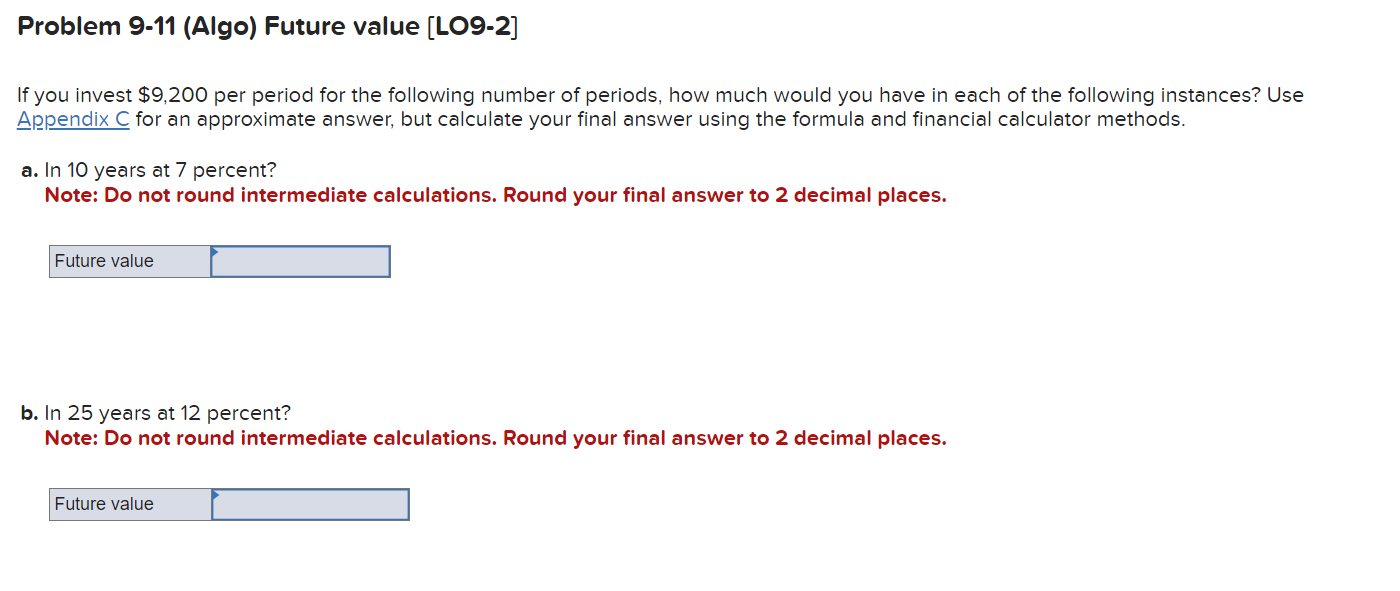
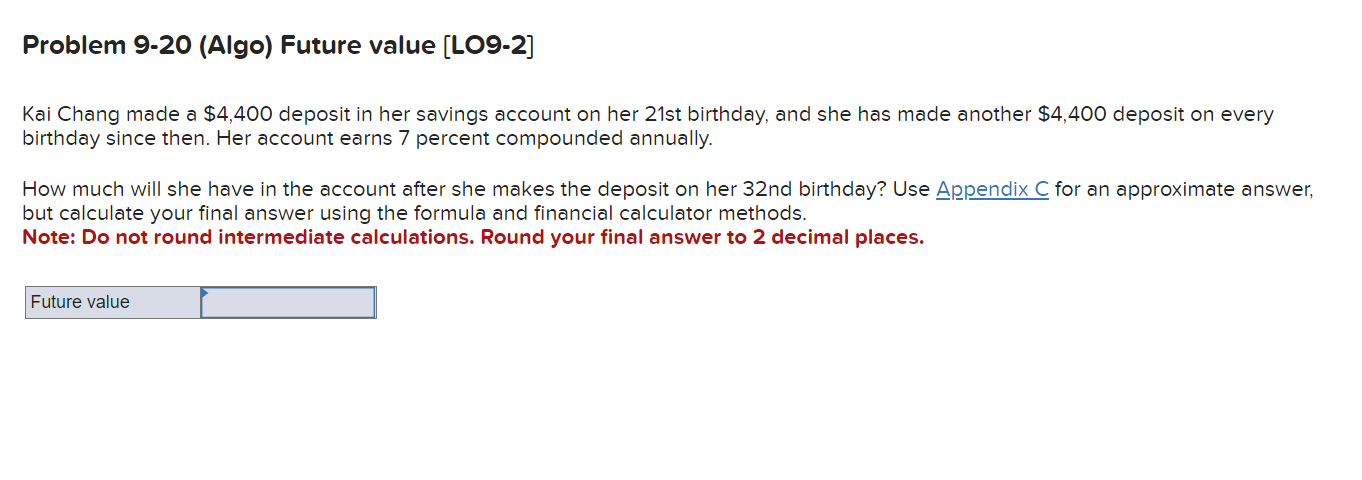
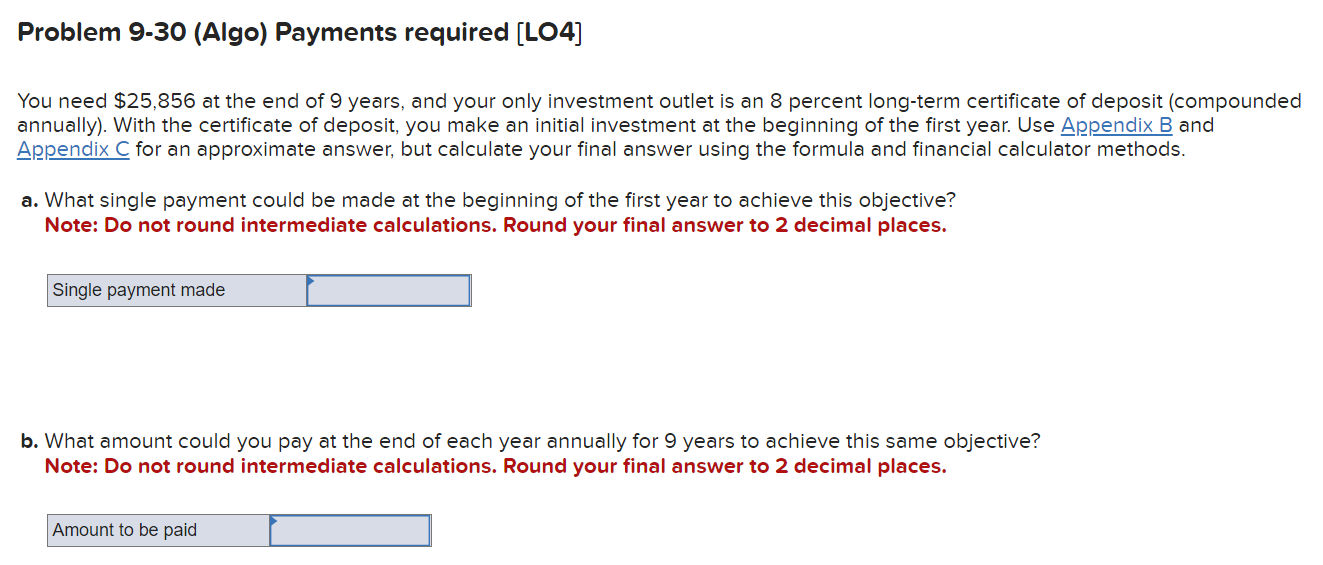
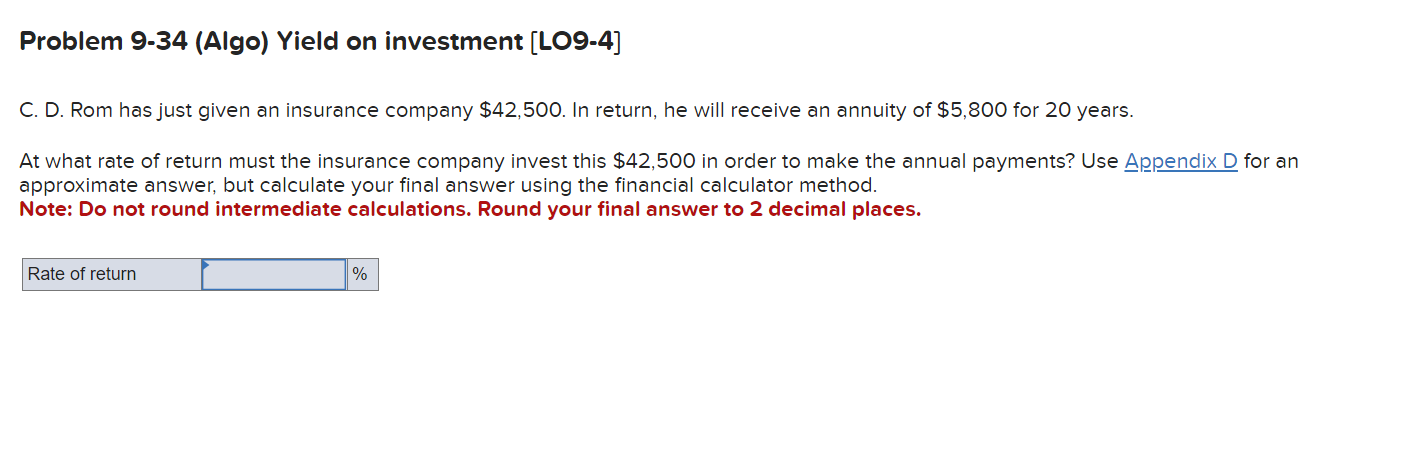
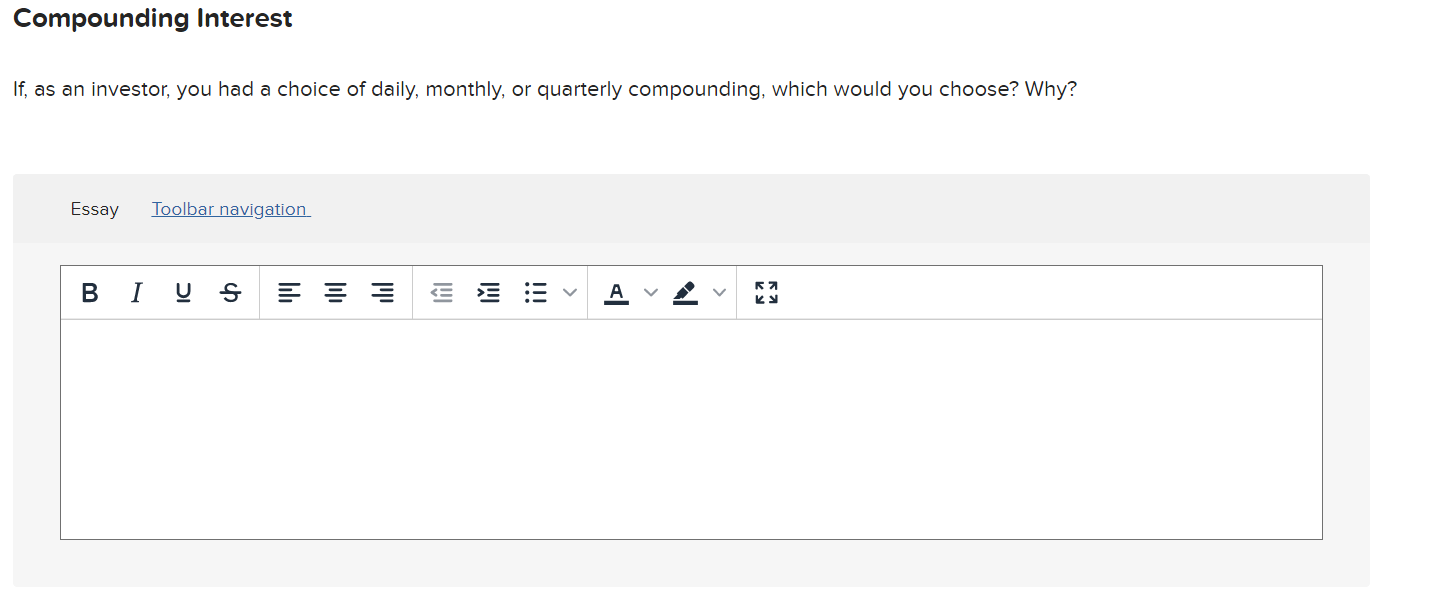
Problem 9-2 (Algo) Present value [LO9-3] What is the present value of the following? Use Appendix B as an approximate answer, but calculate your final answer using the formula and financial calculator methods. a. $7,500 in 6 years at 4 percent? Note: Do not round intermediate calculations. Round your final answer to 2 decimal places. Present value b. $15,000 in 3 years at 7 percent? Note: Do not round intermediate calculations. Round your final answer to 2 decimal places. Present valuec. $25,300 in 9 years at 6 percent? Note: Do not round intermediate calculations. Round your final answer to 2 decimal places. Present value Problem 9-8 (Algo) Present value [L09-3] Your father offers you a choice of $135,000 in 10 years or $50000 today. Use Appendix B as an approximate answer. but calculate your final answer using the formula and financial calculator methods. a-1. If money is discounted at 9 percent. what is the present value of the $135000? Note: Do not round intermediate calculations. Round your final answer to 2 decimal places. Present value a-2.Which offer should you choose? 0 $50000 today 0 $135000 in 10 years b-1. Now assume the offer is $135000 in 7 years or $50,000 today. What is the present value of the $135,000 at 9 percent for 7 years? Note: Do not round intermediate calculations. Round your final answer to 2 decimal places. Present value b-2.Now. which offer should you choose? 0 $135,000 in 7 years 0 $50,000 today Problem 9-15 (Algo) Present value [L09-3] Sherwin Williams will receive $20800 a year for the next 17 years as a result of a picture he has painted. Use Appendix D for an approximate answer, but calculate your final answer using the formula and financial calculator methods. a. What is the present value ofthese payments ifthe discount rate is 13 percent? Note: Do not round intermediate calculations. Round your final answer to 2 decimal places. Present value b. Should he be willing to sell out his future rights now for $174000? 0 No 0 Yes Problem 9-5 (Algo) Future value [L09-2] if you invest $16000 today, how much will you have in each of the following instances? Use Appendix A as an approximate answer, but calculate your final answer using the formula and financial calculator methods a. In 9 years at 8 percent? Note: Do not round intermediate calculations. Round your final answer to 2 decimal places. b. In 20 years at 11 percent? Note: Do not round intermediate calculations. Round your final answer to 2 decimal places. c. In 18 years at 14 percent? Note: Do not round intermediate calculations. Round your final answer to 2 decimal places. d. In 10 years at 14 percent (compounded semiannually)? Note: Do not round intermediate calculations. Round your final answer to 2 decimal places. Problem 9-11 (Algo) Future value [Log-2] If you invest $9.200 per period for the following number of periods. how much would you have in each of the following instances? Use Appendix C for an approximate answer. but calculate your final answer using the formula and financial calculator methods. a. In 10 years at 7 percent? Note: Do not round intermediate calculations. Round your final answer to 2 decimal places. b. In 25 years at 12 percent? Note: Do not round intermediate calculations. Round your final answer to 2 decimal places. Problem 9-20 (Algo) Future value [LOB-2] Kai Chang made a $4,400 deposit in her savings account on her 21st birthday. and she has made another $4,400 deposit on every dirthday since then. Her account earns 7 percent compounded annually. How much will she have in the account after she makes the deposit on her 32nd birthday? Use Appendix C for an approximate answer. out calculate your final answer using the formula and financial calculator methods Note: Do not round intermediate calculations. Round your final answer to 2 decimal places. Problem 9-30 (Algo) Payments required [LO4] You need $25,856 at the end of 9 years, and your only investment outlet is an 8 percent long-term certificate of deposit (compounded annually). With the certificate of deposit, you make an initial investment at the beginning of the first year. Use Appendix B and Appendix C for an approximate answer, but calculate your final answer using the formula and financial calculator methods. a. What single payment could be made at the beginning of the first year to achieve this objective? Note: Do not round intermediate calculations. Round your final answer to 2 decimal places. Single payment made b. What amount could you pay at the end of each year annually for 9 years to achieve this same objective? Note: Do not round intermediate calculations. Round your final answer to 2 decimal places. Amount to be paidProblem 9-34 (Algo) Yield on investment [LO9-4] C. D. Rom has just given an insurance company $42,500. In return, he will receive an annuity of $5,800 for 20 years. At what rate of return must the insurance company invest this $42,500 in order to make the annual payments? Use Appendix D for an approximate answer, but calculate your final answer using the financial calculator method. Note: Do not round intermediate calculations. Round your final answer to 2 decimal places. Rate of return %Problem 9-25 (Algo) Quarterly compounding [L09-5] Juan Garza invested $121_00010 years ago at 8 percent. compounded quarterly. How much has he accumulated? Use Appendix A for an approximate answer but calculate your final answer using the formula and financial calculator methods. Note: Do not round intermediate calculations. Round your final answer to 2 decimal places. Compounding Interest If, as an investor, you had a choice of daily, monthly, or quarterly compounding, which would you choose? Why? Essay Toolbar navigation BIUS
Step by Step Solution
There are 3 Steps involved in it
1 Expert Approved Answer
Step: 1 Unlock
Question Has Been Solved by an Expert!
Get step-by-step solutions from verified subject matter experts
Step: 2 Unlock
Step: 3 Unlock
Students Have Also Explored These Related Mathematics Questions!











 Study Help