







Question: The three cases defined in the master theorem are: Case 1: If f(n) = O(nloga-C) for some constant e > 0, then T(n) O(nlogoa). Case
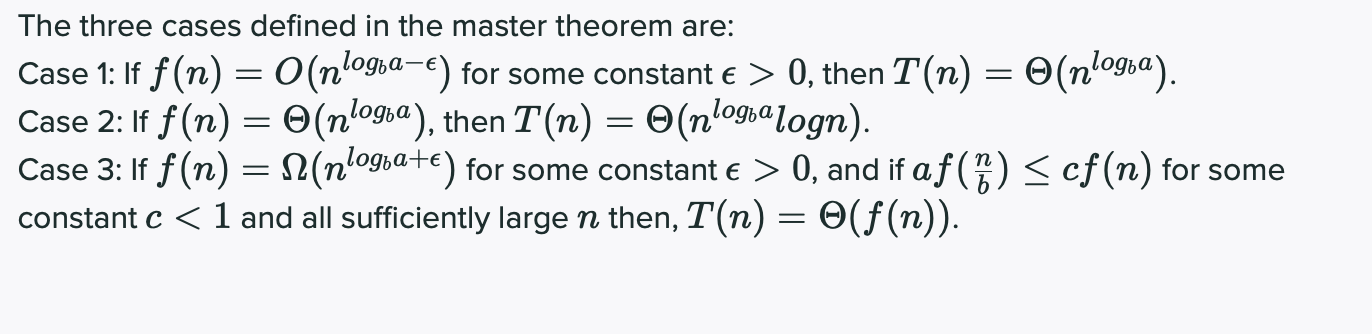
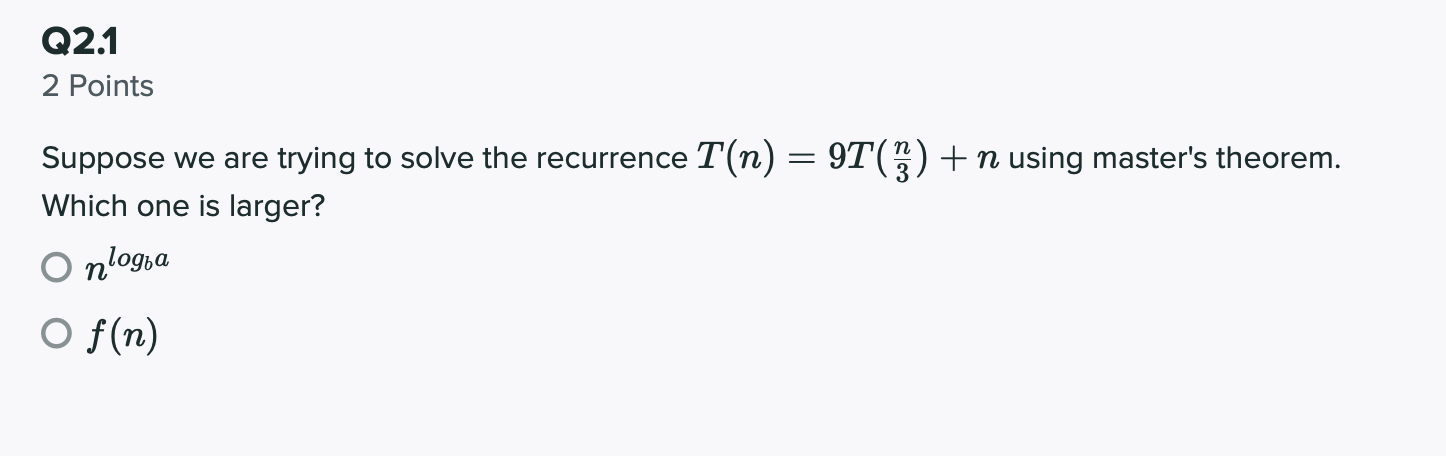
The three cases defined in the master theorem are: Case 1: If f(n) = O(nloga-C) for some constant e > 0, then T(n) O(nlogoa). Case 2: If f(n) = (nlogia), then T(n) = (nlogalogn). Case 3: If f(n) N(nlogoa+E) for some constant e > 0, and if af (7)
Step by Step Solution
There are 3 Steps involved in it
1 Expert Approved Answer
Step: 1 Unlock

Question Has Been Solved by an Expert!
Get step-by-step solutions from verified subject matter experts
Step: 2 Unlock
Step: 3 Unlock
 Study Help