Question: there are no missing information. those information is complete. Hong Kong Disneyland Providing a magical experience for every guest (customer), Disney, with all its hotels
there are no missing information. those information is complete.
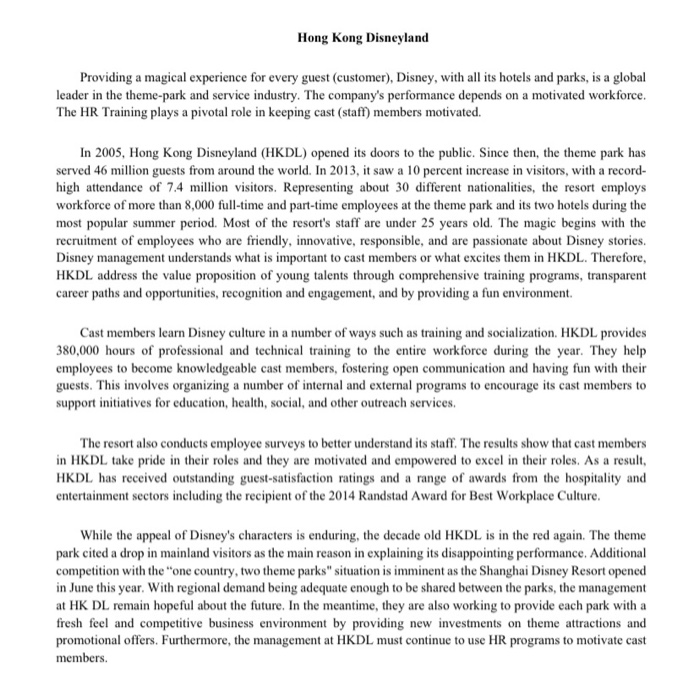
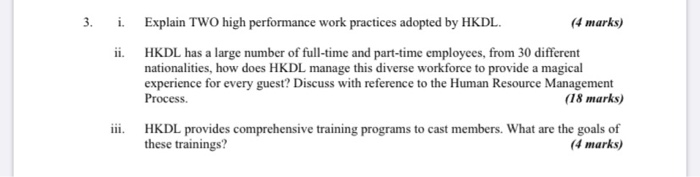
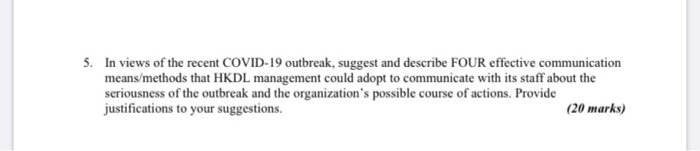
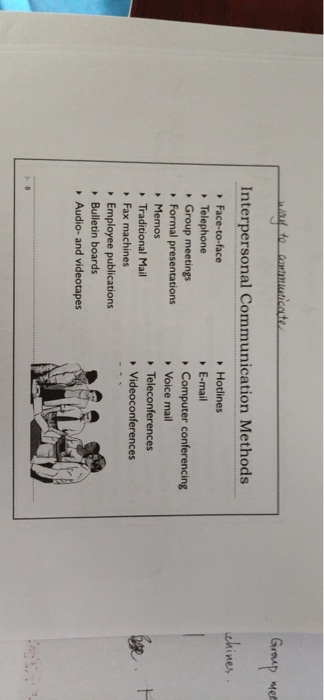
Hong Kong Disneyland Providing a magical experience for every guest (customer), Disney, with all its hotels and parks, is a global leader in the theme-park and service industry. The company's performance depends on a motivated workforce. The HR Training plays a pivotal role in keeping cast (staff) members motivated. In 2005, Hong Kong Disneyland (HKDL) opened its doors to the public. Since then, the theme park has served 46 million guests from around the world. In 2013, it saw a 10 percent increase in visitors, with a record- high attendance of 7.4 million visitors. Representing about 30 different nationalities, the resort employs workforce of more than 8,000 full-time and part-time employees at the theme park and its two hotels during the most popular summer period. Most of the resort's staff are under 25 years old. The magic begins with the recruitment of employees who are friendly, innovative, responsible, and are passionate about Disney stories. Disney management understands what is important to cast members or what excites them in HKDL. Therefore, HKDL address the value proposition of young talents through comprehensive training programs, transparent career paths and opportunities, recognition and engagement, and by providing a fun environment Cast members learn Disney culture in a number of ways such as training and socialization. HKDL provides 380,000 hours of professional and technical training to the entire workforce during the year. They help employees to become knowledgeable cast members, fostering open communication and having fun with their guests. This involves organizing a number of internal and external programs to encourage its cast members to support initiatives for education, health, social, and other outreach services. The resort also conducts employee surveys to better understand its staff. The results show that cast members in HKDL take pride in their roles and they are motivated and empowered to excel in their roles. As a result, HKDL has received outstanding guest satisfaction ratings and a range of awards from the hospitality and entertainment sectors including the recipient of the 2014 Randstad Award for Best Workplace Culture, While the appeal of Disney's characters is enduring the decade old HKDL is in the red again. The theme park cited a drop in mainland visitors as the main reason in explaining its disappointing performance. Additional competition with the "one country, two theme parks" situation is imminent as the Shanghai Disney Resort opened in June this year. With regional demand being adequate enough to be shared between the parks, the management at HK DL remain hopeful about the future. In the meantime, they are also working to provide each park with a fresh feel and competitive business environment by providing new investments on theme attractions and promotional offers. Furthermore, the management at HKDL must continue to use HR programs to motivate cast members. 3. i. Explain TWO high performance work practices adopted by HKDL. (4 marks) ii. HKDL has a large number of full-time and part-time employees, from 30 different nationalities, how does HKDL manage this diverse workforce to provide a magical experience for every guest? Discuss with reference to the Human Resource Management Process. (18 marks) HKDL provides comprehensive training programs to cast members. What are the goals of these trainings? (4 marks) ili 5. In views of the recent COVID-19 outbreak, suggest and describe FOUR effective communication means/methods that HKDL management could adopt to communicate with its staff about the seriousness of the outbreak and the organization's possible course of actions. Provide justifications to your suggestions. (20 marks) to communicate mer Group chines. Interpersonal Communication Methods Face-to-face Hotlines Telephone E-mail Group meetings Computer conferencing Formal presentations Voice mail Memos Teleconferences Traditional Mail Fax machines Videoconferences Employee publications Bulletin boards Audio and videotapes bet









 Study Help