



Question: There are two important issue dimensions in country X the economy and social policy. A description of the party system is shown in the Figure
There are two important issue dimensions in country X the economy and social policy. A description of the party system is shown in the Figure 4 below. Specifically, Figure 4 indicates the location of the three parties in country X on each of the two issue dimensions. No party is large enough to form a majority government on their own. Any two parties could form a government coalition and enjoy a majority. We are going to examine what governments might be equilibrium governments.
a) Indicate all of the possible governments that might form on Figure 4. In other words, where would an AB coalition be located, where would a C minority government be located, where would a CA coalition be located etc.? You should have 9 potential governments.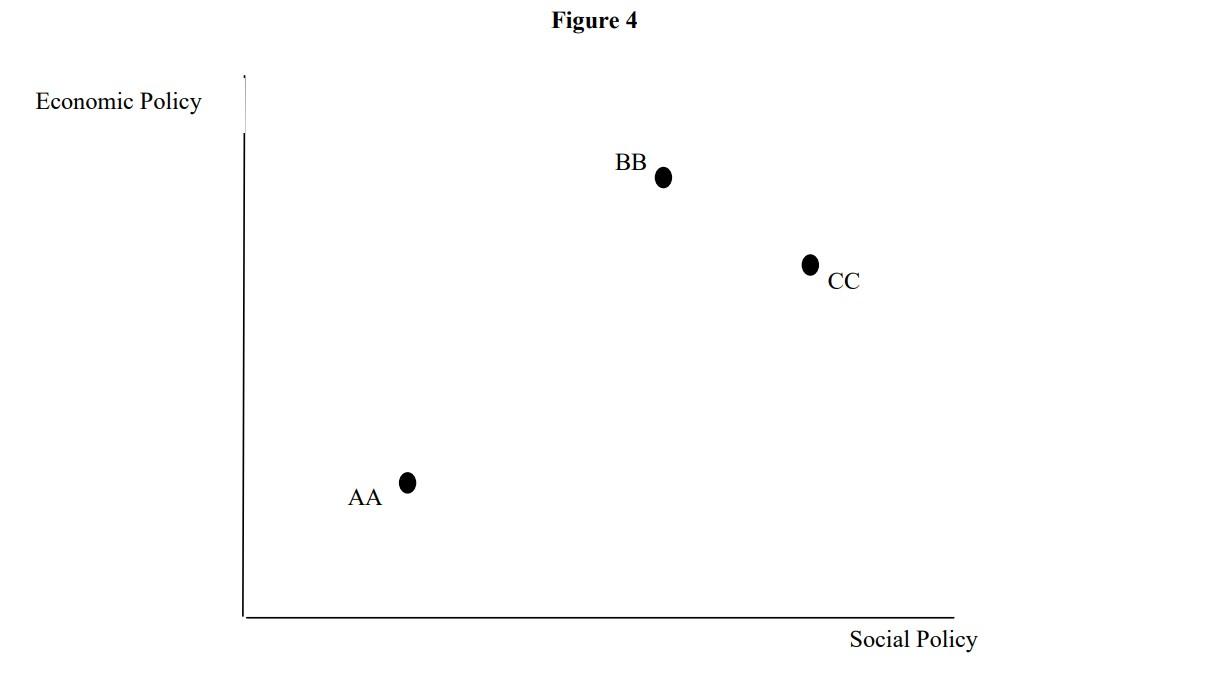 b) Use Figure 4 to indicate what policy combinations are preferred to the government coalition BC. In other words, shade in all policy combinations that are preferred by a majority of parties to BC.
c) Use Figure 4 to determine whether government coalition BC is an equilibrium government. Are there any other government coalitions that are majority preferred to BC?
d) Use Figure 5 on the next page to indicate what policy combinations are preferred to the minority government CC. In other words, shade in all policy combinations that are preferred by a majority of parties to BC.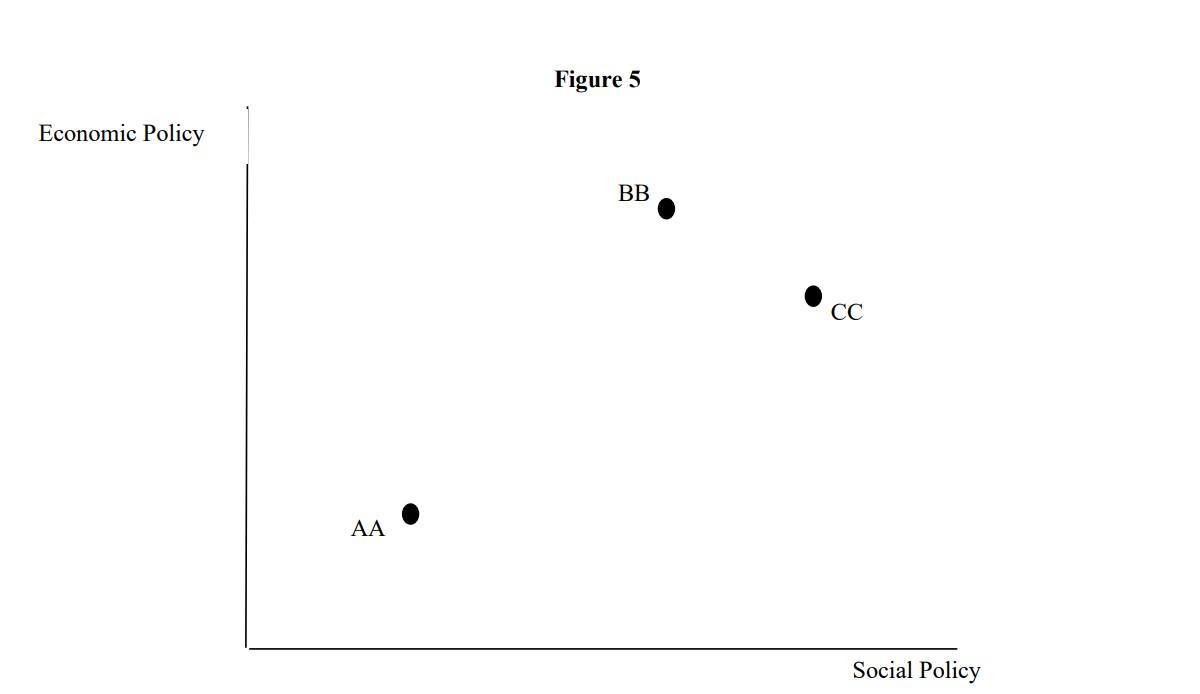
e) Use Figure 5 to determine whether the minority government CC is an equilibrium government. Are there any other government coalitions that are majority preferred to CC? If so, what are they? What does this tell you about whether minority government CC is an equilibrium government?
f) Use Figure 6 on the next page to indicate what policy combinations are preferred to the minority government BB. In other words, shade in all policy combinations that are preferred by a majority of parties to BB
g) Use Figure 6 to determine whether the minority government BB is an equilibrium government. Are there any other government coalitions that are majority preferred to BB? If so, what are they?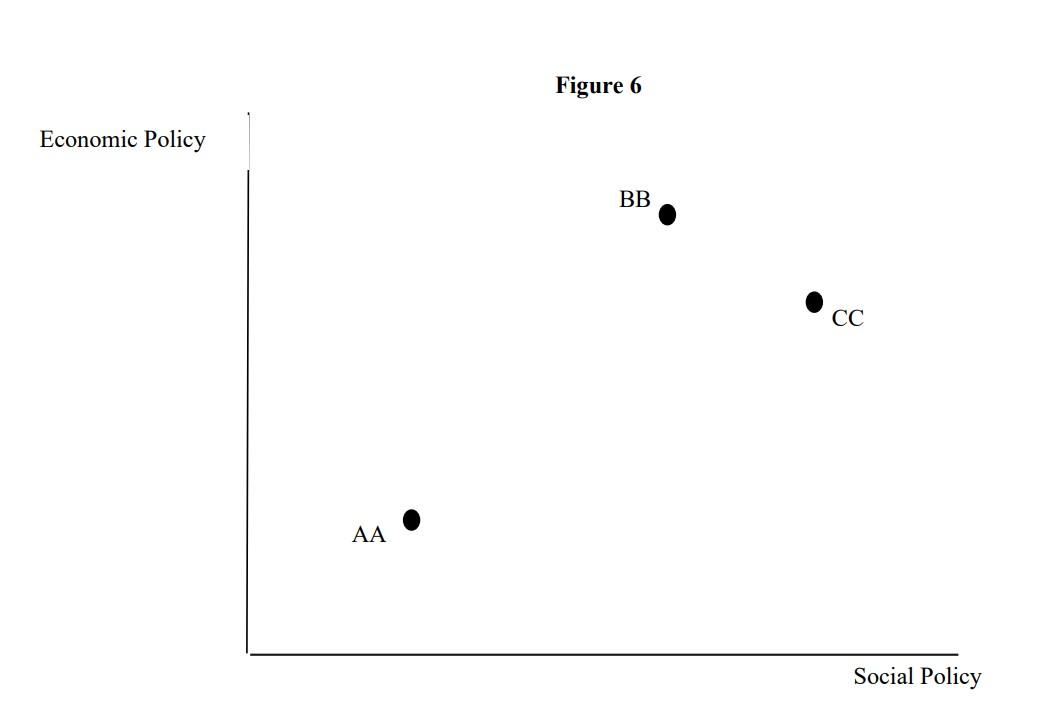
h) Imagine that the status quo was a minority BB government. If you found in the last question that there were other governments that are majority preferred to BB, do you think that any of these other governments would actually form? If not, why not?
i) What is a strong party? Is party B a strong party? If not, why not? If it is, is it a very strong party or a merely strong party and how do you know?
Figure 4 Economic Policy BB CC AA Social Policy Figure 5 Economic Policy BB CC AA Social Policy Figure 6 Economic Policy BB CC AA Social Policy Figure 4 Economic Policy BB CC AA Social Policy Figure 5 Economic Policy BB CC AA Social Policy Figure 6 Economic Policy BB CC AA Social Policy
Step by Step Solution
There are 3 Steps involved in it

Get step-by-step solutions from verified subject matter experts