







Question: these are the same questions but 2 diffent pages. need answers please 1. What is the atomic number of this atom? 2. What is its
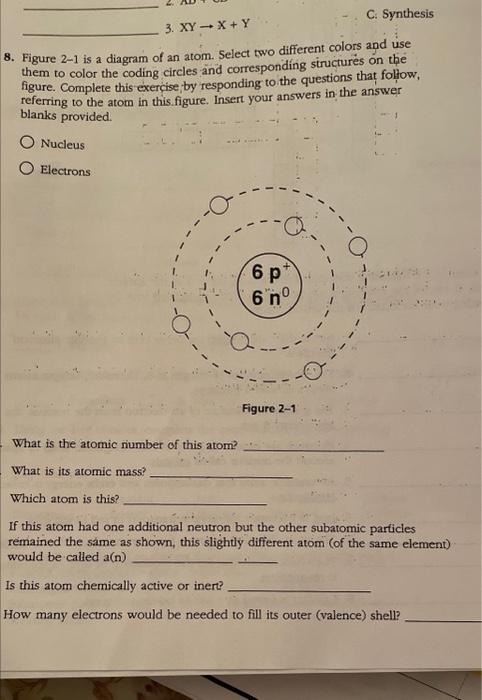
1. What is the atomic number of this atom? 2. What is its atomic mass? 3. Which atom is this? 4. If this atom had one additional neutron but the other subatomic particles remained the same as shown, this slightly different atom (of the same element) would be called a(n) 5. Is this atom chemically active or inert? 6. How many electrons would be needed to fill its outer (valence) shell? 7. Would this atom most likely take part in forming ionic or covalent bonds? Why? 9. Both H2O2 and 2OHare compound molecules composed of the same two hydrogen atoms and two oxygen atoms. Briefly explain how these molecules are different: 10. Two types of chemical bonding are shown in Figure 22. In the figure, identify each type as a(n) ionic or coivalent bond. In the case of the ionic bond, indicate which atom has lost an lectron by adding an arrow to show the direction of electron transfer. For the covalent bond, color the shared electrons. 3. XYX+Y C. Synthesis 8. Figure 21 is a diagram of an atom. Select two different colors and use them to color the coding circles and corresponding structures on the figure. Complete this exercise by responding to the questions that follow, referring to the atom in this figure. Insert your answers in the answer blanks provided. Nucleus Electrons Figure 2-1 What is the atomic number of this atom? What is its atomic mass? Which atom is this? If this atom had one additional neutron but the other subatomic parficles remained the same as shown, this slightly different atom (of the same element) would be called a(n) Is this atom chemically active or inert? How many electrons would be needed to fill its outer (valence) shell
Step by Step Solution
There are 3 Steps involved in it

Get step-by-step solutions from verified subject matter experts
 Study Help