Question: This case assignment try to apply the concepts and information on marketing, specifically, market segmentation and marketing mix . Description Read Beyond the Bean., Course
This case assignment try to apply the concepts and information on marketing, specifically, market segmentation and marketing mix .
Description Read Beyond the Bean., Course Readings, pp. . Apply the theory in the chapter and unit notes to answer the following questions:
- What competition does the company face?
- Where does the opportunity lie for the company? What distinguishes Beyond the Bean? How is it different?
- The case identifies potential market segments. Make a table and further describe each in demographic, geographic, psychographic, and behavioral terms.
- Make a recommendation on which market they should pursue. Your recommendation must be supported by your analysis.
- Design a marketing mix for your recommended target market.
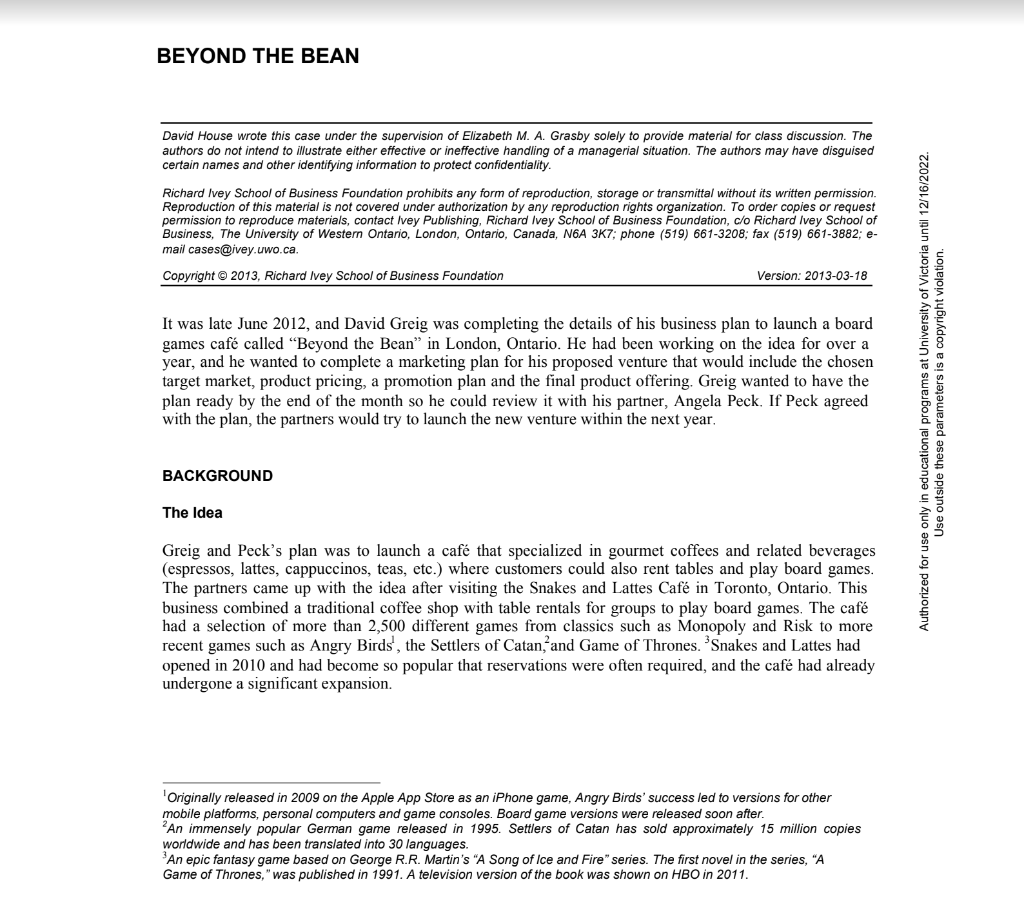
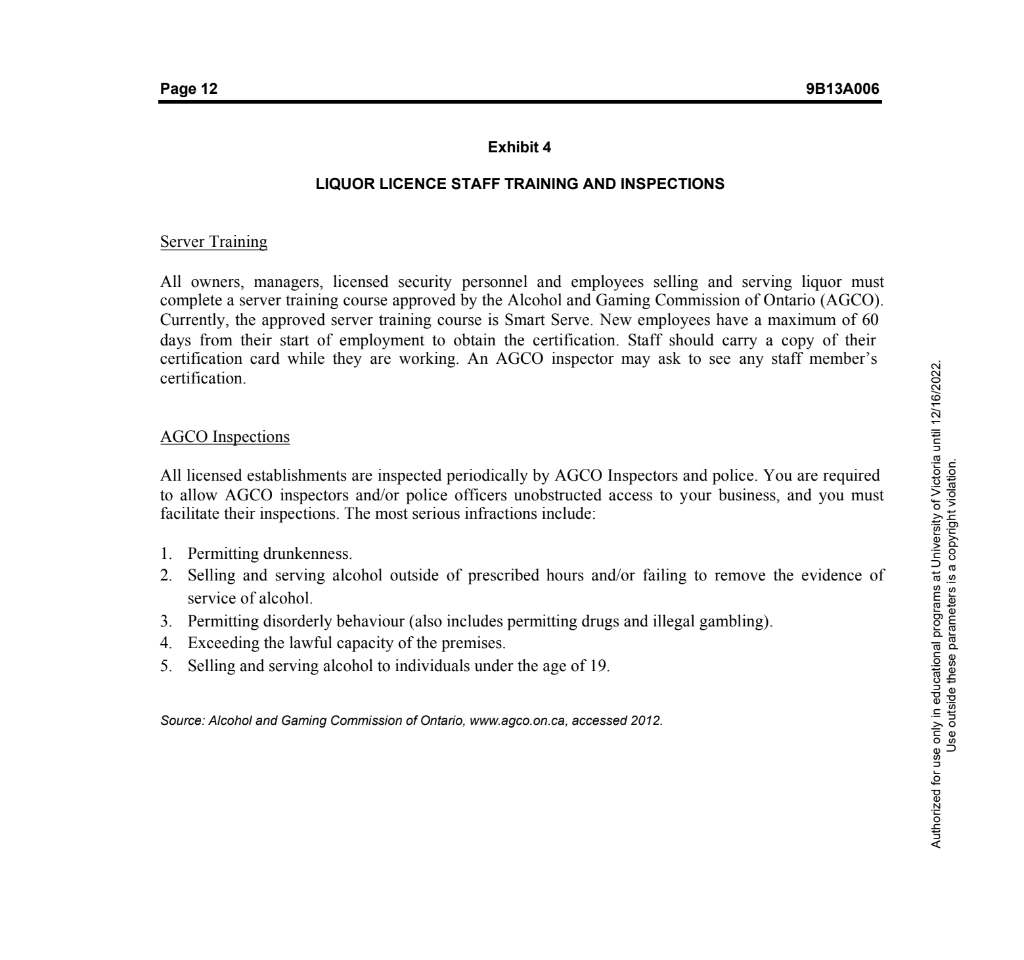
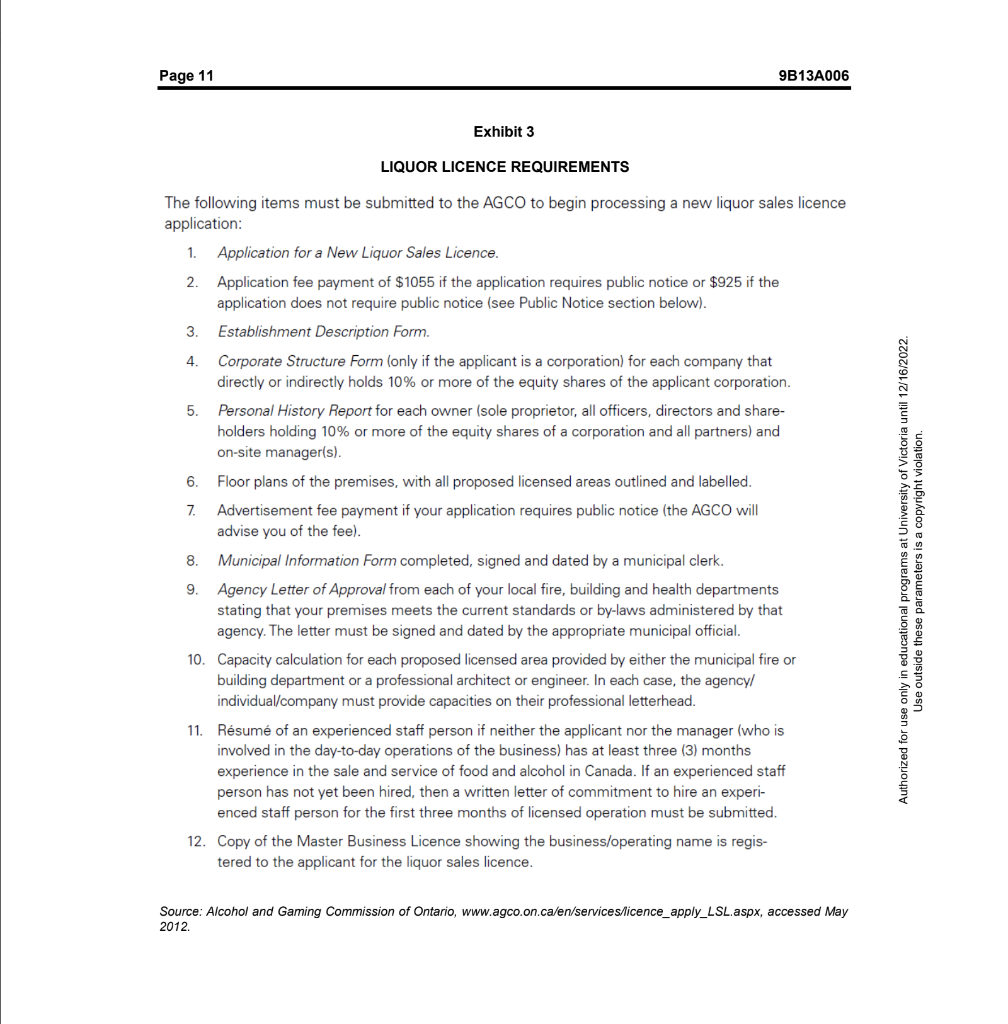
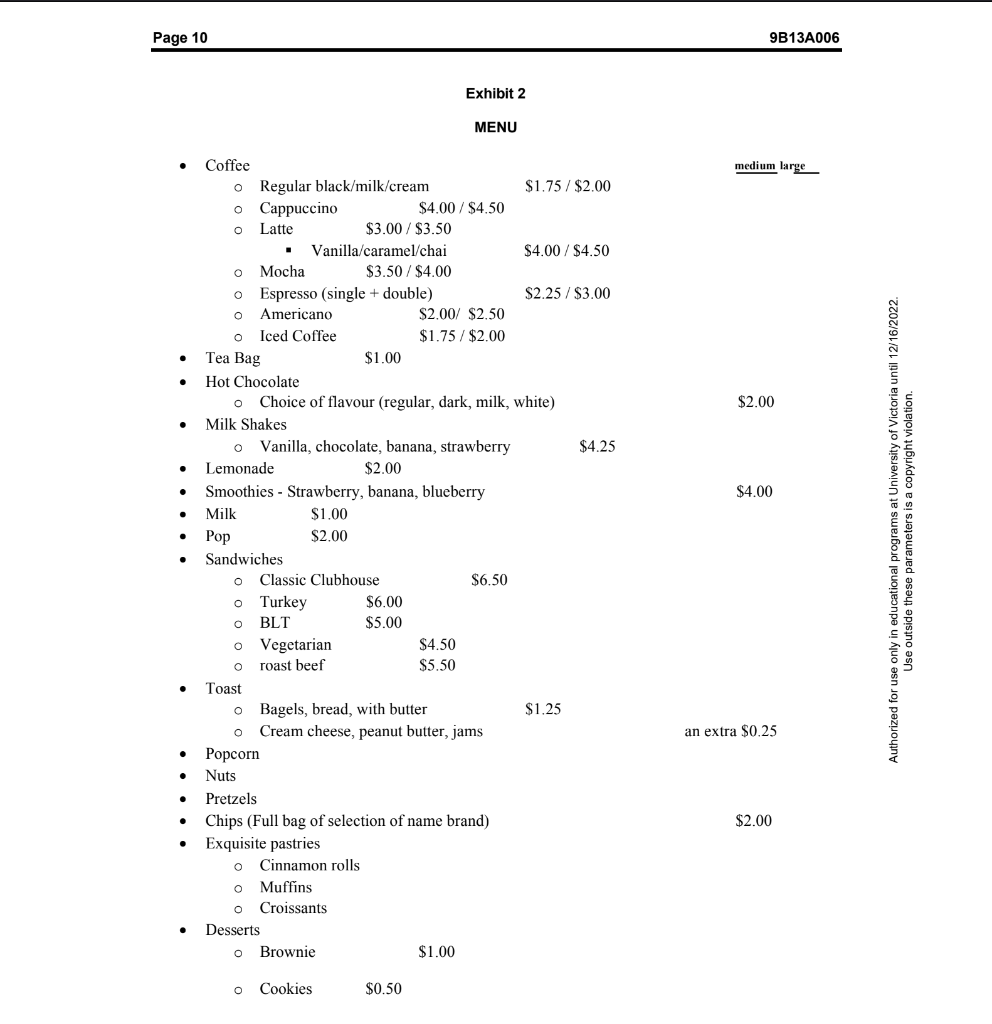
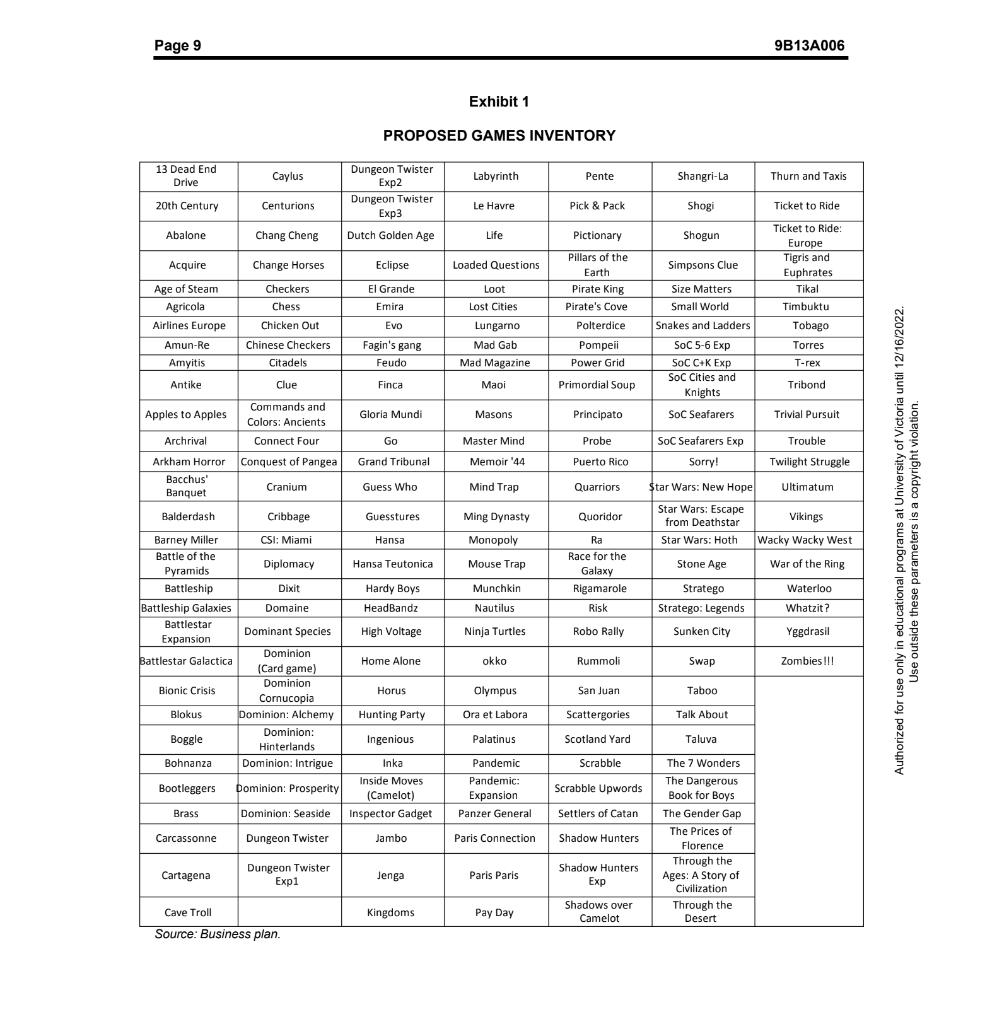
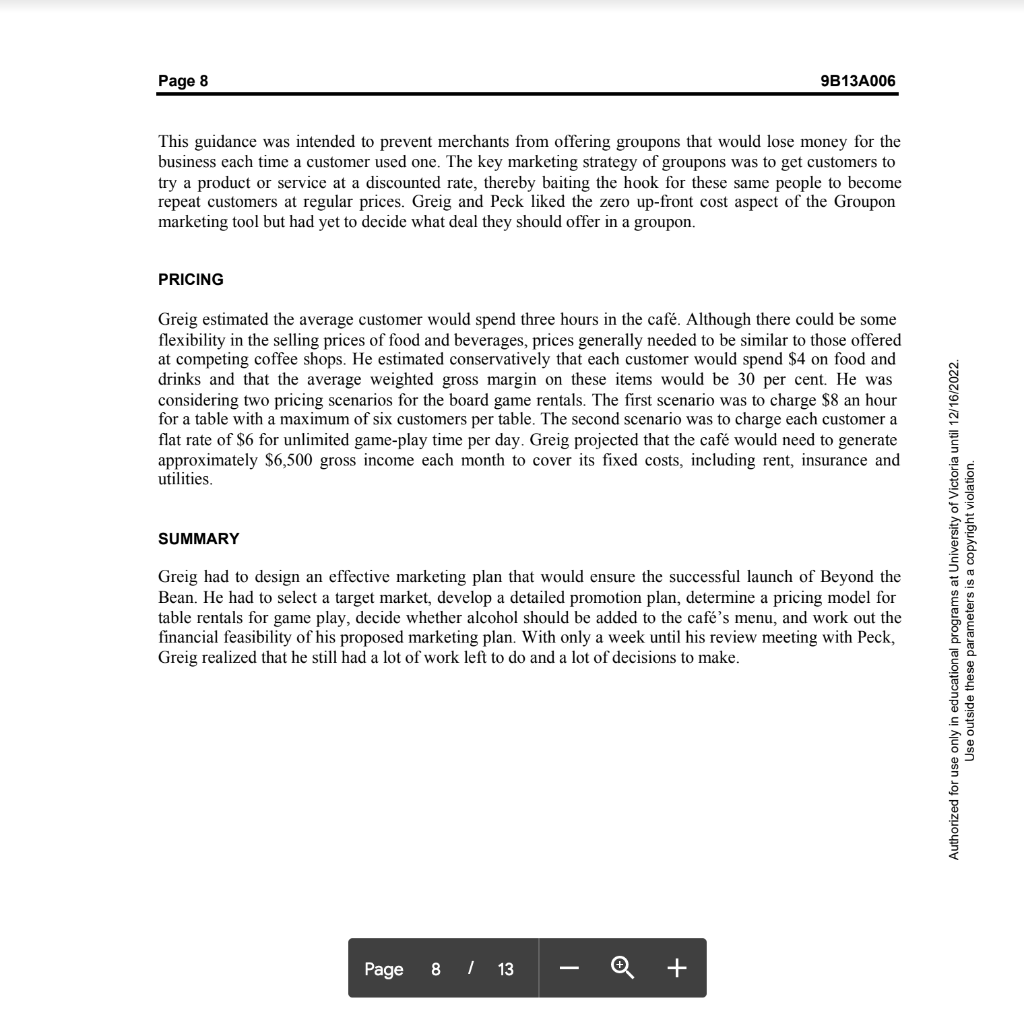
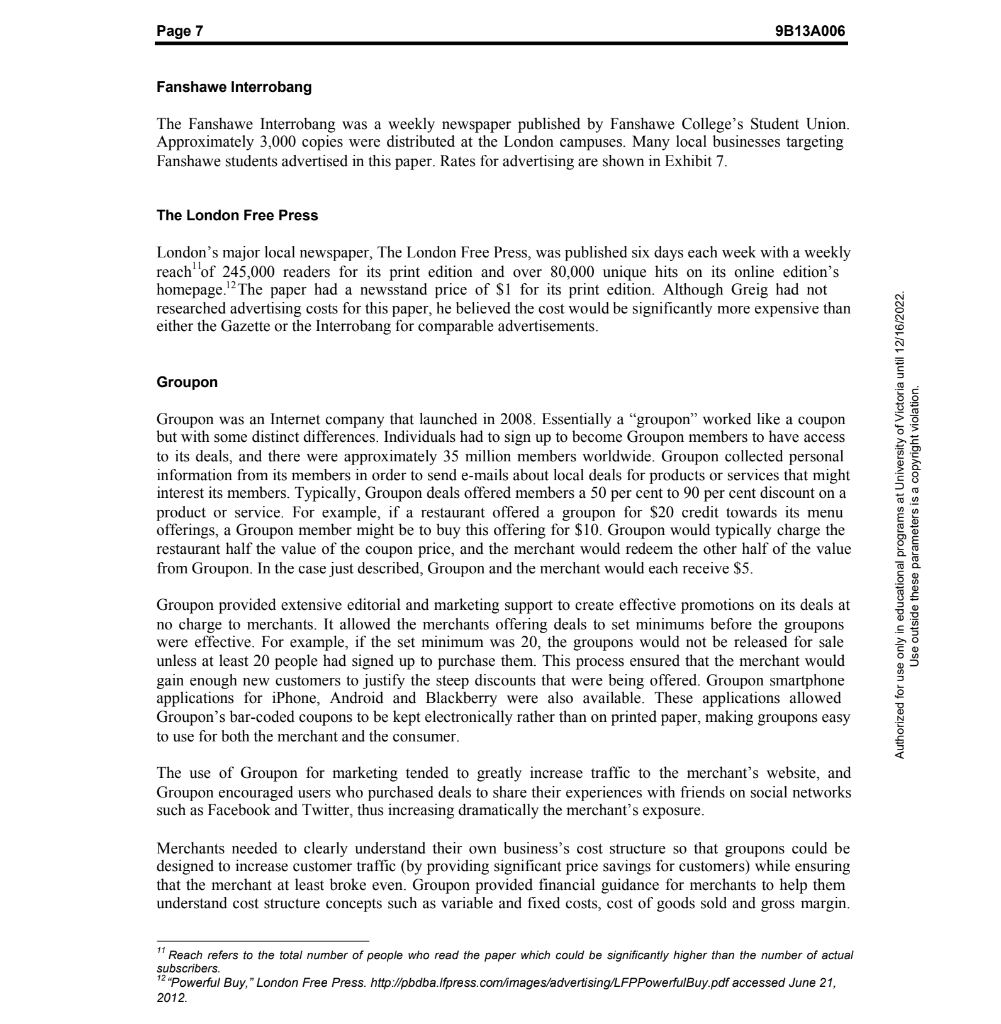
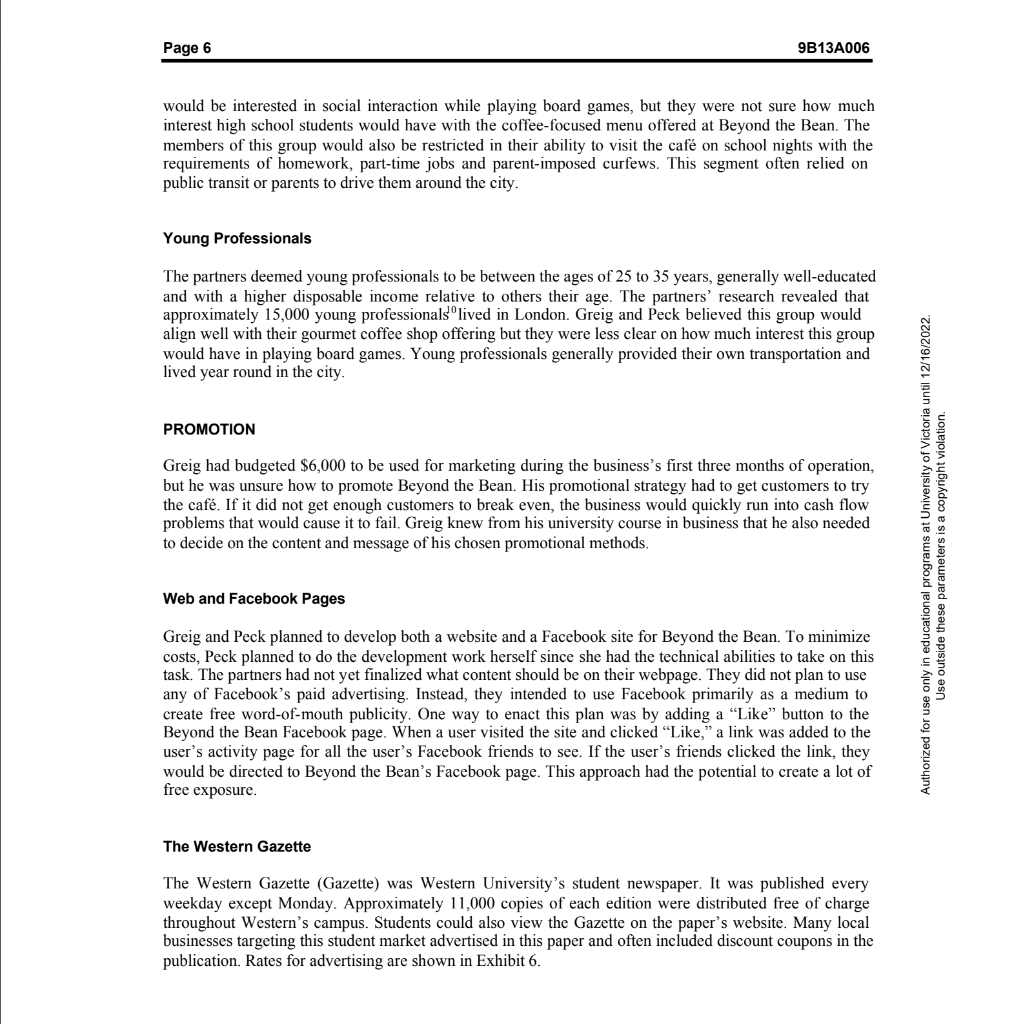
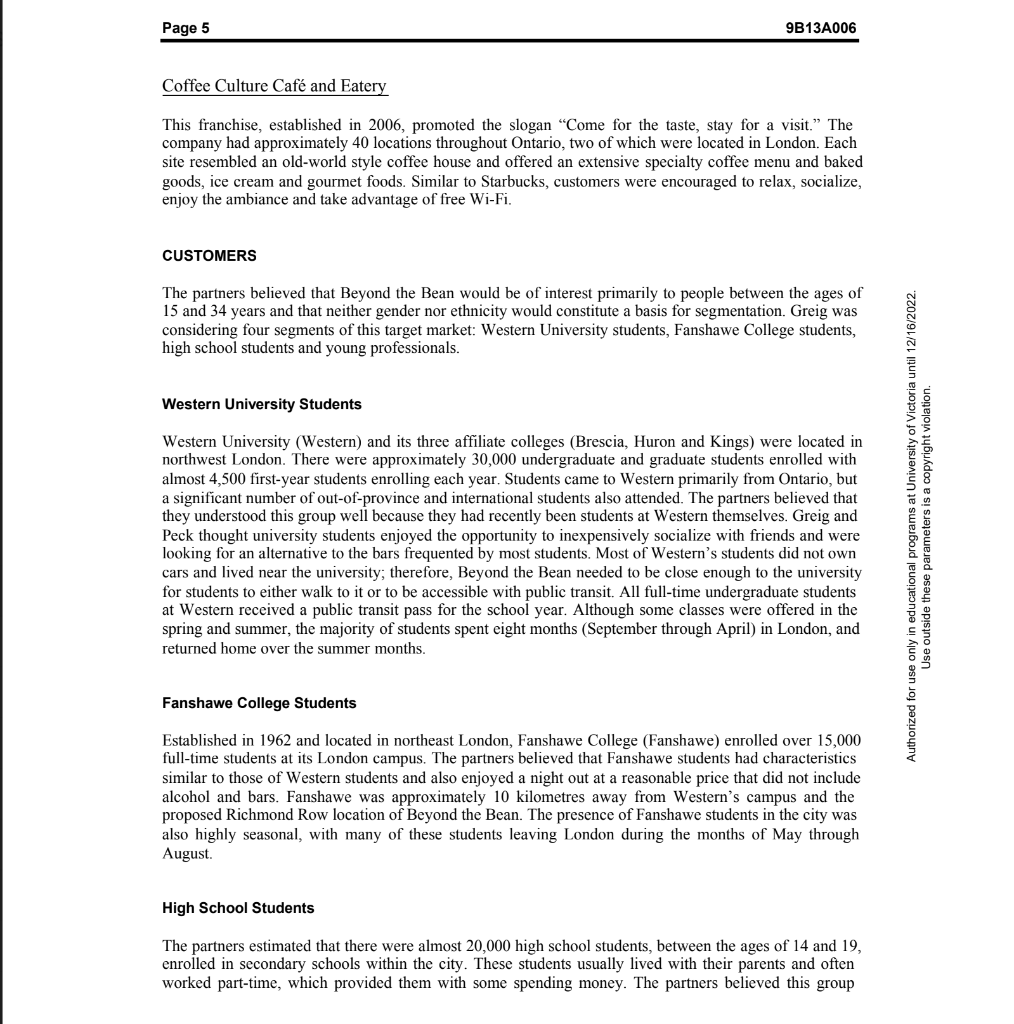
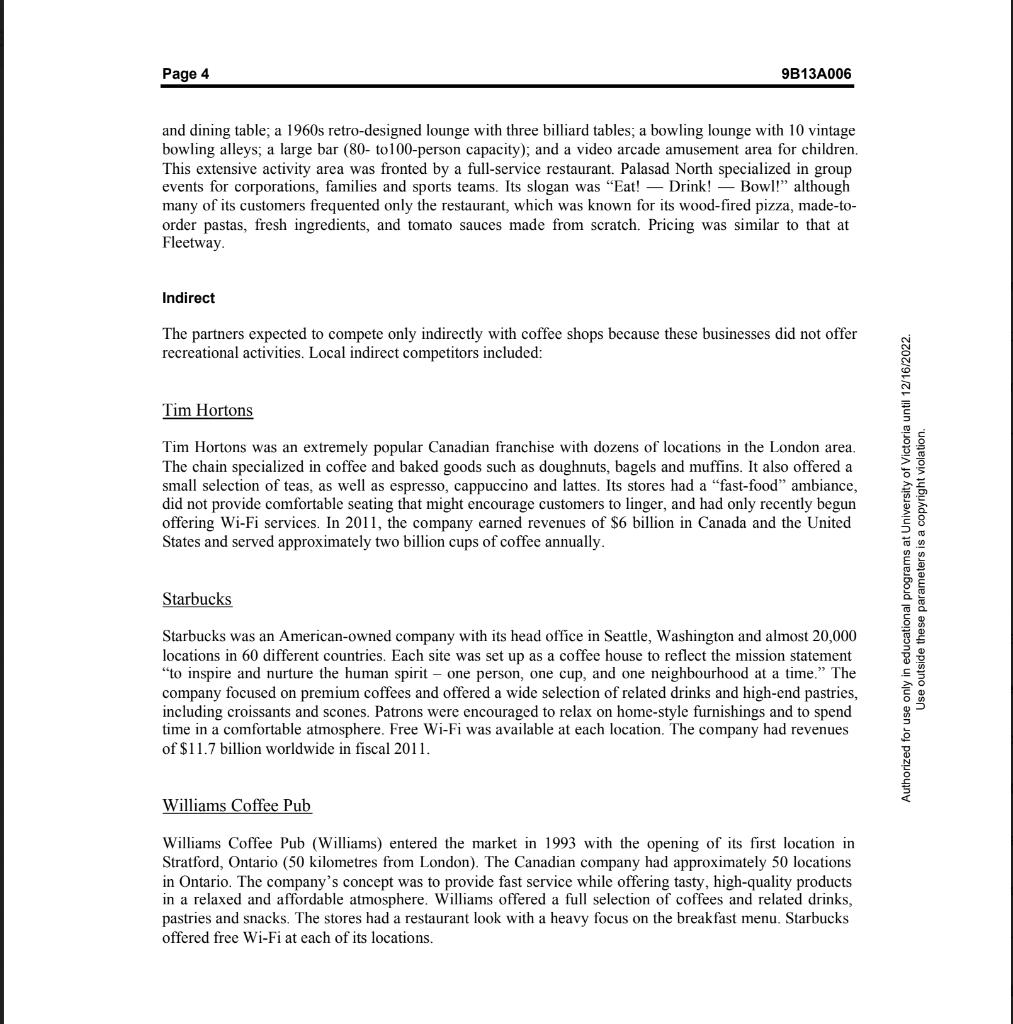
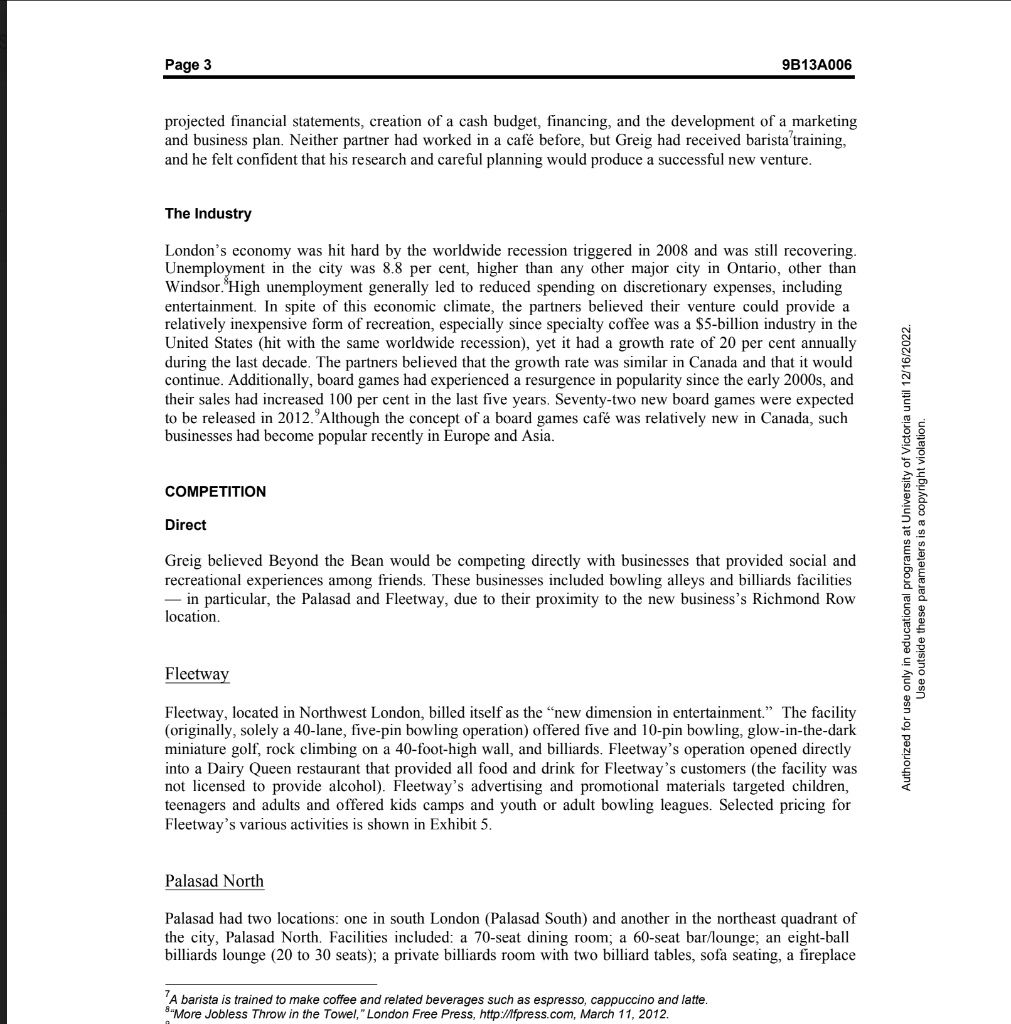
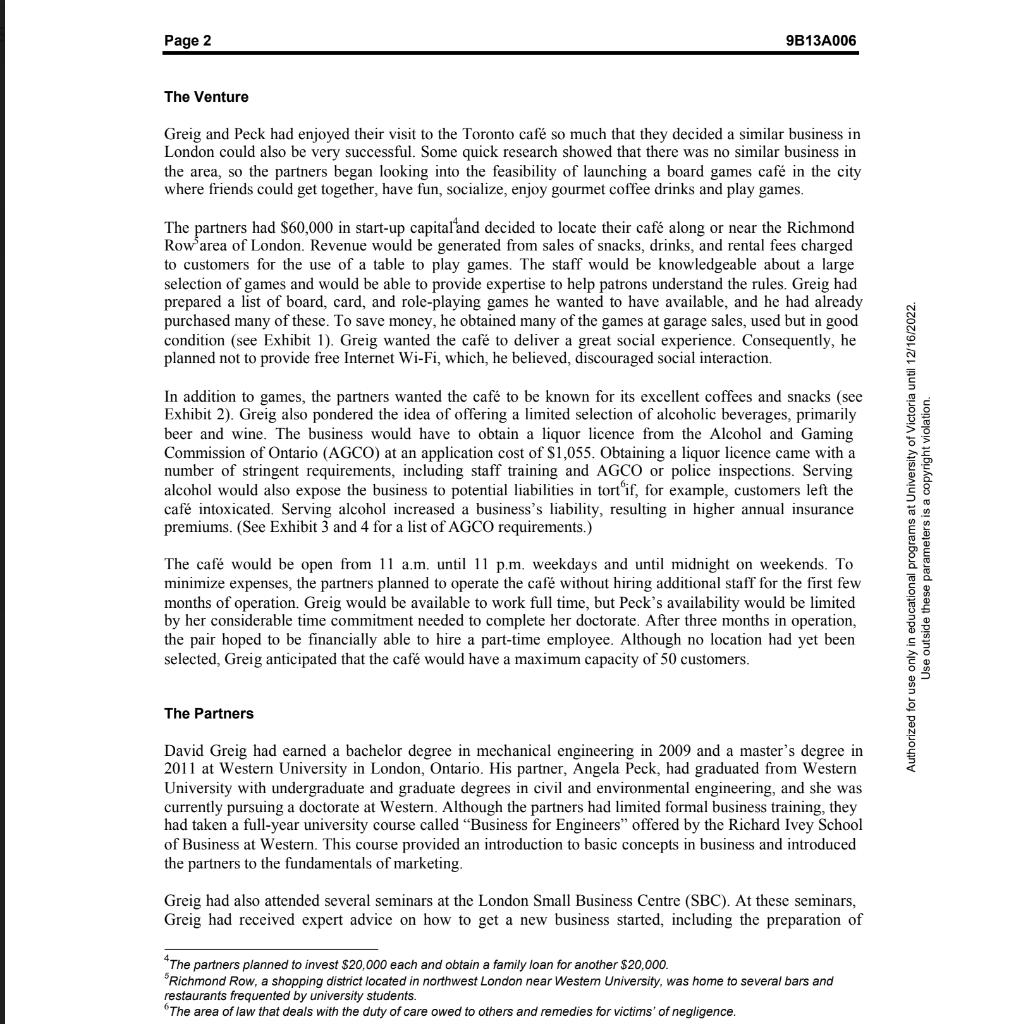
BEYOND THE BEAN David House wrote this case under the supervision of Elizabeth M. A. Grasby solely to provide material for class discussion. The authors do not intend to illustrate either effective or ineffective handling of a managerial situation. The authors may have disguised certain names and other identifying information to protect confidentiality. Richard Ivey School of Business Foundation prohibits any form of reproduction, storage or transmittal without its written permission. Reproduction of this material is not covered under authorization by any reproduction rights organization. To order copies or request permission to reproduce materials, contact Ivey Publishing, Richard Ivey School of Business Foundation, c/o Richard Ivey School of Business, The University of Western Ontario, London, Ontario, Canada, N6A 3K7; phone (519) 661-3208; fax (519) 661-3882; e- mail cases@ivey.uwo.ca. Copyright 2013, Richard Ivey School of Business Foundation Version: 2013-03-18 It was late June 2012, and David Greig was completing the details of his business plan to launch a board games caf called Beyond the Bean in London, Ontario. He had been working on the idea for over a year, and he wanted to complete a marketing plan for his proposed venture that would include the chosen target market, product pricing, a promotion plan and the final product offering. Greig wanted to have the plan ready by the end of the month so he could review it with his partner, Angela Peck, If Peck agreed with the plan, the partners would try to launch the new venture within the next year, Authorized for use only in educational programs at University of Victoria until 12/16/2022. Use outside these parameters is a copyright violation. BACKGROUND The Idea Greig and Peck's plan was to launch a caf that specialized in gourmet coffees and related beverages (espressos, lattes, cappuccinos, teas, etc.) where customers could also rent tables and play board games. The partners came up with the idea after visiting the Snakes and Lattes Caf in Toronto, Ontario. This business combined a traditional coffee shop with table rentals for groups to play board games. The caf had a selection of more than 2,500 different games from classics such as Monopoly and Risk to more recent games such as Angry Birds', the Settlers of Catan, and Game of Thrones. 'Snakes and Lattes had opened in 2010 and had become so popular that reservations were often required, and the caf had already undergone a significant expansion. Originally released in 2009 on the Apple App Store as an iPhone game, Angry Birds' success led to versions for other mobile platforms, personal computers and game consoles. Board game versions were released soon after ?An immensely popular German game released in 1995. Settlers of Catan has sold approximately 15 million copies worldwide and has been translated into 30 languages. An epic fantasy game based on George R.R. Martin's "A Song of Ice and Fire" series. The first novel in the series, "A Game of Thrones," was published in 1991. A television version of the book was shown on HBO in 2011. Page 12 9B13A006 Exhibit 4 LIQUOR LICENCE STAFF TRAINING AND INSPECTIONS Server Training All owners, managers, licensed security personnel and employees selling and serving liquor must complete a server training course approved by the Alcohol and Gaming Commission of Ontario (AGCO). Currently, the approved server training course is Smart Serve. New employees have a maximum of 60 days from their start of employment to obtain the certification. Staff should carry a copy of their certification card while they are working. An AGCO inspector may ask to see any staff member's certification AGCO Inspections All licensed establishments are inspected periodically by AGCO Inspectors and police. You are required to allow AGCO inspectors and/or police officers unobstructed access to your business, and you must facilitate their inspections. The most serious infractions include: 1. Permitting drunkenness. 2. Selling and serving alcohol outside of prescribed hours and/or failing to remove the evidence of service of alcohol. 3. Permitting disorderly behaviour (also includes permitting drugs and illegal gambling). 4. Exceeding the lawful capacity of the premises. 5. Selling and serving alcohol to individuals under the age of 19. Authorized for use only in educational programs at University of Victoria until 12/16/2022. Use outside these parameters is a copyright violation. Source: Alcohol and Gaming Commission of Ontario, www.agco.on.ca, accessed 2012. Page 11 9B13A006 Exhibit 3 LIQUOR LICENCE REQUIREMENTS The following items must be submitted to the AGCO to begin processing a new liquor sales licence application: 1. Application for a New Liquor Sales Licence. 2 Application fee payment of $1055 if the application requires public notice or $925 if the application does not require public notice (see Public Notice section below). 3. Establishment Description Form. 4. Corporate Structure Form (only if the applicant is a corporation) for each company that directly or indirectly holds 10% or more of the equity shares of the applicant corporation. 5. Personal History Report for each owner (sole proprietor, all officers, directors and share- holders holding 10% or more of the equity shares of a corporation and all partners) and on-site manager(s). 6. Floor plans of the premises, with all proposed licensed areas outlined and labelled. 7. Advertisement fee payment if your application requires public notice (the AGCO will advise you of the fee). 8. Municipal Information Form completed, signed and dated by a municipal clerk. 9. Agency Letter of Approval from each of your local fire, building and health departments stating that your premises meets the current standards or by-laws administered by that agency. The letter must be signed and dated by the appropriate municipal official. 10. Capacity calculation for each proposed licensed area provided by either the municipal fire or building department or a professional architect or engineer. In each case, the agency/ individual/company must provide capacities on their professional letterhead. 11. Rsum of an experienced staff person if neither the applicant nor the manager (who is involved in the day-to-day operations of the business) has at least three (3) months experience in the sale and service of food and alcohol in Canada. If an experienced staff person has not yet been hired, then a written letter of commitment to hire an experi- enced staff person for the first three months of licensed operation must be submitted. 12. Copy of the Master Business Licence showing the business/operating name is regis- tered to the applicant for the liquor sales licence. Authorized for use only in educational programs at University of Victoria until 12/16/2022. Use outside these parameters is a copyright violation. Source: Alcohol and Gaming Commission of Ontario, www.agco.on.ca/en/services/licence_apply_LSL.aspx, accessed May 2012 Page 10 9B13A006 Exhibit 2 2 MENU . medium large o $2.00 . $4.00 Coffee O Regular black/milk/cream $1.75 / $2.00 o Cappuccino $4.00 / $4.50 Latte $3.00 / $3.50 Vanilla/caramel/chai $4.00/$4.50 o Mocha $3.50 / $4.00 o Espresso (single + double) $2.25 / $3.00 o Americano $2.00/ $2.50 o Iced Coffee $1.75 / $2.00 Tea Bag $1.00 Hot Chocolate Choice of flavour (regular, dark, milk, white) Milk Shakes o Vanilla, chocolate, banana, strawberry $4.25 Lemonade $2.00 Smoothies - Strawberry, banana, blueberry Milk $1.00 Pop $2.00 Sandwiches o Classic Clubhouse $6.50 o Turkey $6.00 BLT $5.00 o Vegetarian $4.50 o roast beef $5.50 Toast O Bagels, bread, with butter $1.25 Cream cheese, peanut butter, jams Popcorn Nuts Pretzels Chips (Full bag of selection of name brand) Exquisite pastries o Cinnamon rolls O Muffins o Croissants Desserts o Brownie $1.00 Use outside these parameters is a copriate of electoria until 12/16/2022. Authorized for use only in educational programs at University of o . o an extra $0.25 $2.00 . . o Cookies $0.50 Page 9 9B13A006 Exhibit 1 PROPOSED GAMES INVENTORY 13 Dead End Drive Caylus Labyrinth Pente Shangri-La Thurn and Taxis Dungeon Twister Exp2 Dungeon Twister Exp3 20th Century Centurions Le Havre Pick & Pack Shogi Ticket to Ride Abalone Chang Cheng Dutch Golden Age Life Pictionary Shogun Acquire Change Horses Eclipse Loaded Questions Simpsons Clue Ticket to Ride: : Europe Tigris and Euphrates Tikal Timbuktu Tobago Checkers Chess Chicken Out El Grande Emira Evo Age of Steam Agricola Airlines Europe Amun-Re Amyitis Antike Pillars of the Earth Pirate King Pirate's Cove Polterdice Pompeii Power Grid Primordial Soup Loot Lost Cities Lungarno Mad Gab Mad Magazine Fagin's gang Chinese Checkers Citadels Size Matters Small World Snakes and Ladders SOC 5-6 Exp SOC C+K Exp SoC Cities and Knights SoC Seafarers Torres T-rex Feudo Clue Finca Maoi Tribond Gloria Mundi Masons Principato Trivial Pursuit Go Master Mind Probe Trouble Commands and Apples to Apples Colors: Ancients Archrival Connect Four Arkham Horror Conquest of Pangea Bacchus' Cranium Banquet SoC Seafarers Exp Sorry! Grand Tribunal Memoir 44 Puerto Rico Twilight Struggle Guess Who Mind Trap Quarriors Star Wars: New Hope Ultimatum Guesstures Ming Dynasty Quoridor Hansa Monopoly Mouse Trap Ra Race for the Galaxy Rigamarole Risk Hansa Teutonica Hardy Boys HeadBandz Star Wars: Escape Vikings from Deathstar Star Wars: Hoth Wacky Wacky West Stone Age War of the Ring Stratego Waterloo Stratego: Legends Whatzit? Sunken City Yeedrasil Authorized for use only in educational programs at University of Victoria until 12/16/2022. Use outside these parameters is a copyright violation. Munchkin Nautilus High Voltage Ninja Turtles Balderdash Cribbage Barney Miller CSI: Miami Battle of the Pyramids Diplomacy Battleship Dixit Battleship Galaxies Domaine Battlestar Dominant Species Expansion Dominion Battlestar Galactica (Card game) Dominion Bionic Crisis Cornucopia Blokus Dominion: Alchemy Dominion: Boggle Hinterlands Bohnanza Dominion: Intrigue Robo Rally Home Alone okko Rummoli Swap Zombies !!! Horus Olympus San Juan Taboo Hunting Party Ora et Labora Talk About Scattergories Scotland Yard Ingenious Palatinus Taluva Scrabble Bootleggers Dominion: Prosperity Inka Inside Moves (Camelot) Inspector Gadget Pandemic Pandemic: Expansion Panzer General Scrabble Upwords Brass Dominion: Seaside Settlers of Catan Carcassonne Dungeon Twister Jambo Paris Connection Shadow Hunters The 7 Wonders The Dangerous Book for Boys The Gender Gap The Prices of Florence Through the Ages: A Story of Civilization Through the Desert Cartagena Dungeon Twister Exp1 Jenga Paris Paris Shadow Hunters Exp Kingdoms Pay Day Cave Troll Source: Business plan. Shadows over Camelot Page 8 9B13A006 This guidance was intended to prevent merchants from offering groupons that would lose money for the business each time a customer used one. The key marketing strategy of groupons was to get customers to try a product or service at a discounted rate, thereby baiting the hook for these same people to become repeat customers at regular prices. Greig and Peck liked the zero up-front cost aspect of the Groupon marketing tool but had yet to decide what deal they should offer in a groupon. PRICING Greig estimated the average customer would spend three hours in the caf. Although there could be some flexibility in the selling prices of food and beverages, prices generally needed to be similar to those offered at competing coffee shops. He estimated conservatively that each customer would spend $4 on food and drinks and that the average weighted gross margin on these items would be 30 per cent. He was considering two pricing scenarios for the board game rentals. The first scenario was to charge $8 an hour for a table with a maximum of six customers per table. The second scenario was to charge each customer a flat rate of $6 for unlimited game-play time per day. Greig projected that the caf would need to generate approximately $6,500 gross income each month to cover its fixed costs, including rent, insurance and utilities SUMMARY Greig had to design an effective marketing plan that would ensure the successful launch of Beyond the Bean. He had to select a target market, develop a detailed promotion plan, determine a pricing model for table rentals for game play, decide whether alcohol should be added to the caf's menu, and work out the financial feasibility of his proposed marketing plan. With only a week until his review meeting with Peck, Greig realized that he still had a lot of work left to do and a lot of decisions to make. Authorized for use only in educational programs at University of Victoria until 12/16/2022. Use outside these parameters is a copyright violation. Page 8 / 13 - + Page 7 9B13A006 Fanshawe Interrobang The Fanshawe Interrobang was a weekly newspaper published by Fanshawe College's Student Union. Approximately 3,000 copies were distributed at the London campuses. Many local businesses targeting Fanshawe students advertised in this paper. Rates for advertising are shown in Exhibit 7. The London Free Press London's major local newspaper, The London Free Press, was published six days each week with a weekly reach' of 245,000 readers for its print edition and over 80,000 unique hits on its online edition's homepage. The paper had a newsstand price of $1 for its print edition. Although Greig had not researched advertising costs for this paper, he believed the cost would be significantly more expensive than either the Gazette or the Interrobang for comparable advertisements. Groupon Groupon was an Internet company that launched in 2008. Essentially a "groupon worked like a coupon but with some distinct differences. Individuals had to sign up to become Groupon members to have access to its deals, and there were approximately 35 million members worldwide. Groupon collected personal information from its members in order to send e-mails about local deals for products or services that might interest its members. Typically, Groupon deals offered members a 50 per cent to 90 per cent discount on a product or service. For example, if a restaurant offered a groupon for $20 credit towards its menu offerings, a Groupon member might be to buy this offering for $10. Groupon would typically charge the restaurant half the value of the coupon price, and the merchant would redeem the other half of the value from Groupon. In the case just described, Groupon and the merchant would each receive $5. Authorized for use only in educational programs at University of Victoria until 12/16/2022. Use outside these parameters is a copyright violation. Groupon provided extensive editorial and marketing support to create effective promotions on its deals at no charge to merchants. It allowed the merchants offering deals to set minimums before the groupons were effective. For example, if the set minimum was 20, the groupons would not be released for sale unless at least 20 people had signed up to purchase them. This process ensured that the merchant would gain enough new customers to justify the steep discounts that were being offered. Groupon smartphone applications for iPhone, Android and Blackberry were also available. These applications allowed Groupons bar-coded coupons to be kept electronically rather than on printed paper, making groupons easy to use for both the merchant and the consumer. The use of Groupon for marketing tended to greatly increase traffic to the merchant's website, and Groupon encouraged users who purchased deals to share their experiences with friends on social networks such as Facebook and Twitter, thus increasing dramatically the merchant's exposure. Merchants needed to clearly understand their own business's cost structure so that groupons could be designed to increase customer traffic (by providing significant price savings for customers) while ensuring that the merchant at least broke even. Groupon provided financial guidance for merchants to help them understand cost structure concepts such as variable and fixed costs, cost of goods sold and gross margin, "Reach refers to the total number of people who read the paper which could be significantly higher than the number of actual subscribers. 12 "Powerful Buy," London Free Press. http://pbdba.lfpress.com/images/advertising/LFPPowerfulBuy.pdf accessed June 21, 2012 Page 6 9B13A006 would be interested in social interaction while playing board games, but they were not sure how much interest high school students would have with the coffee-focused menu offered at Beyond the Bean. The members of this group would also be restricted in their ability to visit the caf on school nights with the requirements of homework, part-time jobs and parent-imposed curfews. This segment often relied on public transit or parents to drive them around the city. Young Professionals The partners deemed young professionals to be between the ages of 25 to 35 years, generally well-educated and with a higher disposable income relative to others their age. The partners' research revealed that approximately 15,000 young professionals"lived in London. Greig and Peck believed this group would align well with their gourmet coffee shop offering but they were less clear on how much interest this group would have in playing board games. Young professionals generally provided their own transportation and lived year round in the city. PROMOTION Greig had budgeted $6,000 to be used for marketing during the business's first three months of operation, but he was unsure how to promote Beyond the Bean. His promotional strategy had to get customers to try the caf. If it did not get enough customers to break even, the business would quickly run into cash flow problems that would cause it to fail. Greig knew from his university course in business that he also needed to decide on the content and message of his chosen promotional methods. Authorized for use only in educational programs at University of Victoria until 12/16/2022. Use outside these parameters is a copyright violation. Web and Facebook Pages Greig and Peck planned to develop both a website and a Facebook site for Beyond the Bean. To minimize costs, Peck planned to do the development work herself since she had the technical abilities to take on this task. The partners had not yet finalized what content should be on their webpage. They did not plan to use any of Facebook's paid advertising. Instead, they intended to use Facebook primarily as a medium to create free word-of-mouth publicity. One way to enact this plan was by adding a "Like" button to the Beyond the Bean Facebook page. When a user visited the site and clicked "Like," a link was added to the user's activity page for all the user's Facebook friends to see. If the user's friends clicked the link, they would be directed to Beyond the Bean's Facebook page. This approach had the potential to create a lot of free exposure. The Western Gazette The Western Gazette (Gazette) was Western University's student newspaper. It was published every weekday except Monday. Approximately 11,000 copies of each edition were distributed free of charge throughout Western's campus. Students could also view the Gazette on the paper's website. Many local businesses targeting this student market advertised in this paper and often included discount coupons in the publication. Rates for advertising are shown in Exhibit 6. Page 5 9B13A006 Coffee Culture Caf and Eatery This franchise, established in 2006, promoted the slogan Come for the taste, stay for a visit. The company had approximately 40 locations throughout Ontario, two of which were located in London. Each site resembled an old-world style coffee house and offered an extensive specialty coffee menu and baked goods, ice cream and gourmet foods. Similar to Starbucks, customers were encouraged to relax, socialize, enjoy the ambiance and take advantage of free Wi-Fi. CUSTOMERS The partners believed that Beyond the Bean would be of interest primarily to people between the ages of 15 and 34 years and that neither gender nor ethnicity would constitute a basis for segmentation. Greig was considering four segments of this target market: Western University students, Fanshawe College students, high school students and young professionals. Western University Students Western University (Western) and its three affiliate colleges (Brescia, Huron and Kings) were located in northwest London. There were approximately 30,000 undergraduate and graduate students enrolled with almost 4,500 first-year students enrolling each year, Students came to Western primarily from Ontario, but a significant number of out-of-province and international students also attended. The partners believed that they understood this group well because they had recently been students at Western themselves. Greig and Peck thought university students enjoyed the opportunity to inexpensively socialize with friends and were looking for an alternative to the bars frequented by most students. Most of Western's students did not own cars and lived near the university; therefore, Beyond the Bean needed to be close enough to the university for students to either walk to it or to be accessible with public transit. All full-time undergraduate students at Western received a public transit pass for the school year. Although some classes were offered in the spring and summer, the majority of students spent eight months (September through April) in London, and returned home over the summer months. Authorized for use only in educational programs at University of Victoria until 12/16/2022. Use outside these parameters is a copyright violation. Fanshawe College Students Established in 1962 and located in northeast London, Fanshawe College (Fanshawe) enrolled over 15,000 full-time students at its London campus. The partners believed that Fanshawe students had characteristics similar to those of Western students and also enjoyed a night out at a reasonable price that did not include alcohol and bars. Fanshawe was approximately 10 kilometres away from Western's campus and the proposed Richmond Row location of Beyond the Bean. The presence of Fanshawe students in the city was also highly seasonal, with many of these students leaving London during the months of May through August High School Students The partners estimated that there were almost 20,000 high school students, between the ages of 14 and 19, enrolled in secondary schools within the city. These students usually lived with their parents and often worked part-time, which provided them with some spending money. The partners believed this group Page 4 9B13A006 and dining table; a 1960s retro-designed lounge with three billiard tables; a bowling lounge with 10 vintage bowling alleys, a large bar (80- to 100-person capacity); and a video arcade amusement area for children. This extensive activity area was fronted by a full-service restaurant. Palasad North specialized in group events for corporations, families and sports teams. Its slogan was Eat! Drink! Bowl!" although many of its customers frequented only the restaurant, which was known for its wood-fired pizza, made-to- order pastas, fresh ingredients, and tomato sauces made from scratch. Pricing was similar to that at Fleetway. Indirect The partners expected to compete only indirectly with coffee shops because these businesses did not offer recreational activities. Local indirect competitors included: Tim Hortons Tim Hortons was an extremely popular Canadian franchise with dozens of locations in the London area. The chain specialized in coffee and baked goods such as doughnuts, bagels and muffins. It also offered a small selection of teas, as well as espresso, cappuccino and lattes. Its stores had a "fast-food ambiance, did not provide comfortable seating that might encourage customers to linger, and had only recently begun offering Wi-Fi services. In 2011, the company earned revenues of $6 billion in Canada and the United States and served approximately two billion cups of coffee annually. Authorized for use only in educational programs at University of Victoria until 12/16/2022. Use outside these parameters is a copyright violation. Starbucks Starbucks was an American-owned company with its head office in Seattle, Washington and almost 20,000 locations in 60 different countries. Each site was set up as a coffee house to reflect the mission statement "to inspire and nurture the human spirit - one person, one cup, and one neighbourhood at a time. The company focused on premium coffees and offered a wide selection of related drinks and high-end pastries, including croissants and scones. Patrons were encouraged to relax on home-style furnishings and to spend time in a comfortable atmosphere. Free Wi-Fi was available at each location. The company had revenues of $11.7 billion worldwide in fiscal 2011. Williams Coffee Pub Williams Coffee Pub (Williams) entered the market in 1993 with the opening of its first location in Stratford, Ontario (50 kilometres from London). The Canadian company had approximately 50 locations in Ontario. The company's concept was to provide fast service while offering tasty, high-quality products in a relaxed and affordable atmosphere. Williams offered a full selection of coffees and related drinks, pastries and snacks. The stores had a restaurant look with a heavy focus on the breakfast menu. Starbucks offered free Wi-Fi at each of its locations. Page 3 9B13A006 projected financial statements, creation of a cash budget, financing, and the development of a marketing and business plan. Neither partner had worked in a caf before, but Greig had received barista training, and he felt confident that his research and careful planning would produce a successful new venture. The Industry London's economy was hit hard by the worldwide recession triggered in 2008 and was still recovering. Unemployment in the city was 8.8 per cent, higher than any other major city in Ontario, other than Windsor. High unemployment generally led to reduced spending on discretionary expenses, including entertainment. In spite of this economic climate, the partners believed their venture could provide a relatively inexpensive form of recreation, especially since specialty coffee was a $5-billion industry in the United States (hit with the same worldwide recession), yet it had a growth rate of 20 per cent annually during the last decade. The partners believed that the growth rate was similar in Canada and that it would continue. Additionally, board games had experienced a resurgence in popularity since the early 2000s, and their sales had increased 100 per cent in the last five years. Seventy-two new board games were expected to be released in 2012. 'Although the concept of a board games caf was relatively new in Canada, such businesses had become popular recently in Europe and Asia. COMPETITION Direct Greig believed Beyond the Bean would be competing directly with businesses that provided social and recreational experiences among friends. These businesses included bowling alleys and billiards facilities in particular, the Palasad and Fleetway, due to their proximity to the new business's Richmond Row location. Authorized for use only in educational programs at University of Victoria until 12/16/2022. Use outside these parameters is a copyright violation. Fleetway Fleetway, located in Northwest London, billed itself as the new dimension in entertainment. The facility (originally, solely a 40-lane, five-pin bowling operation) offered five and 10-pin bowling, glow-in-the-dark miniature golf, rock climbing on a 40-foot-high wall, and billiards. Fleetway's operation opened directly into a Dairy Queen restaurant that provided all food and drink for Fleetway's customers (the facility was not licensed to provide alcohol). Fleetway's advertising and promotional materials targeted children, teenagers and adults and offered kids camps and youth or adult bowling leagues. Selected pricing for Fleetway's various activities is shown in Exhibit 5. Palasad North Palasad had two locations: one in south London (Palasad South) and another in the northeast quadrant of the city, Palasad North. Facilities included: a 70-seat dining room; a 60-seat bar/lounge; an eight-ball billiards lounge (20 to 30 seats); a private billiards room with two billiard tables, sofa seating, a fireplace A barista is trained to make coffee and related beverages such as espresso, cappuccino and latte. S'More Jobless Throw in the Towel," London Free Press, http://fpress.com, March 11, 2012. Page 2 9B13A006 The Venture Greig and Peck had enjoyed their visit to the Toronto caf so much that they decided a similar business in London could also be very successful. Some quick research showed that there was no similar business in the area, so the partners began looking into the feasibility of launching a board games caf in the city where friends could get together, have fun, socialize, enjoy gourmet coffee drinks and play games. The partners had $60,000 in start-up capital*and decided to locate their caf along or near the Richmond Row area of London. Revenue would be generated from sales of snacks, drinks, and rental fees charged to customers for the use of a table to play games. The staff would be knowledgeable about a large selection of games and would be able to provide expertise to help patrons understand the rules. Greig had prepared a list of board, card, and role-playing games he wanted to have available, and he had already purchased many of these. To save money, he obtained many of the games at garage sales, used but in good condition (see Exhibit 1). Greig wanted the caf to deliver a great social experience. Consequently, he planned not to provide free Internet Wi-Fi, which, he believed, discouraged social interaction. In addition to games, the partners wanted the caf to be known for its excellent coffees and snacks (see Exhibit 2). Greig also pondered the idea of offering a limited selection of alcoholic beverages, primarily beer and wine. The business would have to obtain a liquor licence from the Alcohol and Gaming Commission of Ontario (AGCO) at an application cost of $1,055. Obtaining a liquor licence came with a number of stringent requirements, including staff training and AGCO or police inspections. Serving alcohol would also expose the business to potential liabilities in tortif, for example, customers left the caf intoxicated. Serving alcohol increased a business's liability, resulting in higher annual insurance premiums. (See Exhibit 3 and 4 for a list of AGCO requirements.) Authorized for use only in educational programs at University of Victoria until 12/16/2022. Use outside these parameters is a copyright violation. The caf would be open from 11 am, until 11 p.m. weekdays and until midnight on weekends. To minimize expenses, the partners planned to operate the cafe without hiring additional staff for the first few months of operation. Greig would be available to work full time, but Peck's availability would be limited by her considerable time commitment needed to complete her doctorate. After three months in operation, the pair hoped to be financially able to hire a part-time employee. Although no location had yet been selected, Greig anticipated that the caf would have a maximum capacity of 50 customers. The Partners David Greig had earned a bachelor degree in mechanical engineering in 2009 and a master's degree in 2011 at Western University in London, Ontario. His partner, Angela Peck, had graduated from Western University with undergraduate and graduate degrees in civil and environmental engineering, and she was currently pursuing a doctorate at Western. Although the partners had limited formal business training, they had taken a full-year university course called "Business for Engineers" offered by the Richard Ivey School of Business at Western. This course provided an introduction to basic concepts in business and introduced the partners to the fundamentals of marketing. Greig had also attended several seminars at the London Small Business Centre (SBC). At these seminars, Greig had received expert advice on how to get a new business started, including the preparation of *The partners planned to invest $20,000 each and obtain a family loan for another $20,000. Richmond Row, a shopping district located in northwest London near Western University, was home to several bars and restaurants frequented by university students. The area of law that deals with the duty of care owed to others and remedies for victims' of negligence. BEYOND THE BEAN David House wrote this case under the supervision of Elizabeth M. A. Grasby solely to provide material for class discussion. The authors do not intend to illustrate either effective or ineffective handling of a managerial situation. The authors may have disguised certain names and other identifying information to protect confidentiality. Richard Ivey School of Business Foundation prohibits any form of reproduction, storage or transmittal without its written permission. Reproduction of this material is not covered under authorization by any reproduction rights organization. To order copies or request permission to reproduce materials, contact Ivey Publishing, Richard Ivey School of Business Foundation, c/o Richard Ivey School of Business, The University of Western Ontario, London, Ontario, Canada, N6A 3K7; phone (519) 661-3208; fax (519) 661-3882; e- mail cases@ivey.uwo.ca. Copyright 2013, Richard Ivey School of Business Foundation Version: 2013-03-18 It was late June 2012, and David Greig was completing the details of his business plan to launch a board games caf called Beyond the Bean in London, Ontario. He had been working on the idea for over a year, and he wanted to complete a marketing plan for his proposed venture that would include the chosen target market, product pricing, a promotion plan and the final product offering. Greig wanted to have the plan ready by the end of the month so he could review it with his partner, Angela Peck, If Peck agreed with the plan, the partners would try to launch the new venture within the next year, Authorized for use only in educational programs at University of Victoria until 12/16/2022. Use outside these parameters is a copyright violation. BACKGROUND The Idea Greig and Peck's plan was to launch a caf that specialized in gourmet coffees and related beverages (espressos, lattes, cappuccinos, teas, etc.) where customers could also rent tables and play board games. The partners came up with the idea after visiting the Snakes and Lattes Caf in Toronto, Ontario. This business combined a traditional coffee shop with table rentals for groups to play board games. The caf had a selection of more than 2,500 different games from classics such as Monopoly and Risk to more recent games such as Angry Birds', the Settlers of Catan, and Game of Thrones. 'Snakes and Lattes had opened in 2010 and had become so popular that reservations were often required, and the caf had already undergone a significant expansion. Originally released in 2009 on the Apple App Store as an iPhone game, Angry Birds' success led to versions for other mobile platforms, personal computers and game consoles. Board game versions were released soon after ?An immensely popular German game released in 1995. Settlers of Catan has sold approximately 15 million copies worldwide and has been translated into 30 languages. An epic fantasy game based on George R.R. Martin's "A Song of Ice and Fire" series. The first novel in the series, "A Game of Thrones," was published in 1991. A television version of the book was shown on HBO in 2011









 Study Help