







Question: This case draws on material from Chapters 37. Adam has just graduated, and has a good job at a decent starting salary. He hopes to
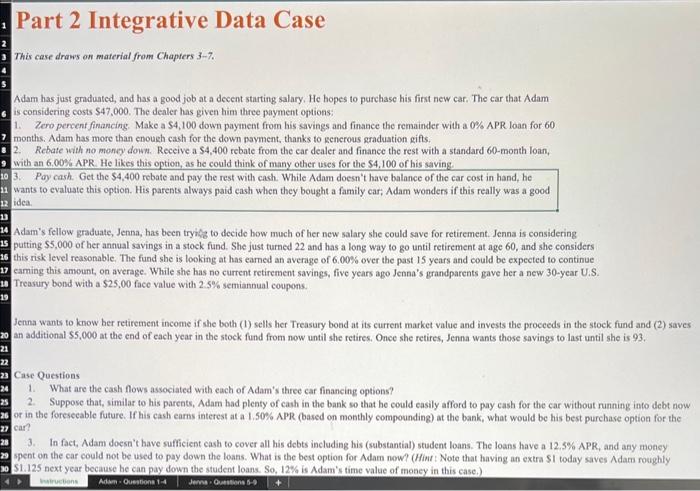
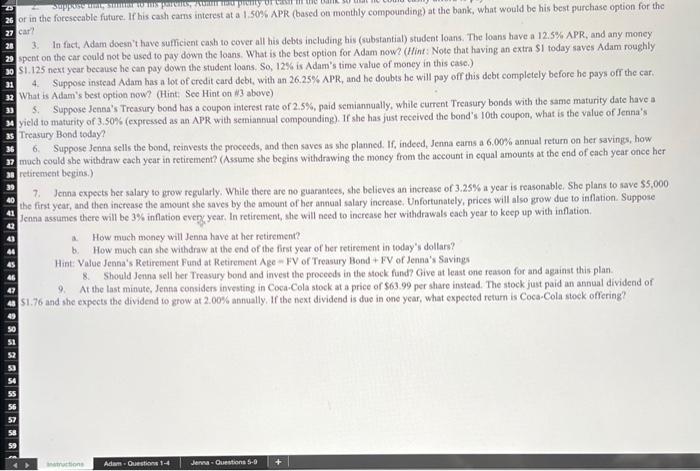
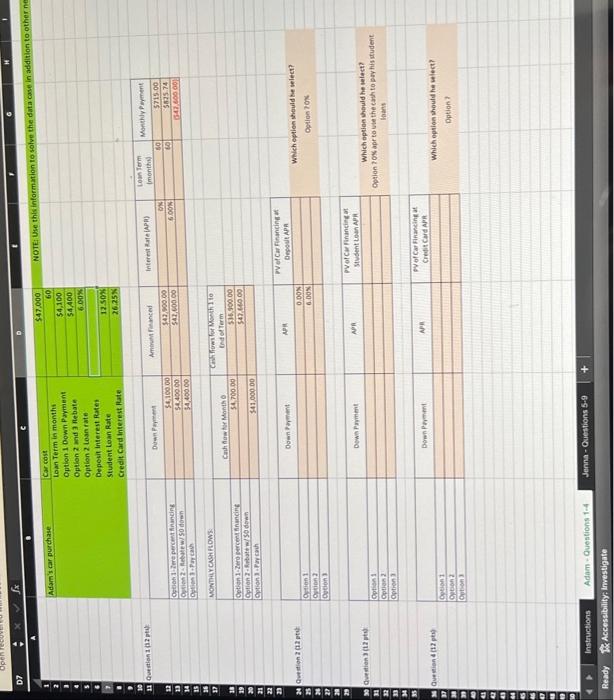
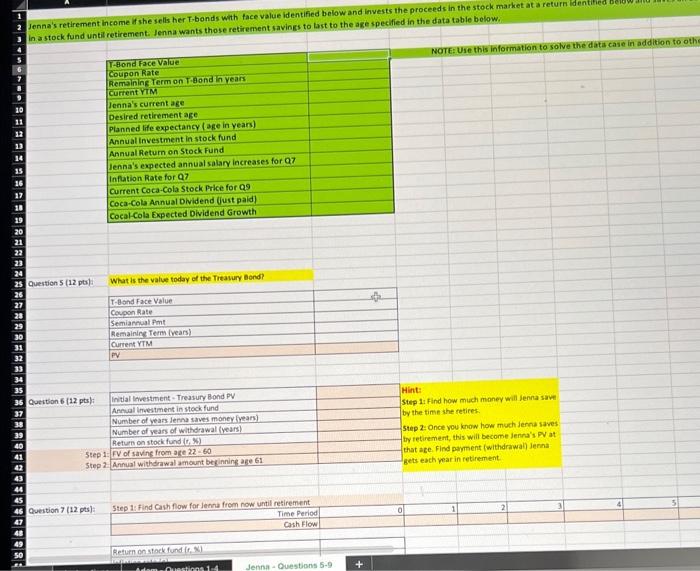
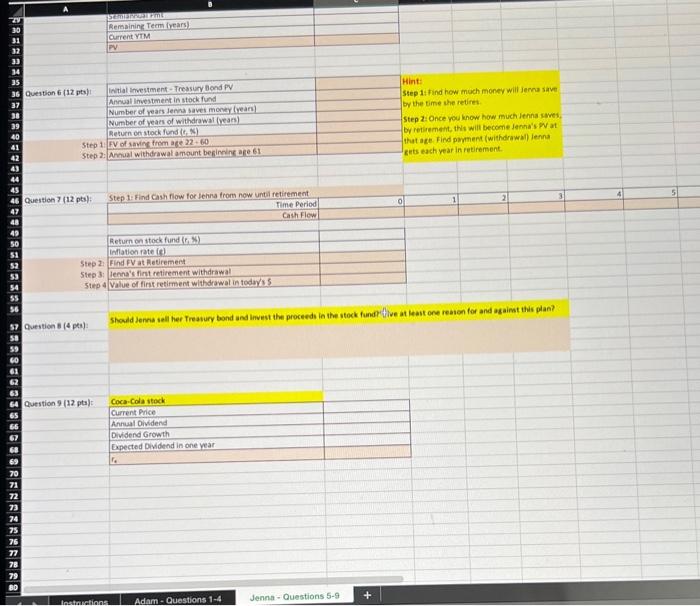
This case draws on material from Chapters 37. Adam has just graduated, and has a good job at a decent starting salary. He hopes to purchase his first new car, The car that Adam is considering costs $47,000. The dealer has given him three payment options: 1. Zero pereent financing. Make a $4,100 down payment from his savings and finance the remainder with a 0% APR loan for 60 months. Adam has more than enough cash for the down payment, thanks to gencrous graduation gifts. 2. Rebate with no money down. Receive a $4,400 rebate from the car dealer and finance the rest with a standard 60 -month loan, with an 6,00% APR. He likes this option, as he could think of many other uses for the $4,100 of his saving . 3. Poy cash. Get the $4,400 rebate and pay the rest with cash. While Adam doesn't have balance of the car cost in hand, he wants to cvaluate this option. His parents always paid eash when they bought a family car; Adam wonders if this really was a good idea: Adam's fellow graduate, Jenna, has been tryice to decide how much of her new salary she could save for retirement. Jenna is considering putting $5,000 of her annual savings in a stock fund. She just turned 22 and has a long way to go until retirement at age 60 , and she considers this risk level reasonable. The fund she is looking at has earned an average of 6.00% over the past 15 years and could be expected to continue eaming this amount, on average. While she has no current retirement savings, five years ago Jenna's grandparents gave ber a new 30y ear U.S. Treasury bond with a $25,00 face value with 2.5% semiannual coupons. Jenna wants to know ber retirement income if she both ( 1 ) selts her Treasury bond at its current market value and invests the proceeds in the stock fund and (2) saves an additional 55,000 at the end of each year in the stock fund from now until she retires. Once she retires, Jenna wants those savings to last until she is 93. Case Questions 1. What are the cash flows associated with each of Adam's three car financing options? 2. Suppose that, similar to his parents, Adam had plenty of cash in the bank so that he could easily afford to pay cash for the car without running into debt now or in the foresecable future. If his cash earns interest at a 1.50\% APR (based on monthly compounding) at the bank, what would be his best purchase option for the car 3. In fact, Adam doesn't have sufficient cash to cover all his debts including his (substantial) student loans. The loans have a 12. 5% APR, and any money spent on the car could not be used to pay down the loans. What is the best option for Adam now? (Hint Note that having an extra SI today saves Adars roughly S1. 125 next year because be can pay down the student loans. So, 12% is Adam's time value of money in this case.) or in the foresecable future. If his cash cams interest at a I S0-5. APR (based on monthly compounding) at the bank, what would be his best purchase option for the car? 3. In fact, Adam doesn't have sufficient cash to cover all his debts including his (substantial) student loans. The loans have a 12.5\%. APR, and any money spent on the car could not be used to pay down the loans. What is the best option for Adam now? (/fint: Note that having an extra $1 today saves Adam roughly S1. 125 next year because he can pay down the student loans. So, 12% is Adam's time value of money in this case.) 4. Suppose instead Adam has a lot of credit card debt, with an 26.25% APR, and he doubts be will pay off this debt coripletely be fore he pays off the car. What is Adam's best option now? (Hiat: Seo Hint on 33 above) 5. Suppose Jenna's Treasary bond has a coupen interest rate of 2.5%, paid semiannually, while current Treasury bonds with the sane maturity date have a yield to maturity of 3.50% (expressed as an APR with semiannual compounding). If she has just received the bond's 10 th coupon, what is the value of Jenna's Treasury Bond today? 6. Suppose Jenna sells the bond, reibvests the procecds, and then saves as she planned. If, indeed, Jenna earns a 6,00% annual refurn on ber savings, how much could sbe withdraw each year in retirement? (Assume she begins withdrawing the moncy from the account in equal amounts at the end of each year once her retiremeat beginis.) 7. Jenna expects ber salary to grow regularly. While there are no guarantees, she believes an increase of 3,25% a year is reasonable, S pe plans to save $5,000 the firityear, and then increase the amount she saves by the amoant of her annual salary increase, Unfortunately, prices will also grow due to inflation. Suppose Jenna assumes there will be 3% inflation every year. In retirenent, she will need to increase her withdrawals each year to keep up with inflation. a. How much money will Jenna have at her retirement? b. How much can she witbdraw at the end of the first year of ber retirement in today's dollars? Hint: Value Jenna's Retirement Fund at Retirement Age - FV of Treasury Bond + FV of Jenna's Savings 8. Should Jenna sell her Treasury bond and invest the proceeds in the stock fund? Give at least orie reason for and against this plan 9. At the last minute. Jenna considers investing in Coca-Cola stock at a price of $63.99 per share instead. The stock just paid an annual dividend of 51.76 and she expects the dividend to grow at 2.00% annually. If the next dividend is doo in one year, what expected return is Coca-Cola stoek offering? Quration 1 (azpty: MoNDAYCGOHLIOWE: oothan 1-2mo percelinincing Option.1.Faraih WWich eption sheuld be velect? option row duentian 3(12pts) Ootion z Wh apr to vie the cast to pay his atudent. laens Quenion d(12 pis) Which eotion thould he welect? Dption? Jenna's in a sto Shoudd Jensa sell her freasury bond and invest the proceeds in the stock fundh'tive at least one reason for and agaimst this plan
Step by Step Solution
There are 3 Steps involved in it

Get step-by-step solutions from verified subject matter experts
 Study Help