Question: This case study assignment is to access student understanding on the event management and planning knowledge which discussed in the class and demonstrate the analysis
This case study assignment is to access student understanding on the event management and planning knowledge which discussed in the class and demonstrate the analysis and solution of the provided cases.
1. What strengths, weaknesses, opportunities, threats would come from moving a tourist attraction/event to another site?
2. Why is it important to develop new initiatives when focusing on visitor experience?
3. Why should the vision, mission, and associated values of an organization be connected?
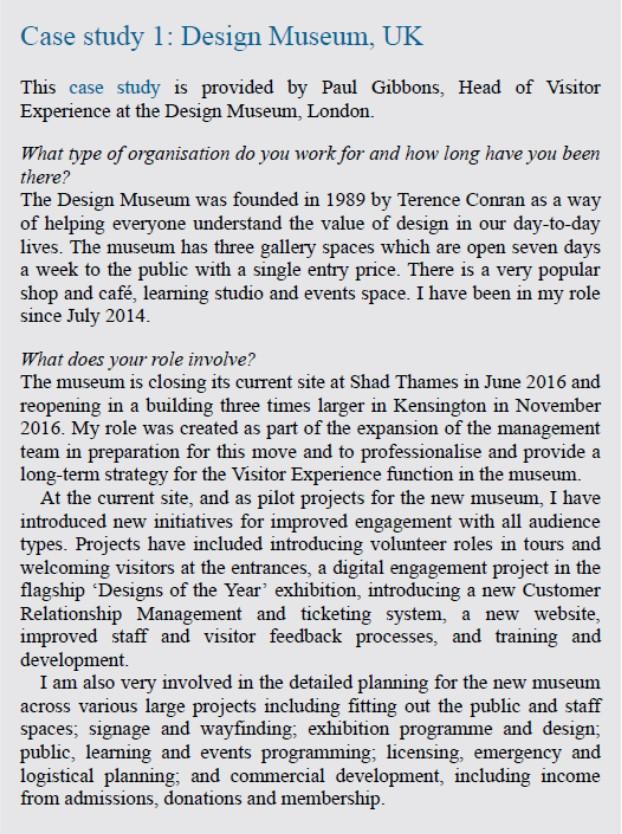

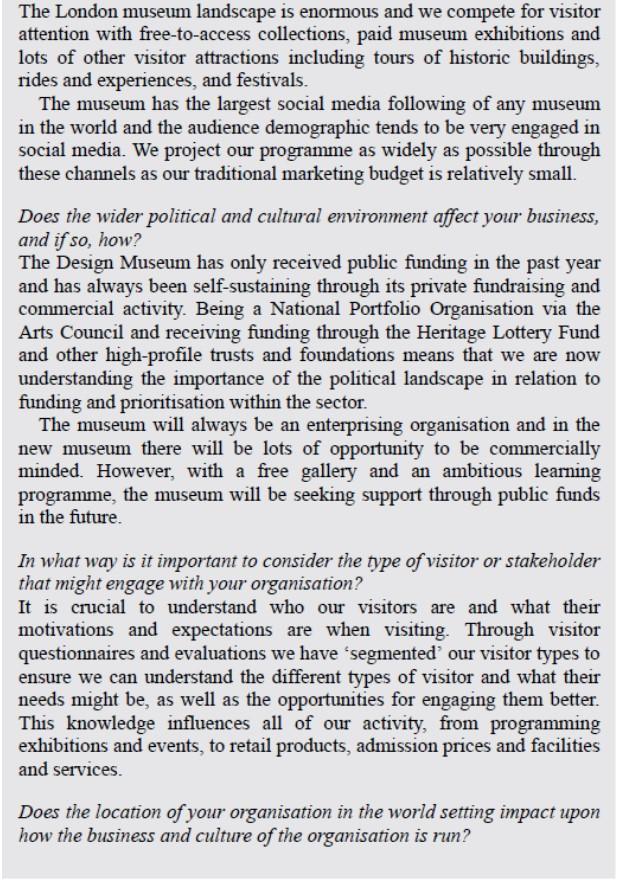
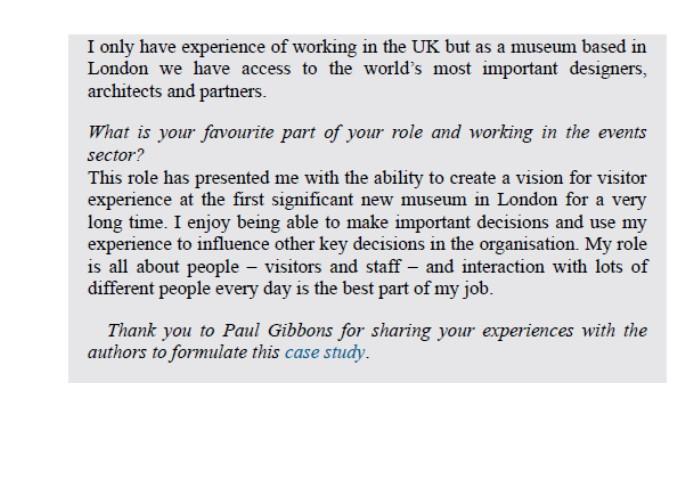
Case study 1: Design Museum, UK This case study is provided by Paul Gibbons, Head of Visitor Experience at the Design Museum, London. What type of organisation do you work for and how long have you been there? The Design Museum was founded in 1989 by Terence Conran as a way of helping everyone understand the value of design in our day-to-day lives. The museum has three gallery spaces which are open seven days a week to the public with a single entry price. There is a very popular shop and caf, learning studio and events space. I have been in my role since July 2014 What does your role involve? The museum is closing its current site at Shad Thames in June 2016 and reopening in a building three times larger in Kensington in November 2016. My role was created as part of the expansion of the management team in preparation for this move and to professionalise and provide a long-term strategy for the Visitor Experience function in the museum. At the current site, and as pilot projects for the new museum, I have introduced new initiatives for improved engagement with all audience types. Projects have included introducing volunteer roles in tours and welcoming visitors at the entrances, a digital engagement project in the flagship Designs of the Year' exhibition, introducing a new Customer Relationship Management and ticketing system, a new website, improved staff and visitor feedback processes, and training and development I am also very involved in the detailed planning for the new museum across various large projects including fitting out the public and staff spaces; signage and wayfinding, exhibition programme and design; public, learning and events programming; licensing, emergency and logistical planning, and commercial development, including income from admissions, donations and membership What is the vision and mission of your organisation? The museum's vision is for everyone to understand the value of design. The museum's mission is to be the most exciting, inspiring and engaging design museum in the world. These aims are underpinned by the four key values of being welcoming, collaborative, enterprising and provocative in everything we do. How do you make sure your organisations vision is carried out in your day-to-day tasks? My role is to ensure that visitors have the very best possible experience at the museum, whatever their knowledge of design or their reason for visiting. This responsibility ranges from ensuring that the presentation and maintenance of all spaces is the best it can be to ensuring that the visitor experience team are well briefed, friendly, confident and welcoming, and to maximise income through the ticketing function. My role is not just about leading my own team but about supporting the other departments in having a clear understanding about their impact on the visitor experience which can be about the design and content in an exhibition; building maintenance, facilities, safety and security issues, the caf and shop service, the learning and public programme; IT support, public communication through signage, the website or social media activity. When launching a new product or event why is it important to consider the feasibility of the task? The museum has a rigorous business planning process for any new activity that requires expenditure (of budget or time). The museum can only survive if expenditure and income are very tightly balanced therefore any new activity is analysed in terms of cost. The museum is also about impact and engagement and new activities are not always going to be cost-effective but may still be important to undertake. The feasibility of a new activity will be assessed in all ways to ensure that a piece of activity is sustainable. Is there rival competition for your business in your sector? If so, how do you strategically plan for this? The London museum landscape is enormous and we compete for visitor attention with free-to-access collections, paid museum exhibitions and lots of other visitor attractions including tours of historic buildings, rides and experiences, and festivals. The museum has the largest social media following of any museum in the world and the audience demographic tends to be very engaged in social media. We project our programme as widely as possible through these channels as our traditional marketing budget is relatively small Does the wider political and cultural environment affect your business, and if so, how? The Design Museum has only received public funding in the past year and has always been self-sustaining through its private fundraising and commercial activity. Being a National Portfolio Organisation via the Arts Council and receiving funding through the Heritage Lottery Fund and other high-profile trusts and foundations means that we are now understanding the importance of the political landscape in relation to funding and prioritisation within the sector. The museum will always be an enterprising organisation and in the new museum there will be lots of opportunity to be commercially minded. However, with a free gallery and an ambitious learning programme, the museum will be seeking support through public funds in the future. In what way is it important to consider the type of visitor or stakeholder that might engage with your organisation? It is crucial to understand who our visitors are and what their motivations and expectations are when visiting. Through visitor questionnaires and evaluations we have segmented our visitor types to ensure we can understand the different types of visitor and what their needs might be, as well as the opportunities for engaging them better. This knowledge influences all of our activity, from programming exhibitions and events, to retail products, admission prices and facilities and services. Does the location of your organisation in the world setting impact upon how the business and culture of the organisation is run? I only have experience of working in the UK but as a museum based in London we have access to the world's most important designers, architects and partners. What is your favourite part of your role and working in the events sector? This role has presented me with the ability to create a vision for visitor experience at the first significant new museum in London for a very long time. I enjoy being able to make important decisions and use my experience to influence other key decisions in the organisation My role is all about people - visitors and staff - and interaction with lots of different people every day is the best part of my job. Thank you to Paul Gibbons for sharing your experiences with the authors to formulate this case study









 Study Help