Question: This comes from the textbook Differential Equations and Linear Algebra 4th edition. Find the solution of the initial value problem. dq dz = 4 +

This comes from the textbook Differential Equations and Linear Algebra 4th edition.

This comes from the textbook DifferentialThis comes from the textbook DifferentialThis comes from the textbook DifferentialThis comes from the textbook DifferentialThis comes from the textbook DifferentialThis comes from the textbook DifferentialThis comes from the textbook DifferentialThis comes from the textbook DifferentialThis comes from the textbook DifferentialThis comes from the textbook Differential
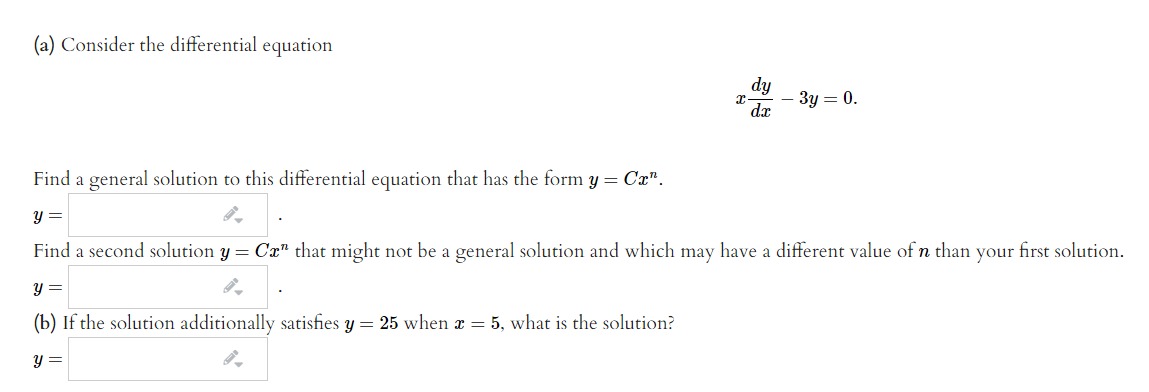
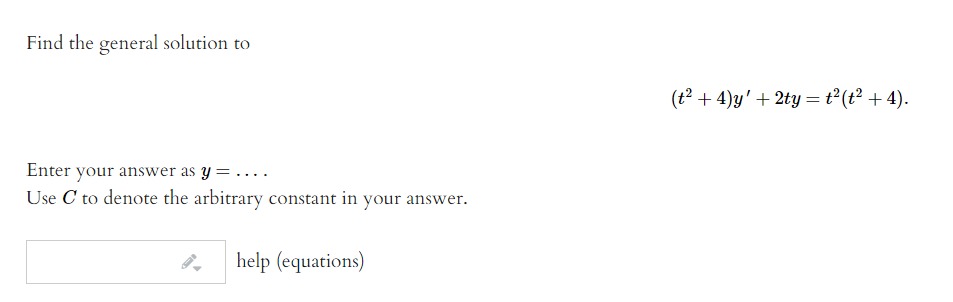
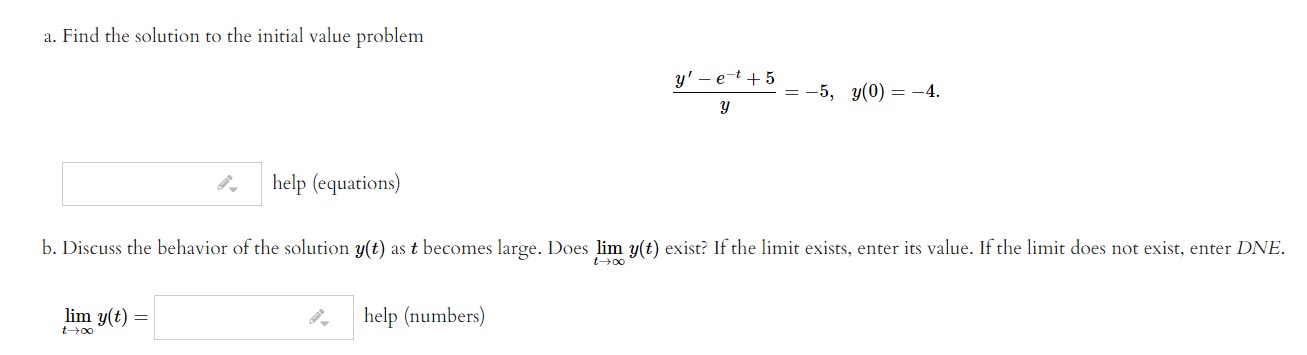
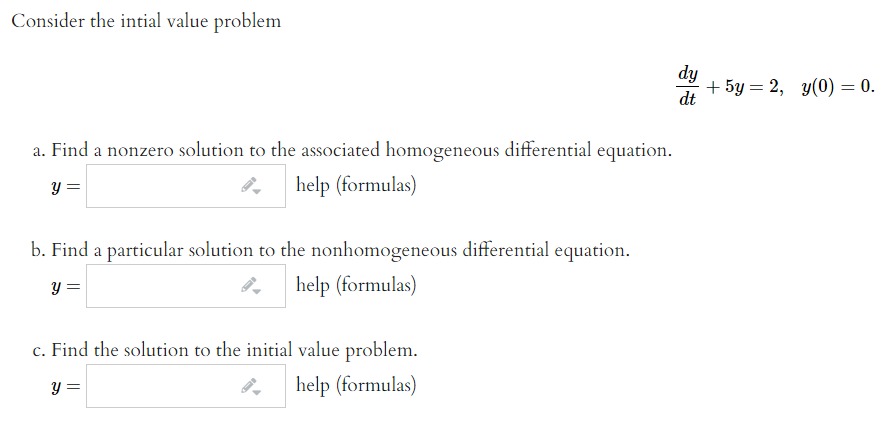
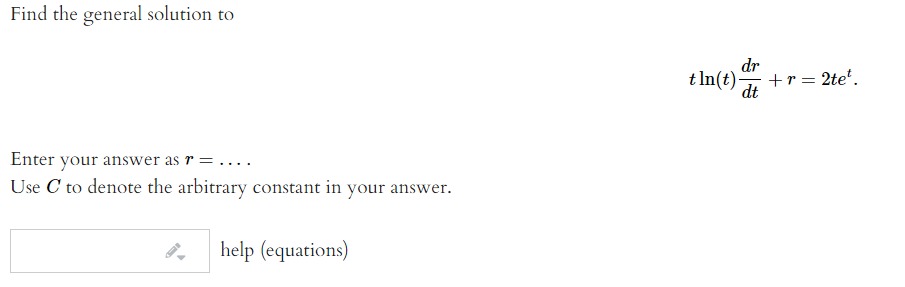
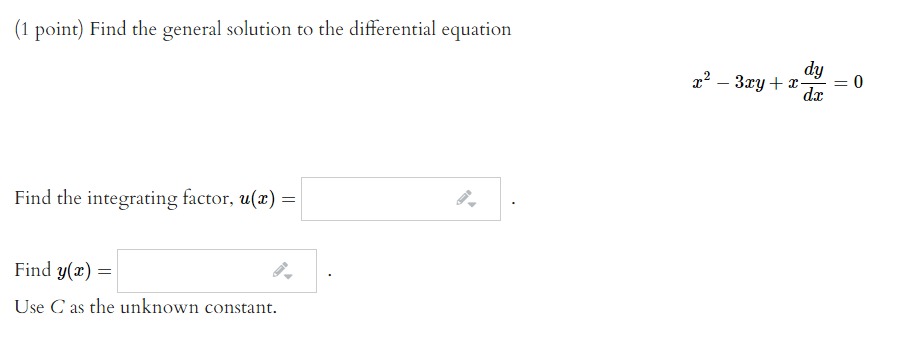
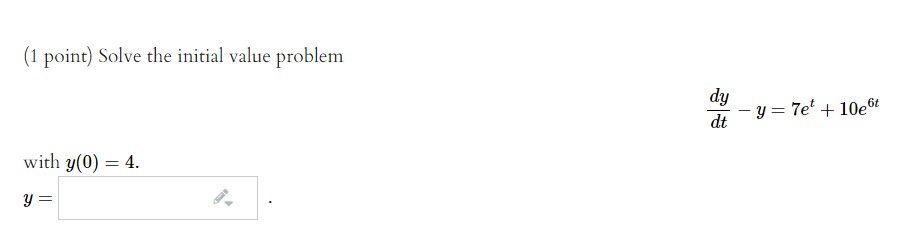
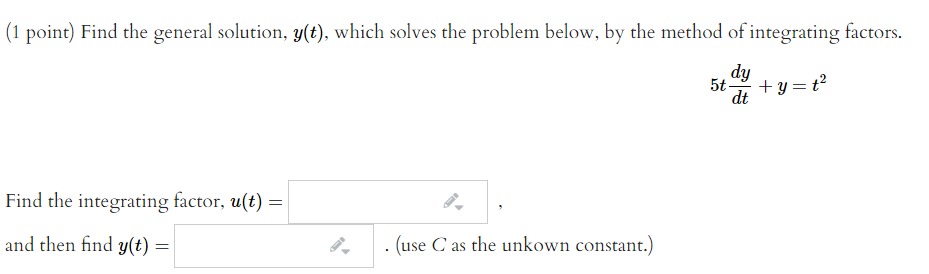
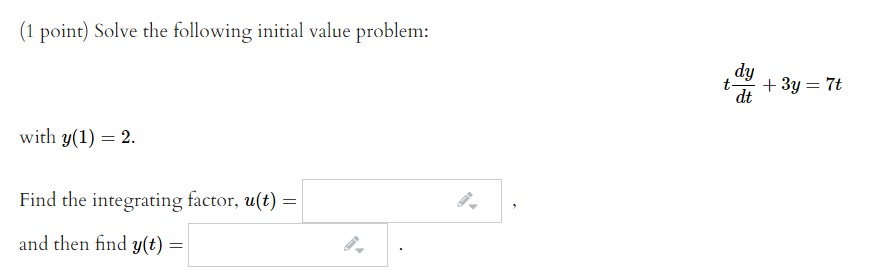
Find the solution of the initial value problem. dq dz = 4 + sin z, and q = 8 when z = 0. q(2) =(3) Consider the differential equation :3y=0. Find a general solution to this differential equation that has the form 3; = 02". y = .91, Find a second solution y : Cm" that might not be a general solution and which may have a different value of 1:. than your rst solution. y = .91, (b) If the solution additionally satises y = 25 when a: = 5, what is the solution? y = .91, Find the general solution to (t2 + 4)y' + 21:3; 2 2032 + 4). Enter your answer 3.5 y = - . . . Use 0 to denote the arbitrary constant in your answer- 59', help {equations} a. Find the solution to the initial value problem yr 78: + 5 = ,5, gm) = *4. l .f' help (equations) b. Discuss the behavior at the solution t) as it becomes large. Does Kim Mt} exist? If the limit exists, enter its value. If the limit does not exist, enter DNE. tMx: 130 Silt) = i, help (numbers) Consider the intial value problem a. Find a nonzero solution to the associated homogeneous differential equation. 1; =' .92. J help (formulas) h. Find a particular solution to the nonhomogeneous differential equation. y =' .4\Find the general solution to ihlilg + r = 2:31. Enter your answer as r : . . . . Use 0 to denote the arbitrary constant in your answer. ,9: help {equations} {1 point]I Find the general solution to the differential equation Find the integrating factor, 11(2) : #7., Find mm) = ; Use C a5 the unknown constant. (1 point) Solve the initial value problem dy dt - y = 7et + 10et with y(0) = 4. y =[:1 point) Find the general solution, y(t), which solves the Problem below, by the method of integrating factors. '13) 2 5t 2: dt +9 Find the integrating factor, u[t] = l #1. l , and then nd y{t) 2! f, . {use C as the unkown constant.) (1 point) Solve the following initial value problem: dy d+ + 3y = 7t with y(1) = 2. Find the integrating factor, u(t) = and then find y(t) =

Step by Step Solution

There are 3 Steps involved in it

1 Expert Approved Answer
Step: 1 Unlock blur-text-image

Question Has Been Solved by an Expert!

Get step-by-step solutions from verified subject matter experts

Step: 2 Unlock
Step: 3 Unlock

Students Have Also Explored These Related Mathematics Questions!