Question: this is a case study to to I need the answers of Q.N.1, 2 and 3 which are below what do you do? section 8
this is a case study to to
I need the answers of Q.N.1, 2 and 3
which are below "what do you do?" section
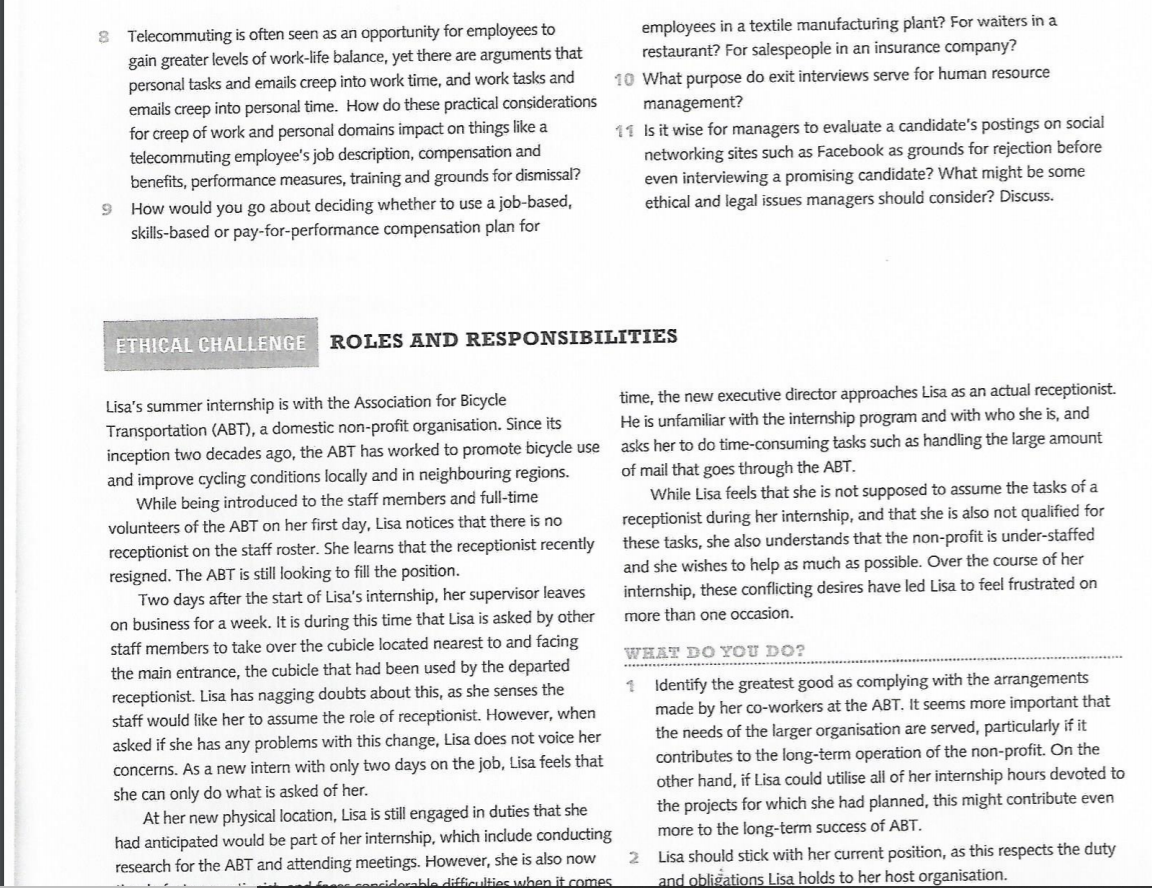
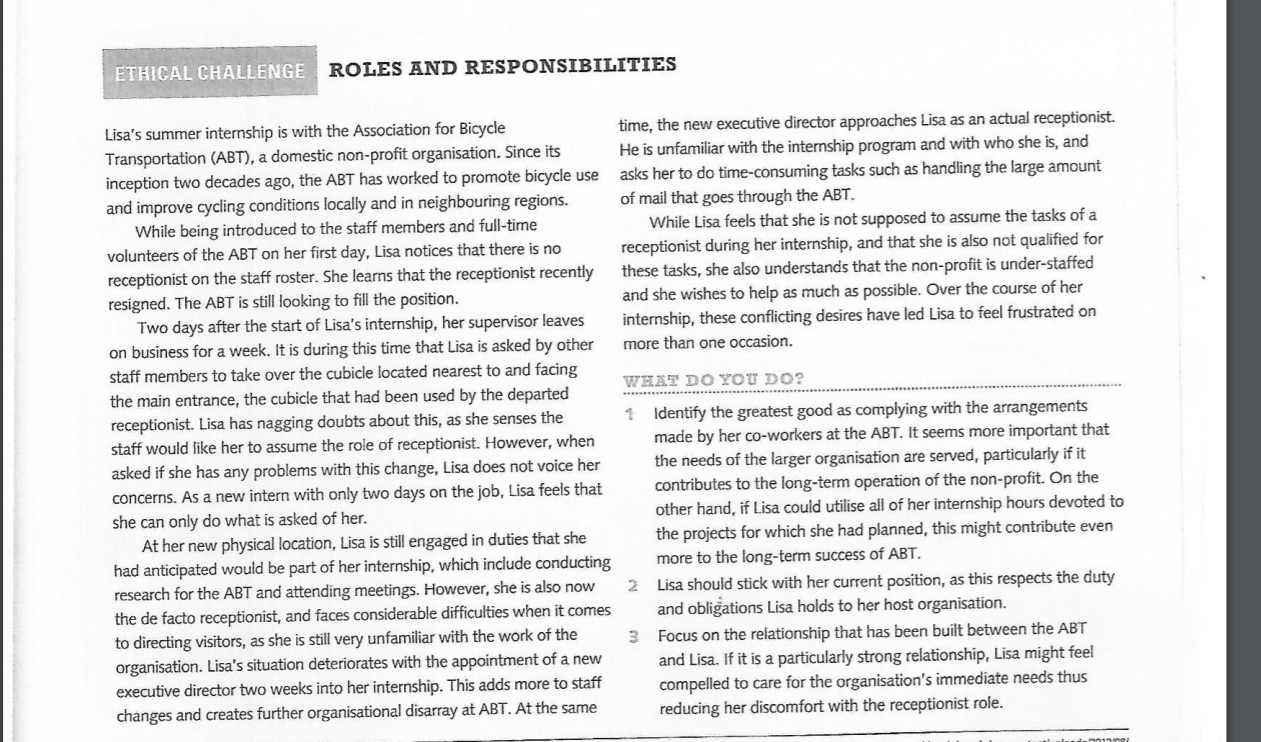
8 Telecommuting is often seen as an opportunity for employees to gain greater levels of work-life balance, yet there are arguments that personal tasks and emails creep into work time, and work tasks and emails creep into personal time. How do these practical considerations for creep of work and personal domains impact on things like a telecommuting employee's job description, compensation and benefits, performance measures, training and grounds for dismissal? How would you go about deciding whether to use a job-based, skills-based or pay-for-performance compensation plan for employees in a textile manufacturing plant? For waiters in a restaurant? For salespeople in an insurance company? 10 What purpose do exit interviews serve for human resource management? 11 Is it wise for managers to evaluate a candidate's postings on social networking sites such as Facebook as grounds for rejection before even interviewing a promising candidate? What might be some ethical and legal issues managers should consider? Discuss. ETHICAL CHALLENGE ROLES AND RESPONSIBILITIES time, the new executive director approaches Lisa as an actual receptionist. He is unfamiliar with the internship program and with who she is, and asks her to do time-consuming tasks such as handling the large amount of mail that goes through the ABT. While Lisa feels that she is not supposed to assume the tasks of a receptionist during her internship, and that she is also not qualified for these tasks, she also understands that the non-profit is under-staffed and she wishes to help as much as possible. Over the course of her internship, these conflicting desires have led Lisa to feel frustrated on more than one occasion. Lisa's summer internship is with the Association for Bicycle Transportation (ABT), a domestic non-profit organisation. Since its inception two decades ago, the ABT has worked to promote bicycle use and improve cycling conditions locally and in neighbouring regions. While being introduced to the staff members and full-time volunteers of the ABT on her first day, Lisa notices that there is no receptionist on the staff roster. She learns that the receptionist recently resigned. The ABT is still looking to fill the position. Two days after the start of Lisa's internship, her supervisor leaves on business for a week. It is during this time that Lisa is asked by other staff members to take over the cubicle located nearest to and facing the main entrance, the cubicle that had been used by the departed receptionist. Lisa has nagging doubts about this, as she senses the staff would like her to assume the role of receptionist. However, when asked if she has any problems with this change, Lisa does not voice her concerns. As a new intern with only two days on the job, Lisa feels that she can only do what is asked of her. At her new physical location, Lisa is still engaged in duties that she had anticipated would be part of her internship, which include conducting research for the ABT and attending meetings. However, she is also now ceciderable difficulties when it comes WHAT DO YOU DO? 1 Identify the greatest good as complying with the arrangements made by her co-workers at the ABT. It seems more important that the needs of the larger organisation are served, particularly if it contributes to the long-term operation of the non-profit. On the other hand, if Lisa could utilise all of her internship hours devoted to the projects for which she had planned, this might contribute even more to the long-term success of ABT. 2 Lisa should stick with her current position, as this respects the duty and obligations Lisa holds to her host organisation. ETHICAL CHALLENGE ROLES AND RESPONSIBILITIES time, the new executive director approaches Lisa as an actual receptionist. He is unfamiliar with the internship program and with who she is, and asks her to do time-consuming tasks such as handling the large amount of mail that goes through the ABT. While Lisa feels that she is not supposed to assume the tasks of a receptionist during her internship, and that she is also not qualified for these tasks, she also understands that the non-profit is under-staffed and she wishes to help as much as possible. Over the course of her internship, these conflicting desires have led Lisa to feel frustrated on more than one occasion. WHAT DO YOU DO? Lisa's summer internship is with the Association for Bicycle Transportation (ABT), a domestic non-profit organisation. Since its inception two decades ago, the ABT has worked to promote bicycle use and improve cycling conditions locally and in neighbouring regions. While being introduced to the staff members and full-time volunteers of the ABT on her first day, Lisa notices that there is no receptionist on the staff roster. She learns that the receptionist recently resigned. The ABT is still looking to fill the position. Two days after the start of Lisa's internship, her supervisor leaves on business for a week. It is during this time that Lisa is asked by other staff members to take over the cubicle located nearest to and facing the main entrance, the cubicle that had been used by the departed receptionist. Lisa has nagging doubts about this, as she senses the staff would like her to assume the role of receptionist. However, when asked if she has any problems with this change, Lisa does not voice her concerns. As a new intern with only two days on the job, Lisa feels that she can only do what is asked of her. At her new physical location, Lisa is still engaged in duties that she had anticipated would be part of her internship, which include conducting research for the ABT and attending meetings. However, she is also now the de facto receptionist, and faces considerable difficulties when it comes to directing visitors, as she is still very unfamiliar with the work of the organisation. Lisa's situation deteriorates with the appointment of a new executive director two weeks into her internship. This adds more to staff changes and creates further organisational disarray at ABT. At the same 1 Identify the greatest good as complying with the arrangements made by her co-workers at the ABT. It seems more important that the needs of the larger organisation are served, particularly if it contributes to the long-term operation of the non-profit. On the other hand, if Lisa could utilise all of her internship hours devoted to the projects for which she had planned, this might contribute even more to the long-term success of ABT. 2 Lisa should stick with her current position, as this respects the duty and obligations Lisa holds to her host organisation. 3 Focus on the relationship that has been built between the ABT and Lisa. If it is a particularly strong relationship, Lisa might feel compelled to care for the organisation's immediate needs thus reducing her discomfort with the receptionist role. ning









 Study Help