







Question: this is a problem I'm having trouble with, I do not know how to go about it The crafters are paid on an hourly basis.
this is a problem I'm having trouble with, I do not know how to go about it
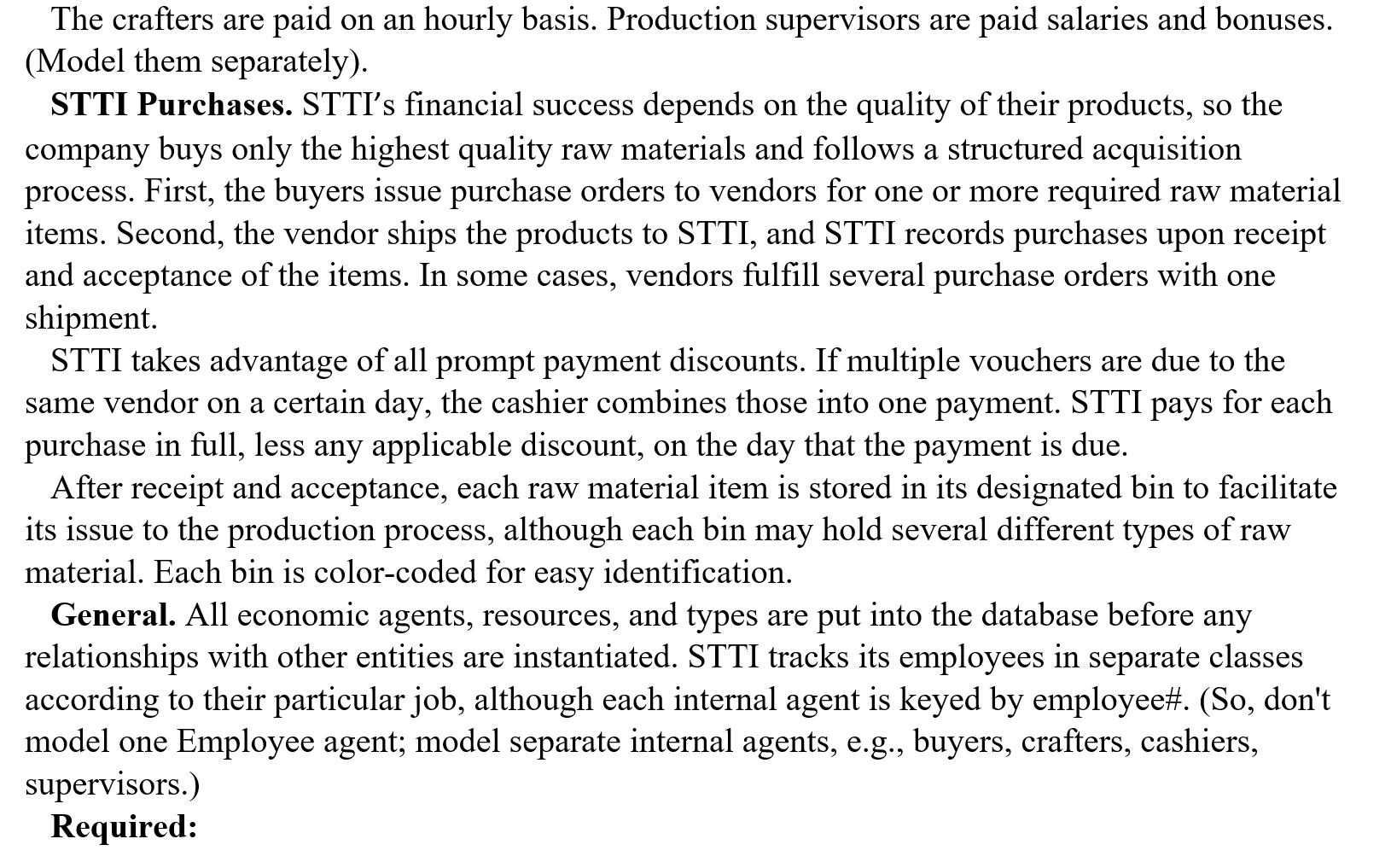
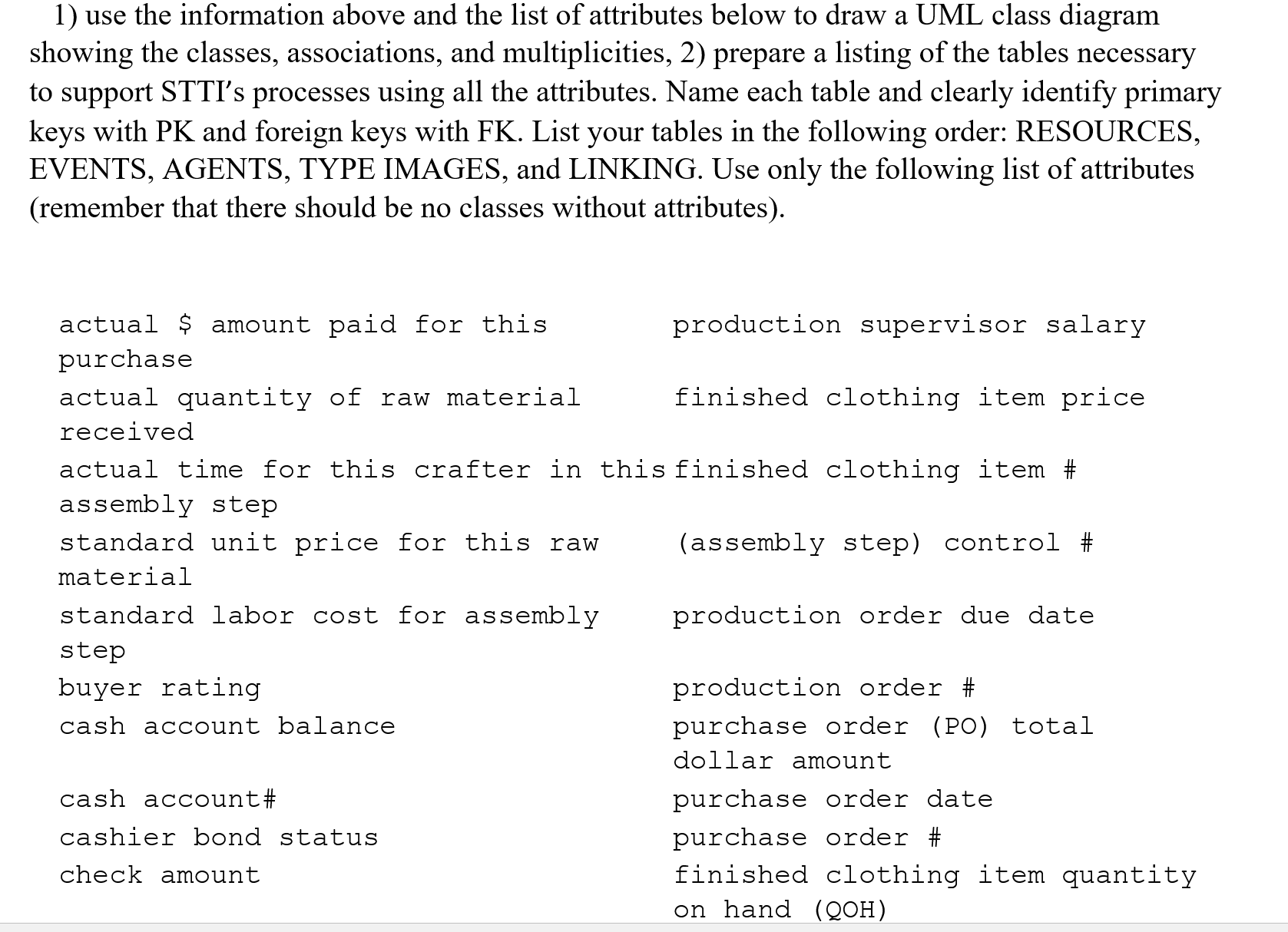
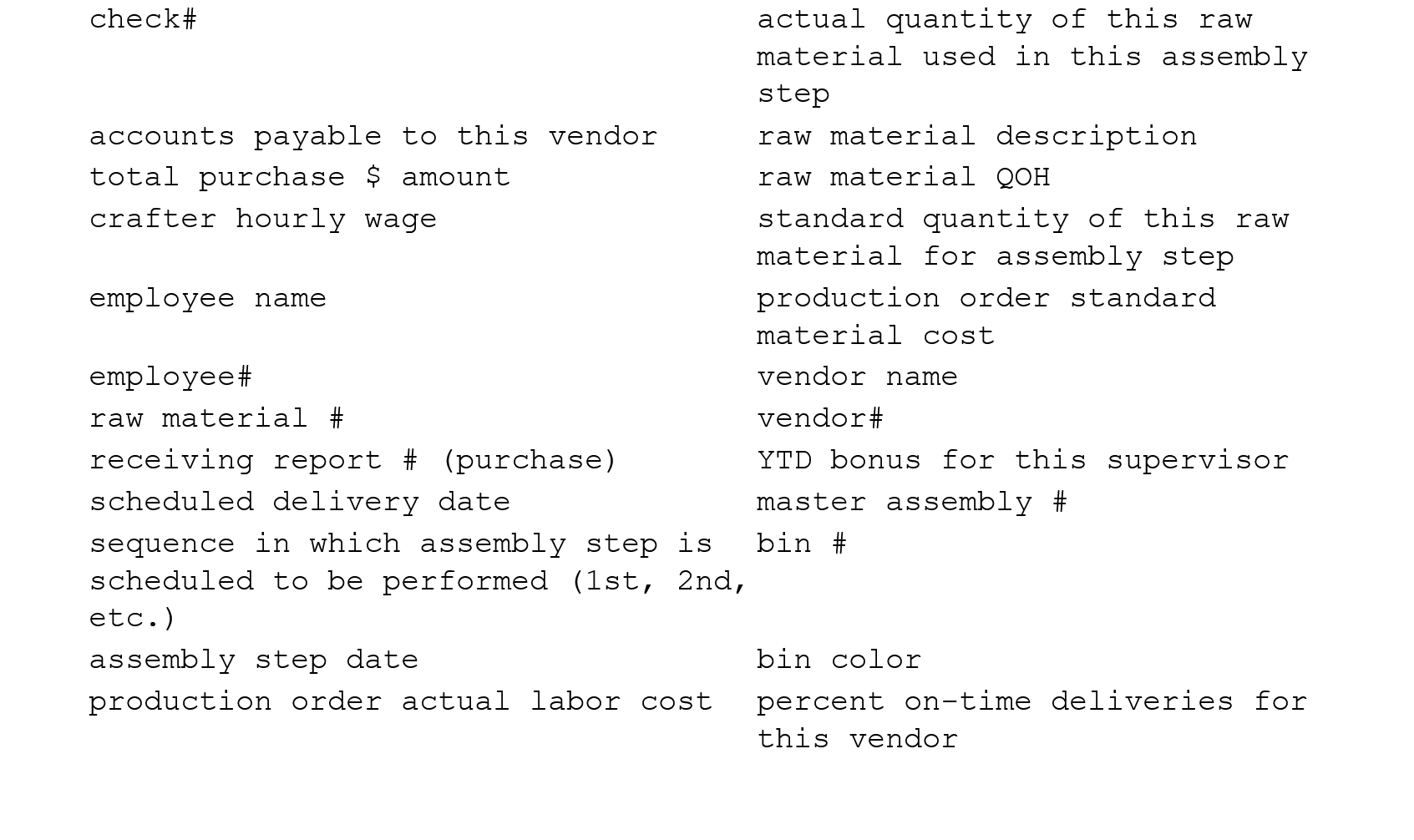
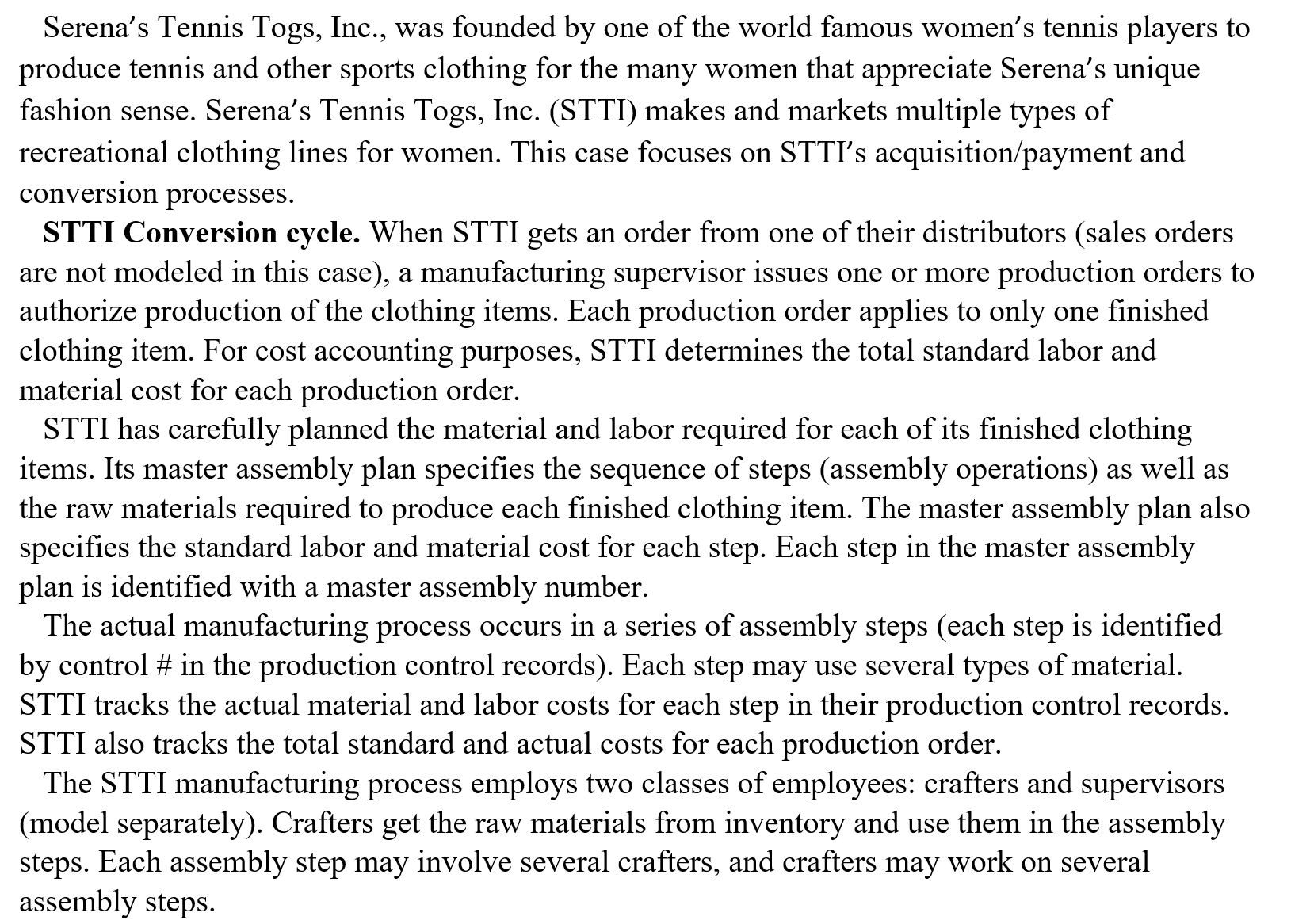
The crafters are paid on an hourly basis. Production supervisors are paid salaries and bonuses. (Model them separately). STTI Purchases. STTI's nancial success depends on the quality of their products, so the company buys only the highest quality raw materials and follows a structured acquisition process. First, the buyers issue purchase orders to vendors for one or more required raw material items. Second, the vendor ships the products to STTI, and STTI records purchases upon receipt and acceptance of the items. In some cases, vendors fulll several purchase orders with one shipment. STTI takes advantage of all prompt payment discounts. If multiple vouchers are due to the same vendor on a certain day, the cashier combines those into one payment. STTI pays for each purchase in full, less any applicable discount, on the day that the payment is due. After receipt and acceptance, each raw material item is stored in its designated bin to facilitate its issue to the production process, although each bin may hold several different types of raw material. Each bin is color-coded for easy identication. General. All economic agents, resources, and types are put into the database before any relationships with other entities are instantiated. STTI tracks its employees in separate classes according to their particular job, although each internal agent is keyed by employee#. (So, don't model one Employee agent; model separate internal agents, e. g., buyers, crafters, cashiers, supervisors.) Required: 1) use the information above and the list of attributes below to draw a UML class diagram showing the classes, associations, and multiplicities, 2) prepare a listing of the tables necessary to support STTI's processes using all the attributes. Name each table and clearly identify primary keys with PK and foreign keys with FK. List your tables in the following order: RESOURCES, EVENTS, AGENTS, TYPE IMAGES, and LINKING. Use only the following list of attributes (remember that there should be no classes without attributes). actual $ amount paid for this purchase actual quantity of raw material received production supervisor salary finished clothing item price actual time for this crafter in thisfinished clothing item # assembly step standard unit price for this raw material standard labor cost for assembly step buyer rating cash account balance cash account# cashier bond status check amount (assembly step) control # production order due date production order # purchase order (PO) total dollar amount purchase order date purchase order # finished clothing item quantity on hand (QOH) check# accounts payable to this vendor total purchase $ amount crafter hourly wage employee name employee# raw material # receiving report # (purchase) scheduled delivery date sequence in which assembly step scheduled to be performed (lst, etc.) assembly step date is 2nd, production order actual labor cost actual quantity of this raw material used in this assembly step raw material description raw material QOH standard quantity of this raw material for assembly step production order standard material cost vendor name vendor# YTD bonus for this supervisor master assembly # bin # bin color percent ontime deliveries for this vendor Serena's Tennis Togs, Inc., was founded by one of the world famous women's tennis players to produce tennis and other sports clothing for the many women that appreciate Serena's unique fashion sense. Serena's Tennis Togs, Inc. (STTI) makes and markets multiple types of recreational clothing lines for women. This case focuses on STTI's acquisition/payment and conversion processes. STTI Conversion cycle. When STTI gets an order from one of their distributors (sales orders are not modeled in this case), a manufacturing supervisor issues one or more production orders to authorize production of the clothing items. Each production order applies to only one nished clothing item. For cost accounting purposes, STTI determines the total standard labor and material cost for each production order. STTI has carefully planned the material and labor required for each of its nished clothing items. Its master assembly plan specifies the sequence of steps (assembly operations) as well as the raw materials required to produce each nished clothing item. The master assembly plan also specifies the standard labor and material cost for each step. Each step in the master assembly plan is identied with a master assembly number. The actual manufacturing process occurs in a series of assembly steps (each step is identified by control # in the production control records). Each step may use several types of material. STTI tracks the actual material and labor costs for each step in their production control records. STTI also tracks the total standard and actual costs for each production order. The STTI manufacturing process employs two classes of employees: crafters and supervisors (model separately). Crafters get the raw materials from inventory and use them in the assembly steps. Each assembly step may involve several crafters, and crafters may work on several assembly steps
Step by Step Solution
There are 3 Steps involved in it

Get step-by-step solutions from verified subject matter experts
 Study Help