







Question: This is an example exercise, please answer the following to the best of your ability and with much detail, please. Please incorporate understanding of college-level
- This is an example exercise, please answer the following to the best of your ability and with much detail, please.
- Please incorporate understanding of college-level writing, sentence construction, grammar and punctuation.
- PLEASE BE SURE TO create an outline and Cluster Map" 2 parts to this assignment. I have provided essay for reference.
- Please use""HOW TO WRITE AN OUTLINE", and "CLUSTER MAP", down below, for reference in help with assignment
Thank you so much!
Assignment:
- Prepare (create) a formal outline with the information provided from essay. "Same-Sex Marriage: A Comprehensive Review of Social, Legal, and Psychological Perspectives"
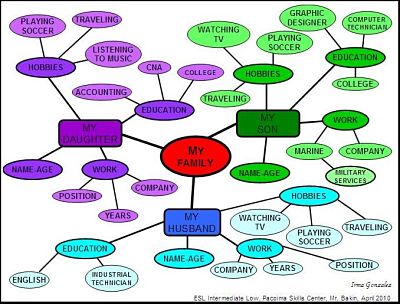
- prepare (create) a form of "cluster map"
- format map can be created of YOUR CHOICE, does not have to be exact like picture, as long as it's in a way of a "map idea"
Research Essay Topic:
Same-Sex Marriage: A Comprehensive Review of Social, Legal, and Psychological Perspectives
This study offers a thorough examination of same-sex marriage, including its historical backdrop, legal evolution, sociological impact, and psychological implications. Drawing on a number of scholarly sources, it examines the arguments for and against same-sex marriage, goes into its legal history in various jurisdictions, investigates its consequences on individuals and society, and evaluates the psychological well-being of same-sex couples. By combining several perspectives, this paper hopes to contribute to a better understanding of the varied nature of same-sex marriage and its implications for individuals and communities. Same-sex marriage, which was formerly a difficult subject in many cultures, has experienced considerable changes in recent decades. This study will provide a comprehensive examination of the phenomena, including its historical context, legislative developments, societal consequences, and psychological components. Understanding same-sex marriage needs an examination of its history, conflicts, and ramifications in various areas.Same-sex relationships and marriage have been accepted and condemned in various societies and civilizations throughout history. Understanding the historical trajectory reveals the complexities of attitudes regarding same-sex relationships and marriage, from ancient civilizations that recognized them to eras of extreme persecution and prejudice. The legal framework surrounding same-sex marriage has changed significantly around the world. This section looks at historic judicial decisions, legislative developments, and societal transformations that have influenced the recognition and regulation of same-sex marriage in many jurisdictions. From pioneering legalization in the Netherlands to broad recognition in many countries, the legal evolution of same-sex marriage reflects shifting societal attitudes and values. While in social aspect, same-sex marriage has had profound societal implications, influencing cultural norms, political discourse, and social attitudes. This section explores the impact of same-sex marriage on family structures, religious institutions, and the broader fabric of society. It examines debates surrounding marriage equality, adoption rights, and the intersectionality of LGBTQ+ rights with other social justice movements. Additionally, The mental well-being of those in same-sex marriages is crucial to comprehending the phenomenon. This section examines research on the mental health, interpersonal happiness, and familial dynamics of people in same-sex marriage. It discusses minority stress, social support networks, and LGBTQ+ individuals' resilience in the face of stigma and discrimination. On the other hand, debates about same-sex marriage frequently center on competing moral, religious, and legal arguments. This section discusses and examines significant reasons for and against same-sex marriage, including religious freedom, children's welfare, and the definition of marriage itself. By addressing these arguments, this study hopes to provide a more nuanced view of the intricacies present in the debate over same-sex marriage.
Furthermore, in different lines of research, Dr. John Gottman and Dr. Julie Schwartz Gottman have seen the strength and resilience of same-sex couples, even in the face of cultural and social challenges to which same-sex couples are peculiarly exposed. When these couples are in difficulty, they require and deserve personalized, research-based help, just like any other couple. The result showed that, Gay and lesbian couples are more optimistic in the face of conflict. When bringing up a conflict, gay and lesbian couples employ more affection and humor than straight couples, and their partners respond more positively. Gay and lesbian couples are also more likely to stay positive following a quarrel. "In terms of feelings, we believe these couples may operate on quite different principles than straight couples. "Straight couples may learn a lot from gay and lesbian relationships," says Gottman. However, Unhappy gay and lesbian couples exhibit low levels of "physiological arousal." The opposite is true for straight couples. For straights, physiological arousal indicates continued irritation. The continuing aroused state, which includes a raised heart rate, sweaty palms, and jitteriness, makes it difficult for partners to relax in the midst of disagreement. This decreased degree of arousal in gay and lesbian couples demonstrates their ability to comfort one another. Aside from that, researchers found out that, being denied the right to marry contributes to the stigma associated with a minority sexual identity. Researchers discovered that living in a state where same-sex marriage is prohibited can result in persistent social stress and mental health issues. Psychologists are especially concerned that such stigma would harm the healthy development of teenagers and young people.
In conclusion, same-sex marriage is an important topic in modern concerns about human rights, equality, and social justice. Its recognition and acceptance mark a watershed moment in the ongoing fight for LGBTQ+ rights globally. This study has presented a thorough examination of same-sex marriage, including historical, legal, sociological, and psychological aspects. It leads to a better understanding of the intricacies and ramifications of same-sex marriage for individuals and communities by combining different points of view.
HOW TO WRITE AN OUTLINE
An outline breaks down the parts of your thesis in a clear, hierarchical manner. Most students find that writing an outlinebeforebeginning the paper is most helpful in organizing one's thoughts. If your outline is good, your paper should be easy to write.
The basic format for an outline uses an alternating series of numbers and letters, indented accordingly, to indicate levels of importance. Here is a skeletal example of an outline on a paper about the development of Japanese theater. You will need to flesh out your own.
OUTLINE | NOTES |
I. Introduction A. Background B. Thesis: Japanese theater rose from a popular to elite and then returned to a popular art form. II. Early theatrical forms A. Bugaku B. Sarugaku C. Primitive Noh D. Authors and Audience III. Noh theater A. Authors B. Props 1. Masks a. women b. demons c. old men 2. Structure of Stage C. Themes 1. Buddhist influence 2. The supernatural D. Kyogen interludes E. Audience IV. Kabuki A. Authors B. Props 1. make-up 2. special effects C. Themes 1. Love stories 2. Revenge D. Audience V. Bunraku (puppet) theater A. Authors B. Props C. Themes 1. Love stories 2. Historical romances D. Audience VI. Conclusion: Confirm thesis | The thesis is stated in the first section, which is theintroduction. Thebodyfollows the introduction, and breaks down the points the author wishes to make. Note that some sections have subdivisions, others do not, depending on the demands of the paper. In this outline, II, III, & IV all have similar structure, but this will not necessarily be true for all papers. Some may only have three major sections, others more than the five given here. Yourconclusionshouldrestateyour thesis, andneverintroduce new material. Yet this entry should explore what you actually conclude. |
Cluster Map or Diagram
in development of an essay outline
In the cluster diagram or map, students prepare to write an essay about a topic you have chosen.Before you start writing, you create a cluster diagram as a writing tool to help you organize your subtopics and ideas into a formal outline that will frame out your essay. If you were to read the essay and look at the cluster diagram, you should be able to see that the ideas in the essay are related to the ideas diagrammed in clusters.
To create your cluster map, begin by listing your topic and, in our case, your thesis in the center of the page. That is the hub. From there, you will draw spokes, which refer to subcategories related to your topic and thesis. As you get more specific, you add more content to your map, tied to those subtopics. (if picture of a sample cluster map doesn't show up below. please google "cluster map example" an example of the map should pop up.)
Step by Step Solution
There are 3 Steps involved in it

Get step-by-step solutions from verified subject matter experts
 Study Help