



Question: this is article i need summary of this article 150 to 250 words and you can read last page there is requirments How Concerned Should
this is article i need summary of this article 150 to 250 words and you can read last page there is requirments
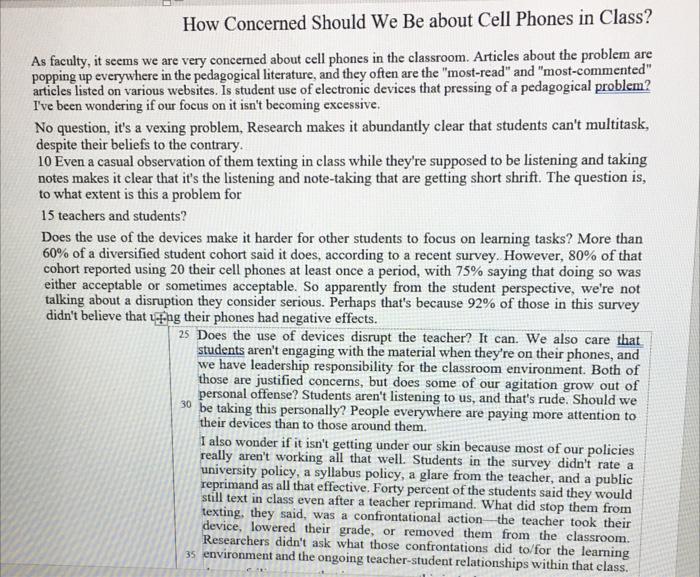
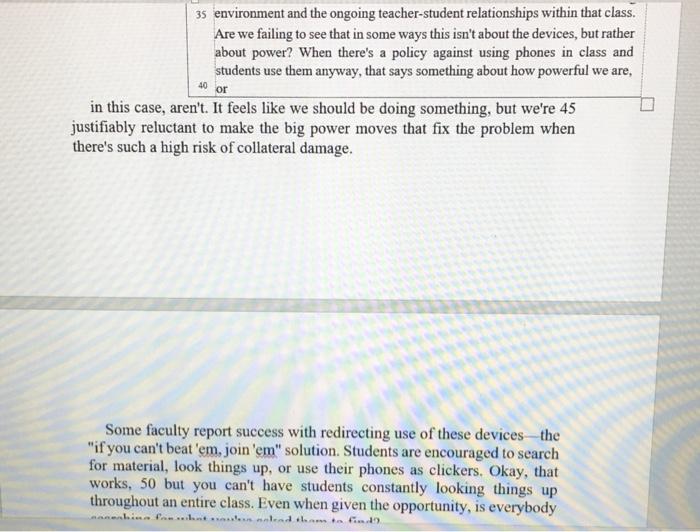
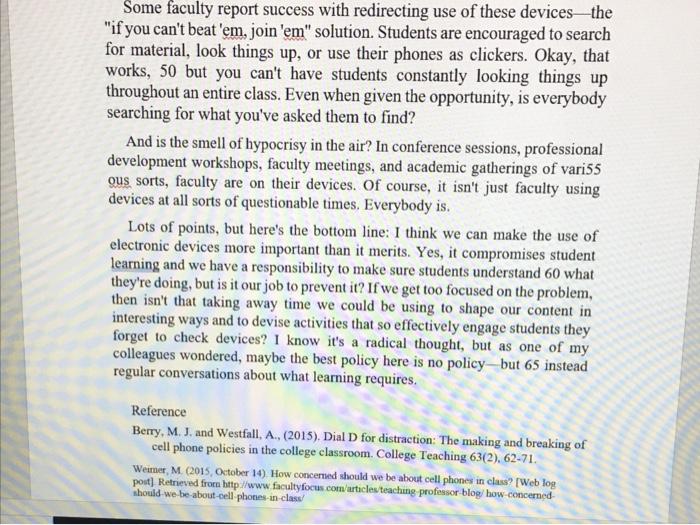
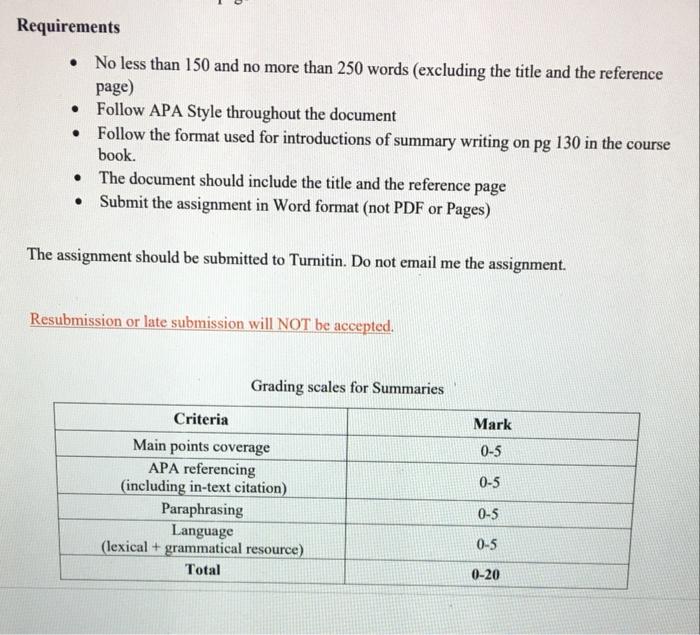
How Concerned Should We Be about Cell Phones in Class? As faculty, it seems we are very concerned about cell phones in the classroom. Articles about the problem are popping up everywhere in the pedagogical literature, and they often are the "most-read" and "most-commented" articles listed on various websites. Is student use of electronic devices that pressing of a pedagogical problem? I've been wondering if our focus on it isn't becoming excessive. No question, it's a vexing problem, Research makes it abundantly clear that students can't multitask, despite their beliefs to the contrary. 10 Even a casual observation of them texting in class while they're supposed to be listening and taking notes makes it clear that it's the listening and note-taking that are getting short shrift. The question is, to what extent is this a problem for 15 teachers and students? Does the use of the devices make it harder for other students to focus on learning tasks? More than 60% of a diversified student cohort said it does, according to a recent survey. However, 80% of that cohort reported using 20 their cell phones at least once a period, with 75% saying that doing so was either acceptable or sometimes acceptable. So apparently from the student perspective, we're not talking about a disruption they consider serious. Perhaps that's because 92% of those in this survey didn't believe that ofing their phones had negative effects. 25 Does the use of devices disrupt the teacher? It can. We also care that students aren't engaging with the material when they're on their phones, and we have leadership responsibility for the classroom environment. Both of those are justified concerns, but does some of our agitation grow out of personal offense? Students aren't listening to us, and that's rude. Should we be taking this personally? People everywhere are paying more attention to their devices than to those around them. I also wonder if it isn't getting under our skin because most of our policies really aren't working all that well. Students in the survey didn't rate a university policy, a syllabus policy, a glare from the teacher, and a public reprimand as all that effective. Forty percent of the students said they would still text in class even after a teacher reprimand. What did stop them from texting, they said, was a confrontational action the teacher took their device, lowered their grade, or removed them from the classroom. Researchers didn't ask what those confrontations did to for the learning 35 environment and the ongoing teacher-student relationships within that class. 30 35 environment and the ongoing teacher-student relationships within that class. Are we failing to see that in some ways this isn't about the devices, but rather about power? When there's a policy against using phones in class and students use them anyway, that says something about how powerful we are, in this case, aren't. It feels like we should be doing something, but we're 45 justifiably reluctant to make the big power moves that fix the problem when there's such a high risk of collateral damage. 40 or Some faculty report success with redirecting use of these devices the "if you can't beat 'em, join 'em" solution Students are encouraged to search for material, look things up, or use their phones as clickers. Okay, that works, 50 but you can't have students constantly looking things up throughout an entire class. Even when given the opportunity, is everybody annabis fontes de fi Some faculty report success with redirecting use of these devices the "if you can't beat 'em, join 'em" solution. Students are encouraged to search for material, look things up, or use their phones as clickers. Okay, that works, 50 but you can't have students constantly looking things up throughout an entire class. Even when given the opportunity, is everybody searching for what you've asked them to find? And is the smell of hypocrisy in the air? In conference sessions, professional development workshops, faculty meetings, and academic gatherings of vari55 ous sorts, faculty are on their devices. Of course, it isn't just faculty using devices at all sorts of questionable times. Everybody is. Lots of points, but here's the bottom line: I think we can make the use of electronic devices more important than it merits. Yes, it compromises student learning and we have a responsibility to make sure students understand 60 what they're doing, but is it our job to prevent it? If we get too focused on the problem, then isn't that taking away time we could be using to shape our content in interesting ways and to devise activities that so effectively engage students they forget to check devices? I know it's a radical thought, but as one of my colleagues wondered, maybe the best policy here is no policy-but 65 instead regular conversations about what learning requires. Reference Berry, M. J. and Westfall, A., (2015). Dial D for distraction: The making and breaking of cell phone policies in the college classroom. College Teaching 63(2), 62-71. Weimer, M. (2015 October 14) How concerned should we be about cell phones in class? [Weblog post] Retrieved from http://www.facultyfocus.com/articles teaching professor blog/how-concerned should we be about-cell phones-in-class Requirements No less than 150 and no more than 250 words (excluding the title and the reference page) Follow APA Style throughout the document Follow the format used for introductions of summary writing on pg 130 in the course book. The document should include the title and the reference page Submit the assignment in Word format (not PDF or Pages) The assignment should be submitted to Turnitin. Do not email me the assignment. Resubmission or late submission will NOT be accepted. Grading scales for Summaries Mark 0-5 Criteria Main points coverage APA referencing (including in-text citation) Paraphrasing Language (lexical + grammatical resource) Total 0-5 0-5 0-5 0-20 Step by Step Solution
There are 3 Steps involved in it
1 Expert Approved Answer
Step: 1 Unlock

Question Has Been Solved by an Expert!
Get step-by-step solutions from verified subject matter experts
Step: 2 Unlock
Step: 3 Unlock