Question: this is the case this is the chapter Identify and apply the role of NGO's in the diamond trade to the De Beers case. You
this is the case
this is the chapter
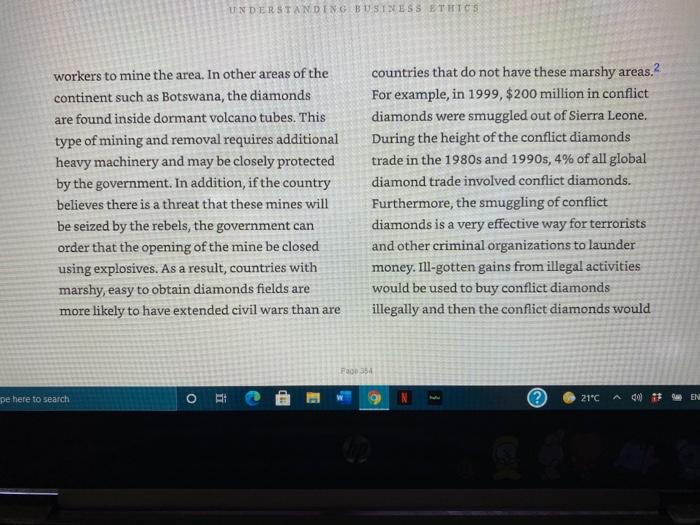
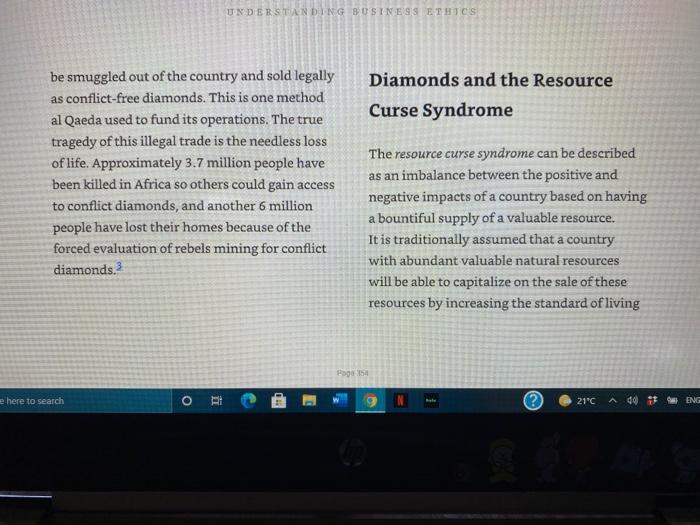
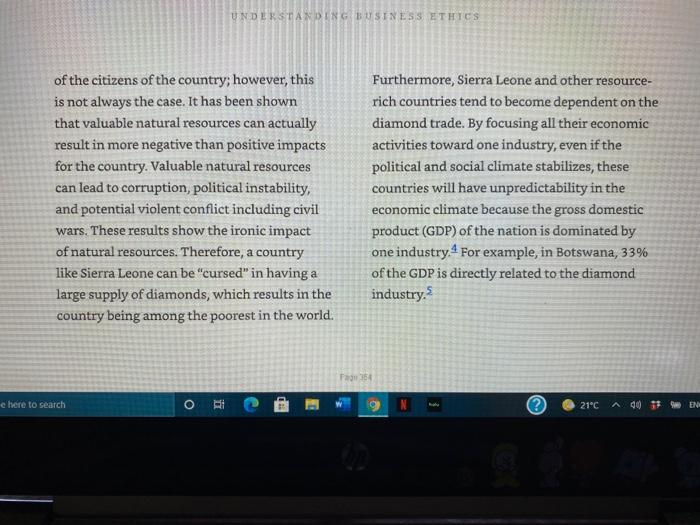
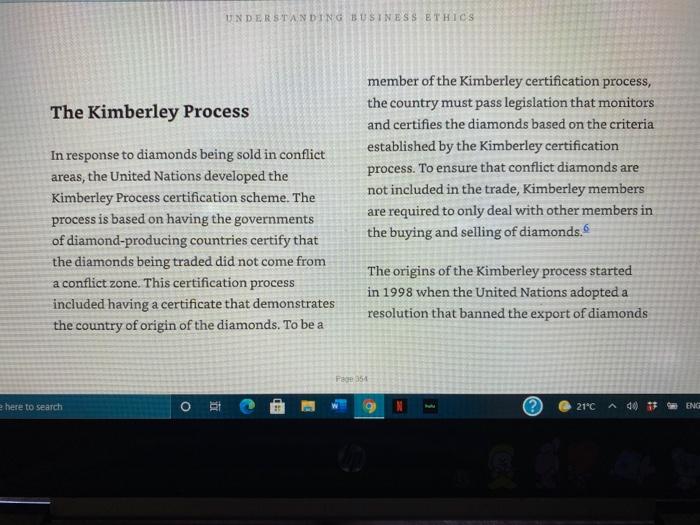
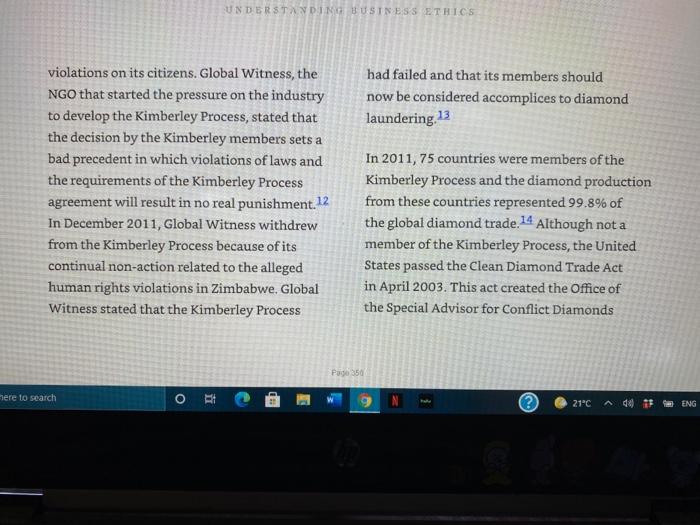
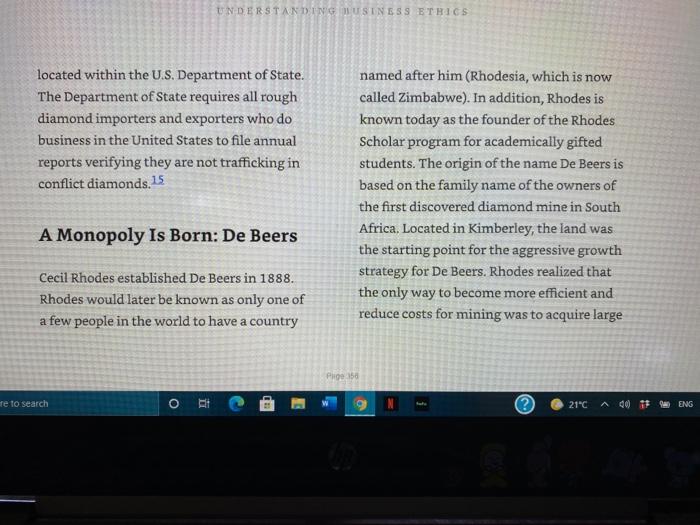
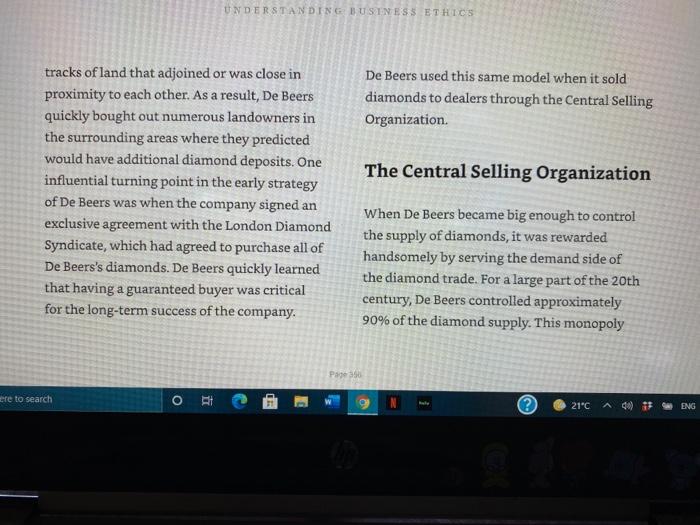
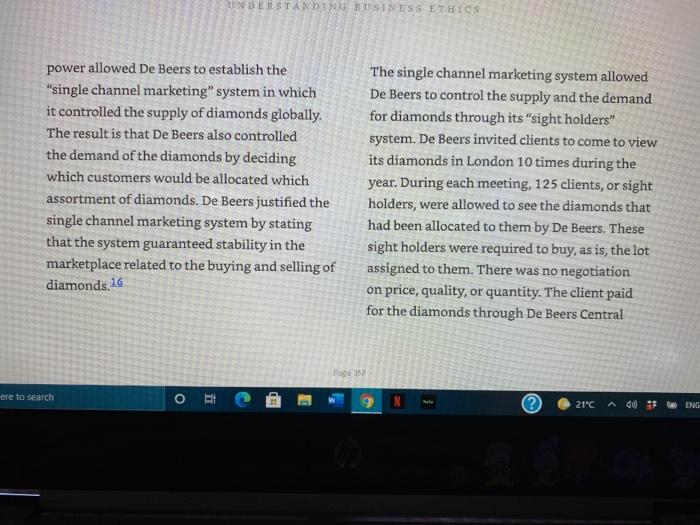
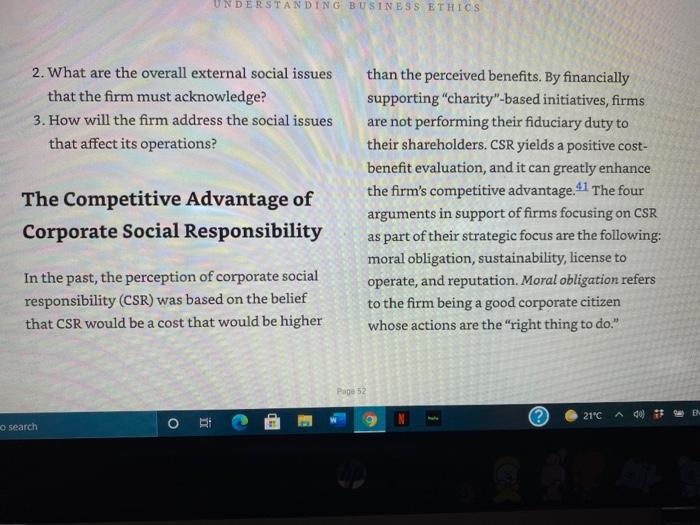
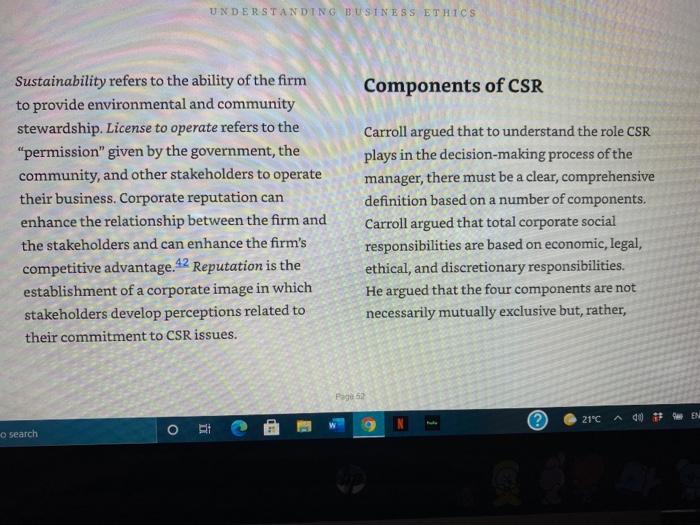
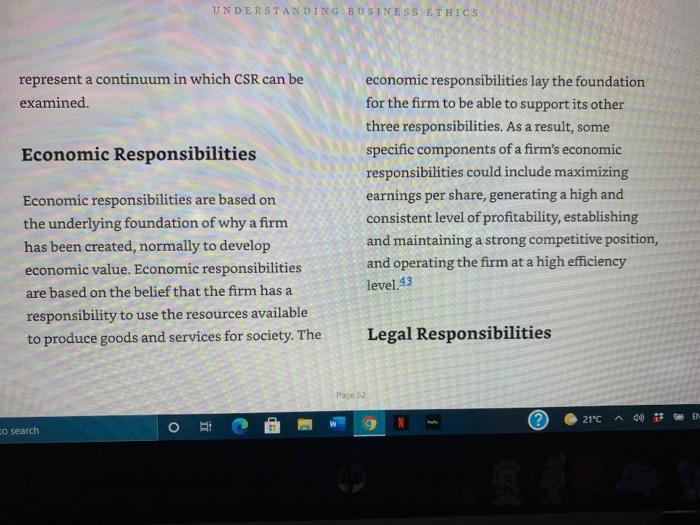
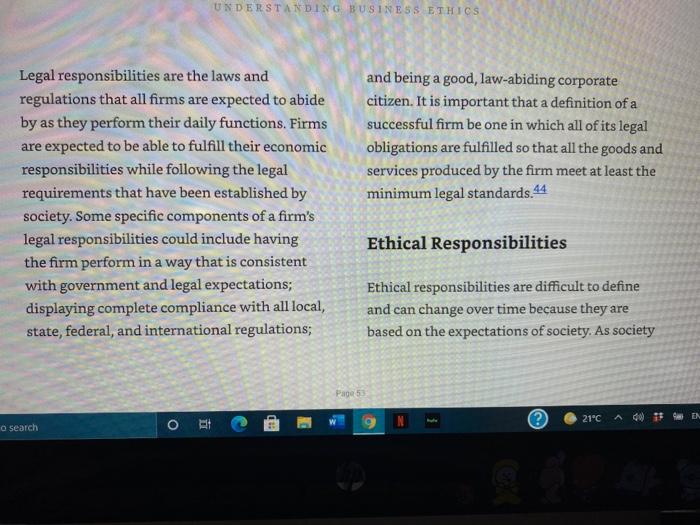
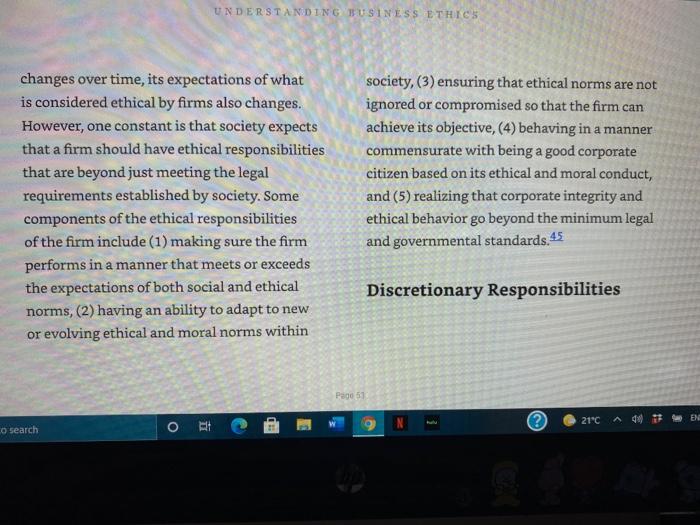
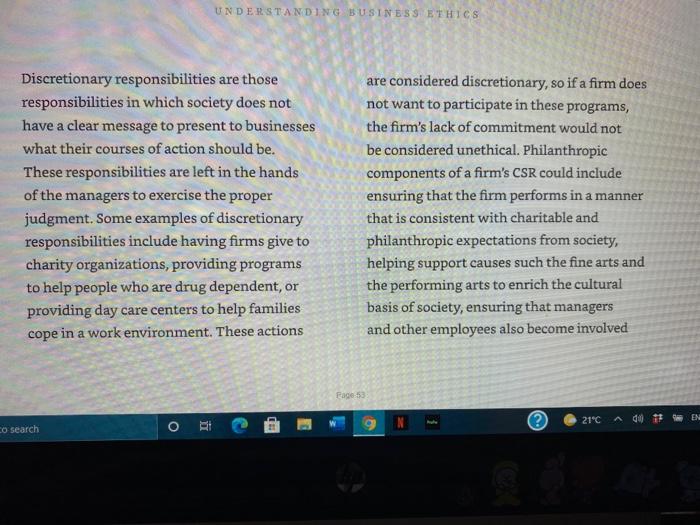
Identify and apply the role of NGO's in the diamond trade to the De Beers case. You may select any concept you deem relevant from each chapter but make sure to explain what it is, how it applies, and why. 10 De Beers and the Conflict Diamonds: A Monopoly Doesn't Last Forever child labor to a company controlling the global market, diamonds have had a phenomenal economic, social, and political impact globally. The image of the diamond is critical because the diamond does not have any intrinsic value. For more than half a century, humans have been able to develop synthetic diamonds that are used in industrial settings. Diamonds are carbon based, so they are one of the strongest substances known to man. Before the invention of synthetic diamonds, manufacturers bought diamonds on the open market to be used as Since the 1950s, humans have been able to make synthetic diamonds. Yet, consumers demand "real" diamonds for their jewelry, but at what cost? The diamond industry has been marred with numerous ethical issues. From 56% Page 353 of 572 Location 206617733 H A 007 o 21C ENG e here to search 9 ti A comprehensive definition of a stakeholder presented by the Stanford Research Institute in 1963 is a member of a group whose support is necessary for the firm to continue to exist. Edward Freeman believed that stakeholders were any individuals or groups that can affect or be affected by the actions of the firm. 11 The multitude of stakeholders in today's business operations make the shareholder just one of many groups interested in ethical behaviors of the business. In the past, many companies looked after only the stockholders, but this sense of constituencies has changed in recent years. Corporations now look toward a stakeholder approach. Stakeholders are defined as any group or individual that has a vested interest in the operations of the firm. Traditional stakeholders for a firm include employees, suppliers, stockholders, customers, Freeman built on the original work of Dodd by broadening the definition of stakeholders to encompass any individuals or groups that have a vested interest in the operations of the firm. Page 40 ere to search o Bi 3D E 2 21C A 407 EN UNDERSTANDING BUSINESS ETHICS for diamonds as "slaves" to the rebels. The release of the movie Blood Diamond starring Leonardo DiCaprio as a diamond smuggler brought the issue of conflict diamonds to the forefront. Blood Diamond was set in Sierra Leone during its civil war and showed brutal images of murder, kidnapping, and mutilation. Some scenes included having children selecting which of their limbs would be amputated by the rebels to ensure children obey the commands of the rebels. Furthermore, additional scenes showed men being forced from their villages and being required to mine One of the reasons why conflict diamonds can be potentially common in funding civil wars is the location of the diamonds. In Western African countries such as Sierra Leone Liberia, and the Ivory Coast, diamonds are located in marshy areas and riverbeds. The diamonds are very close to the surface of the ground, so it is very easy for anyone to "mine" the fields. In addition, it is very easy for a rebel group to seize control of the marshy area and force Page 1 ype here to search OH O E 21C A it UNDERSTANDING BUSINESS ETHICS workers to mine the area. In other areas of the continent such as Botswana, the diamonds are found inside dormant volcano tubes. This type of mining and removal requires additional heavy machinery and may be closely protected by the government. In addition, if the country believes there is a threat that these mines will be seized by the rebels, the government can order that the opening of the mine be closed using explosives. As a result, countries with marshy, easy to obtain diamonds fields are more likely to have extended civil wars than are countries that do not have these marshy areas.2 For example, in 1999, $200 million in conflict diamonds were smuggled out of Sierra Leone, During the height of the conflict diamonds trade in the 1980s and 1990s, 4% of all global diamond trade involved conflict diamonds. Furthermore, the smuggling of conflict diamonds is a very effective way for terrorists and other criminal organizations to launder money. Ill-gotten gains from illegal activities would be used to buy conflict diamonds illegally and then the conflict diamonds would Fag 354 pe here to search o i e w 21C A 17 EN UNDERSTANDING BUSINESS ETHICS Diamonds and the Resource Curse Syndrome be smuggled out of the country and sold legally as conflict-free diamonds. This is one method al Qaeda used to fund its operations. The true tragedy of this illegal trade is the needless loss of life. Approximately 3.7 million people have been killed in Africa so others could gain access to conflict diamonds, and another 6 million people have lost their homes because of the forced evaluation of rebels mining for conflict diamonds. The resource curse syndrome can be described as an imbalance between the positive and negative impacts of a country based on having a bountiful supply of a valuable resource. It is traditionally assumed that a country with abundant valuable natural resources will be able to capitalize on the sale of these resources by increasing the standard of living Page 35 e here to search O EN 21C A ENG UNDERSTANDING BUSINESS ETHICS of the citizens of the country; however, this is not always the case. It has been shown that valuable natural resources can actually result in more negative than positive impacts for the country. Valuable natural resources can lead to corruption, political instability, and potential violent conflict including civil wars. These results show the ironic impact of natural resources. Therefore, a country like Sierra Leone can be "cursed" in having a large supply of diamonds, which results in the country being among the poorest in the world. Furthermore, Sierra Leone and other resource- rich countries tend to become dependent on the diamond trade. By focusing all their economic activities toward one industry, even if the political and social climate stabilizes, these countries will have unpredictability in the economic climate because the gross domestic product (GDP) of the nation is dominated by one industry. For example, in Botswana, 33% of the GDP is directly related to the diamond industry. 354 B e here to search O A ? 21C A0017 EN UNDERSTANDING BUSINESS ETHICS The Kimberley Process In response to diamonds being sold in conflict areas, the United Nations developed the Kimberley Process certification scheme. The process is based on having the governments of diamond-producing countries certify that the diamonds being traded did not come from a conflict zone. This certification process included having a certificate that demonstrates the country of origin of the diamonds. To be a member of the Kimberley certification process, the country must pass legislation that monitors and certifies the diamonds based on the criteria established by the Kimberley certification process. To ensure that conflict diamonds are not included in the trade, Kimberley members are required to only deal with other members in the buying and selling of diamonds. The origins of the Kimberley process started in 1998 when the United Nations adopted a resolution that banned the export of diamonds Page 354 e here to search O 21C 0017 ENG UNDERSTANDING BUSINESS ETHICS from Angola Angola was in the midst of a bloody civil war. The resolution did not stop the flow of conflict diamonds into the marketplace. In 2000, the United Nations developed a preliminary version of a policy related to conflict diamonds that would become the foundation of the Kimberley Process.? showing the direct link between conflict diamonds and arms dealing. The initial meeting of member countries occurred in Kimberley, South Africa, which happens to be the birthplace of De Beers, the world's largest diamond-producing company. After the completion of 3 years of negotiation, the final agreement was approved in 2003 and was endorsed by the UN General Assembly and the UN Security Council. Since 2003, the members have met annually to discuss any issues related to the certification process. In the past, The Kimberley Process resulted partly from the pressure from the nongovernmental organization (NGO) Global Witness. Global Witness provided evidence to the public Fe335 ( pe here to search O RI 2 f E 21C A6 17 EN UIN DE BESTANDEN BUSINESS ETHICS members have been forced to withdraw their membership from the Kimberley Process. In 2004, the Republic of Congo lost its Kimberley Process membership when it could not explain its sudden significant increase in diamond exports. One way in which smugglers in conflict zones can bypass the trade ban is to smuggle the diamonds from a conflict zone to a conflict-free zone. As a result, conflict diamonds will be certified as "conflict free" from a Kimberley Process member even though the true origin of the diamonds is from a conflict zone. One way to monitor this type of smuggling is to evaluate whether there has been a sudden jump in exported diamonds without a corresponding jump in new diamond mine discoveries. In 2007, the Republic of Congo rejoined the Kimberley Process when the country demonstrated the improvement of monitoring and control system for diamonds being traded in their country. In September 2009, the Zimbabwe government was allegedly guilty of murder and human Page 5 ype here to search o 2 21C 0 + EN UNDERSTANDING BUSINESS ETHICS rights violations by its army and police pertaining to diamond mining. Zimbabwe is a Kimberley Process member. A Kimberley Process representative visited Zimbabwe and found evidence of killings and forced labor in the diamond fields. The team recommendation was that Zimbabwe suspend itself from membership in the Kimberley Process. 10 As expected, smugglers in Zimbabwe searched for an outlet for their potential "conflict" diamonds. They found an outlet in Zimbabwe's neighbor Mozambique. Although Mozambique does not have any diamond fields or mines, a significant market for rough diamonds developed. The diamonds are sold in Mozambique and shipped to another country to be cut and polished and then sold as "conflict free." Although no one knows exactly how many diamonds are being smuggled out of Zimbabwe, in the previous year, 2008, 59% of Zimbabwe's diamond product was not exported through official commerce channels. On the black market, conflict diamonds can sell anywhere from $1 to $4,000 per carat Page 35 e here to search O RI OH E 21C 00) it SEN UNDERSTANDING BUSINESS ETHICS depending on the quality of the stone. In addition, buyers of conflict diamonds in Mozambique can earn as much as $100,000 a month buying and selling diamonds. 11 In November 2009, the Kimberley members decided not to suspend Zimbabwe despite the evidence their own team collected on alleged human rights violations and murder. The members concluded that the military in Zimbabwe did have organized smuggling organizations and did use extreme violence against illegal miners. However, Kimberley Process members decided that instead of sanctioning, they would send a monitor to determine whether future exports from the disputed areas in Zimbabwe could be certified as conflict free. Human rights organizations and other NGOs voiced their complaints pertaining to the decision made by the Kimberley members, stating that the lack of sanctions proved that the Kimberley Process does not have the power to stop countries from committing illegal acts and human rights Page 355 here to search o 21C A 00 17 ENG UNDERSTANDING BUSINESS ETHICS had failed and that its members should now be considered accomplices to diamond laundering 13 violations on its citizens. Global Witness, the NGO that started the pressure on the industry to develop the Kimberley Process, stated that the decision by the Kimberley members sets a bad precedent in which violations of laws and the requirements of the Kimberley Process agreement will result in no real punishment.12 In December 2011, Global Witness withdrew from the Kimberley Process because of its continual non-action related to the alleged human rights violations in Zimbabwe, Global Witness stated that the Kimberley Process In 2011, 75 countries were members of the Kimberley Process and the diamond production from these countries represented 99.8% of the global diamond trade. 14 Although not a member of the Kimberley Process, the United States passed the Clean Diamond Trade Act in April 2003. This act created the Office of the Special Advisor for Conflict Diamonds Pas 350 ere to search o 11 E 210 A 40 : ENG UNDERSTANDING BUSINESS ETHICS located within the U.S. Department of State. The Department of State requires all rough diamond importers and exporters who do business in the United States to file annual reports verifying they are not trafficking in conflict diamonds.15 named after him (Rhodesia, which is now called Zimbabwe). In addition, Rhodes is known today as the founder of the Rhodes Scholar program for academically gifted students. The origin of the name De Beers is based on the family name of the owners of the first discovered diamond mine in South Africa. Located in Kimberley, the land was the starting point for the aggressive growth strategy for De Beers. Rhodes realized that the only way to become more efficient and reduce costs for mining was to acquire large A Monopoly Is Born: De Beers Cecil Rhodes established De Beers in 1888. Rhodes would later be known as only one of a few people in the world to have a country Phg 150 e to search O 21C A0017 90 ENG UNDERSTANDING BUSINESS ETHICS De Beers used this same model when it sold diamonds to dealers through the Central Selling Organization The Central Selling Organization tracks of land that adjoined or was close in proximity to each other. As a result, De Beers quickly bought out numerous landowners in the surrounding areas where they predicted would have additional diamond deposits. One influential turning point in the early strategy of De Beers was when the company signed an exclusive agreement with the London Diamond Syndicate, which had agreed to purchase all of De Beers's diamonds. De Beers quickly learned that having a guaranteed buyer was critical for the long-term success of the company. When De Beers became big enough to control the supply of diamonds, it was rewarded handsomely by serving the demand side of the diamond trade. For a large part of the 20th century, De Beers controlled approximately 90% of the diamond supply. This monopoly Page 30 ere to search o 21C 4) 17 ENG UNDERSTANDING BUSINESS ETHICS Selling sales unit. If the client refused to buy the diamonds, the client would not be invited back to a future sight holders meeting, and another client would take that place. 1Z Controlling the Supply of Diamonds principal means: land acquisition and contract buyers. De Beers continued to buy more and more land where diamonds were located. As a result, it became the dominant player in the diamond industry. In addition, De Beers had standing contracts with independent buyers such that these buyers would purchase whatever diamonds De Beers had available to sell. Therefore, De Beers could establish an artificial "scarcity" by controlling the supply of diamonds. For diamonds that were found in dormant volcano tubes, controlling the supply Of course, this system can only work if De Beers controlled the supply of diamonds. This objective was accomplished through two Page ere to search O et BD 21C A , ENG UNDERSTANDING BUSINESS ETHICS were British colonies. The government of these countries used intimidation and brute force to enforce the interests of De Beers. meant buying the land where the diamond deposits are located. The more difficult task was controlling the supply in the countries in which the diamonds were located in marshy, river areas near the surface of the ground. For these diamond deposits, it was much more difficult to control the supply and mining of the diamonds. To attempt to control the supply during the early 20th century, De Beers allegedly sought and received aid from the British government in controlling the diamond mining operations of countries that As African countries broke away from Britain and became independent countries, De Beers shifted its focus to establishing strong relationships with whoever was in power. Therefore, De Beers controlled vast amounts of diamond deposits and used its influence to help control supply of diamonds for those areas that De Beers did not own. However, there was still Page 357 e to search o BA 21C 40) FENG Management's Response to Stakeholders Moral Management and Stakeholders12 Horizons article, "The Pyramid of Corporate Social Responsibility: Toward the Moral Management of Organizational Stakeholders," managers can be classified based on three types of moral values: immoral, amoral, and moral. An immoral manager is one who does not care how his or her decisions affect the stakeholders, but the actions are actively counterintuitive to what is the right and ethical thing to do. These managers focus only on their own goals and the goals of the company and consider legal requirements as constants or barriers that A manager's response to stakeholders depends, in part, on the level of morality of the manager. As Archie Carroll states in his 1991 Business Page 1 Te to search O * ? 21C Ad if EN are ignored when their corporate actions are implemented. Recent examples of Kenneth Lay, Bernie Ebbers, and Dennis Kozlowski demonstrate that immoral managers can reach the pinnacle of a company and are able to disperse their immoral viewpoints throughout the company against the social and legal norms that are expected of the firm by society. The danger with an amoral manager is that because ethical considerations are not contemplated in the decision-making process, the manager may unintentionally commit unethical acts and not realize the impact the decision had on various stakeholders. An example of unintentional amorality could occur when a police or fire department has stringent height and weight requirements for potential applicants. Although the reason for the An amoral manager is a manager who could be considered ethically neutral. An amoral manager does not focus proactively on ethical issues, nor does he or she try to purposely go FDO1 to search ED 21C A TEN Which Stakeholders Are More Important"? Another issue with stakeholder theory is the determination of which groups the corporation must be directly accountable to. One way of identifying the importance of stakeholders is to examine the attributes of power, legitimacy, and urgency of the stakeholder group. Power is the extent to which the organization can influence or impose its will on the stakeholder group. Legitimacy is the assumption that the actions of the corporation are desirable, proper, or appropriate within the limits of the corporation. Urgency is the degree to which the issues raised by the stakeholder must be dealt with in a time-sensitive manner. When all three of these attributes are present, that stakeholder must be considered a high-priority stakeholder.13 By using this attribute approach, corporations may be better able to determine Page 3 ere to search ORI 21C 042 ANDING BUSINESS ETHICS which stakeholder groups have the highest priority in their day-to-day operations. Stakeholders affect organizations through four roles: Stakeholders evaluate the effects of corporate behaviors on their interests or reconcile the effects of those behaviors with their expectations. Stakeholders act upon their interests, expectations, experiences, and evaluations. 24 The Ability to Build Trust With the Stakeholders Stakeholders establish expectations (explicit or implicit) about corporate performance. Stakeholders experience the effects of corporate behaviors. There is an inherent need to build and maintain Page to search OBE 2 E 21C A00 a relationship of trust between the firm and the stakeholders. Just as managers are expected to be trustworthy agent managers of the financial resources of the stockholders, managers are also expected to manage the interests of the various stakeholders who have a vested interest in the firm's operations. Trust can be considered a moral exchange between the stakeholders and the managers of the firm. Three elements of trust affect the relationship between stakeholders and the firms: rational prediction of outcomes, emotion, and a clear moral element. Stakeholders enhance their trust in a firm if they become more optimistic that the results of the actions of the firm will have a positive impact on their needs and expectations. Stakeholders will also strengthen their level of trust the more they become vulnerable by the actions of the firm and become more emotional than rational. Stakeholders also have faith that their trustworthy relationship with the firm is based on mutual moral and ethical commitment.15 Po 44 to search ORI 21C A 44 ETHICS In addition, a high level of trust allows less stringent corporate governance structures to be developed to monitor the actions of the top-level managers, which reduces costs and enhances the firm's competitive advantage. A relationship between the stakeholders and the firm built on trust strengthens both parties' level of cooperative behavior. Four dimensions can enhance the level of trust between the stakeholders and the firms: ability, benevolence, integrity, and information quality. Ability is based on the firm's level of expertise, competence, and product development in the economic success of the firm. Benevolence is based on the level of the firm's corporate social responsibility and amount of information that is dispersed from the firm. Integrity is based on perception of how the firm is performing in its function of keeping its promises and the ability to demonstrate to the stakeholders its law-abiding behavior. Information quality is evaluated based on the level of objectivity and intelligibility. 16 Page 14 e to search O 21C A013 LA BUSINESS ETHICS program. For example, if the customers ask for proof of the validity of the fair trade program, it could create a ripple effect throughout the supply chain all the way back to the farmer of the product. The ambiguity pertaining to the Fair Trade products discussed in the opening vignette demonstrates that stakeholders must be well informed and diligent to ensure their expectations are met by the actions of others. From the farmer in the co-op to the distribution of the products to the retailer to the customers who buy the product, each stakeholder must ask the questions that demand that their beliefs pertaining to a fair trade program coincide with the actual actions of the various other stakeholders throughout the fair trade The Role of Stakeholder Communications One major area to consider is stakeholder communications. If management must be Page 4 e to search ORI HD IN 21C A 40 IF UNDERSTANDING BUSINESS ETHICS concerned with the needs of all legitimate stakeholders and, to a certain degree, derivative stakeholders, then how should management communicate necessary information to the groups? The concept of stakeholder communications must be viewed from the perspective of both management and the stakeholders. How should information be communicated? For instance, some companies explicitly mention stakeholders in their vision or mission statement. These companies might want to open lines of communication with these stakeholders. Methods such as open houses, public service announcements, and public newsletters all distribute information about company issues. Another way to open dialogue is to offer a town meeting to discuss relevant issues about the corporation. Management needs to be open to the informational needs of stakeholders, and stakeholders need to express their comments and concerns in a nonthreatening manner. Page 45 e to search ORE > E 2 21C 06 ** BUSINESS ETHICS Triple Bottom Line Reporting Triple bottom line reporting is a concept that is receiving momentum as a way of satisfying the reporting and disclosure needs of various stakeholder groups, although many companies refer to the concept as an accountability report. A concept that was first introduced in 1998 by John Elkington in his book Cannibals with Forks: The Triple Bottom Line of Twenty-First Century Business, the concept of the triple bottom line expands traditional financial reporting to include environmental and social reporting. Elkington purports looking beyond just the financial numbers and including the environmental performance and social performance of the company in an all-inclusive company report. The triple bottom line is also known as 3 BL or by the phrase "People, Planet, Profit."17 As a result, a triple bottom line centers on the vested interests of all the stakeholders instead of focusing solely on the Page 45 e to search O EHH 2 9 2 21C NING BUSINESS ETHICS interest of the shareholders. Focusing on the environmental and social impacts as well as the financial impacts encourages a firm to establish social and environmental objectives and benchmarking goals. With these goals in place, it may be easier for firms to justify their focus on social and environmental issues that would result in long-term financial rewards for the firm. It is necessary to establish metrics for nonfinancial objectives to properly evaluate the effectiveness of the firm in achieving these goals. In addition, the establishment of these objectives increases the level of transparency of the actions of the firm that can be effectively evaluated by its stakeholders. Environmental performance is generally focused on the amount of resources used in operations in areas such as energy, land, and water. The environmental performance evaluation also focuses on by-products of the production process such as waste, air emissions, and chemical materials and measures their long- term impacts. Social performance is usually based on how the firm and its suppliers both Page 45 e to search O ti ? 21C A00179 The Benefit Corporation but is also a valuable tool the firm uses to enhance its long-term sustainability from both a financial and a nonfinancial perspective. Both the Paris and Johannesburg stock exchanges require all companies listed on these exchanges to produce sustainability reports. Therefore, triple bottom line companies focus on long- term business sustainability, which can be viewed as a firm that meets not only the long- term needs of its own operation but also the long-term needs of its stakeholders.21 A benefit corporation (B Corp) is a new type of corporation that addresses issues related to financial, social, and environmental objectives. B Corps must have three criteria that are not mandated in traditional corporations: (1) They must meet comprehensive and transparent social and environmental performance standards, (2) they must meet higher legal accountability standards than traditional corporations do, and (3) they Page 10 to search O i 21C Add HICS must build business constituencies for public policies that support sustainable business.22 The underlying motivation of the B Corp concept is that corporations can both focus on shareholder value and provide social and environmental goods to society. In addition, the concept can "protect" the beliefs and values of top executives of current companies who focus on the triple bottom line but want to ensure those beliefs continue in the future. When California allowed the creation of B Corps beginning on January 1, 2012, Patagonia, a sports clothing and gear retailer, was the first corporation to register as a B Corp. Patagonia CEO Casey Sheahan stated the purpose for Patagonia: "We're trying to preserve for the long term the way our company is run"23 Patagonia's founder, Yvon Chouinard, also supported the B Corp registration by stating, "Patagonia is trying to build a company that could last 100 years ... Benefit corporation legislation creates the legal framework to enable mission-driven companies like Patagonia to stay mission-driven through Pago 10 to search 21C 6 succession, capital raises, and even changes in ownership by institutionalizing the values, culture, processes, and high standards put in place by founding entrepreneurs."24 The president of Greyston Bakery, Mike Brady, stated that benefit corporations are important because they "add another level of accountability and transparency"25 to the actions of the firm. Case studies of both Patagonia and Greyston Bakery are located in the second half of this textbook. B Corps are certified by the nonprofit organization B Lab. To become certified by B Lab, a corporation must successfully complete a stakeholder impact assessment, incorporate its social and environmental objectives into the mission and legal framework of the firm, and sign a "Declaration of Interdependence" that acknowledges its interdependence with its stakeholders.26 The B Corp must also publish an annual benefit report that evaluates how well the corporation achieved its financial, social, and environmental goals. By April Page 40 o search 21C 17 El NG BUSINESS ETHICS Suppliers as Stakeholders 2015, there were 1,237 B Corp firms from 121 industries located in 38 countries.27 In the B Corporation 2011 Annual Report, the top five reasons why it would be beneficial for the firm to become B Corp certified were the ability to increase profits, attract more investors, generate positive press, preserve the mission of the firm, and build a movement to enhance political commitment to the values and ideals established by B Corps.28 It is necessary to begin requiring social responsibility and ethical behavior in the relationship between firms and their suppliers. As the fair trade example demonstrated at the beginning of the chapter, the ethical relationship between suppliers and their partners can be difficult and complex to understand. Many companies want those they do business with to demonstrate the same commitment to do the right thing that the Page 7 to search o RI 2 E 21C 00 HICS company itself is displaying. For example, several computer companies have developed electronics industry codes of conduct to use in conjunction with their suppliers. In 2004, Hewlett-Packard, Dell Computers, and IBM used an electronics industry code of ethics as part of the validation process for corporate social responsibility. This code is seen as collaboration for these companies to demand socially responsible business practices from companies in their supply chains. The code covers issues such as labor (child labor practices, wages and benefits, etc.), health and safety (occupational injury, occupational safety, industrial hygiene, etc.), environment (hazardous substances handling, air emissions, permits and reporting, etc.), management systems (company commitment, training measures, risk assessment and management, etc.), and ethics (disclosure of information, business integrity, protection of identity, etc.). An example of a framework companies could use to ensure that the relationship between Page 2 search O RE de 21C Awit BUSINESS ETHICS suppliers and the firm is based on ethical values. This is summarized in Intel's Supplier Ethics Expectations.29 The relationship between suppliers and the firm should be based on three components: 1. The supplier must be in strict compliance with the law. 2. The supplier must have respect for competition. 3. The supplier must not have any actual or perceived conflicts of interest with any other party Outsourcing is defined as assigning a function or task that was previously done within a company to an external third party. As companies continue to try to identify areas to reduce costs, outsourcing has become a global issue. Outsourcing traditionally focuses on transferring a manufacturing or service function to an area or a country in which the labor costs are lower. The net reduction Page 7 to search 0 0 CHE E 21C A 00 between the firm and the customers: Customers as Stakeholders 1. The manufacturing process 2. Sales and quotes 3. Distribution 4. Customer service 31 It is critical for any company to understand the role customers have on the ultimate survival of the firm. Customers must have a high level of trust with the firms they are buying goods and services from, or the customers will seek those goods and services from companies they feel they can trust. Ethical behavior must be the norm in four critical areas in the relationship The Manufacturing Process The customers expect and demand products that are safe to use and are of at least reasonable quality. As a result, customers trust the firms Page 4 earch O BD 21C 405 ENN Sales and Quotes to manufacture products that are dependable and are not a safety hazard to the public. In addition, customers expect that the products and services used in advertising represent the same products and services that are sold to the customers. Furthermore, customers expect that the firm has developed its own products and services and has not illegally copied or counterfeited the products from another company. Customers expect that salespeople will be honest and ethical in dealing with them. Customers also expect that the features and prices quoted by salespersons are valid. Furthermore, customers expect that the company will not mislead the customer by presenting information that misrepresents its product. An example of potentially misleading information is the use of stealth marketing. Stealth marketing is having a company give Pago 50 earch 2 21" CA" # EN ICS this act, it is illegal for any company to make illegal payments in the form of bribes to secure business contracts in other countries. Distribution financial incentives to "agents" who, through word of mouth, explain why the product should be bought. It is considered stealth marketing because the customers may not realize that they are receiving purchasing advice from a paid endorser of the product. In addition, customers do not tolerate unethical practices, such as baiting the customer with one product then switching to another product. In the United States, firms that do business in other countries must abide by the Foreign Corrupt Practices Act (FCPA) of 1977. Under Customers expect that the items they order will be exactly the same items that will be delivered. Customers also expect to be informed of any adjustments that have been made to the order once the distribution of the order takes place. Page 50 earch ORI g ? 21C EN Customer Service The firm is expected to honor any guarantees or other promises given to the customer at time of purchase. As a result, customers trust the firm to fulfill the obligation that was agreed upon when the customer purchased the goods or used the services. The government's role as a stakeholder is primarily based on compliance issues. The government establishes and implements laws that require firms to comply with the rules and regulations of the laws. If a firm does not comply with the law, the government has the authority to punish the firm through fines and possible prison terms for employees within the firm. Government as a Stakeholder Page 50 earch o Bit g 2 21C 4 EN IOS NGOs as Stakeholders Nongovernmental organizations (NGOs) can play a significant role in the decision- making process of firms. Focusing on a specific cause, such as human rights, the natural environment, or individual freedoms, NGOs use their resources to bring these issues to the attention of various stakeholders, including employees, customers, governments, and society, NGOs will usually target large corporations, if possible, for information dissemination and activism, to capture attention by the media and other interested stakeholders. The common goal of most NGO campaigns is to use customer and public pressure to force the corporation to adjust its strategic focus. There are three factors for firms to consider when addressing the issues related to NGOs: transaction costs, brand impact, and competitive position. Transaction costs refer to the costs to the firm to adjust its strategy Page 50 search ORE E g 21C CS International, Care International, Greenpeace, Civil Society and Governance, Human Rights Watch, Oxfam International, and World Vision International.33 in order to address the issues identified by the NGOs. This could include manufacturing costs, plant costs, and equipment costs. Brand impact refers to how much of a threat a public protest would be to brand reputation and sales of the firm's products and the threat of the consumers shifting to a competitor's brand. Competitive position refers to the threat that a firm's competitive advantage may weaken if its competitors do not have a strategic focus that concerns the NGOs.32 Some of the most famous NGOs are Amnesty Local Community and Society as Stakeholders The interest of local communities and society as a whole primarily focuses on issues in which "quality of life" can be negatively affected. Page 51 search O RI FD g 21C EN For example, firms that release high levels of pollution into the air or into the water are of concern to the local communities. In addition, health and safety issues that could affect the well-being of the people living in the community also would raise concerns. A firm's action may have the most significant effect on the day-to-day operations of the firm's local facility in the local community. in this evaluation is the Stakeholder Analysis Tool.34 This five-step process incorporates the expected impact the action taken by the firm will have on various stakeholders. Step 1 is to identify the specifics of the firm's project or activity and identify key goals and milestones. Step 2 involves identifying all vested stakeholders who would be affected by the project and could affect the firm's success of completing the project. Step 3 involves identifying both interests and expectations of the stakeholders. The project is evaluated Every firm should consider its stakeholders in any decision process. A formalized tool to aid Page 57 earch O RI . E 2 21" A48 EN as having either a positive or negative impact on the needs of each stakeholder. Step 4 involves rating the level of importance of each stakeholder relative to the success of the project. And finally, step 5 involves identifying the actions needed to satisfy the interests and expectations of the stakeholders. 35 information in a timely manner, forthrightness and honesty of the firm, being treated in a welcoming manner and with warmth by the firm, being accommodating and reasonable to the needs of the stakeholders, and receiving accurate and transparent information 27 From a stakeholder's perspective, a number of interests and expectations need to be addressed by the firm include accessibility to communicate with the firm's ability to get The Role of Corporate Social Responsibility Although components of corporate social Page 1 arch O . 9 le 21C ENC used by corporations to signify several topics for corporations, including legal responsibility, fiduciary duty, legitimacy, and charitable contributions 39 responsibility can been seen in the 1930s with the interchange between Berle and Dodd (mentioned earlier in this chapter), many scholars consider the book Social Responsibilities of the Businessman by Howard Bowen to be the first comprehensive attempt to develop and interpret the concept of corporate social responsibility. 18 Corporate social responsibility is the obligation companies have to develop and implement courses of action that aid in social issues that affect society. As a result, the term corporate social responsibility is Carroll presented a three-dimensional model of corporate performance based on answering three questions:40 1. What components should be included in the definition of corporate social responsibility? Page 5 earch O DED 2 21"C A 40 UNDERSTANDING BUSINESS ETHICS 2. What are the overall external social issues that the firm must acknowledge? 3. How will the firm address the social issues that affect its operations? The Competitive Advantage of Corporate Social Responsibility than the perceived benefits. By financially supporting "charity"-based initiatives, firms are not performing their fiduciary duty to their shareholders. CSR yields a positive cost- benefit evaluation, and it can greatly enhance the firm's competitive advantage.11 The four arguments in support of firms focusing on CSR as part of their strategic focus are the following: moral obligation, sustainability, license to operate, and reputation. Moral obligation refers to the firm being a good corporate citizen whose actions are the "right thing to do." In the past, the perception of corporate social responsibility (CSR) was based on the belief that CSR would be a cost that would be higher Page 52 21C 0017 9 N ORI o search UNDERSTANDING BUSINESS ETHICS Components of CSR Sustainability refers to the ability of the firm to provide environmental and community stewardship. License to operate refers to the "permission" given by the government, the community, and other stakeholders to operate their business. Corporate reputation can enhance the relationship between the firm and the stakeholders and can enhance the firm's competitive advantage.42 Reputation is the establishment of a corporate image in which stakeholders develop perceptions related to their commitment to CSR issues. Carroll argued that to understand the role CSR plays in the decision-making process of the manager, there must be a clear, comprehensive definition based on a number of components. Carroll argued that total corporate social responsibilities are based on economic, legal, ethical, and discretionary responsibilities. He argued that the four components are not necessarily mutually exclusive but, rather, Page ? 21C 017 i O 2 search UNDERSTANDING BUSINESS ETHICS represent a continuum in which CSR can be examined. Economic Responsibilities economic responsibilities lay the foundation for the firm to be able to support its other three responsibilities. As a result, some specific components of a firm's economic responsibilities could include maximizing earnings per share, generating a high and consistent level of profitability, establishing and maintaining a strong competitive position, and operating the firm at a high efficiency Economic responsibilities are based on the underlying foundation of why a firm has been created, normally to develop economic value. Economic responsibilities are based on the belief that the firm has a responsibility to use the resources available to produce goods and services for society. The level.43 Legal Responsibilities Page 52 21C Ada Co search UNDERSTANDING BUSINESS ETHICS and being a good, law-abiding corporate citizen. It is important that a definition of a successful firm be one in which all of its legal obligations are fulfilled so that all the goods and services produced by the firm meet at least the minimum legal standards.44 Legal responsibilities are the laws and regulations that all firms are expected to abide by as they perform their daily functions. Firms are expected to be able to fulfill their economic responsibilities while following the legal requirements that have been established by society. Some specific components of a firm's legal responsibilities could include having the firm perform in a way that is consistent with government and legal expectations; displaying complete compliance with all local, state, federal, and international regulations; Ethical Responsibilities Ethical responsibilities are difficult to define and can change over time because they are based on the expectations of society. As society Page 5 N O 21C A 06 o search UNDERSTANDING BUSINESS ETHICS changes over time, its expectations of what is considered ethical by firms also changes. However, one constant is that society expects that a firm should have ethical responsibilities that are beyond just meeting the legal requirements established by society. Some components of the ethical responsibilities of the firm include (1) making sure the firm performs in a manner that meets or exceeds the expectations of both social and ethical norms, (2) having an ability to adapt to new or evolving ethical and moral norms within society, (3) ensuring that ethical norms are not ignored or compromised so that the firm can achieve its objective, (4) behaving in a manner commensurate with being a good corporate citizen based on its ethical and moral conduct, and (5) realizing that corporate integrity and ethical behavior go beyond the minimum legal and governmental standards.45 Discretionary Responsibilities Page 5 ? EN 21C o o search i UNDERSTANDING BUSINESS ETHICS Discretionary responsibilities are those responsibilities in which society does not have a clear message to present to businesses what their courses of action should be. These responsibilities are left in the hands of the managers to exercise the proper judgment. Some examples of discretionary responsibilities include having firms give to charity organizations, providing programs to help people who are drug dependent, or providing day care centers to help families cope in a work environment. These actions are considered discretionary, so if a firm does not want to participate in these programs, the firm's lack of commitment would not be considered unethical. Philanthropic components of a firm's CSR could include ensuring that the firm performs in a manner that is consistent with charitable and philanthropic expectations from society, helping support causes such the fine arts and the performing arts to enrich the cultural basis of society, ensuring that managers and other employees also become involved Page 5 O PRI e co search 21CA 001









 Study Help