







Question: This is the circuit that needs to be modified: Q3 Q2 Q1 QO D Q D Q Q DQ GND (OV) CLK a) Modify the
This is the circuit that needs to be modified: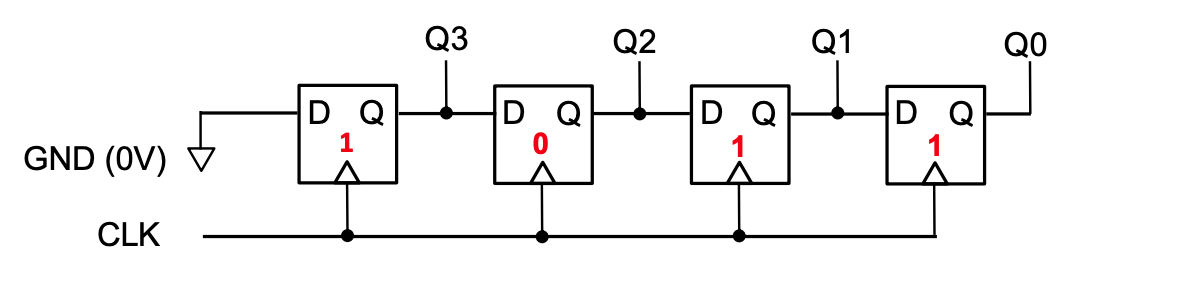
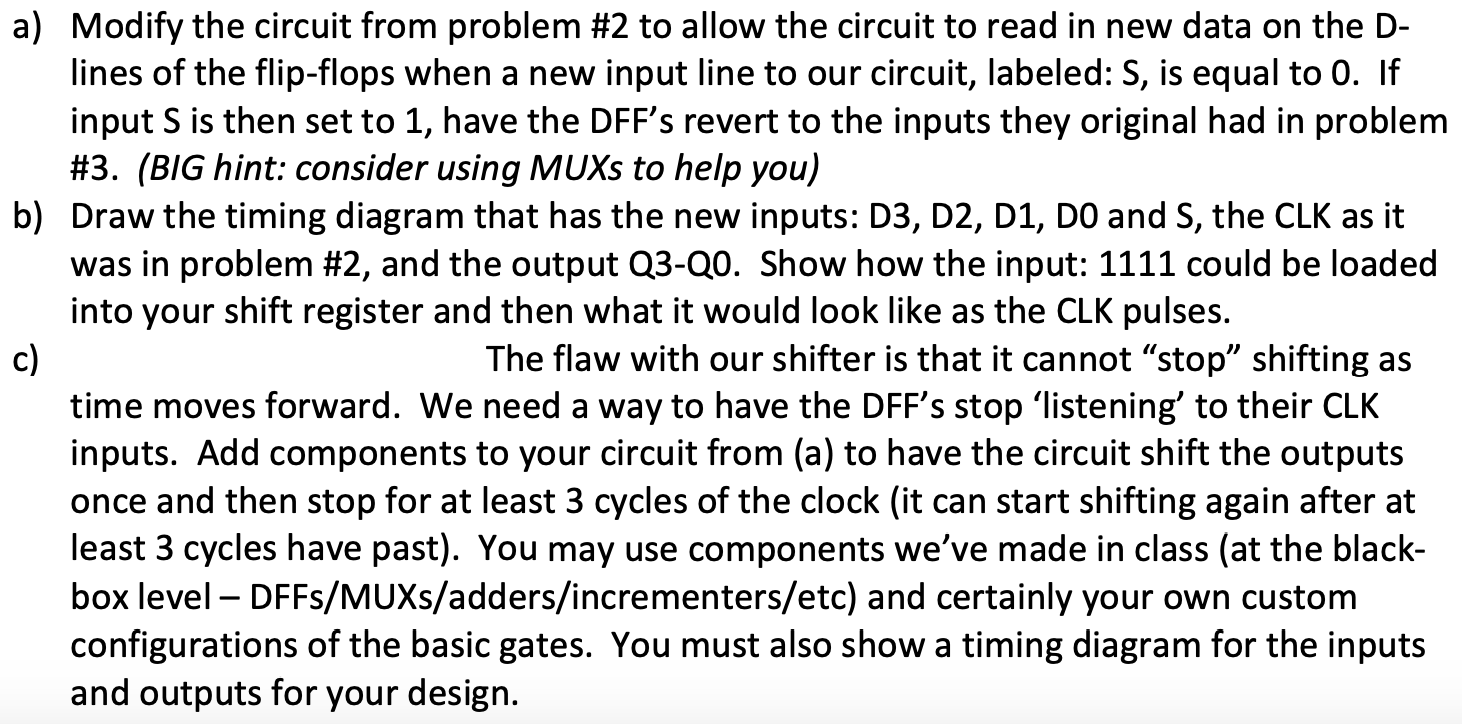
Q3 Q2 Q1 QO D Q D Q Q DQ GND (OV) CLK a) Modify the circuit from problem #2 to allow the circuit to read in new data on the D- lines of the flip-flops when a new input line to our circuit, labeled: S, is equal to 0. If input S is then set to 1, have the DFF's revert to the inputs they original had in problem #3. (BIG hint: consider using MUXs to help you) b) Draw the timing diagram that has the new inputs: D3, D2, D1, DO and S, the CLK as it was in problem #2, and the output Q3-20. Show how the input: 1111 could be loaded into your shift register and then what it would look like as the CLK pulses. c) The flaw with our shifter is that it cannot stop shifting as time moves forward. We need a way to have the DFF's stop listening to their CLK inputs. Add components to your circuit from (a) to have the circuit shift the outputs once and then stop for at least 3 cycles of the clock (it can start shifting again after at least 3 cycles have past). You may use components we've made in class (at the black- box level - DFFs/MUXs/adders/incrementers/etc) and certainly your own custom configurations of the basic gates. You must also show a timing diagram for the inputs and outputs for your design. Q3 Q2 Q1 QO D Q D Q Q DQ GND (OV) CLK a) Modify the circuit from problem #2 to allow the circuit to read in new data on the D- lines of the flip-flops when a new input line to our circuit, labeled: S, is equal to 0. If input S is then set to 1, have the DFF's revert to the inputs they original had in problem #3. (BIG hint: consider using MUXs to help you) b) Draw the timing diagram that has the new inputs: D3, D2, D1, DO and S, the CLK as it was in problem #2, and the output Q3-20. Show how the input: 1111 could be loaded into your shift register and then what it would look like as the CLK pulses. c) The flaw with our shifter is that it cannot stop shifting as time moves forward. We need a way to have the DFF's stop listening to their CLK inputs. Add components to your circuit from (a) to have the circuit shift the outputs once and then stop for at least 3 cycles of the clock (it can start shifting again after at least 3 cycles have past). You may use components we've made in class (at the black- box level - DFFs/MUXs/adders/incrementers/etc) and certainly your own custom configurations of the basic gates. You must also show a timing diagram for the inputs and outputs for your design
Step by Step Solution
There are 3 Steps involved in it

Get step-by-step solutions from verified subject matter experts
 Study Help