Question: this is the question. you will need these three pages to answer the question. please use the case study to answer. 4. Using Hackman and
this is the question.
you will need these three pages to answer the question.
please use the case study to answer.
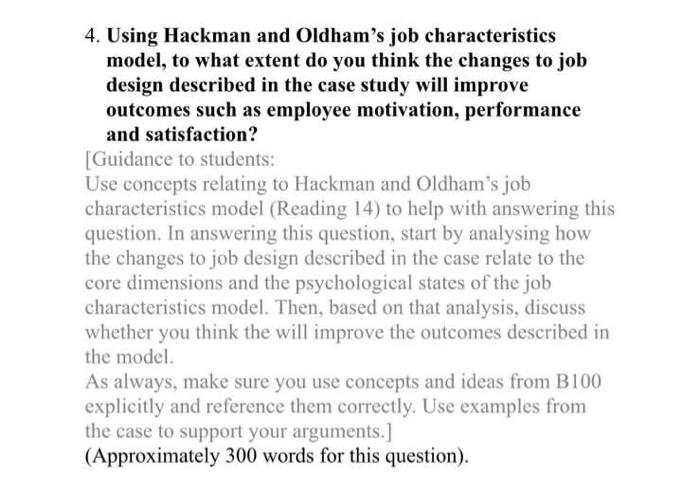
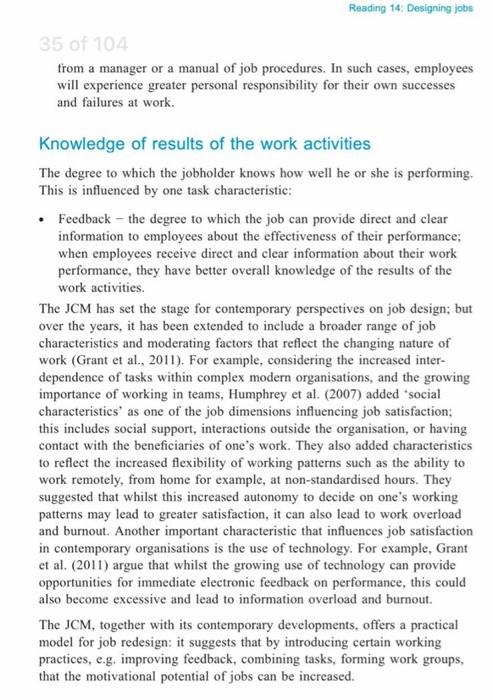
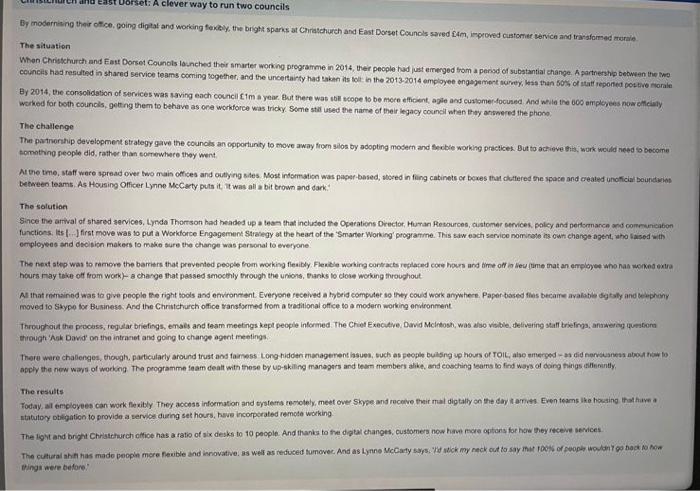
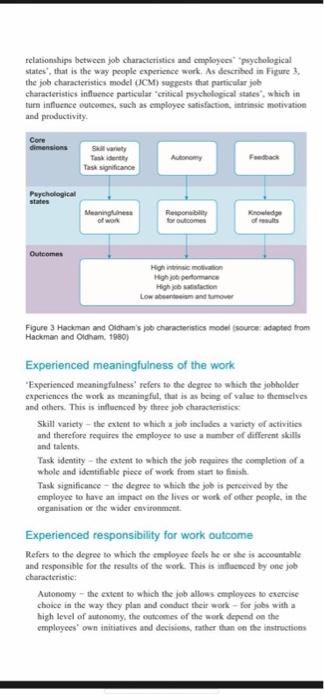
4. Using Hackman and Oldham's job characteristics model, to what extent do you think the changes to job design described in the case study will improve outcomes such as employee motivation, performance and satisfaction? [Guidance to students: Use concepts relating to Hackman and Oldham's job characteristics model (Reading 14) to help with answering this question. In answering this question, start by analysing how the changes to job design described in the case relate to the core dimensions and the psychological states of the job characteristics model. Then, based on that analysis, discuss whether you think the will improve the outcomes described in the model. As always, make sure you use concepts and ideas from B100 explicitly and reference them correctly. Use examples from the case to support your arguments.] (Approximately 300 words for this question). 3 The job characteristics model (JCM) Hackman and Oldham's (1980) influential work also put the human element at the centre of job design and proposed a model to understand the complex 33 relationships between job characteristics and employees psychological states, that is the way people experience work. As described in Figure 3. the job characteristics model (CM) suggests that particular job characteristics influence particular critical psychological states, which in tum influence outcomes, such as employee satisfaction, intrinsic motivation and productivity Core dimensions Fack Tasker Task significance Puychological states Meaning the Respon os Outcomes High job satisfaction Low bonum Figure 3 Hackman and Oldham's job characteristics moont source adapted from Hackman and Oldham, 1980) and talents Experienced meaningfulness of the work Experienced meaningfulness' refers to the degree to which the jobbolder experiences the work as meaningful, that is as being of value to themselves and others. This is influenced by three joh characteristics Skill variety - the extent to which job includes a variety of activities and therefore requires the employee to use aamber of different skills Task identity - the extent to which the job requires the completion of a whole and identifiable piece of work from start to finish Task significance - the degree to which the job is perceived by the employee to have an impact on the lives or week of other people, in the organisation or the wider environment Experienced responsibility for work outcome Refers to the degree to which the employee feels he or she is accountable and responsible for the results of the work. This is influenced by one job characteristic: Autonomy - the extent to which the job allons employees to exercise choice in the way they plan and conduct their work for jobs with a high level of autonomy, the outcomes of the work depend on the employees' own initiatives and decisions, rather than on the instructions Reading 14: Designing jobs 35 of 104 from a manager or a manual of job procedures. In such cases, employees will experience greater personal responsibility for their own successes and failures at work. Knowledge of results of the work activities The degree to which the jobholder knows how well he or she is performing. This is influenced by one task characteristic: Feedback - the degree to which the job can provide direct and clear information to employees about the effectiveness of their performance; when employees receive direct and clear information about their work performance, they have better overall knowledge of the results of the work activities. The JCM has set the stage for contemporary perspectives on job design; but over the years, it has been extended to include a broader range of job characteristics and moderating factors that reflect the changing nature of work (Grant et al., 2011). For example, considering the increased inter- dependence of tasks within complex modern organisations, and the growing importance of working in teams, Humphrey et al. (2007) added 'social characteristics' as one of the job dimensions influencing job satisfaction: this includes social support, interactions outside the organisation, or having contact with the beneficiaries of one's work. They also added characteristics to reflect the increased flexibility of working patterns such as the ability to work remotely, from home for example, at non-standardised hours. They suggested that whilst this increased autonomy to decide on one's working patterns may lead to greater satisfaction, it can also lead to work overload and burnout. Another important characteristic that influences job satisfaction in contemporary organisations is the use of technology. For example, Grant et al. (2011) argue that whilst the growing use of technology can provide opportunities for immediate electronic feedback on performance, this could also become excessive and lead to information overload and burnout. The JCM, together with its contemporary developments, offers a practical model for job redesign: it suggests that by introducing certain working practices, e.g. improving feedback, combining tasks, forming work groups, that the motivational potential of jobs can be increased. et: A clever way to run two councils By moderning their tice poing digital and working fexty, the bright sparks at Christchurch and East Dorset Councils saved in improved customer service and transformed mera The situation When Christchurch and East Dorset Councils launched their smarter working programme in 2014, their people had just emerged from a period of substantial change. A partnership between the two councils had resulted in shared service teams coming together, and the uncertainty had taken its toll in the 2013-2014 employee engagement survey, less than 50% of staff reported post morale By 2014, the consolidation of services was saving each council cim a year. But there was still come to be more efficient, age and customer-focuned. And while the 100 pyes now emelany worked for both councils, getting them to behave as one workforce was tricky Some still used the name of their legacy council when they answered the phone The challenge The partnership development strategy gave the councis an opportunity to move away from silou by adopting modern and fedible working practices. But to achieve this work would need to become tomething people did, rather than comewhere they went Ame time, wat were spread over two main offices and outlying sites. Most information was paperbosed, word in ting cabinets or boxes that chattered the space and created unoficial boundaria between teams As Housing Officer Lynne McCarty puts it it was all bit brown and dark The solution Since the arrival of shared services, Lynda Thomson had headed up a tean that included the Operations Director, Human Resources, customer service policy and performance and communcation functions. Its first move was to put a Workforce Engagement Strategy at the heart of the Smarter Working programme. This saw each service nominate its own change agent, who led with employees and decision makers to make sure the change was personal to everyone The next step was to remove the barriers that prevented people from working fleste Fenile working contracte replaced core hours and time off in Wessume that an employee who has worked extra hours may take off from work)- a change that passed smoothly through the unions, anks to close working throughout At that remained was to give people the right tools and environment. Everyone received a hybrid computet do they could work anywhern. Paper based this became valabila digitally and emphony moved to Skype for Business. And the Christchurch office wansformed from a traditional office to a modern working environment Throughout the process, tegutar briefings, emails and team meetings kept people informed. The Chief Executive, David Mcleroosh, was also visibile delivering start trefings, anweng yestore through 'Ask David' on the intranet and going to change agent meetings There were challenges, though, particularly around trust and furies Long hidden morgerent issues, such as people bulong up hours of Tol, aho merged - did nerve bow to sely the new ways of working the programme team dealt with these by up-skilling managers and team members alike, and coaching as to find ways of doing things aboundly, The results Today, al employees can work exibly They access information and systems remowly, mert over Skype and receive their mal diptally on the day tarmes. Even teams ike housing that have statutory obligation to provide a service during set hours, have incorporated remote working The list and bright Christchurch office has a ratio of six desks to 10 people. And thanks to the digital changes, customers now how more options for how they receve verdice The cultural shit has made people more flexible and innovative, as well as reduced tumover. And as Lynne McCarty says stick my neck cut to say of people would go hack to how things were before









 Study Help