



Question: This is what I have so far, I can't get the proper sequence. // Banker's Algorithm #include using namespace std; int main() { int n,
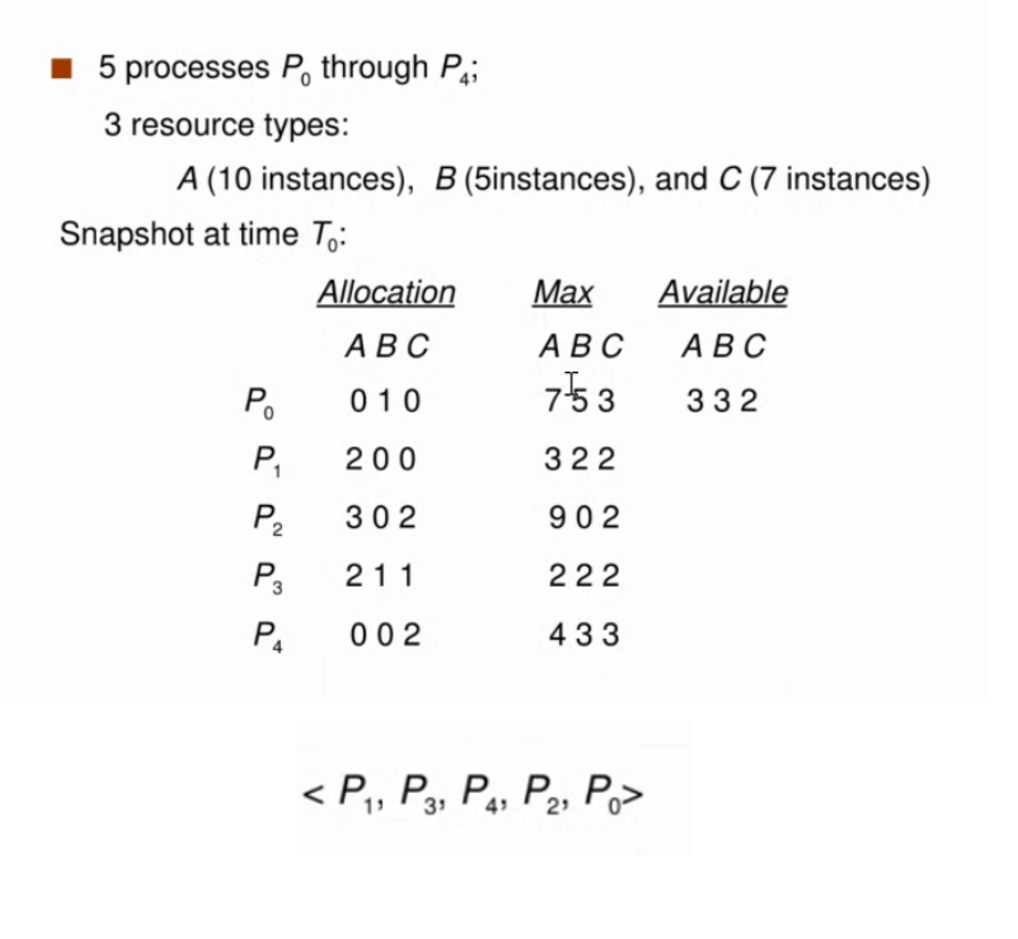
This is what I have so far, I can't get the proper sequence.
// Banker's Algorithm #include
int main() {
int n, m, i, j, k; n = 5; // Number of processes m = 3; // Number of resources int alloc[5][3] = { { 0, 1, 0 }, // P0 // Allocation Matrix { 2, 0, 0 }, // P1 { 3, 0, 2 }, // P2 { 2, 1, 1 }, // P3 { 0, 0, 2 } }; // P4
int max[5][3] = { { 7, 5, 3 }, // P0 // MAX Matrix { 3, 2, 2 }, // P1 { 9, 0, 2 }, // P2 { 2, 2, 2 }, // P3 { 4, 3, 3 } }; // P4
int avail[3] = { 3, 3, 2 }; // Available Resources
int f[n], ans[n], int = 0; for (k = 0; k
int flag = 0; for (j = 0; j avail[j]){ flag = 1; //break; } }
if (flag == 0) { ans[int++] = i; for (y = 0; y
cout "; cout
return (0); }
5 processes P, through Pa; 3 resource types: A (10 instances), B (5instances), and C (7 instances) Snapshot at time To Allocation Max Available ABC ABC ABC PO 010 753 332 P, 200 3 2 2 P. 302 902 . 211 222 . 002 433
Step by Step Solution
There are 3 Steps involved in it

Get step-by-step solutions from verified subject matter experts