







Question: This Is what I wrote for Assignment 1: 1. What is sustainable development for you as a student? As a young entrepreneur? For me as
This Is what I wrote for Assignment 1:
1. What is sustainable development for you as a student? As a young entrepreneur?
For me as a student, sustainable development means building a better future for future generations as well as myself. It entails becoming aware of the problems facing our globe and figuring out solutions. It also entails making decisions that are beneficial to society and the environment.
As a student and a young entrepreneur, I may take the following actions to support sustainable development:
Learn about the problems that our planet is experiencing. This covers pollution, poverty, and climate change. I will be better able to handle these issues if I have more knowledge about them. Make decisions that are beneficial to society and the environment. This covers practices like recycling, taking the bus, and consuming less meat. I can also decide to back companies that value sustainability. Make a difference with my platform and expertise. I can work as a volunteer for environmental organizations, launch a company with a sustainability focus, or just spread awareness of the value of sustainable development.
2. What is the SDG you are most interested in to solve in your own ways?
Sustainable development is even more crucial for a young entrepreneur. I want to start a company that benefits the entire world. I want to use my platform and skills to change the world.
SDG 13: Climate Action is the SDG that I am most motivated to complete in my own unique way. I think that the most urgent problem affecting our planet right now is climate change, and I want to d0 my part to help solve it. I have a lot of options for addressing climate change. By altering my lifestyle, such as driving less, using less energy, and consuming less meat, I can lower my own carbon footprint. I may also back companies who are dedicated to lessening their negative effects on the environment.
Here are some concrete actions I can take to combat climate change:
reduce my carbon footprint. This includes practices like using less energy, driving less, and cutting back on meat consumption. Encourage companies that are dedicated to minimizing their negative effects on the environment. This covers practices like eating locally, utilizing renewable energy sources, and making investments in sustainable businesses. Participate in environmental action. This includes actions like participating in protests, volunteering for environmental organizations, and contacting my elected representatives. I firmly believe that by doing these things, I can contribute to the effort to combat climate change.
Hoemwork:
Given your choice of SDG you would want to help attain in the shortest amount of time, identify the most pressing challenge or problem through a problem tree analysis.
( I chosed SDG 13)
Follow the steps in this problem tree analysis tool: Positioning Issues: The Problem Tree (mit.edu) and creat3 your own through a PPT and a 5-minute video format
Refernce: "https://web.mit.edu/urbanupgrading/upgrading/issues-tools/tools/problem-tree.html"
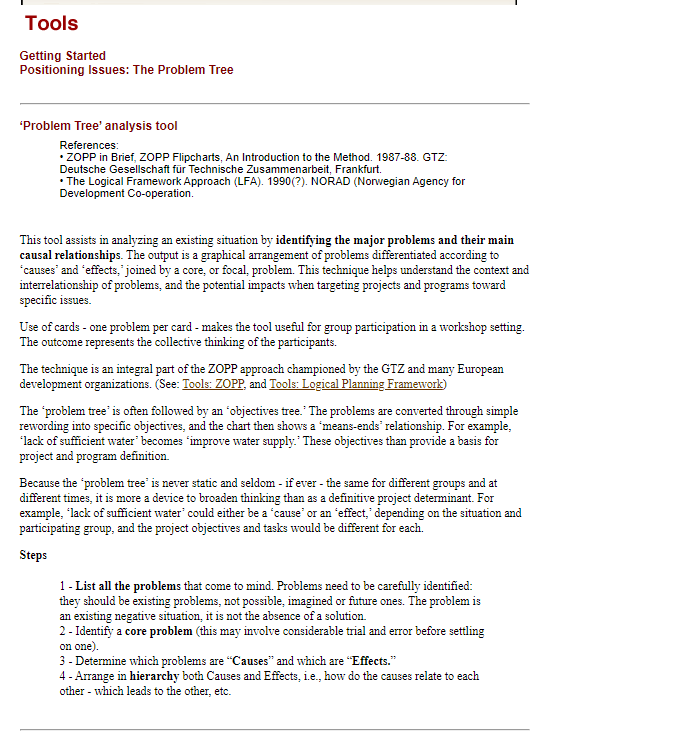
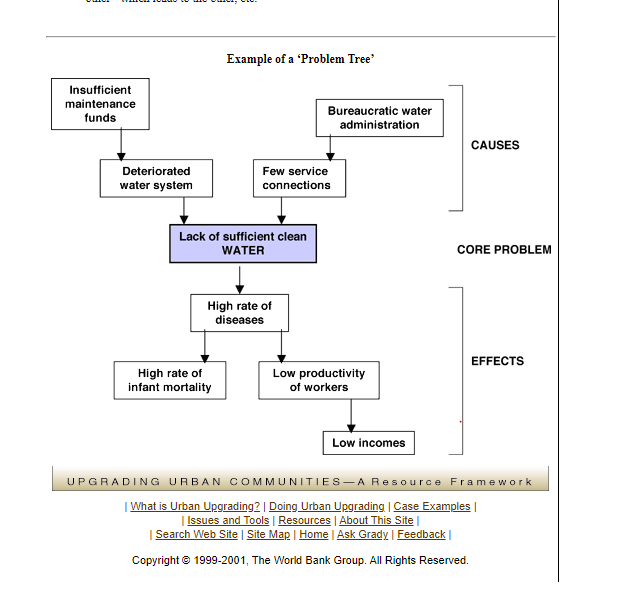
Tools Getting Started Positioning Issues: The Problem Tree 'Problem Tree' analysis tool References: . ZOPP in Brief, ZOPP Flipcharts, An Introduction to the Method. 1987-88. GTZ: Deutsche Gesellschaft fur Technische Zusammenarbeit, Frankfurt. . The Logical Framework Approach (LFA). 1990(?). NORAD (Norwegian Agency for Development Co-operation. This tool assists in analyzing an existing situation by identifying the major problems and their main causal relationships. The output is a graphical arrangement of problems differentiated according to 'causes' and 'effects, " joined by a core, or focal, problem. This technique helps understand the context and interrelationship of problems, and the potential impacts when targeting projects and programs toward specific issues. Use of cards - one problem per card - makes the tool useful for group participation in a workshop setting. The outcome represents the collective thinking of the participants. The technique is an integral part of the ZOPP approach championed by the GTZ and many European development organizations. (See: Tools: ZOPP, and Tools: Logical Planning Framework) The 'problem tree' is often followed by an "objectives tree.' The problems are converted through simple rewording into specific objectives, and the chart then shows a 'means-ends' relationship. For example, "lack of sufficient water becomes "improve water supply.' These objectives than provide a basis for project and program definition. Because the 'problem tree" is never static and seldom - if ever - the same for different groups and at different times, it is more a device to broaden thinking than as a definitive project determinant. For example, 'lack of sufficient water' could either be a 'cause' or an 'effect, ' depending on the situation and participating group, and the project objectives and tasks would be different for each. Steps 1 - List all the problems that come to mind. Problems need to be carefully identified: they should be existing problems, not possible, imagined or future ones. The problem is an existing negative situation, it is not the absence of a solution. 2 - Identify a core problem (this may involve considerable trial and error before settling on one). 3 - Determine which problems are "Causes" and which are "Effects." 4 - Arrange in hierarchy both Causes and Effects, i.e., how do the causes relate to each other - which leads to the other, etc.Example of a 'Problem Tree" Insufficient maintenance Bureaucratic water funds administration CAUSES Deteriorated Few service water system connections Lack of sufficient clean WATER CORE PROBLEM High rate of diseases EFFECTS High rate of Low productivity infant mortality of workers Low incomes UPGRADING URBAN COMMUNITIES - A Resource Framework | What is Urban Upgrading? | Doing Urban Upgrading | Case Examples | Issues and Tools | Resources | About This Site | | Search Web Site | Site Map | Home | Ask Grady | Feedback | Copyright @ 1999-2001, The World Bank Group. All Rights Reserved
Step by Step Solution
There are 3 Steps involved in it

Get step-by-step solutions from verified subject matter experts
 Study Help