







Question: This one I had put A and it was wrong. Tolaram Group The Tolaram Group was founded in Malang, Indonesia, in 1948. In 1988, the
This one I had put "A" and it was wrong.
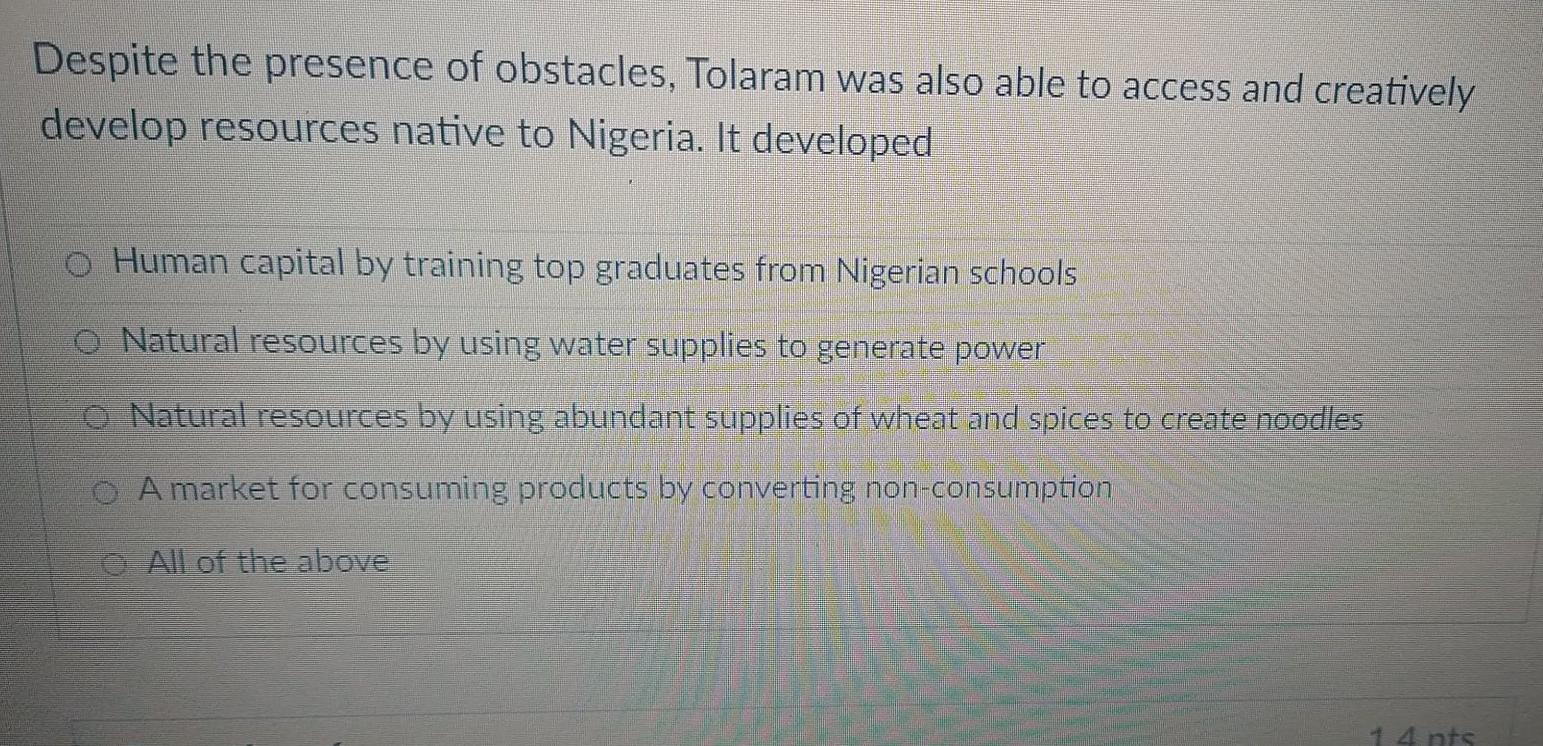
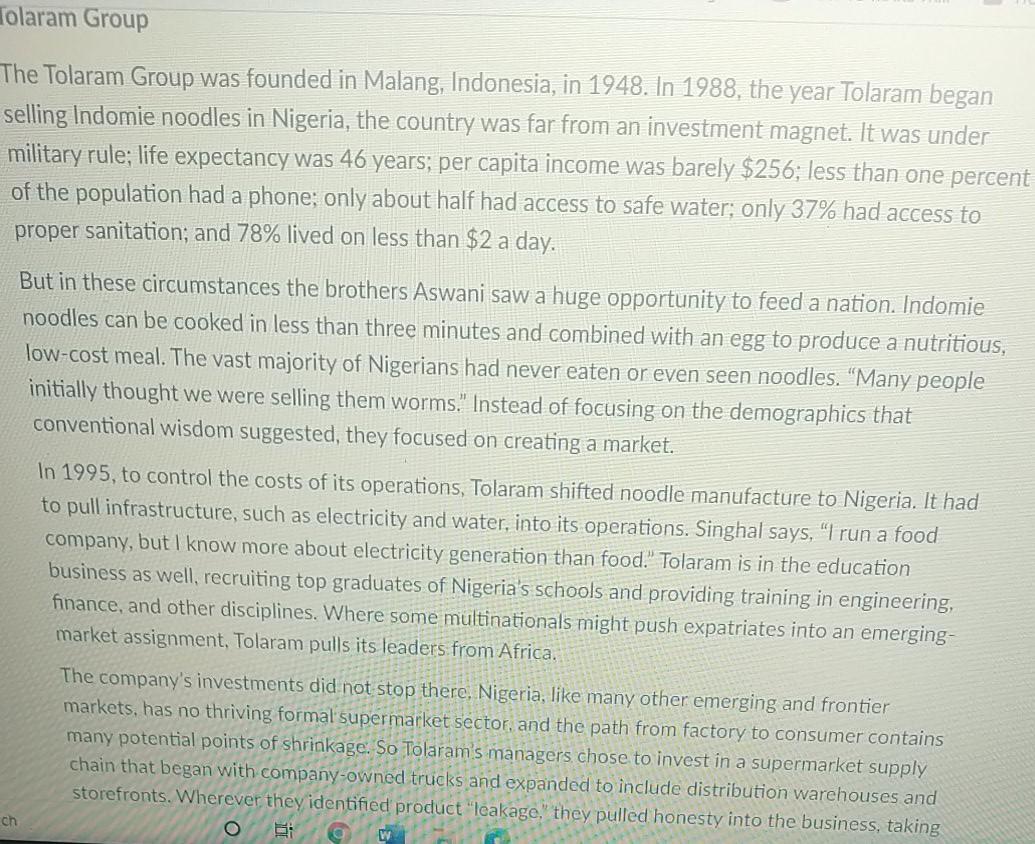
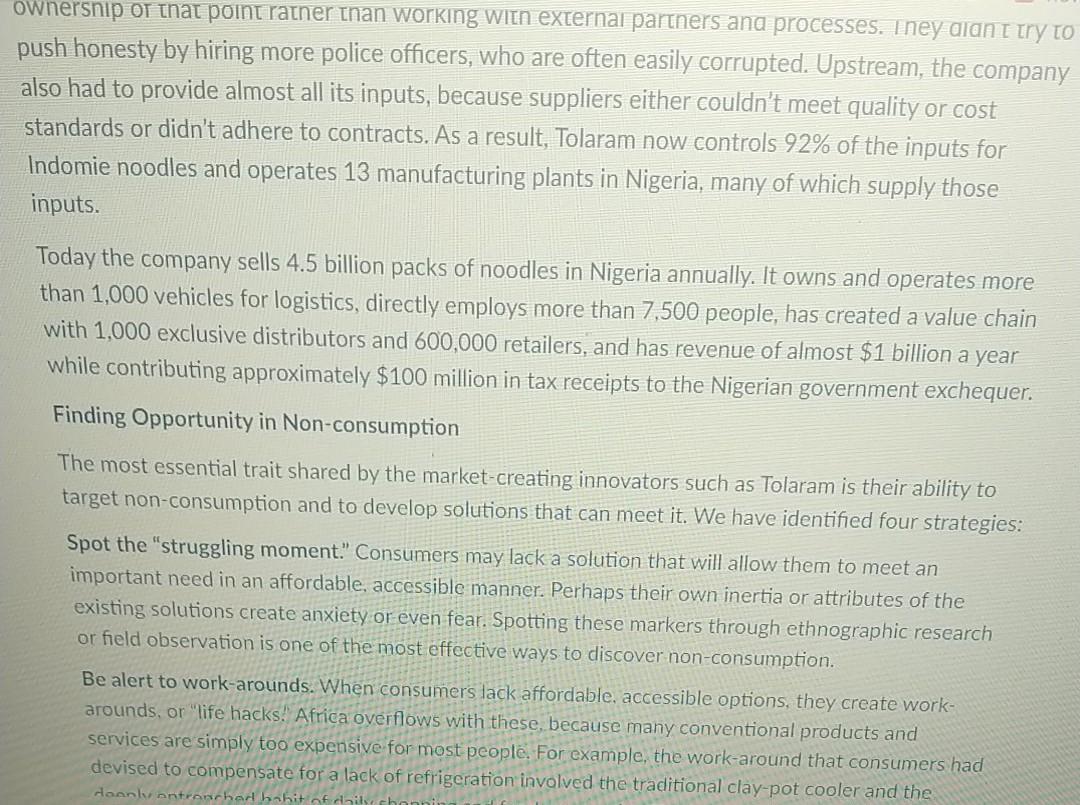
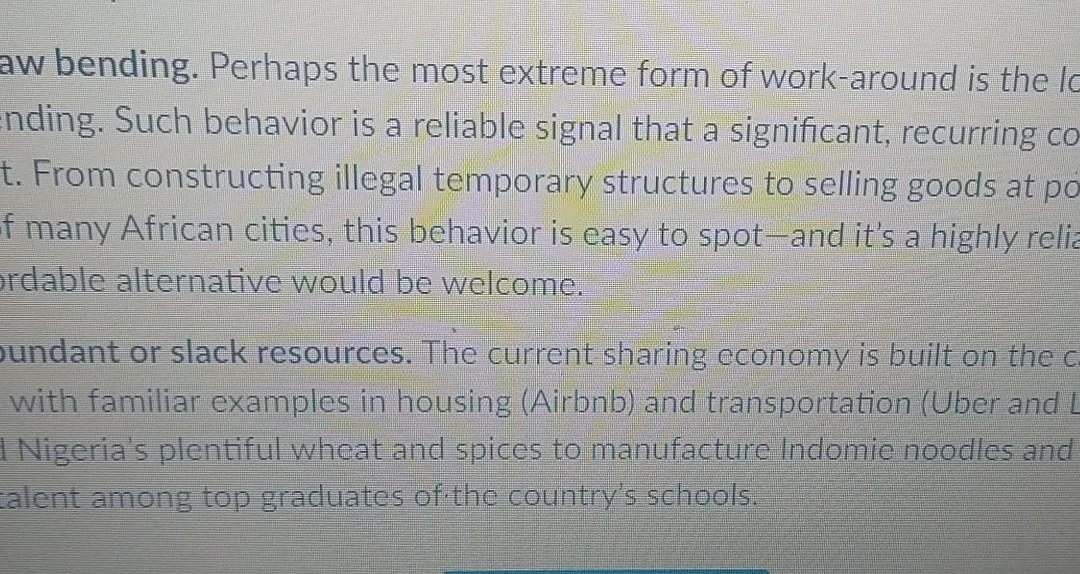
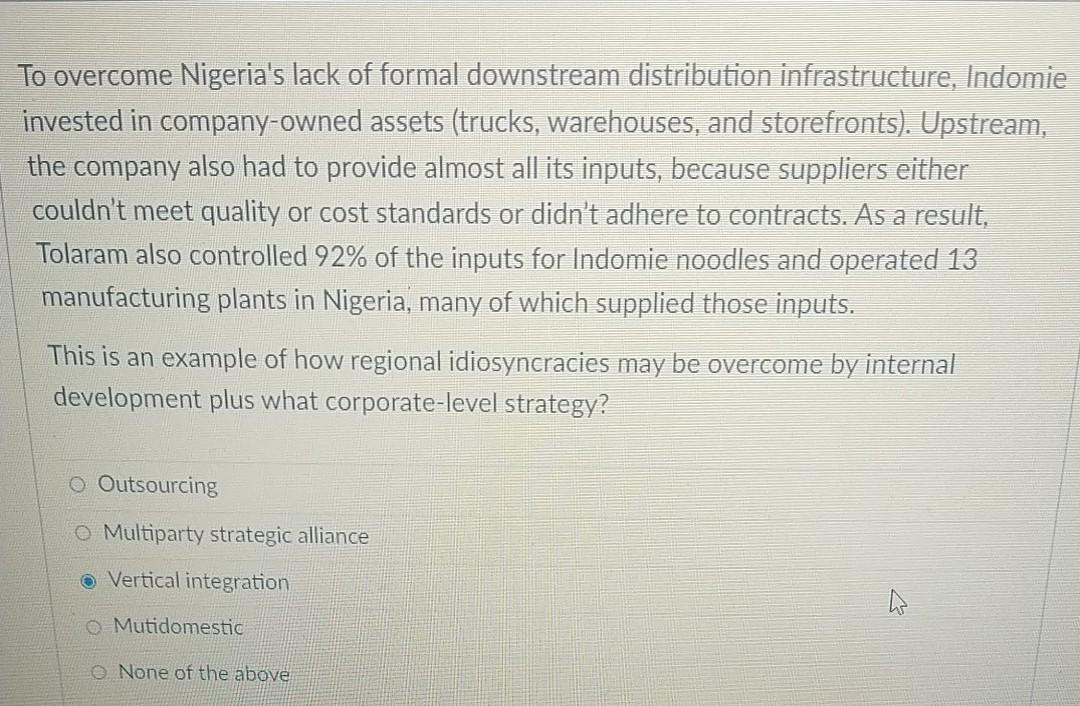
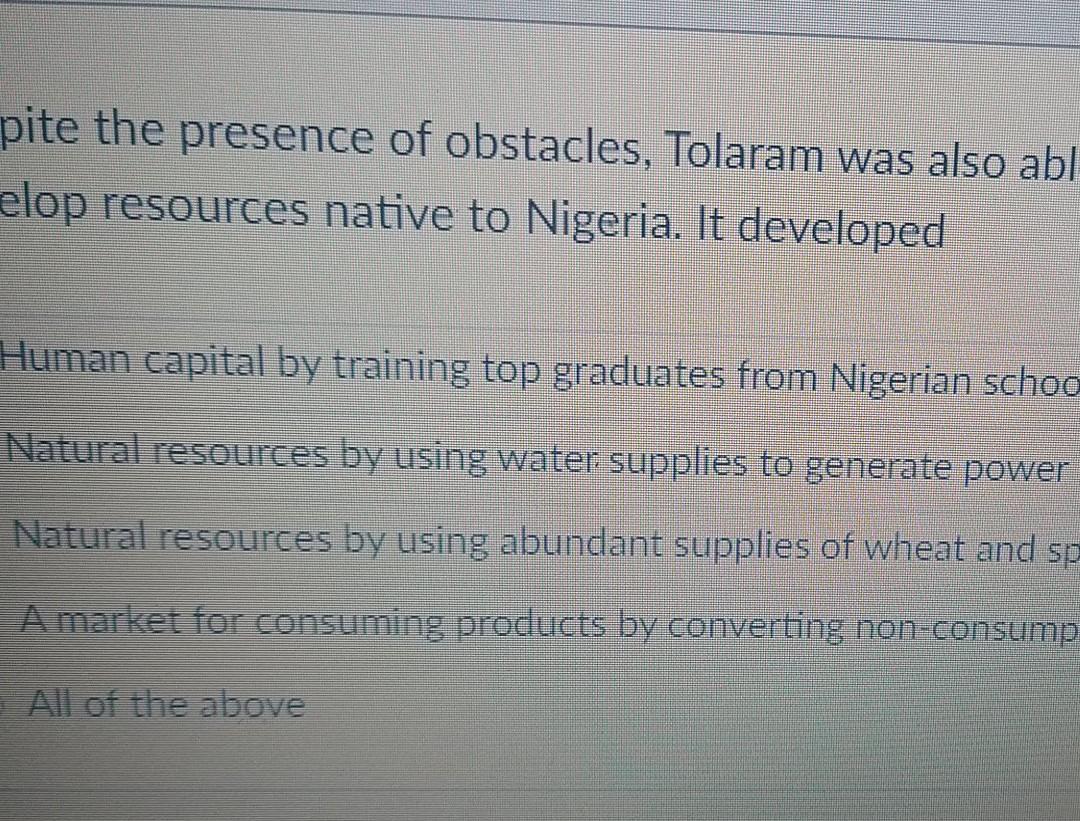
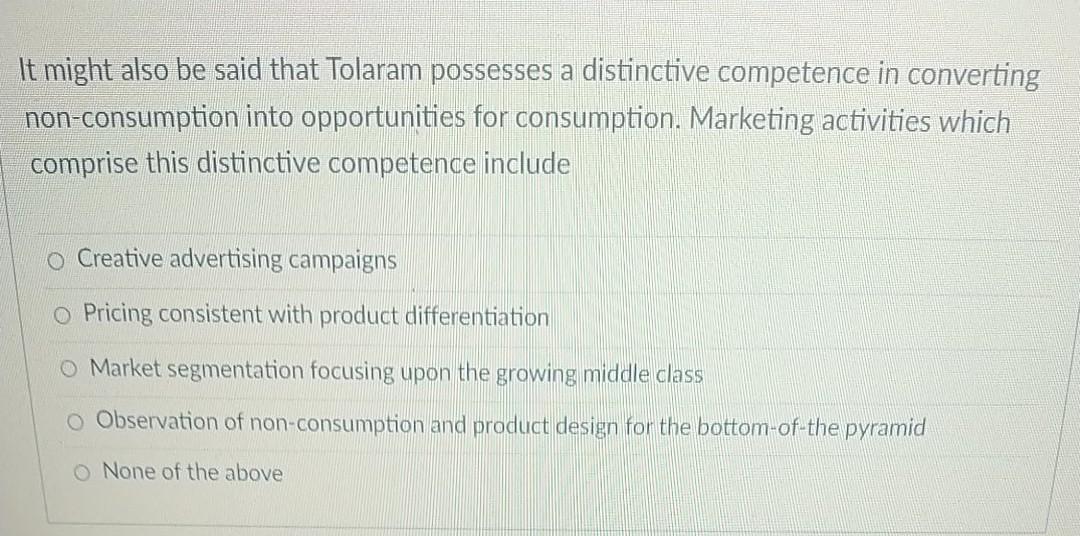
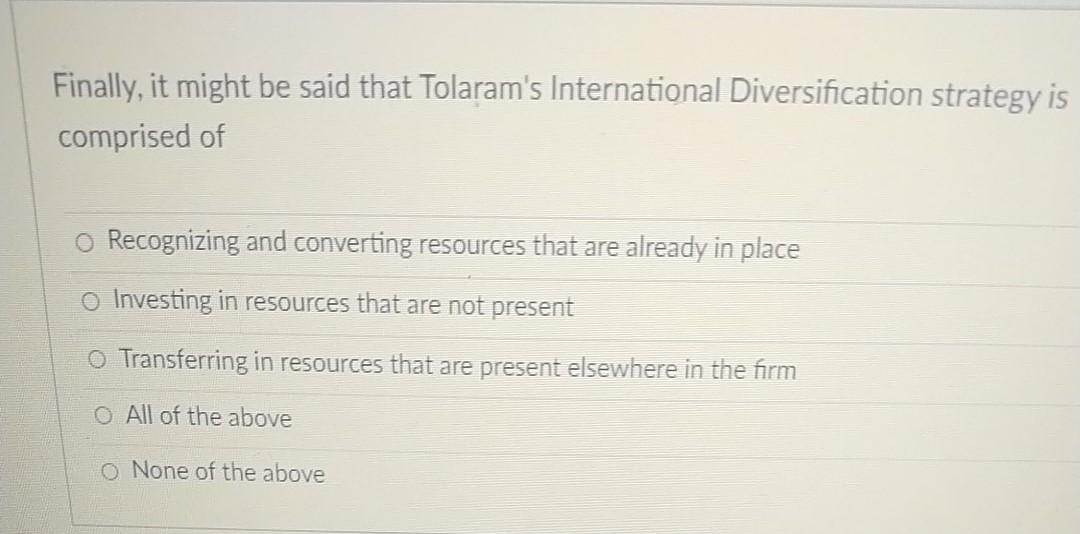
Tolaram Group The Tolaram Group was founded in Malang, Indonesia, in 1948. In 1988, the year Tolaram began selling Indomie noodles in Nigeria, the country was far from an investment magnet. It was under military rule; life expectancy was 46 years; per capita income was barely $256; less than one percent of the population had a phone; only about half had access to safe water; only 37% had access to proper sanitation; and 78% lived on less than $2 a day. But in these circumstances the brothers Aswani saw a huge opportunity to feed a nation. Indomie noodles can be cooked in less than three minutes and combined with an egg to produce a nutritious, low-cost meal. The vast majority of Nigerians had never eaten or even seen noodles. "Many people initially thought we were selling them worms." Instead of focusing on the demographics that conventional wisdom suggested, they focused on creating a market. In 1995, to control the costs of its operations, Tolaram shifted noodle manufacture to Nigeria. It had to pull infrastructure, such as electricity and water, into its operations. Singhal says, I run a food company, but I know more about electricity generation than food." Tolaram is in the education business as well, recruiting top graduates of Nigeria's schools and providing training in engineering, finance, and other disciplines. Where some multinationals might push expatriates into an emerging- market assignment, Tolaram pulls its leaders from Africa, The company's investments did not stop there, Nigeria, like many other emerging and frontier markets, has no thriving formal supermarket sector, and the path from factory to consumer contains many potential points of shrinkage. So Tolaram's managers chose to invest in a supermarket supply chain that began with company-owned trucks and expanded to include distribution warehouses and storefronts. Wherever they identified product "leakage," they pulled honesty into the business, taking ch ownership of that point rather than working with external partners and processes. They alan I try to push honesty by hiring more police officers, who are often easily corrupted. Upstream, the company also had to provide almost all its inputs, because suppliers either couldn't meet quality or cost standards or didn't adhere to contracts. As a result, Tolaram now controls 92% of the inputs for Indomie noodles and operates 13 manufacturing plants in Nigeria, many of which supply those inputs. Today the company sells 4.5 billion packs of noodles in Nigeria annually. It owns and operates more than 1,000 vehicles for logistics, directly employs more than 7,500 people, has created a value chain with 1,000 exclusive distributors and 600,000 retailers, and has revenue of almost $1 billion a year while contributing approximately $100 million in tax receipts to the Nigerian government exchequer. Finding Opportunity in Non-consumption The most essential trait shared by the market-creating innovators such as Tolaram is their ability to target non-consumption and to develop solutions that can meet it. We have identified four strategies: Spot the "struggling moment." Consumers may lack a solution that will allow them to meet an important need in an affordable, accessible manner. Perhaps their own inertia or attributes of the existing solutions create anxiety or even fear. Spotting these markers through ethnographic research or field observation is one of the most effective ways to discover non-consumption. Be alert to work-arounds. When consumers lack affordable, accessible options, they create work- arounds, or "life hacks! Africa overflows with these, because many conventional products and services are simply too expensive for most people. For example, the work-around that consumers had devised to compensate for a lack of refrigeration involved the traditional clay-pot cooler and the doan vantranchart hahit aw bending. Perhaps the most extreme form of work-around is the lo Ending. Such behavior is a reliable signal that a significant, recurring co t. From constructing illegal temporary structures to selling goods at po f many African cities, this behavior is easy to spot-and it's a highly relia ordable alternative would be welcome. bundant or slack resources. The current sharing economy is built on the c with familiar examples in housing (Airbnb) and transportation (Uber and L | Nigeria's plentiful wheat and spices to manufacture Indomie noodles and calent among top graduates of the country's schools. To overcome Nigeria's lack of formal downstream distribution infrastructure, Indomie invested in company-owned assets (trucks, warehouses, and storefronts). Upstream, the company also had to provide almost all its inputs, because suppliers either couldn't meet quality or cost standards or didn't adhere to contracts. As a result, Tolaram also controlled 92% of the inputs for Indomie noodles and operated 13 manufacturing plants in Nigeria, many of which supplied those inputs. This is an example of how regional idiosyncracies may be overcome by internal development plus what corporate-level strategy? O Outsourcing O Multiparty strategic alliance Vertical integration Mutidomestic None of the above pite the presence of obstacles, Tolaram was also abl elop resources native to Nigeria. It developed Human capital by training top graduates from Nigerian schoo Natural resources by using water supplies to generate power Natural resources by using abundant supplies of wheat and sp A market for consuming products by converting non-consump All of the above It might also be said that Tolaram possesses a distinctive competence in converting non-consumption into opportunities for consumption. Marketing activities which comprise this distinctive competence include o Creative advertising campaigns o Pricing consistent with product differentiation O Market segmentation focusing upon the growing middle class o Observation of non-consumption and product design for the bottom-of-the pyramid O None of the above Finally, it might be said that Tolaram's International Diversification strategy is comprised of Recognizing and converting resources that are already in place o Investing in resources that are not present o Transferring in resources that are present elsewhere in the firm O All of the above None of the above Despite the presence of obstacles, Tolaram was also able to access and creatively develop resources native to Nigeria. It developed o Human capital by training top graduates from Nigerian schools O Natural resources by using water supplies to generate power Natural resources by using abundant supplies of wheat and spices to create noodles A market for consuming products by converting non-consumption O All of the above 14 pts
Step by Step Solution
There are 3 Steps involved in it
1 Expert Approved Answer
Step: 1 Unlock

Question Has Been Solved by an Expert!
Get step-by-step solutions from verified subject matter experts
Step: 2 Unlock
Step: 3 Unlock
 Study Help