







Question: This problem set is meant to give you practice using Dynamic Programming. It may seem tedious but by the end you should be getting an
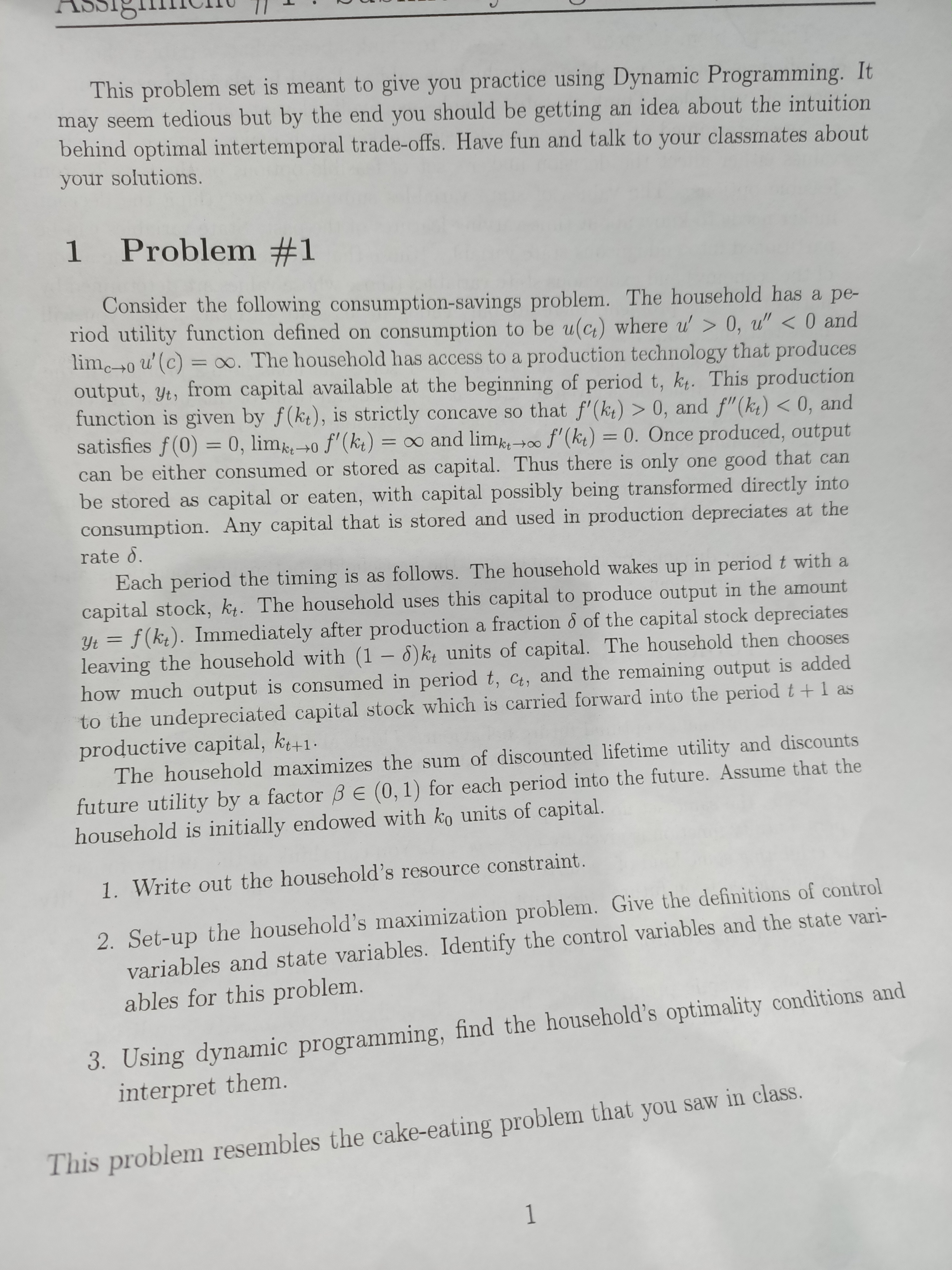
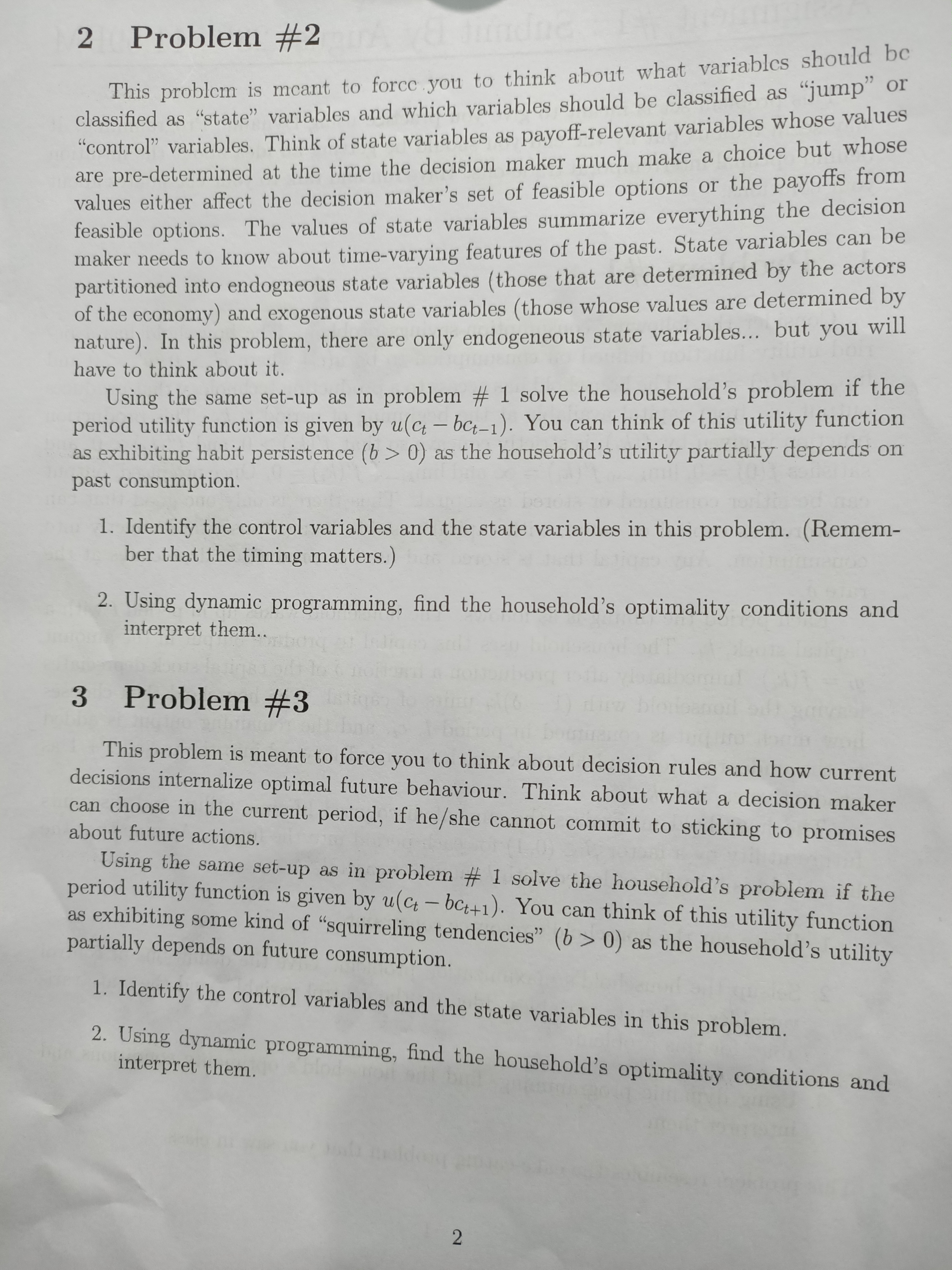
This problem set is meant to give you practice using Dynamic Programming. It may seem tedious but by the end you should be getting an idea about the intuition behind optimal intertemporal trade-offs. Have fun and talk to your classmates about your solutions. 1 Problem #1 Consider the following consumption-savings problem. The household has a pe- riod utility function defined on consumption to be u(ct) where u' > 0, u" 0, and f"(kt) 0) as the household's utility partially depends on past consumption. 1. Identify the control variables and the state variables in this problem. (Remem- ber that the timing matters.) 2. Using dynamic programming, find the household's optimality conditions and interpret them.. 3 Problem #3 This problem is meant to force you to think about decision rules and how current decisions internalize optimal future behaviour. Think about what a decision maker can choose in the current period, if he/she cannot commit to sticking to promises about future actions. Using the same set-up as in problem # 1 solve the household's problem if the period utility function is given by u(ct - bot+1). You can think of this utility function as exhibiting some kind of "squirreling tendencies" (b > 0) as the household's utility partially depends on future consumption. 1. Identify the control variables and the state variables in this problem. 2. Using dynamic programming, find the household's optimality conditions and interpret them
Step by Step Solution
There are 3 Steps involved in it

Get step-by-step solutions from verified subject matter experts
 Study Help