







Question: This question has two parts. First, answer Part A. Then, answer Part E. Use the graph to answer both parts. Part A Given the function
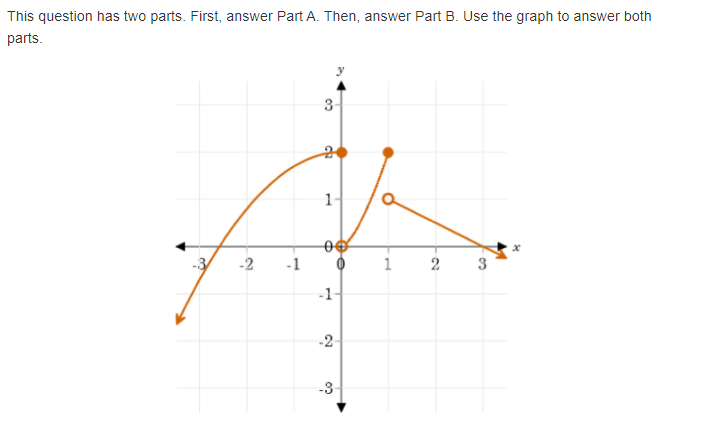
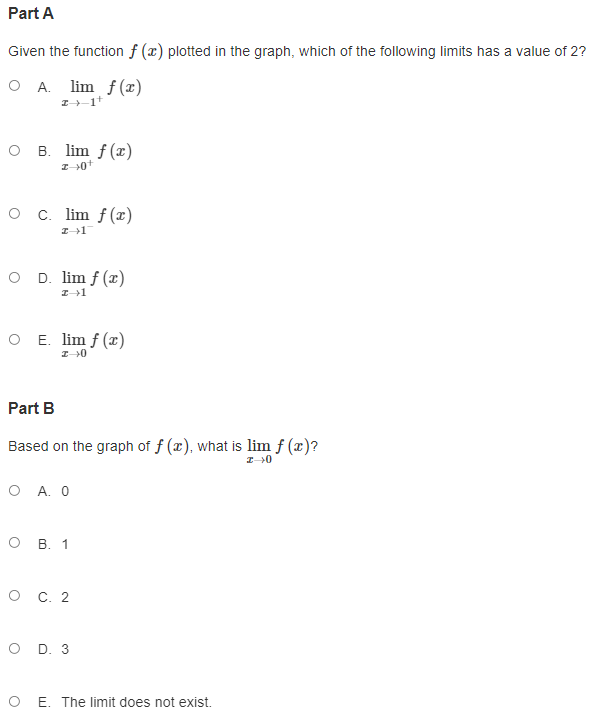
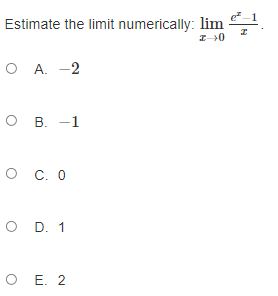
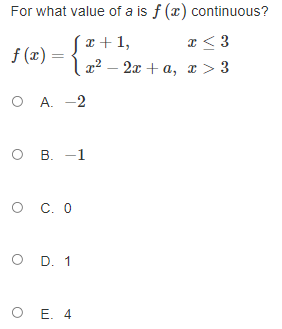
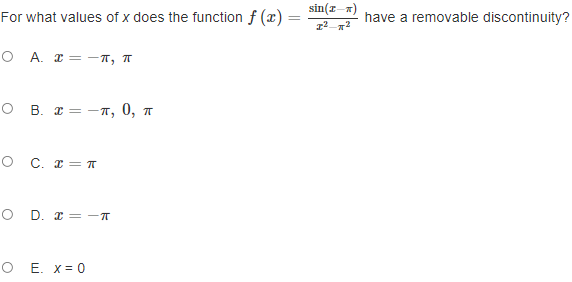
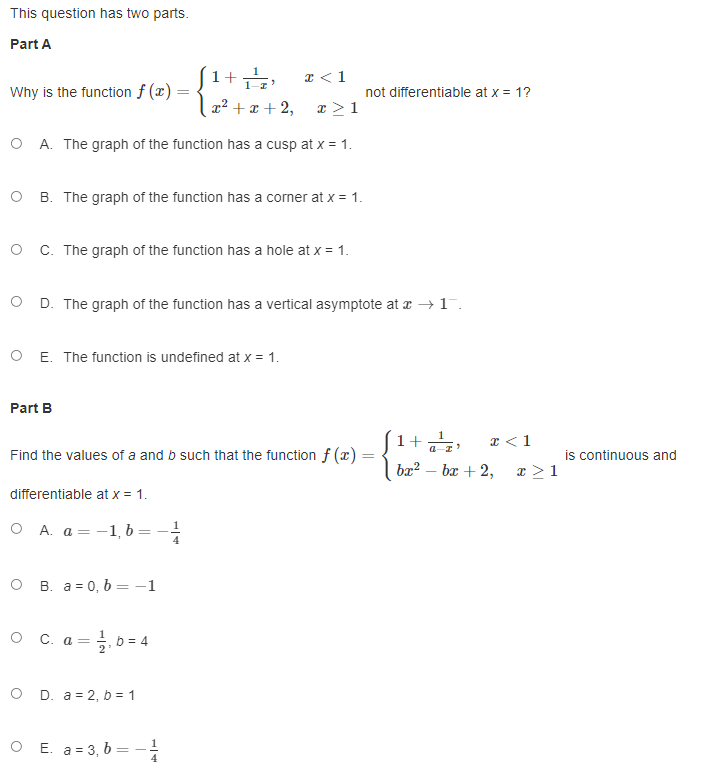
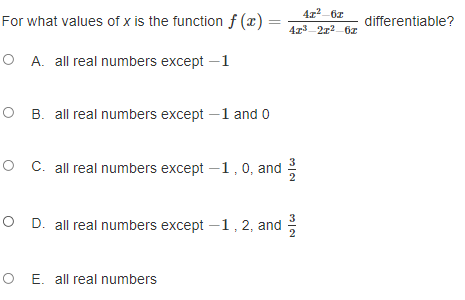
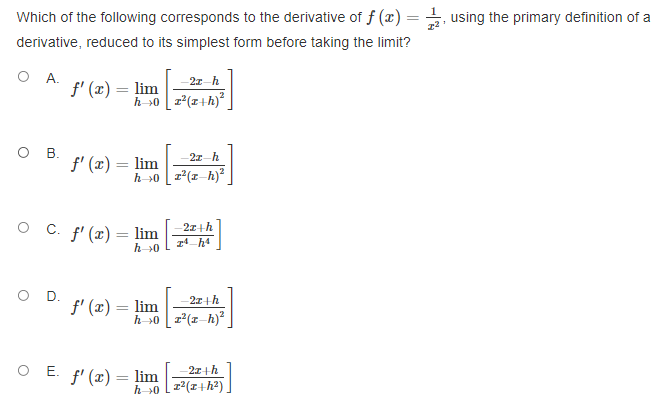
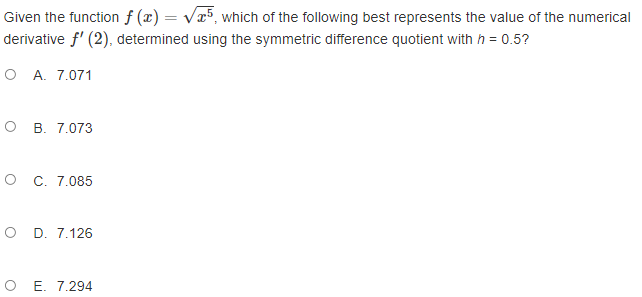
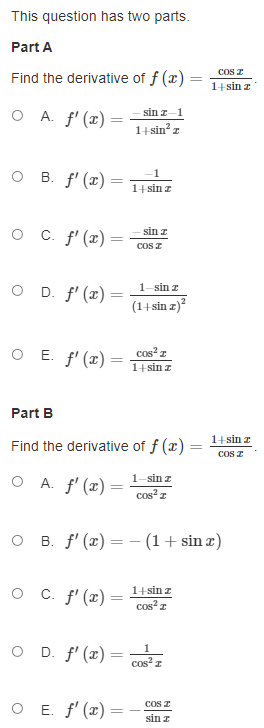
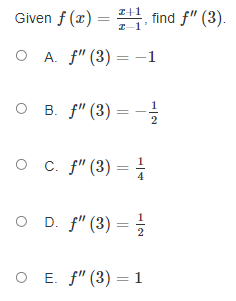
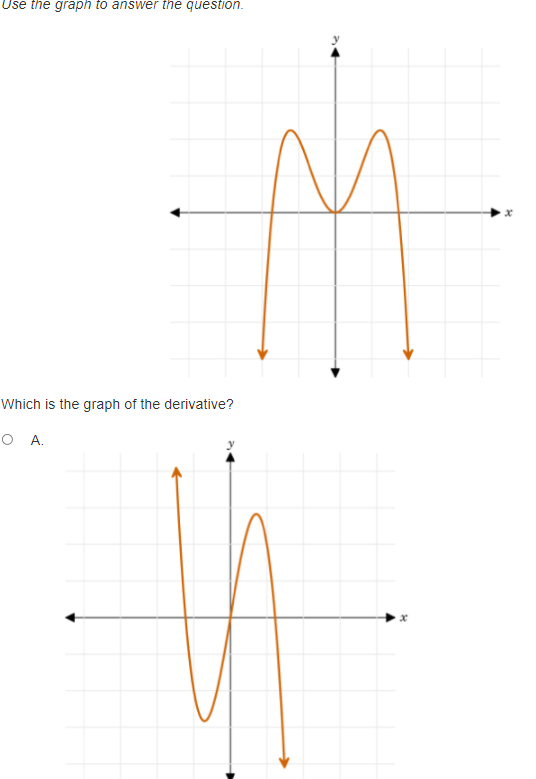
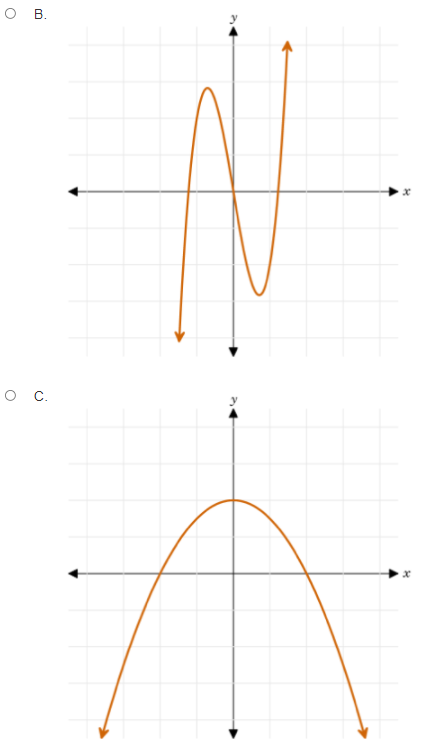
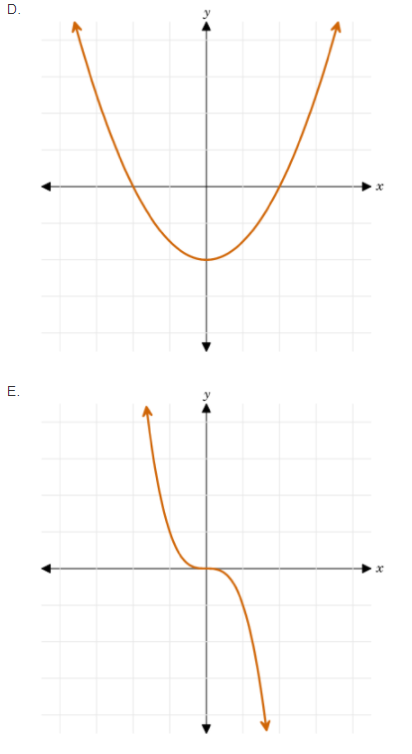
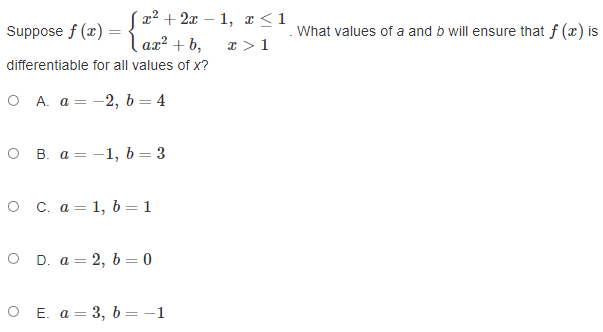
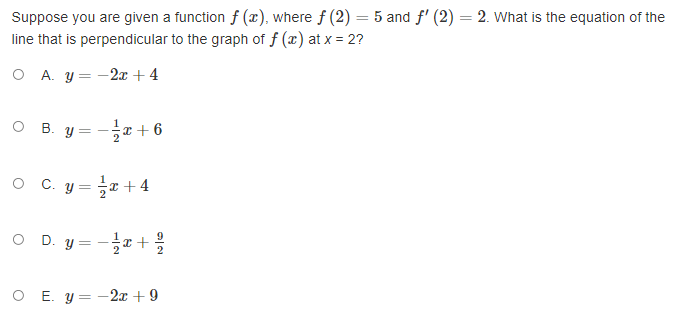
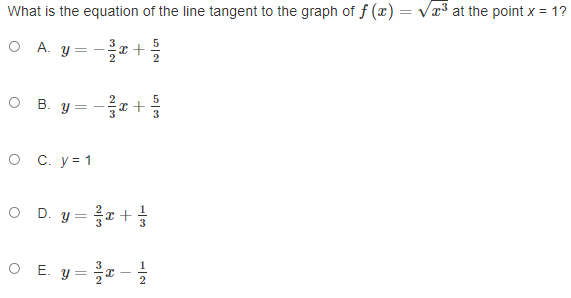
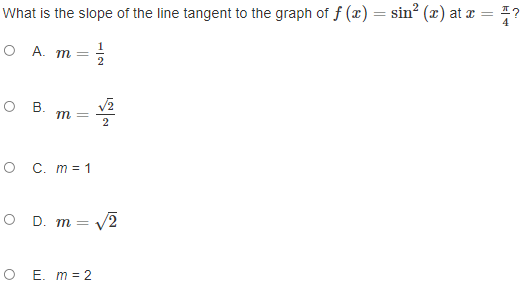
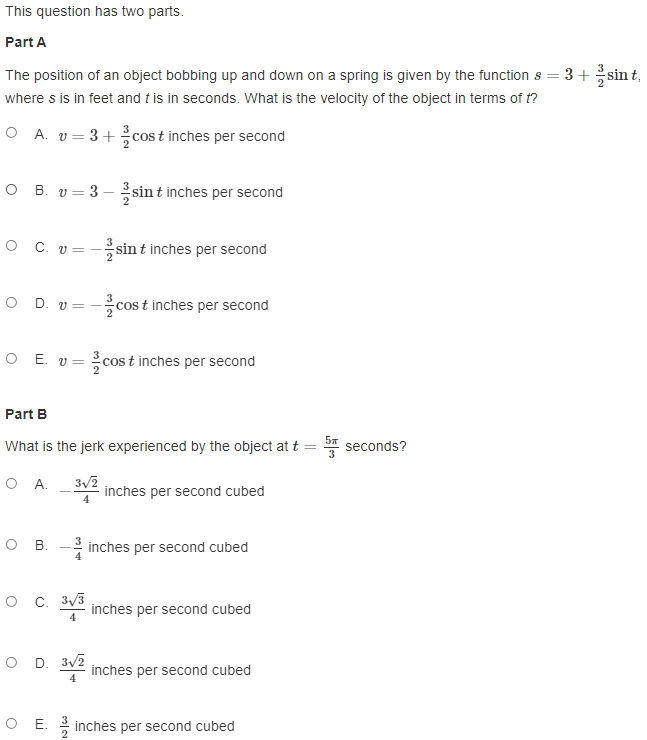
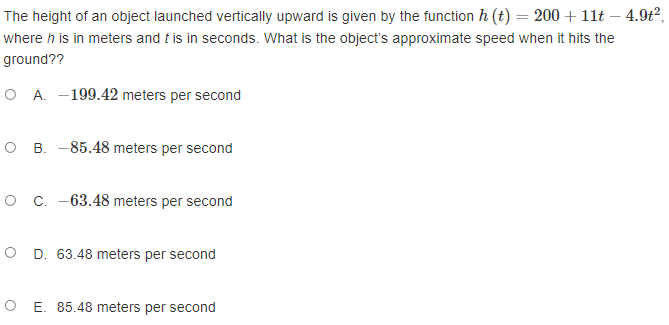
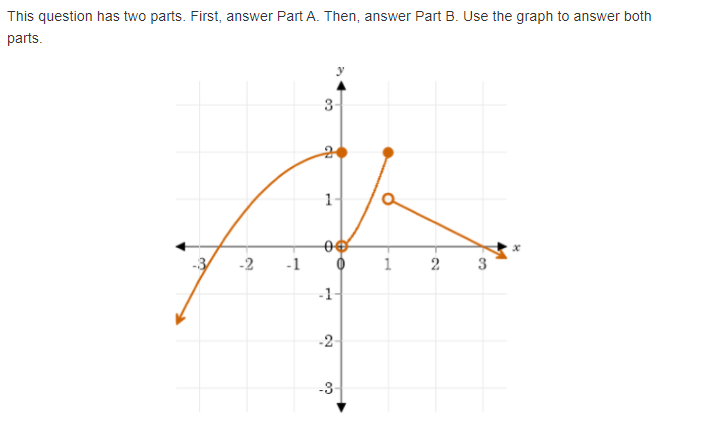
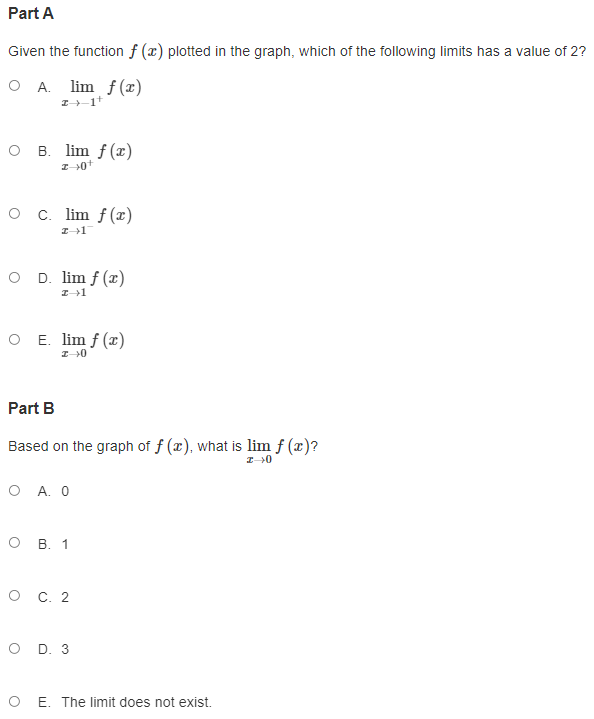
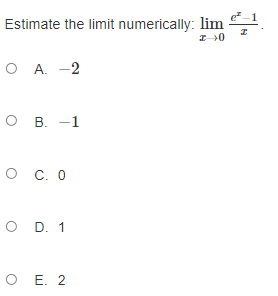
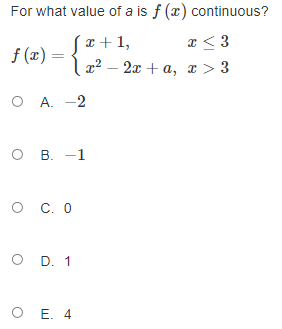
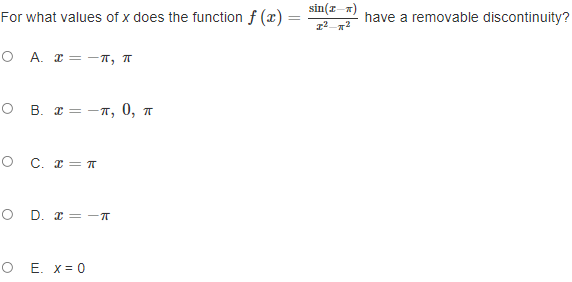
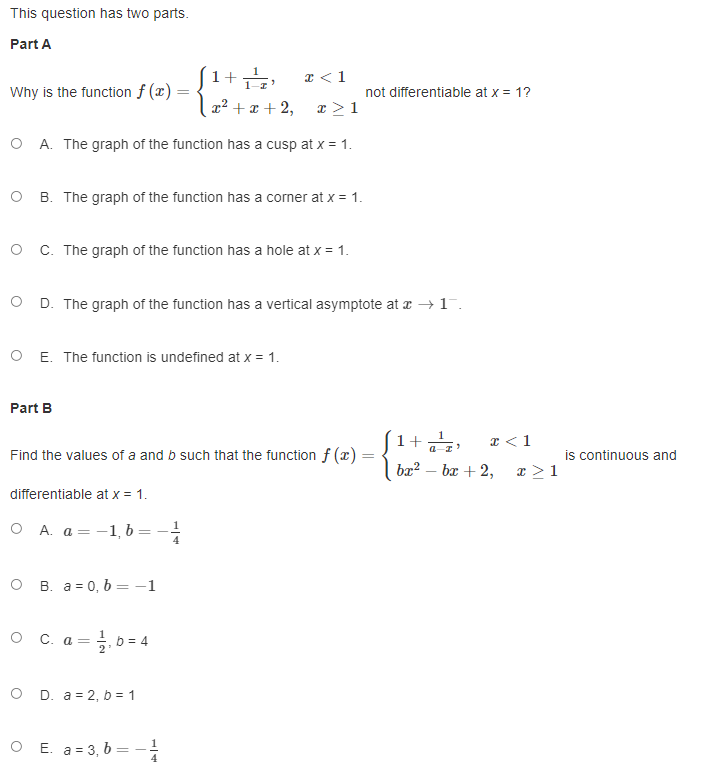
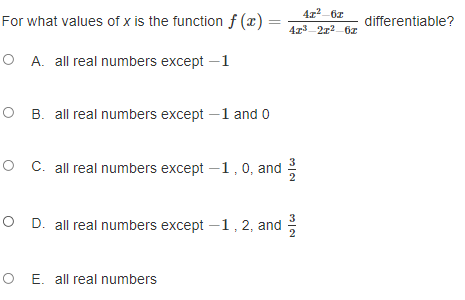
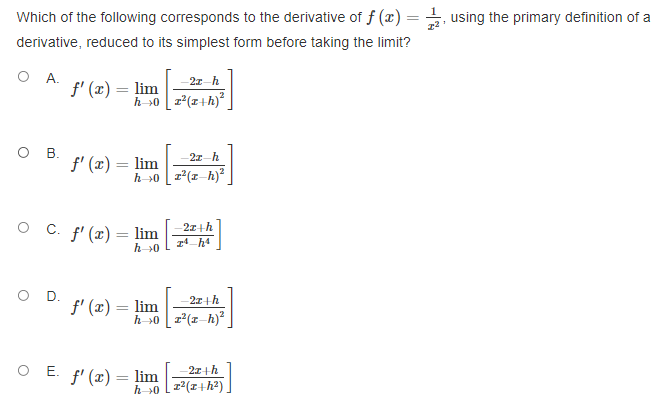
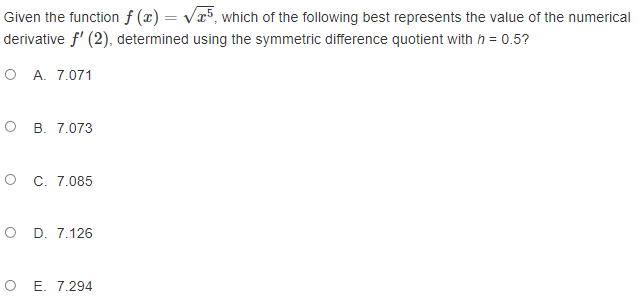
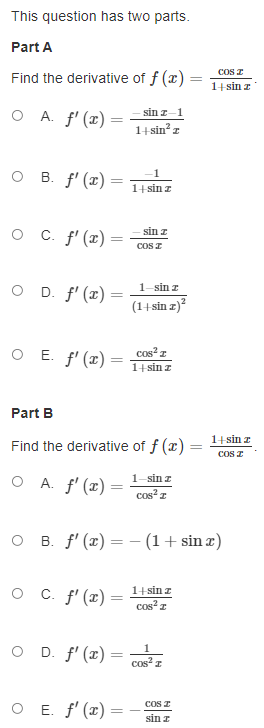
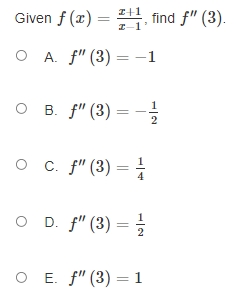
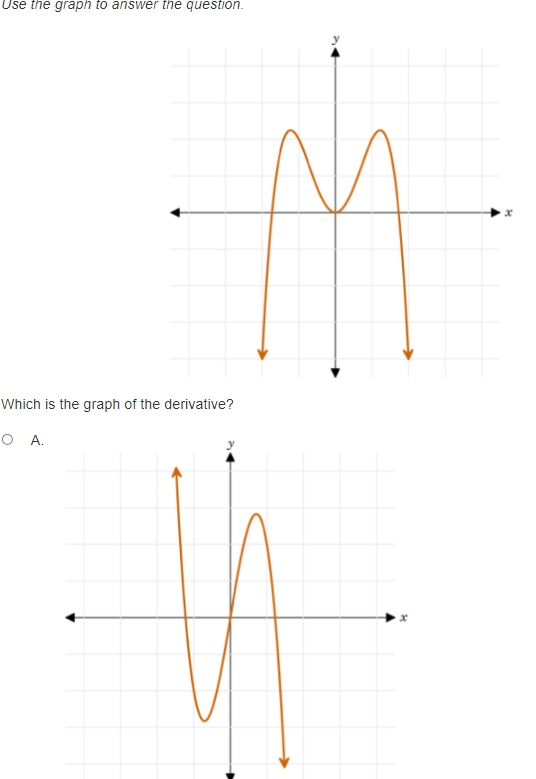
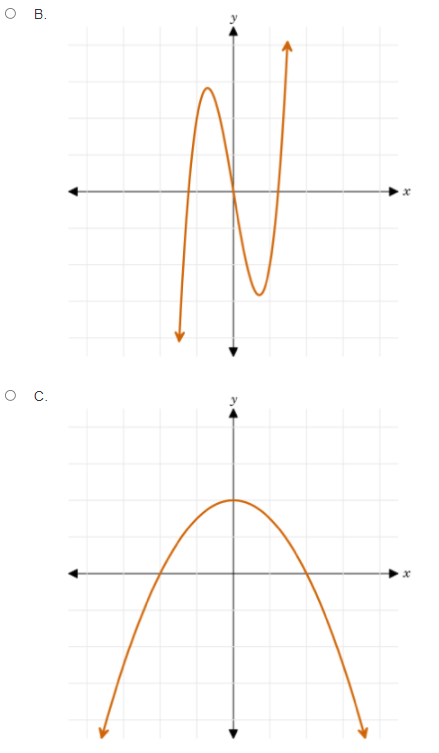
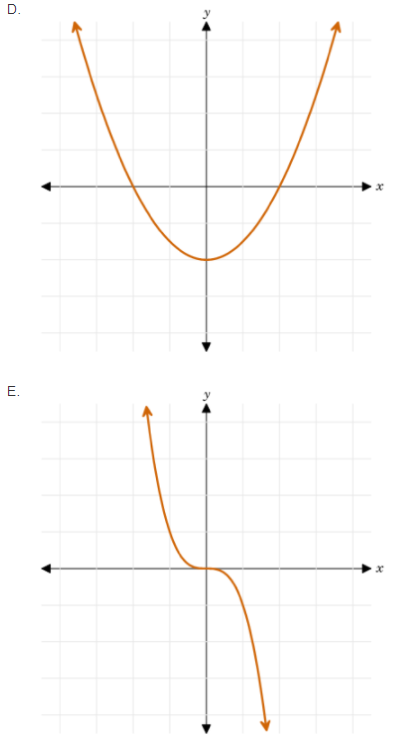
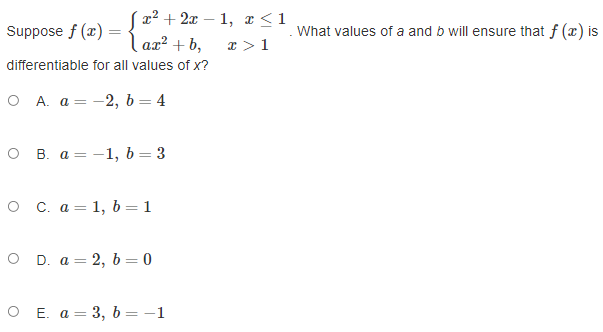
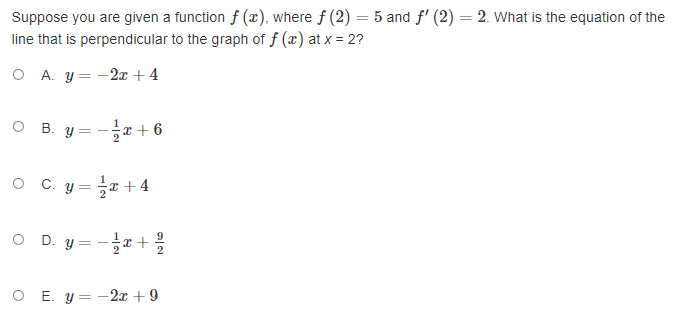
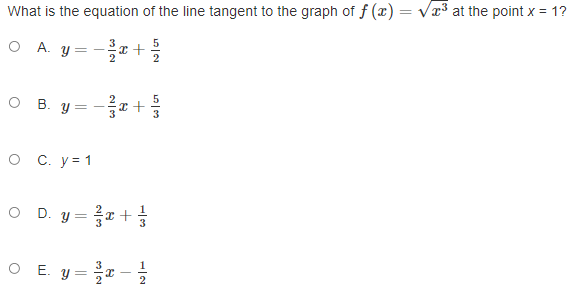
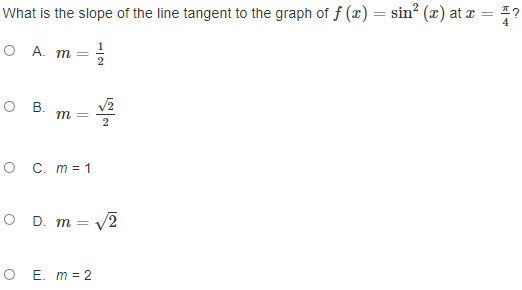
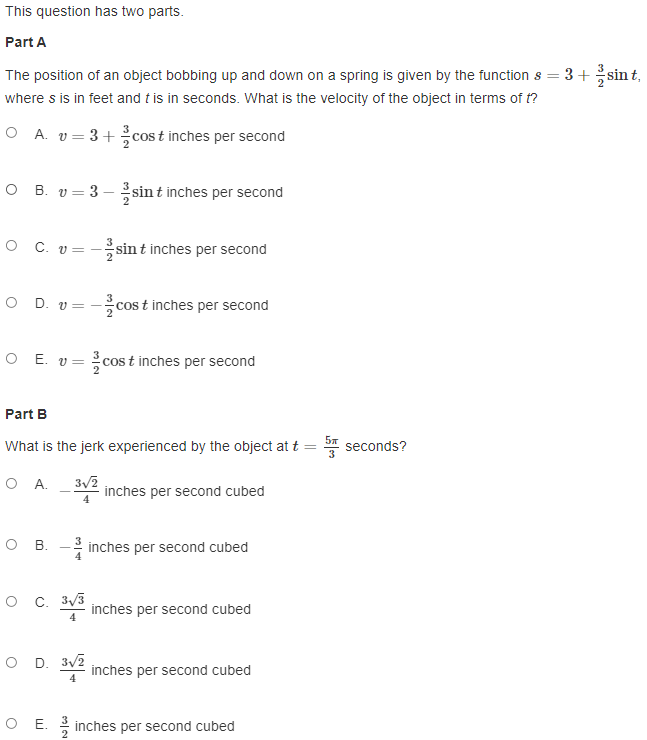
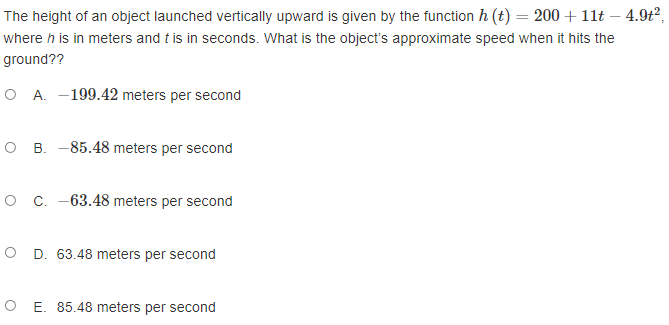
This question has two parts. First, answer Part A. Then, answer Part E. Use the graph to answer both parts. Part A Given the function f (@) plotted in the graph, which of the following limits has a value of 2? O A. lim f (x) O B. lim f (x) O c. lim f (x) O D. lim f (x) I +1 O E. lim f (x) Part B Based on the graph of f (x), what is lim f (x)? O A. 0 O B. 1 O C. 2 O D. 3 O E. The limit does not exist.sin (C-*) For what values of x does the function f (@ ) = have a removable discontinuity? -7 2 O A. T = -1, T O B. E = -TT, 0, A O C. T= O D. T= - O E. X= 0This question has two parts. Part A * 1 Why is the function f (x) = not differentiable at x = 1? O A. The graph of the function has a cusp at x = 1. O B. The graph of the function has a corner at x = 1. O C. The graph of the function has a hole at x = 1. O D. The graph of the function has a vertical asymptote at x - 17. O E. The function is undefined at x = 1. Part B Find the values of a and b such that the function f (x) = is continuous and br? - br + 2, 1 differentiable at x = 1. O A. a = -1, b= - O B. a = 0, b=-1 O C. a = -, b= 4 O D. a = 2, b = 1 O E. a = 3, b = -1For what values of x is the function f (@ ) = differentiable? 413 213-61 O A. all real numbers except -1 O B. all real numbers except -1 and 0 O C. all real numbers except -1 , 0, and O D. all real numbers except -1 , 2, and O E. all real numbersWhich of the following corresponds to the derivative of f (@) = , using the primary definition of a derivative, reduced to its simplest form before taking the limit? O A f' (x) = lim 21-h h 0 I'(eth) O B. f' (x) = lim 2x-h r' (x h) O c. f' (x) = lim 21th h 30 O D. f' (x) = lim 2xth h x0 r' (r h) O E. f' (x) = lim 2z thGiven the function f (@) = va' which of the following best represents the value of the numerical derivative f' (2), determined using the symmetric difference quotient with h = 0.5? O A. 7.071 O B. 7.073 O C. 7.085 O D. 7.126 O E. 7.294This question has two parts. Part A Find the derivative of f (@ ) = COST 1 + sin O A. f' (x) = sin c-1 1| sin I O B. f' (x) = 1 + sin I o c. f' (x) = sin I COS I O D. f' (x) = 1-sin I (1 + sin x) O E. f' (x) = COS- I 1 + sin Part B Find the derivative of f (@) = 1 + sin COS I O A. f'(x) = 1-sin I O B. f' (x) = - (1 + sinc) o c. f' (x) = 1 + sin I COS- I O D. f' (x) = cos I O E. f' (x) = - COS I Sin I\fUse the graph to answer the question. Which is the graph of the derivative? O A.r' + 2x-1, a
Step by Step Solution
There are 3 Steps involved in it

Get step-by-step solutions from verified subject matter experts
 Study Help