







Question: This question is for CBA 400 course. Please complete a SIMAC Outline for the Unocal Case Reading: Reference: genetic engineering and clear ethical guidelines for
This question is for CBA 400 course.
Please complete a SIMAC Outline for the Unocal Case
Reading:
Reference:
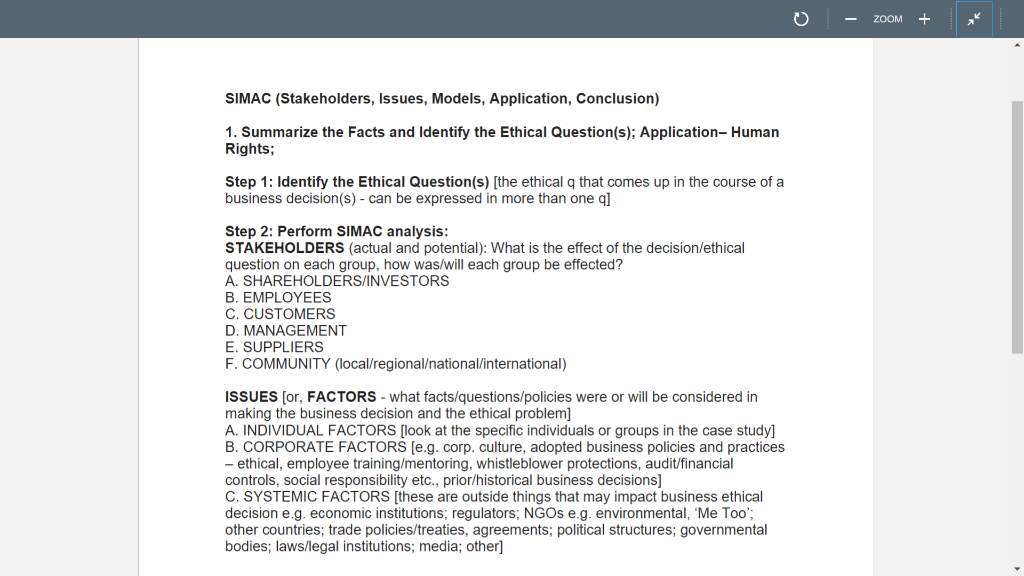
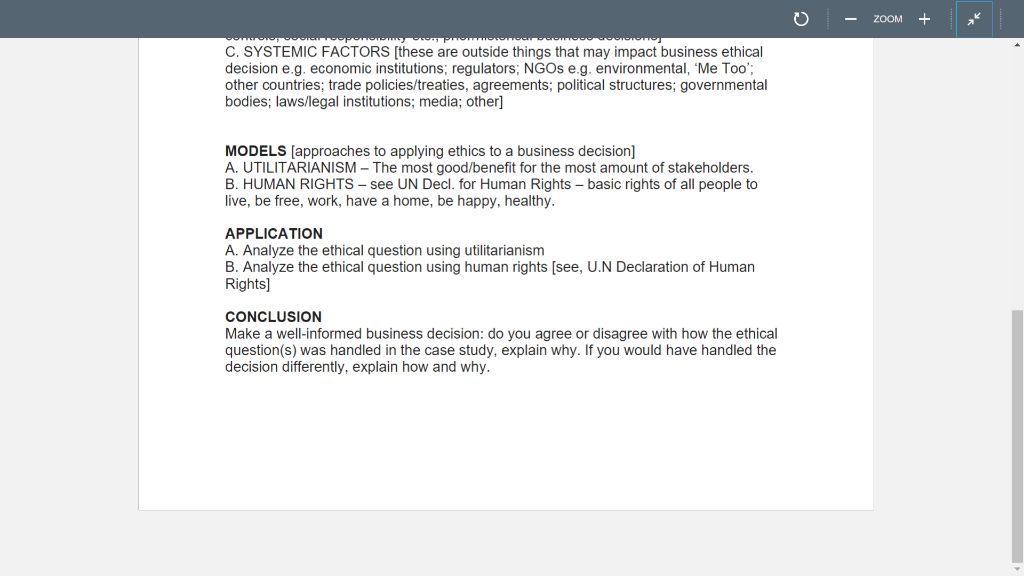
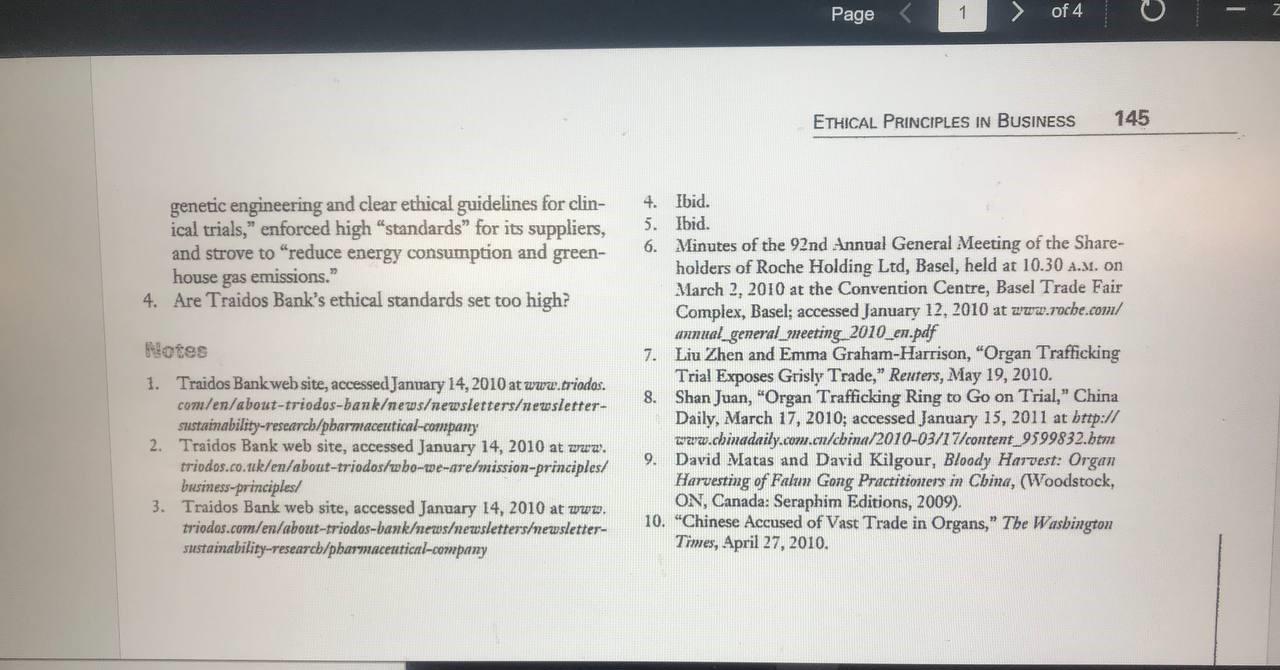
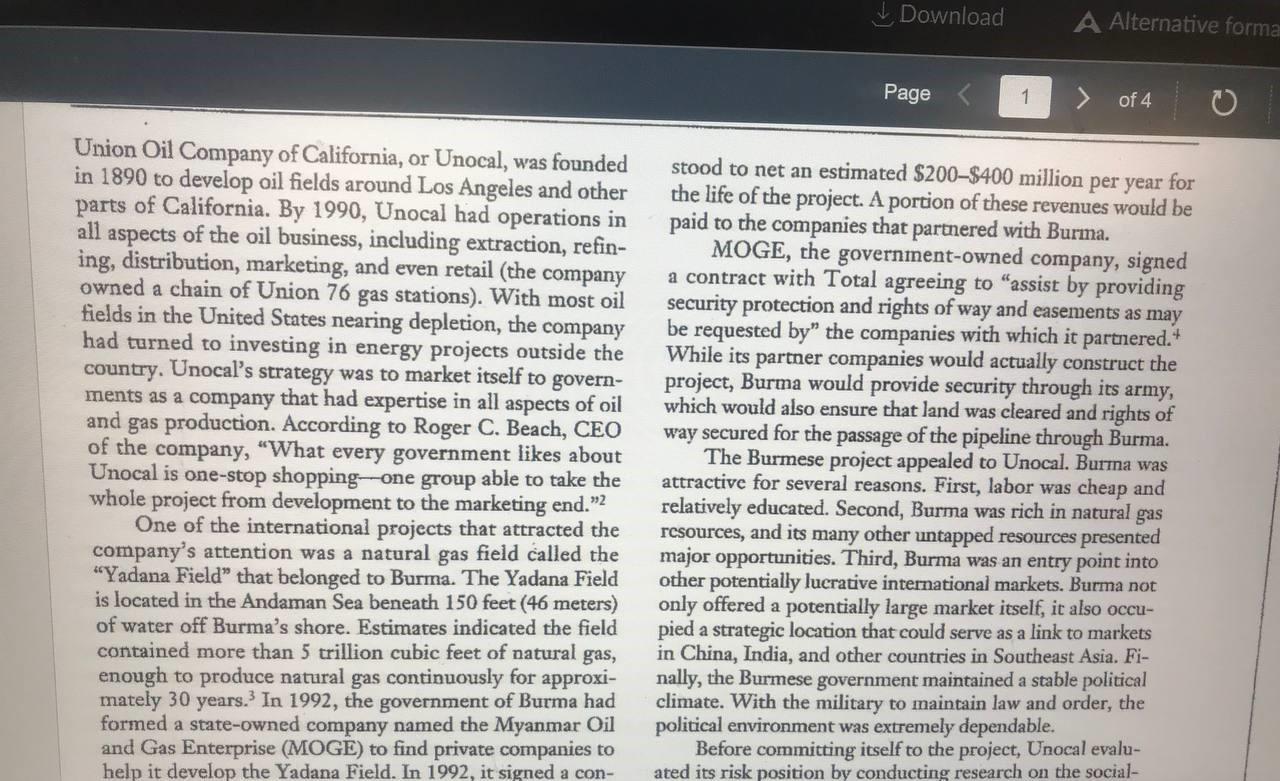
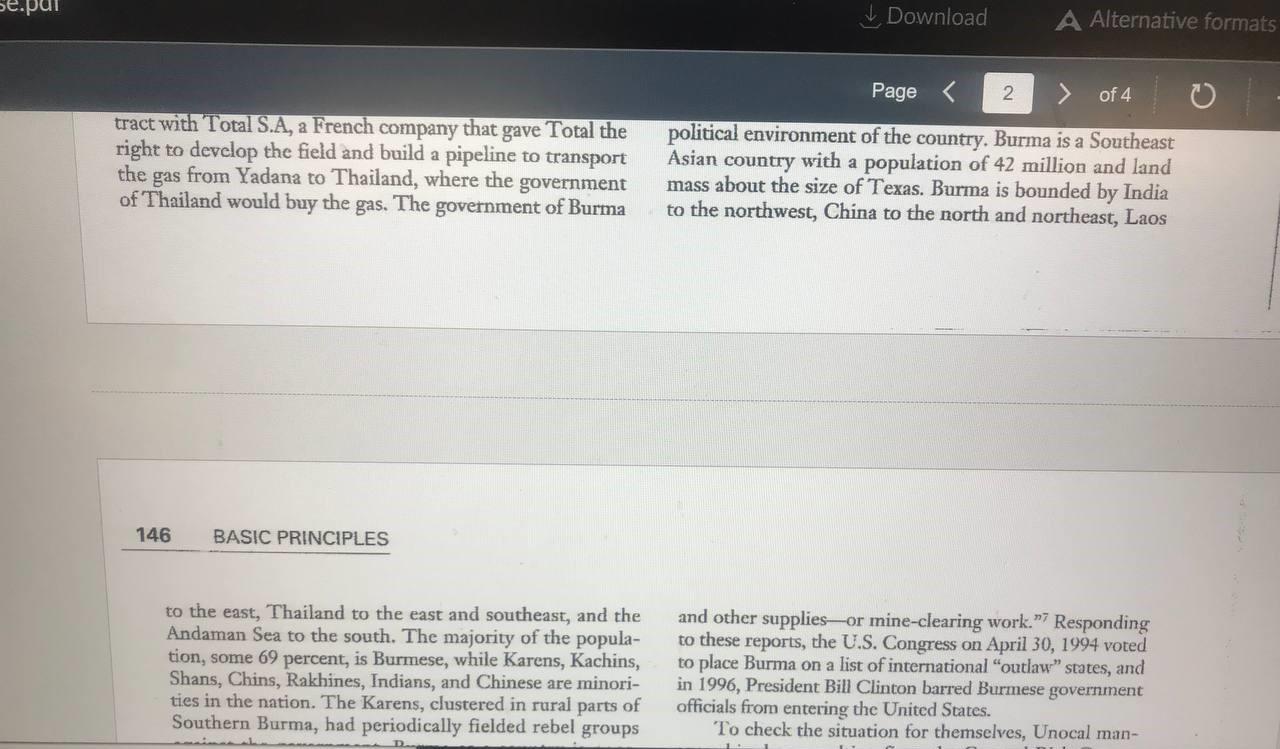
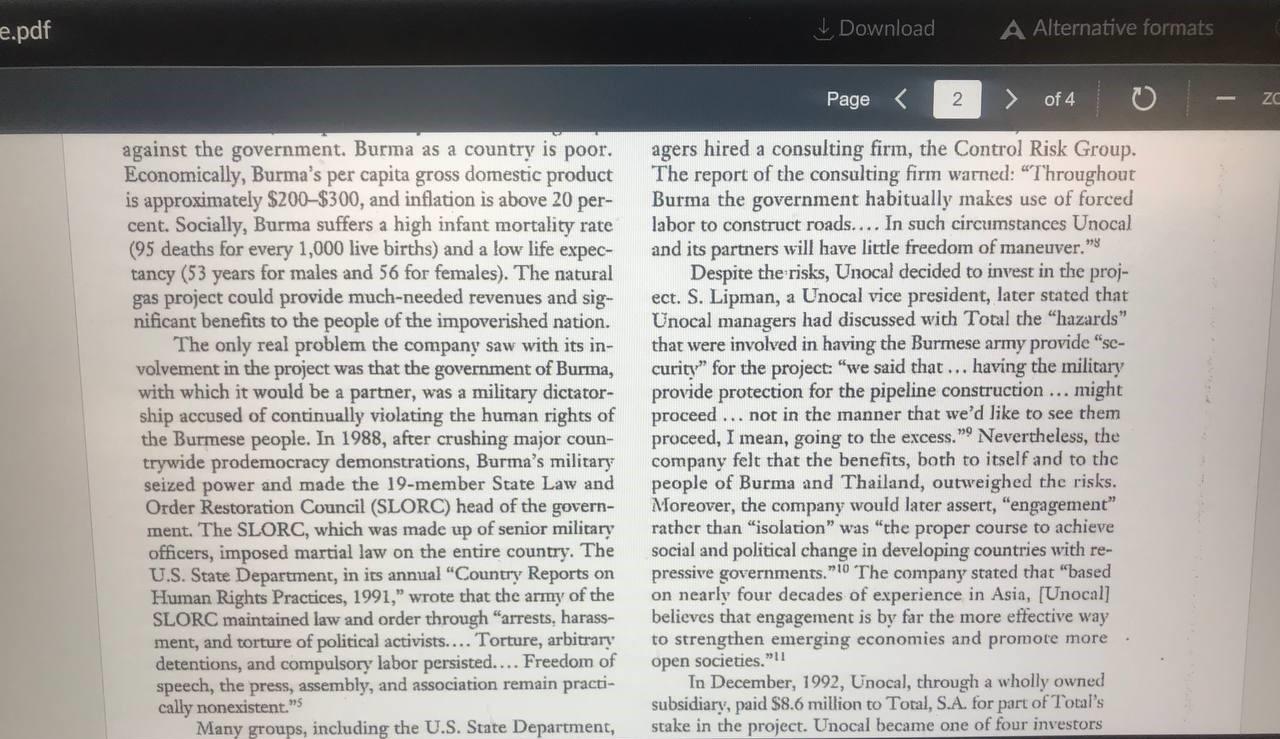
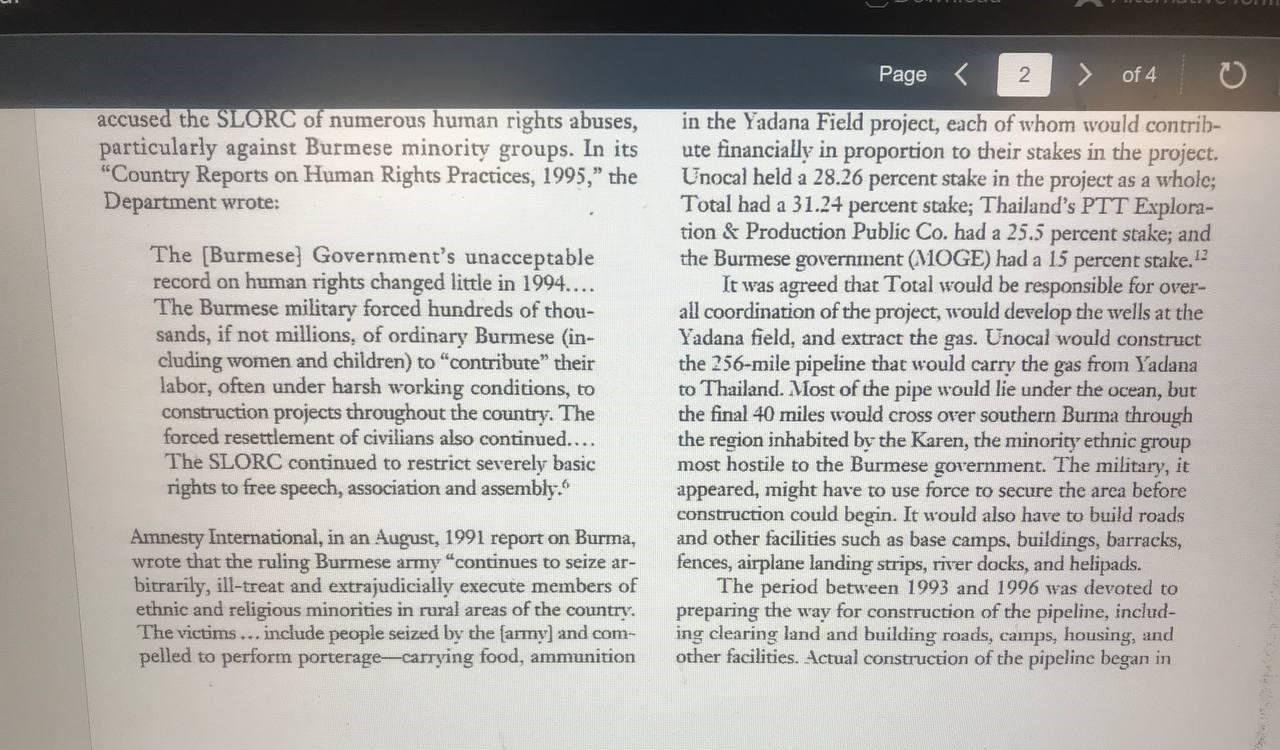
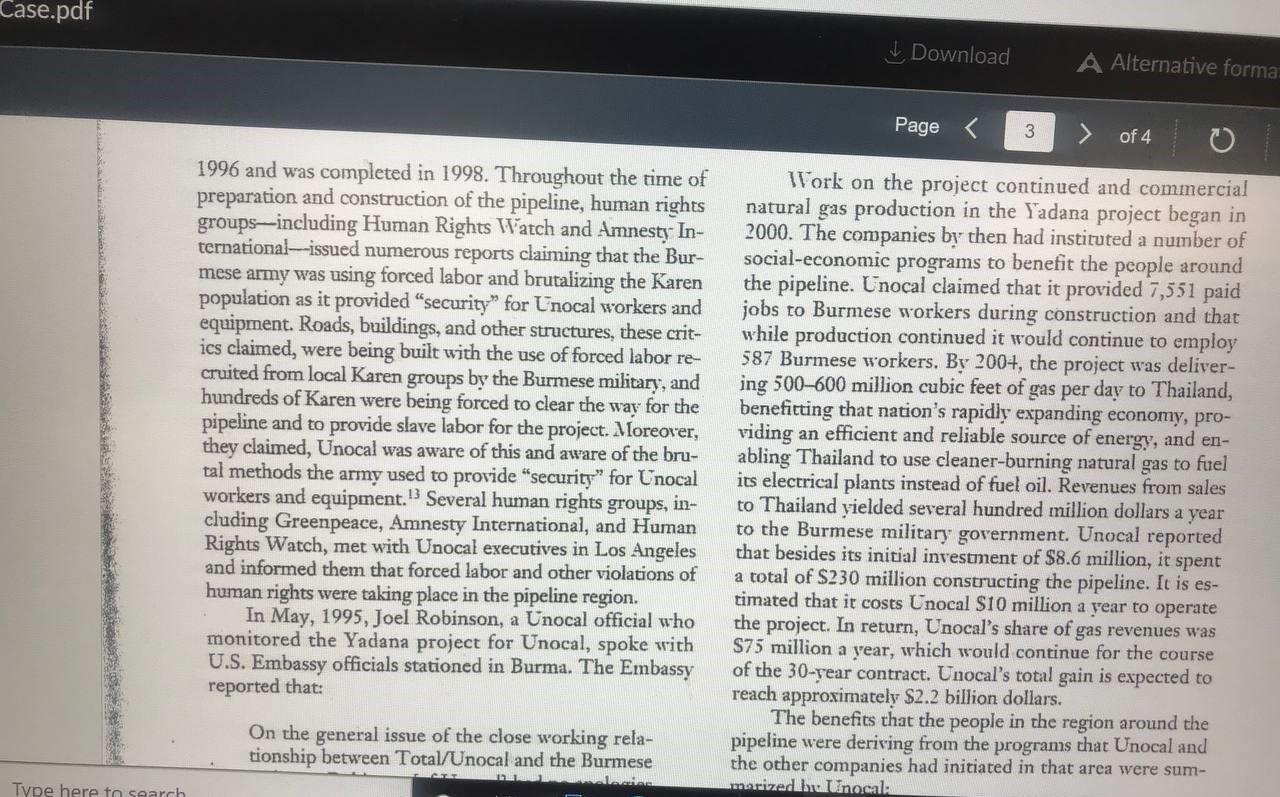
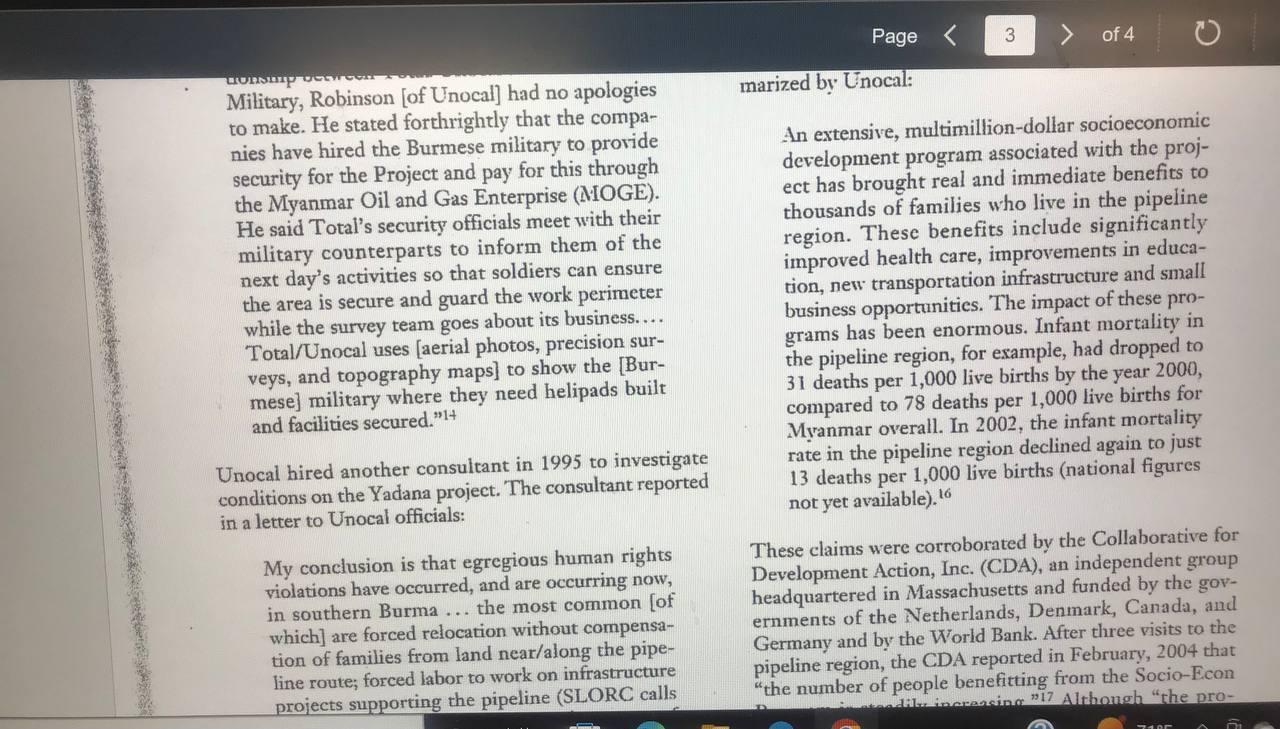
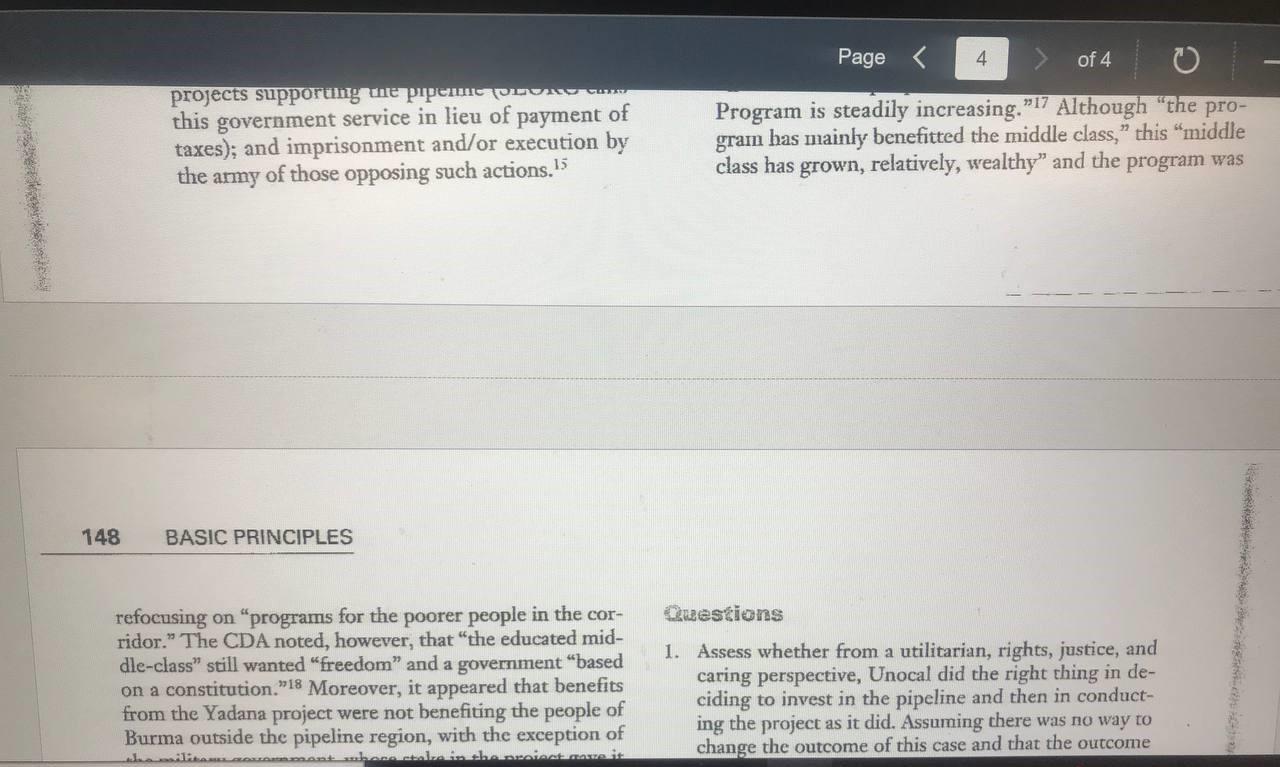
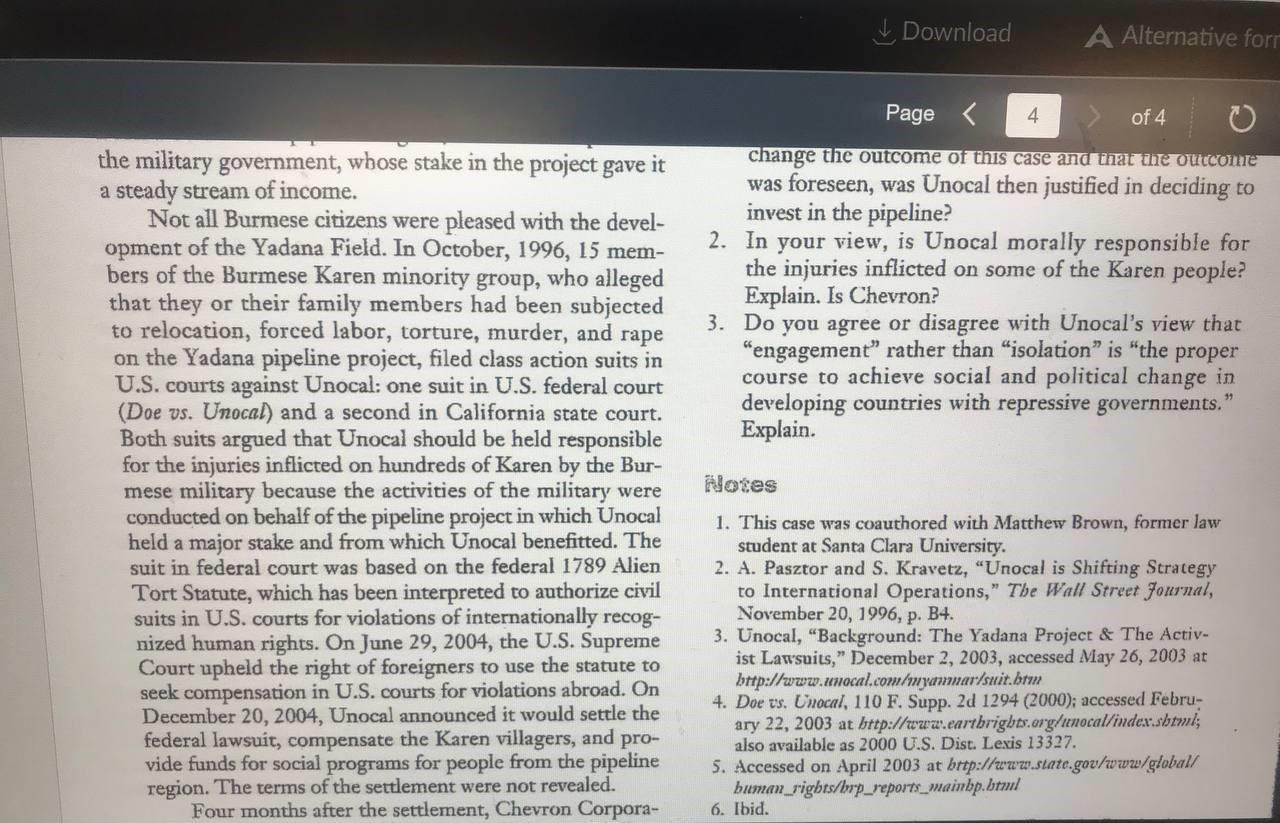
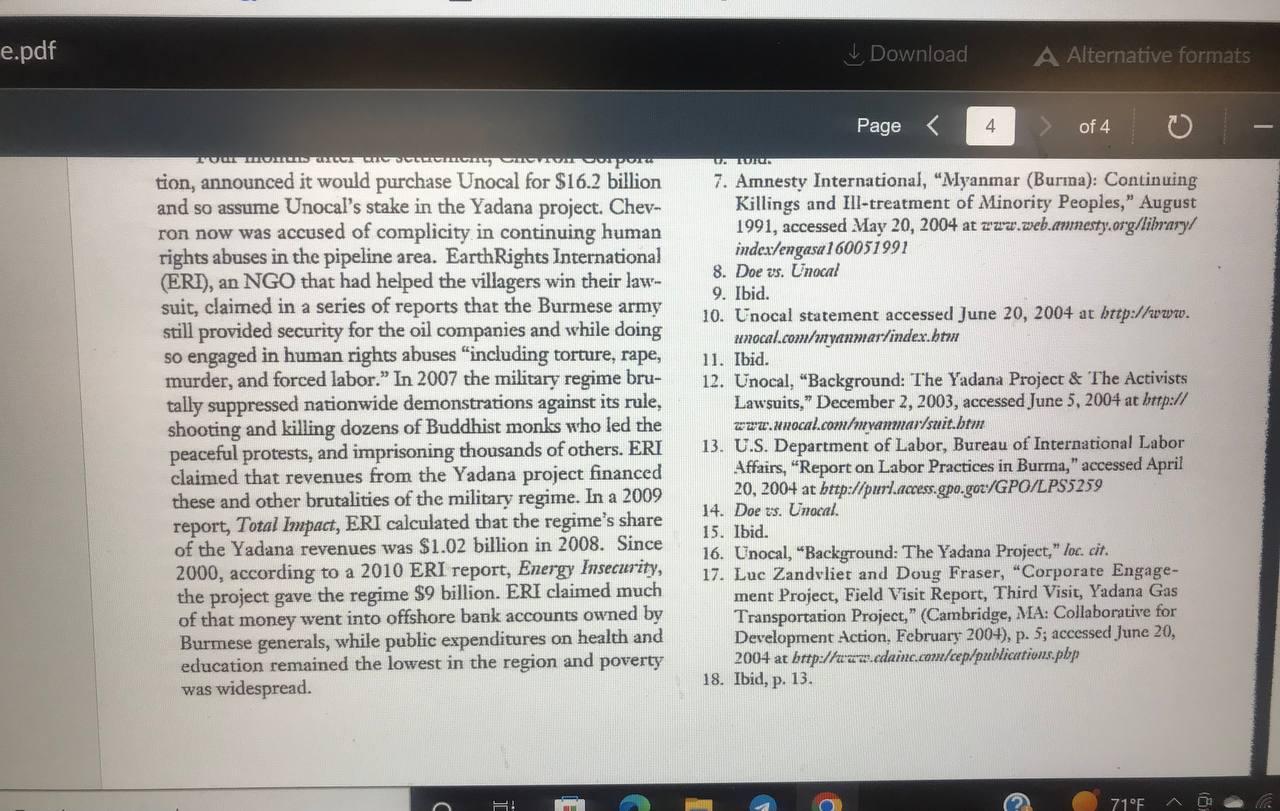
genetic engineering and clear ethical guidelines for clin- 4. Ibid. ical trials," enforced high "standards" for its suppliers, 5. Ibid. and strove to "reduce energy consumption and green- 6. Minutes of the 92nd Annual General Meeting of the Sharehouse gas emissions." holders of Roche Holding Ltd, Basel, held at 10.30 A.M. on 4. Are Traidos Bank's ethical standards set too high? March 2, 2010 at the Convention Centre, Basel Trade Fair Complex, Basel; accessed January 12, 2010 at www.rocbe.com/ annual_general_meeting_2010_en.pdf fH0t8s 7. Liu Zhen and Emma Graham-Harrison, "Organ Trafficking 1. Traidos Bankweb site, accessed January 14, 2010 at wwe.triodos. Trial Exposes Grisly Trade," Reuters, May 19, 2010. com/en/about-triodos-bankewsewslettersewsletter- 8. Shan Juan, "Organ Trafficking Ring to Go on Trial," China sustainability-researcb/pbarmaceutical-company Daily, March 17, 2010; accessed January 15, 2011 at bttp:// 2. Traidos Bank web site, accessed January 14, 2010 at www. www.cbinadaily.comt.cn/cbina/2010-03/17/content_9599832.btm triodos.co.nk/en/about-triodos/wbo-we-are/mission-principles/ 9. David Matas and David Kilgour, Bloody Harvest: Organ business-principlesl Harvesting of Falun Gong Practitioners in Cbina, (Woodstock, 3. Traidos Bank web site, accessed January 14, 2010 at wwz. ON, Canada: Seraphim Editions, 2009). triodos.com/en/about-triodos-bankewsewslettersinewsletter- 10. "Chinese Accused of Vast Trade in Organs," Tbe Wasbington sustainability-researcb/pharmaceutical-company Times, April 27, 2010. Union Oil Company of California, or Unocal, was founded stood to net an estimated $200$400 million per year for in 1890 to develop oil fields around Los Angeles and other the life of the project. A portion of these revenues would be parts of California. By 1990, Unocal had operations in paid to the companies that parmered with Burma. all aspects of the oil business, including extraction, refin- MOGE, the government-owned company, signed ing, distribution, marketing, and even retail (the company a contract with Total agreeing to "assist by providing owned a chain of Union 76 gas stations). With most oil security protection and rights of way and easements as may fields in the United States nearing depletion, the company be requested by " the companies with which it partnered.4 had turned to investing in energy projects outside the While its partner companies would actually construct the country. Unocal's strategy was to market itself to govern- project, Burma would provide security through its army, ments as a company that had expertise in all aspects of oil which would also ensure that land was cleared and rights of and gas production. According to Roger C. Beach, CEO way secured for the passage of the pipeline through Burma. of the company, "What every government likes about The Burmese project appealed to Unocal. Burma was Unocal is one-stop shopping-one group able to take the attractive for several reasons. First, labor was cheap and whole project from development to the marketing end."2 relatively educated. Second, Burma was rich in natural gas One of the international projects that attracted the resources, and its many other untapped resources presented company's attention was a natural gas field called the major opportunities. Third, Burma was an entry point into "Yadana Field" that belonged to Burma. The Yadana Field other potentially lucrative international markets. Burma not is located in the Andaman Sea beneath 150 feet (46 meters) only offered a potentially large market itself, it also occuof water off Burma's shore. Estimates indicated the field pied a strategic location that could serve as a link to markets contained more than 5 trillion cubic feet of natural gas, in China, India, and other countries in Southeast Asia. Fienough to produce natural gas continuously for approxi- nally, the Burmese government maintained a stable political mately 30 years. 3 In 1992, the government of Burma had climate. With the military to maintain law and order, the formed a state-owned company named the Myanmar Oil political environment was extremely dependable. and Gas Enterprise (MOGE) to find private companies to Before committing itself to the project, Unocal evaluhelp it develop the Yadana Field. In 1992, it signed a con- ated its risk position by conducting research on the social- tract with Total S.A, a French company that gave Total the political environment of the country. Burma is a Southeast right to develop the field and build a pipeline to transport Asian country with a population of 42 million and land the gas from Yadana to Thailand, where the government mass about the size of Texas. Burma is bounded by India of Thailand would buy the gas. The government of Burma to the northwest, China to the north and northeast, Laos 146 BASIC PRINCIPLES to the east, Thailand to the east and southeast, and the and other supplies-or mine-clearing work. n7 Responding Andaman Sea to the south. The majority of the popula- to these reports, the U.S. Congress on April 30,1994 voted tion, some 69 percent, is Burmese, while Karens, Kachins, to place Burma on a list of international "outlaw" states, and Shans, Chins, Rakhines, Indians, and Chinese are minori- in 1996, President Bill Clinton barred Burmese government ties in the nation. The Karens, clustered in rural parts of officials from entering the United States. Southern Burma, had periodically fielded rebel groups To check the situation for themselves, Unocal man- against the government. Burma as a country is poor. agers hired a consulting firm, the Control Risk Group. Economically, Burma's per capita gross domestic product The report of the consulting firm warned: "Throughout is approximately $200$300, and inflation is above 20 per- Burma the government habitually makes use of forced cent. Socially, Burma suffers a high infant mortality rate labor to construct roads.... In such circumstances Unocal (95 deaths for every 1,000 live births) and a low life expec- and its partners will have little freedom of maneuver." tancy ( 53 years for males and 56 for females). The natural Despite the risks, Unocal decided to invest in the projgas project could provide much-needed revenues and sig- ect. S. Lipman, a Unocal vice president, later stated that nificant benefits to the people of the impoverished nation. Unocal managers had discussed with Total the "hazards" The only real problem the company saw with its in- that were involved in having the Burmese army provide "scvolvement in the project was that the government of Burma, curity" for the project: "we said that ... having the military with which it would be a partner, was a military dictator- provide protection for the pipeline construction ... might ship accused of continually violating the human rights of proceed ... not in the manner that we'd like to see them the Burmese people. In 1988, after crushing major coun- proceed, I mean, going to the excess. 19 Nevertheless, the trywide prodemocracy demonstrations, Burma's military company felt that the benefits, both to itself and to the seized power and made the 19-member State Law and people of Burma and Thailand, outweighed the risks. Order Restoration Council (SLORC) head of the govern- Moreover, the company would later assert, "engagement" ment. The SLORC, which was made up of senior military rather than "isolation" was "the proper course to achieve officers, imposed martial law on the entire country. The social and political change in developing countries with reU.S. State Department, in its annual "Country Reports on pressive governments."10 The company stated that "based Human Rights Practices, 1991," wrote that the army of the on nearly four decades of experience in Asia, [Unocal] SLORC maintained law and order through "arrests, harass- believes that engagement is by far the more effective way ment, and torture of political activists.... Torture, arbitrary to strengthen emerging economies and promote more detentions, and compulsory labor persisted.... Freedom of open societies." M1 speech, the press, assembly, and association remain practi- In December, 1992, Unocal, through a wholly owned cally nonexistent." subsidiary, paid \$8.6 million to Total, S.A. for part of Total's Many groups, including the U.S. State Department, stake in the project. Unocal became one of four investors accused the SLORC of numerous human rights abuses, in the Yadana Field project, each of whom would contribparticularly against Burmese minority groups. In its ute financially in proportion to their stakes in the project. "Country Reports on Human Rights Practices, 1995," the Unocal held a 28.26 percent stake in the project as a whole; Department wrote: . Total had a 31.24 percent stake; Thailand's PTT Exploration \& Production Public Co. had a 25.5 percent stake; and The [Burmese] Government's unacceptable the Burmese government (MOGE) had a 15 percent stake. 12 record on human rights changed little in 1994... It was agreed that Total would be responsible for overThe Burmese military forced hundreds of thou- all coordination of the project, would develop the wells at the sands, if not millions, of ordinary Burmese (in- Yadana field, and extract the gas. Unocal would construct cluding women and children) to "contribute" their the 256-mile pipeline that would carry the gas from Yadana labor, often under harsh working conditions, to to Thailand. Most of the pipe would lie under the ocean, but construction projects throughout the country. The the final 40 miles would cross over southern Burma through forced resettlement of civilians also continued.... the region inhabited by the Karen, the minority ethnic group The SLORC continued to restrict severely basic most hostile to the Burmese government. The military, it rights to free speech, association and assembly. 6 appeared, might have to use force to secure the area before Amnesty International, in an August, 1991 report on Burma, construction could begin. It would also have to build roads wrote that the ruling Burmese army "continues to seize ar- fences, airplane landing strips, river docks, and helipads. bitrarily, ill-treat and extrajudicially execute members of The period between 1993 and 1996 was devoted to ethnic and religious minorities in rural areas of the country. preparing the way for construction of the pipeline, includThe victims ... include people seized by the [army] and com- ing clearing land and building roads, camps, housing, and pelled to perform porterage-carrying food, ammunition other facilities. Actual construction of the pipeline began in 1996 and was completed in 1998 . Throughout the time of Work on the project continued and commercial preparation and construction of the pipeline, human rights natural gas production in the Yadana project began in groups-including Human Rights Watch and Amnesty In- 2000. The companies by then had instituted a number of ternational-issued numerous reports claiming that the Bur- social-economic programs to benefit the people around mese army was using forced labor and brutalizing the Karen the pipeline. Lnocal claimed that it provided 7,551 paid population as it provided "security" for Lnocal workers and jobs to Burmese workers during construction and that equipment. Roads, buildings, and other structures, these crit- while production continued it would continue to employ ics claimed, were being built with the use of forced labor re- 587 Burmese workers. By 2004 , the project was delivercruited from local Karen groups by the Burmese military, and ing 500-600 million cubic feet of gas per day to Thailand, hundreds of Karen were being forced to clear the way for the benefitting that nation's rapidly expanding economy, propipeline and to provide slave labor for the project. Moreover, viding an efficient and reliable source of energy, and enthey claimed, Unocal was aware of this and aware of the bru- abling Thailand to use cleaner-burning natural gas to fuel tal methods the army used to provide "security" for Cnocal its electrical plants instead of fuel oil. Revenues from sales workers and equipment. 13 Several human rights groups, in- to Thailand yielded several hundred million dollars a year cluding Greenpeace, Amnesty International, and Human to the Burmese military gorernment. Unocal reported Rights Watch, met with Unocal executives in Los Angeles that besides its initial investment of $8.6 million, it spent and informed them that forced labor and other violations of a total of $230 million constructing the pipeline. It is eshuman rights were taking place in the pipeline region. timated that it costs Cnocal S10 million a year to operate In May, 1995, Joel Robinson, a Unocal official who the project. In return, Unocal's share of gas revenues was monitored the Yadana project for Unocal, spoke with $75 million a year, which would continue for the course U.S. Embassy officials stationed in Burma. The Embassy of the 30-rear contract. Unocal's total gain is expected to reported that: reach approximately $2.2 billion dollars. The benefits that the people in the region around the On the general issue of the close working rela-_ pipeline were deriving from the programs that Unocal and tionship between Total/Unocal and the Burmese the other companies had initiated in that area were sum- Military, Robinson [of Unocal] had no apologies marized by Unocal: to make. He stated forthrightly that the companies have hired the Burmese military to provide security for the Project and pay for this through the Myanmar Oil and Gas Enterprise (MOGE). He said Total's security officials meet with their military counterparts to inform them of the next day's activities so that soldiers can ensure the area is secure and guard the work perimeter while the survey team goes about its business.... Total/Unocal uses [aerial photos, precision surAn extensive, multimillion-dollar socioeconomic mese] ect has brought real and immediate benefits to and faciliriery where they need helipads built_ compared to 78 deaths per 1,000 live births for Myanmar overall. In 2002, the infant mortality in 1995 to investigate 13 deaths pipeline region declined again to just in a letter to Unocal officials: not yet available). 16 My conclusion is that egregious human rights These claims were corroborated by the Collaborative for violations have occurred, and are occurring now, Development Action, Inc. (CDA), an independent group in southern Burma ... the most common [of headquartered in Massachusetts and funded by the govwhich] are forced relocation without compensa- ernments of the Netherlands, Denmark, Canada, and tion of families from land near/along the pipe-_ Germany and by the World Bank. After three visits to the line route; forced labor to work on infrastructure pipeline region, the CDA reported in February, 2004 that projects supporting the pipeline (SLORC calls this government service in lieu of payment of Program is steadily increasing." 17 Although "the protaxes); and imprisonment and/or execution by gram has mainly benefitted the middle class," this "middle the army of those opposing such actions. 15 class has grown, relatively, wealthy" and the program was BASIC PRINCIPLES refocusing on "programs for the poorer people in the cor- Qreestions ridor." The CDA noted, however, that "the educated middle-class" still wanted "freedom" and a government "based 1. Assess whether from a utilitarian, rights, justice, and on a constitution. 18 Moreover, it appeared that benefits caring perspective, Unocal did the right thing in defrom the Yadana project were not benefiting the people of ciding to invest in the pipeline and then in conductBurma outside the pipeline region, with the exception of ing the project as it did. Assuming there was no way to change the outcome of this case and that the outcome the military government, whose stake in the project gave it change the outcome of this case and that the outcomre a steady stream of income. was foreseen, was Unocal then justified in deciding to Not all Burmese citizens were pleased with the develinvest in the pipeline? opment of the Yadana Field. In October, 1996, 15 mem- 2. In your view, is Unocal morally responsible for bers of the Burmese Karen minority group, who alleged the injuries inflicted on some of the Karen people? that they or their family members had been subjected Explain. Is Chevron? to relocation, forced labor, torture, murder, and rape 3. Do you agree or disagree with Unocal's view that on the Yadana pipeline project, filed class action suits in "engagement" rather than "isolation" is "the proper U.S. courts against Unocal: one suit in U.S. federal court course to achieve social and political change in (Doe vs. Unocal) and a second in California state court. developing countries with repressive governments." Both suits argued that Unocal should be held responsible Explain. for the injuries inflicted on hundreds of Karen by the Burmese military because the activities of the military were conducted on behalf of the pipeline project in which Unocal held a major stake and from which Unocal benefitted. The 1. This case was coauthored with Matthew Brown, former law suit in federal court was based on the federal 1789 Alien student at Santa Clara University. Tort Statute, which has been interpreted to authorize civil 2. A. Pasztor and S. Kravetz, "Unocal is Shifting Strategy suits in U.S. courts for violations of internationally recogto International Operations," The Wall Street fournal, nized human rights. On June 29, 2004, the U.S. Supreme November 20, 1996, p. B4. Court upheld the right of foreigners to use the statute to 3. Unocal, "Background: The Yadana Project \& The Activseek compensation in U.S. courts for violations abroad. On ist Larrsuits," December 2, 2003, accessed May 26, 2003 at December 20, 2004, Unocal announced it would settle the bttp://wwwv.unocal.com/myyamnar/suit.brm federal lawsuit, compensate the Karen villagers, and pro- 4. Doe vs. Unocal, 110 F. Supp. 2d 1294 (2000); accessed Februvide funds for social programs for people from the pipeline ary 22, 2003 at bttp://www.eartbrigbts.org/tnocal/index:sbtwl; region. The terms of the settlement were not revealed. also available as 2000 U.S. Dist. Lexis 13327. Four months after the settlement, Chevron Corpora- 5. Accessed on April 2003 at brtp://zwwze.state.gov/wwwe/globall buman_rigbts/brp_reports_mainbp.btzml 6. Ibid. tion, announced it would purchase Unocal for $16.2 billion 7. Amnesty International, "Myanmar (Burma): Continuing and so assume Unocal's stake in the Yadana project. ChevKillings and Ill-treatment of Minority Peoples," August ron now was accused of complicity in continuing human 1991, accessed May 20, 2004 at www.web.annesty. org/lilmaryf rights abuses in the pipeline area. EarthRights International index/engasul 60051991 (ERI), an NGO that had helped the villagers win their law- 8. Doe es. Unocal suit, claimed in a series of reports that the Burmese army still provided security for the oil companies and while doing 9. Ibid. so engaged in human rights abuses "including torture, rape, 11. Ibid. murder, and forced labor." In 2007 the military regime bru- 12. Unocal, "Background: The Yadana Project \& The Activists tally suppressed nationwide demonstrations against its rule, Lawsuits," December 2, 2003, accessed June 5, 2004 at brtp:/l shooting and killing dozens of Buddhist monks who led the peaceful protests, and imprisoning thousands of others. ERI www.unocal.comnvammar/suit.btm claimed that revenues from the Yadana project financed 13. U.S. Department of Labor, Bureau of International Labor these and other brutalities of the military regime. In a 2009 Affairs, "Report on Labor Practices in Burma," accessed April report, Total Impact, ERI calculated that the regime's share 20,2004 at bttp://purl.access.gpo.gou/GPO/LPS5259 of the Yadana revenues was $1.02 billion in 2008 . Since 14. Doe cs. Unocal. 15. Ibid. 2000, according to a 2010 ERI report, Energy Insecurity, 16. Unocal, "Background: The Yadana Project," loc. cit. the project gave the regime $9 billion. ERI claimed much ment Project, Field Visit Report, Third Visit, Yadana Gas of that money went into offshore bank accounts owned by Transportation Project," (Cambridge, MA: Collaborative for Burmese generals, while public expenditures on health and Development Action, February 2004), p. 5 ; accessed June 20, education remained the lowest in the region and poverty 2004 at brtp:/hazw.cdainc.com/cep/publications.php was widespread. 18. Ibid, p. 13 . SIMAC (Stakeholders, Issues, Models, Application, Conclusion) 1. Summarize the Facts and Identify the Ethical Question(s); Application- Human Rights; Step 1: Identify the Ethical Question(s) [the ethical q that comes up in the course of a business decision(s) - can be expressed in more than one q ] Step 2: Perform SIMAC analysis: STAKEHOLDERS (actual and potential): What is the effect of the decision/ethical question on each group, how was/will each group be effected? A. SHAREHOLDERS/INVESTORS B. EMPLOYEES C. CUSTOMERS D. MANAGEMENT E. SUPPLIERS F. COMMUNITY (local/regionalational/international) ISSUES [or, FACTORS - what facts/questions/policies were or will be considered in making the business decision and the ethical problem] A. INDIVIDUAL FACTORS [look at the specific individuals or groups in the case study] B. CORPORATE FACTORS [e.g. corp. culture, adopted business policies and practices - ethical, employee training/mentoring, whistleblower protections, audit/financial controls, social responsibility etc., prior/historical business decisions] C. SYSTEMIC FACTORS [these are outside things that may impact business ethical decision e.g. economic institutions; regulators; NGOs e.g. environmental, 'Me Too'; other countries; trade policies/treaties, agreements; political structures; governmental bodies; laws/legal institutions; media; other] C. SYSTEMIC FACTORS [these are outside things that may impact business ethical decision e.g. economic institutions; regulators; NGOs e.g. environmental, 'Me Too'; other countries; trade policies/treaties, agreements; political structures; governmental bodies; laws/legal institutions; media; other] MODELS [approaches to applying ethics to a business decision] A. UTILITARIANISM - The most good/benefit for the most amount of stakeholders. B. HUMAN RIGHTS - see UN Decl. for Human Rights - basic rights of all people to live, be free, work, have a home, be happy, healthy. APPLICATION A. Analyze the ethical question using utilitarianism B. Analyze the ethical question using human rights [see, U.N Declaration of Human Rights] CONCLUSION Make a well-informed business decision: do you agree or disagree with how the ethical question(s) was handled in the case study, explain why. If you would have handled the decision differently, explain how and why
Step by Step Solution
There are 3 Steps involved in it

Get step-by-step solutions from verified subject matter experts
 Study Help