



Question: Toxic Killer Comes Back from the Dead It was considered one of the greatest achievements in public health at the time. A lone health and
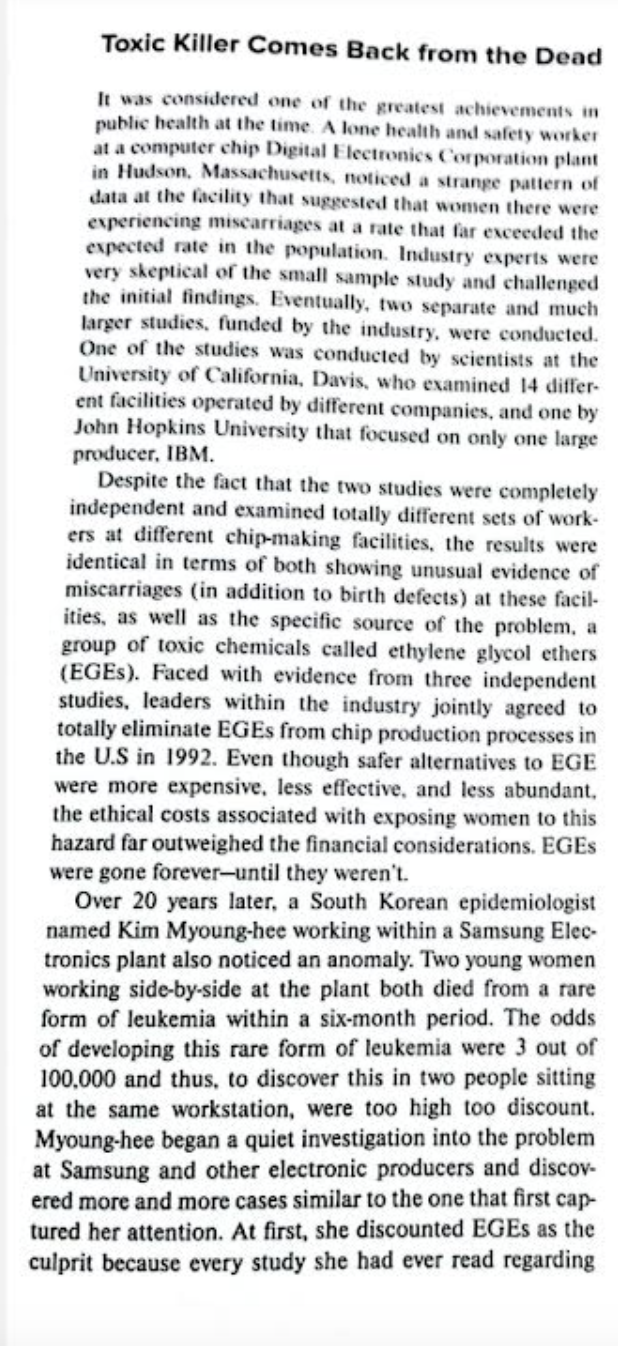
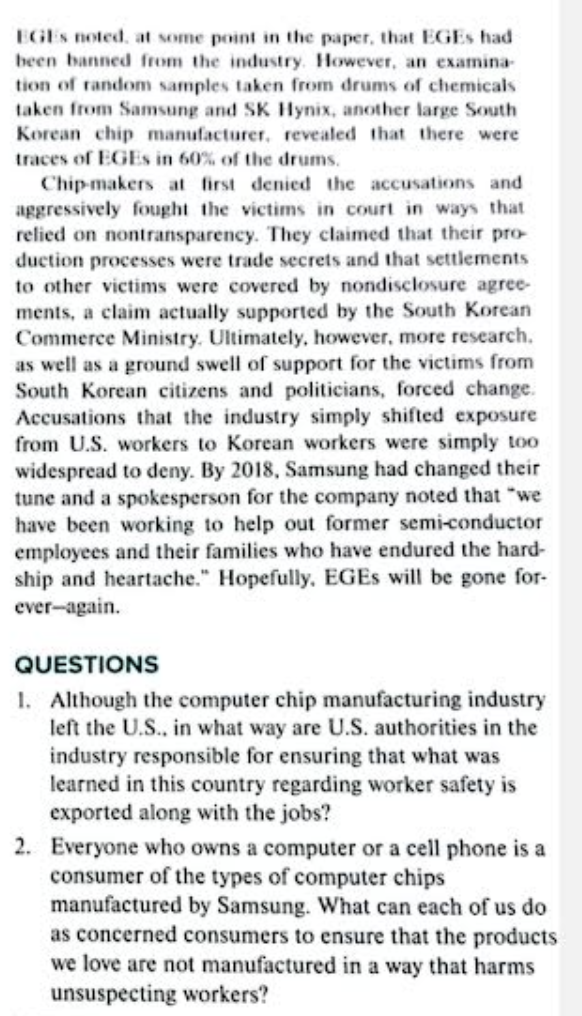
Toxic Killer Comes Back from the Dead It was considered one of the greatest achievements in public health at the time. A lone health and safety worket at a computer chip Digital Electronics Corporation plant in Hudson. Massachusetts, noticed a strange pattern of data at the facility that sugsested that women there were experiencing miscarriages at a rate that far exceded the expected rate in the population. Industry experts were very skeptical of the small sample study and challenged the initial findings. Eventually, two separate and much larger studies, funded by the industry. were conducted. One of the studies was conducted by scientists at the University of California, Davis, who examined 14 different facilities operated by different companies, and one by John Hopkins University that focused on only one large producer, IBM. Despite the fact that the two studies were completely independent and examined totally different sets of workers at different chip-making facilities, the results were identical in terms of both showing unusual evidence of miscarriages (in addition to birth defects) at these facilities, as well as the specific source of the problem. a group of toxic chemicals called ethylene glycol ethers (EGEs). Faced with evidence from three independent studies, leaders within the industry jointly agreed to totally eliminate EGEs from chip production processes in the U.S in 1992. Even though safer alternatives to EGE were more expensive, less effective, and less abundant, the ethical costs associated with exposing women to this hazard far outweighed the financial considerations. EGEs were gone forever-until they weren't. Over 20 years later, a South Korean epidemiologist named Kim Myoung-hee working within a Samsung Electronics plant also noticed an anomaly. Two young women working side-by-side at the plant both died from a rare form of leukemia within a six-month period. The odds of developing this rare form of leukemia were 3 out of 100,000 and thus, to discover this in two people sitting at the same workstation, were too high too discount. Myoung-hee began a quiet investigation into the problem at Samsung and other electronic producers and discovered more and more cases similar to the one that first captured her attention. At first, she discounted EGEs as the culprit because every study she had ever read regarding I (il's noted. at some point in the paper, that EGEs had been banned from the industry. However, an examination of random samples taken from drums of chemicals taken from Samsung and SK IIynix, another large South Korean chip manufacturer, revealed that there were traces of EGEs in 60% of the drums. Chip-makers at first denied the accusations and aggressively fought the victims in court in ways that relied on nontransparency. They claimed that their production processes were trade secrets and that settlements to other victims were covered by nondisclosure agree. ments, a claim actually supported by the South Korean Commerce Ministry. Ultimately, however, more research. as well as a ground swell of support for the victims from South Korean citizens and politicians, forced change. Accusations that the industry simply shifted exposure from U.S. workers to Korean workers were simply too widespread to deny. By 2018, Samsung had changed their tune and a spokesperson for the company noted that "we have been working to help out former semi-conductor employees and their families who have endured the hardship and heartache." Hopefully. EGEs will be gone forever-again. QUESTIONS 1. Although the computer chip manufacturing industry left the U.S., in what way are U.S. authorities in the industry responsible for ensuring that what was learned in this country regarding worker safety is exported along with the jobs? 2. Everyone who owns a computer or a cell phone is a consumer of the types of computer chips manufactured by Samsung. What can each of us do as concerned consumers to ensure that the products we love are not manufactured in a way that harms unsuspecting workers
Step by Step Solution
There are 3 Steps involved in it

Get step-by-step solutions from verified subject matter experts