







Question: Bertrand & Mullainathan (2004) study race in the labor market by sending fictitious resumes to help-wanted ads in Boston and Chicago newspapers. To manipulate perceived
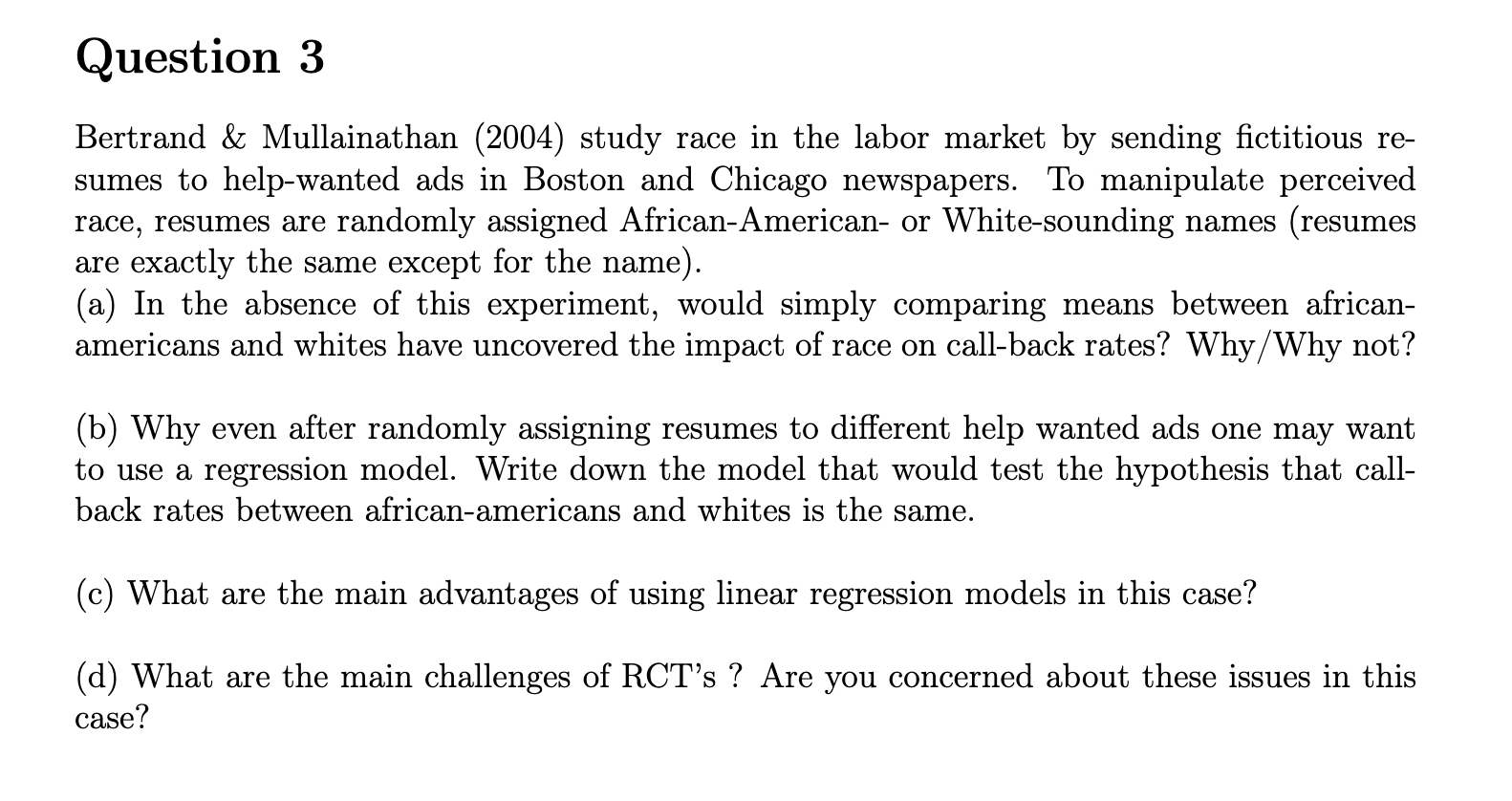
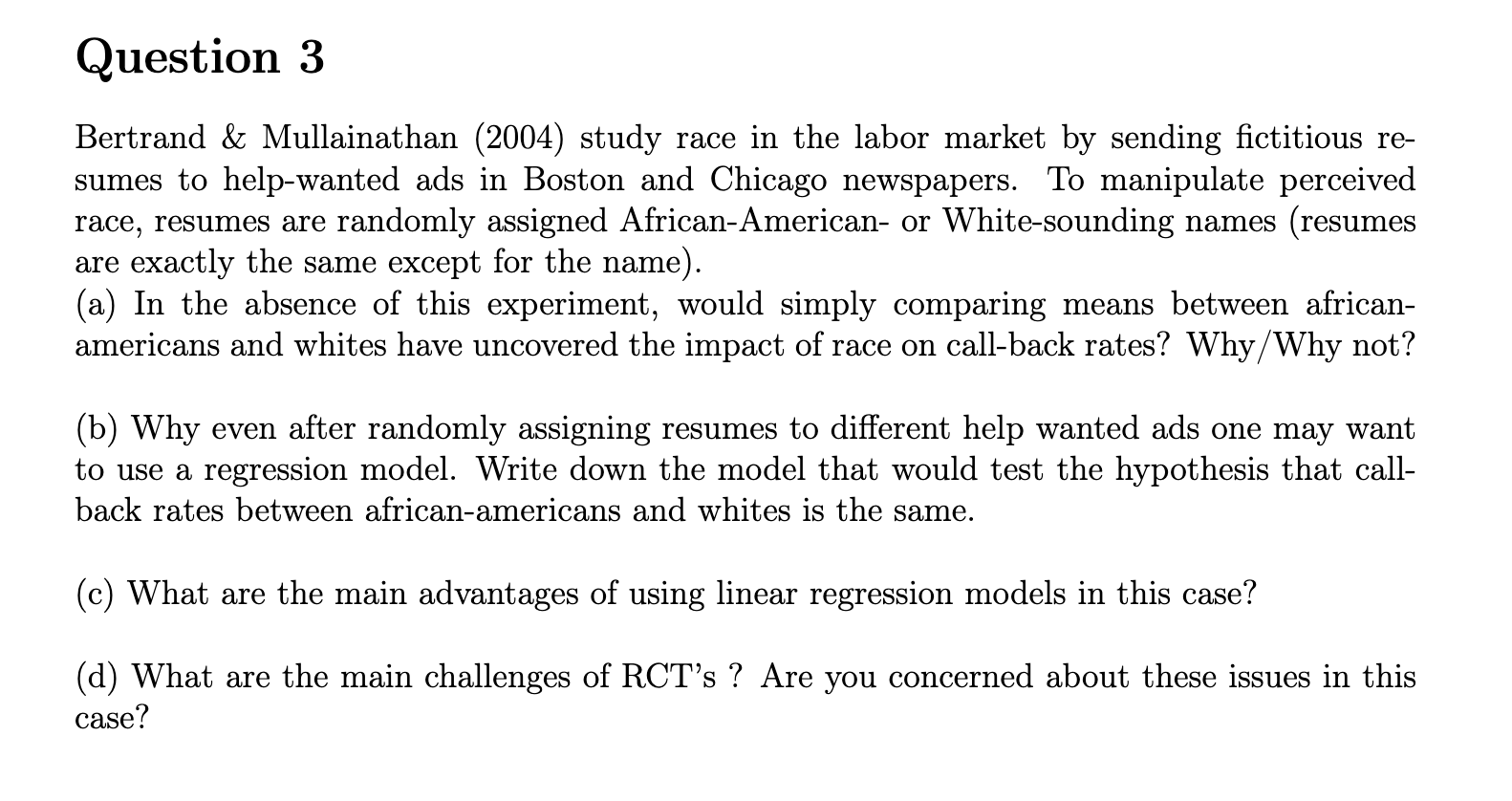
Bertrand \& Mullainathan (2004) study race in the labor market by sending fictitious resumes to help-wanted ads in Boston and Chicago newspapers. To manipulate perceived race, resumes are randomly assigned African-American- or White-sounding names (resumes are exactly the same except for the name). (a) In the absence of this experiment, would simply comparing means between africanamericans and whites have uncovered the impact of race on call-back rates? Why/Why not? (b) Why even after randomly assigning resumes to different help wanted ads one may want to use a regression model. Write down the model that would test the hypothesis that callback rates between african-americans and whites is the same. (c) What are the main advantages of using linear regression models in this case? (d) What are the main challenges of RCT's ? Are you concerned about these issues in this case
Step by Step Solution
There are 3 Steps involved in it

Get step-by-step solutions from verified subject matter experts
 Study Help