





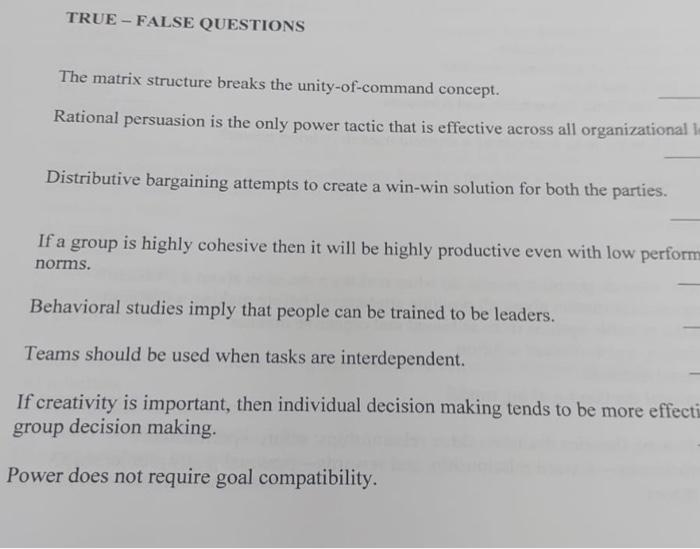
Question: TRUE FALSE QUESTIONS The matrix structure breaks the unity-of-command concept. Rational persuasion is the only power tactic that is effective across all organizational l Distributive
TRUE FALSE QUESTIONS The matrix structure breaks
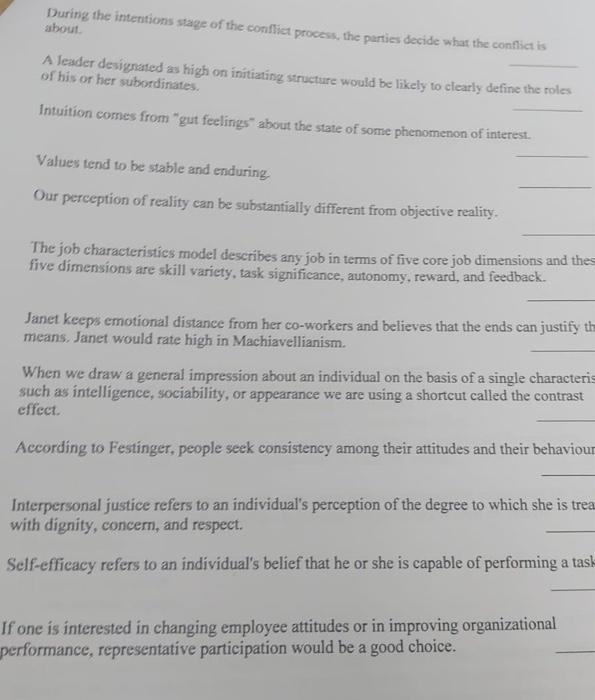
TRUE FALSE QUESTIONS The matrix structure breaks the unity-of-command concept. Rational persuasion is the only power tactic that is effective across all organizational l Distributive bargaining attempts to create a win-win solution for both the parties. If a group is highly cohesive then it will be highly productive even with low perform norms. Behavioral studies imply that people can be trained to be leaders. Teams should be used when tasks are interdependent. If creativity is important, then individual decision making tends to be more effecti group decision making. Power does not require goal compatibility. During the intentions stage of the conflict process, the parties decide what the conflict is about. A leader designated as high on initiating structure would be likely to clearly define the roles of his or her subordinates. Intuition comes from "gut feelings about the state of some phenomenon of interest. Values tend to be stable and enduring. Our perception of reality can be substantially different from objective reality. The job characteristics model describes any job in terms of five core job dimensions and thes five dimensions are skill variety, task significance, autonomy, reward, and feedback. Janet keeps emotional distance from her co-workers and believes that the ends can justify the means. Janet would rate high in Machiavellianism. When we draw a general impression about an individual on the basis of a single characteris such as intelligence, sociability, or appearance we are using a shortcut called the contrast effect. According to Festinger, people seek consistency among their attitudes and their behaviour Interpersonal justice refers to an individual's perception of the degree to which she is trea with dignity, concern, and respect. Self-efficacy refers to an individual's belief that he or she is capable of performing a task If one is interested in changing employee attitudes or in improving organizational performance, representative participation would be a good choice

Step by Step Solution

There are 3 Steps involved in it

1 Expert Approved Answer
Step: 1 Unlock blur-text-image

Question Has Been Solved by an Expert!

Get step-by-step solutions from verified subject matter experts

Step: 2 Unlock
Step: 3 Unlock

Students Have Also Explored These Related General Management Questions!