


Question: true or false 9. A response to an uncontrollable drive or desire to obtain, use, or experience a feeling substance, or activity that leads the

true or false true or false 9. A response to an uncontrollable
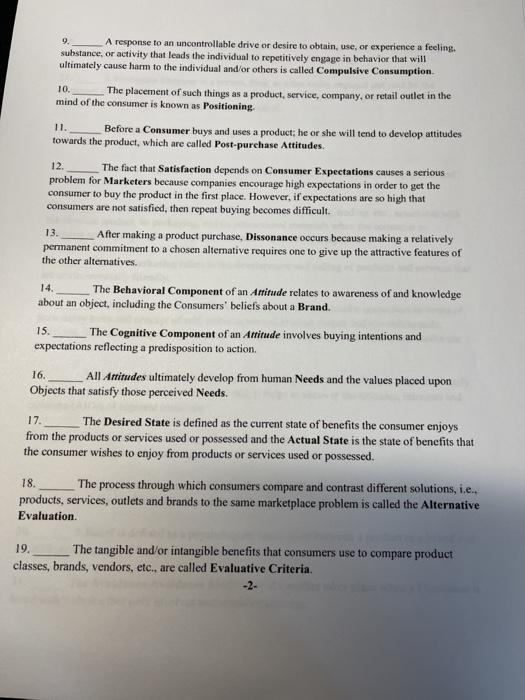
9. A response to an uncontrollable drive or desire to obtain, use, or experience a feeling substance, or activity that leads the individual to repetitively engage in behavior that will ultimately cause harm to the individual and/or others is called Compulsive Consumption 10. 11. 12. 14. The placement of such things as a product, service company, or retail outlet in the mind of the consumer is known as Positioning, Before a Consumer buys and uses a product; he or she will tend to develop attitudes towards the product, which are called Post-purchase Attitudes. The fact that Satisfaction depends on Consumer Expectations causes a serious problem for Marketers because companies encourage high expectations in order to get the consumer to buy the product in the first place. However, if expectations are so high that consumers are not satisfied, then repeat buying becomes difficult. 13. After making a product purchase, Dissonance occurs because making a relatively permanent commitment to a chosen alternative requires one to give up the attractive features of the other alternatives. The Behavioral Component of an Amirude relates to awareness of and knowledge about an object, including the Consumers' beliefs about a Brand. 15. The Cognitive Component of an Attitude involves buying intentions and expectations reflecting a predisposition to action. All Attitudes ultimately develop from human Needs and the values placed upon Objects that satisfy those perceived Needs. 17. The Desired State is defined as the current state of benefits the consumer enjoys from the products or services used or possessed and the Actual State is the state of benefits that the consumer wishes to enjoy from products or services used or possessed. 18 The process through which consumers compare and contrast different solutions, i.e.. products, services, outlets and brands to the same marketplace problem is called the Alternative Evaluation 19. The tangible and/or intangible benefits that consumers use to compare product classes, brands, vendors, etc., are called Evaluative Criteria. -2- 16

Step by Step Solution

There are 3 Steps involved in it

1 Expert Approved Answer
Step: 1 Unlock blur-text-image

Question Has Been Solved by an Expert!

Get step-by-step solutions from verified subject matter experts

Step: 2 Unlock
Step: 3 Unlock

Students Have Also Explored These Related General Management Questions!