







Question: (TRUE or FALSE?) A correlation coefficient value of +1 indicates that the variables' values are not related at all and this is known as statistical
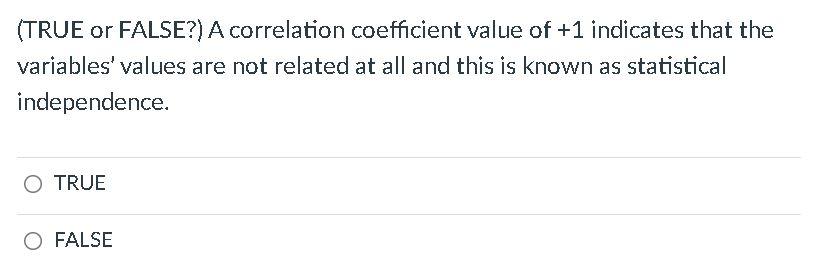
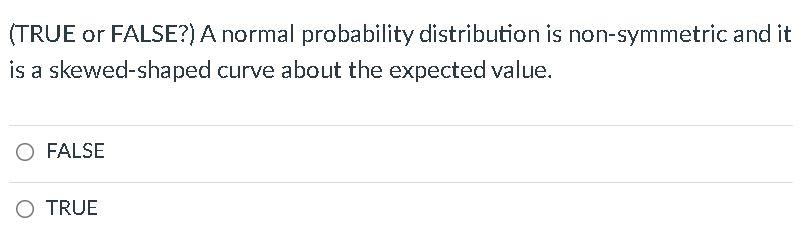
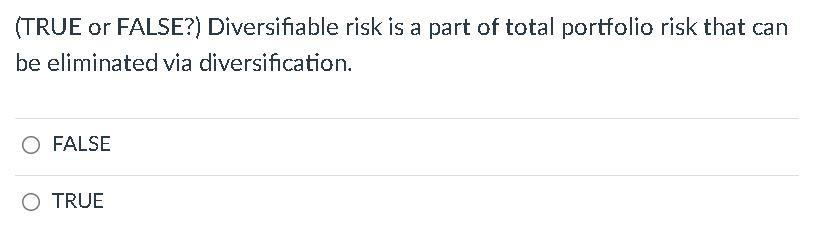
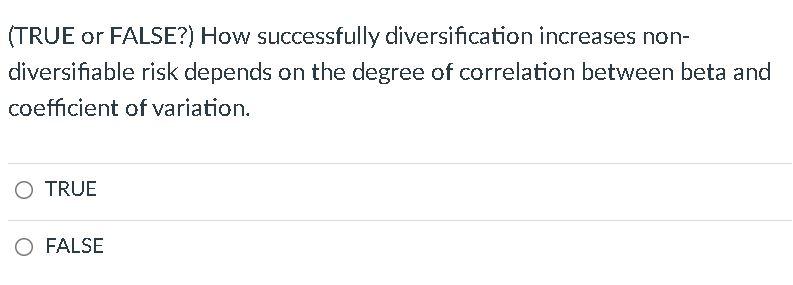
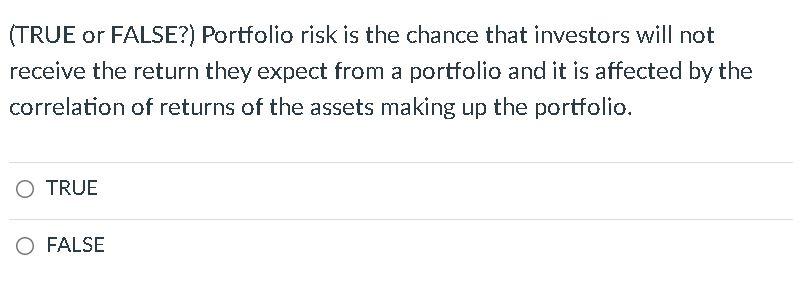
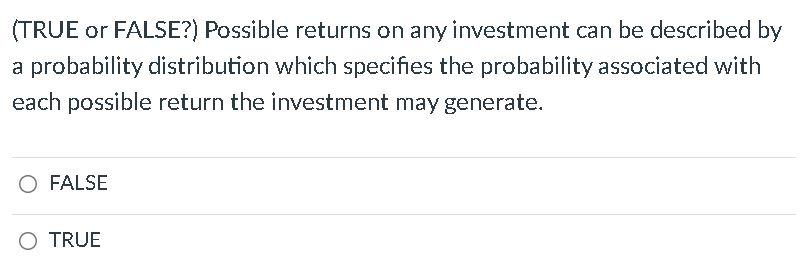
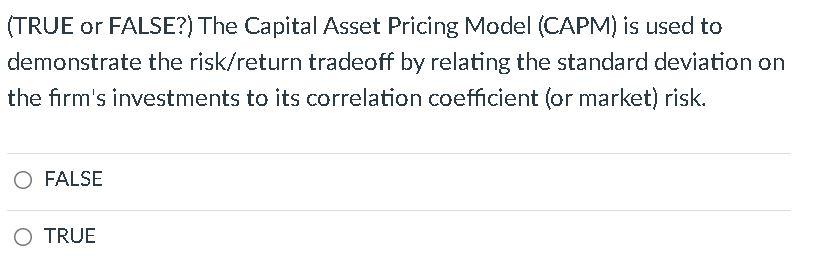
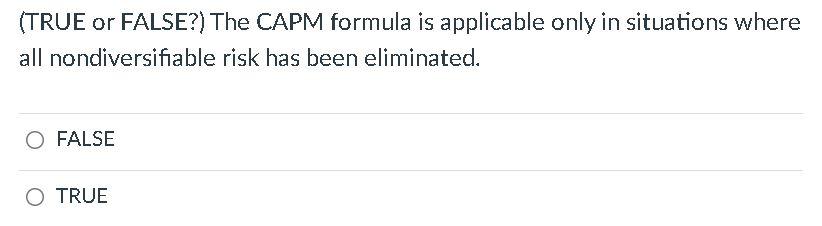
(TRUE or FALSE?) A correlation coefficient value of +1 indicates that the variables' values are not related at all and this is known as statistical independence. O TRUE O FALSE (TRUE or FALSE?) A normal probability distribution is non-symmetric and it is a skewed-shaped curve about the expected value. FALSE O TRUE (TRUE or FALSE?) Diversifiable risk is a part of total portfolio risk that can be eliminated via diversification, FALSE O TRUE (TRUE or FALSE?) How successfully diversification increases non- diversifiable risk depends on the degree of correlation between beta and coefficient of variation. O TRUE O FALSE (TRUE or FALSE?) Portfolio risk is the chance that investors will not receive the return they expect from a portfolio and it is affected by the correlation of returns of the assets making up the portfolio. TRUE FALSE (TRUE or FALSE?) Possible returns on any investment can be described by a probability distribution which specifies the probability associated with each possible return the investment may generate. FALSE O TRUE (TRUE or FALSE?) The Capital Asset Pricing Model (CAPM) is used to demonstrate the risk/return tradeoff by relating the standard deviation on the firm's investments to its correlation coefficient (or market) risk. O FALSE O TRUE (TRUE or FALSE?) The CAPM formula is applicable only in situations where all nondiversifiable risk has been eliminated. FALSE O TRUE
Step by Step Solution
There are 3 Steps involved in it

Get step-by-step solutions from verified subject matter experts
 Study Help